
Vintage Magazine Canterbury
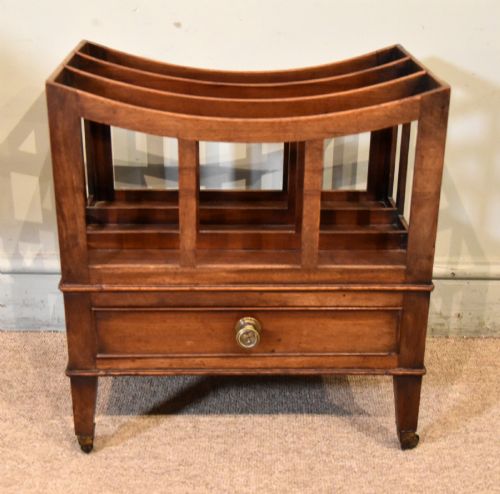
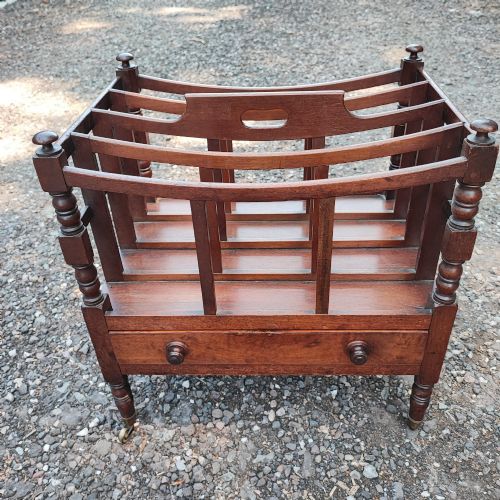
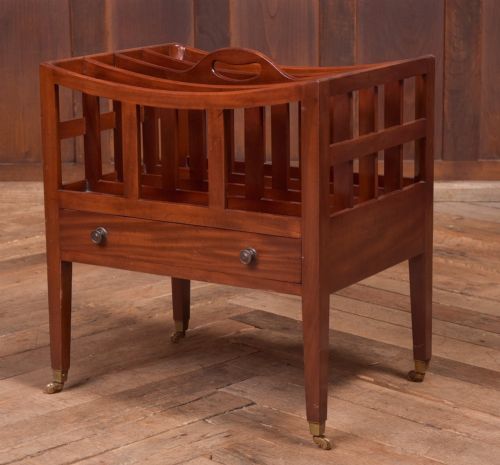
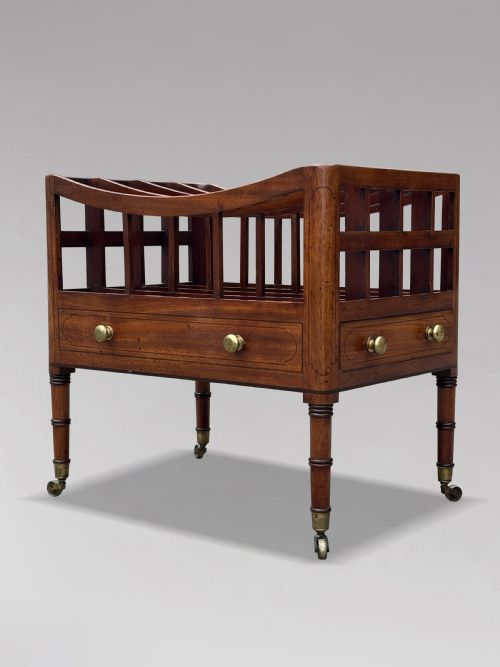
A vintage magazine canterbury is a low, compartmented stand designed to hold periodicals, sheets of music, and folios close to hand.
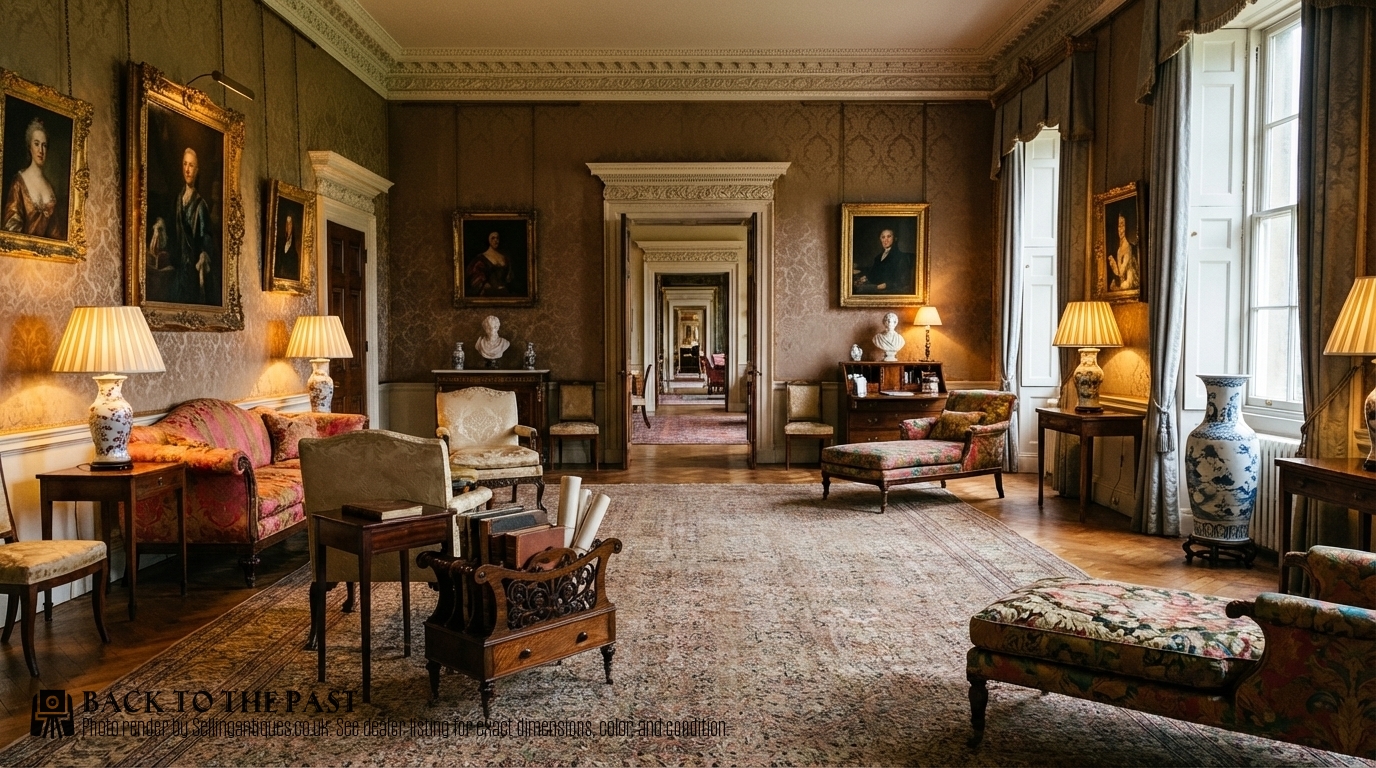
Vintage Magazine Canterbury
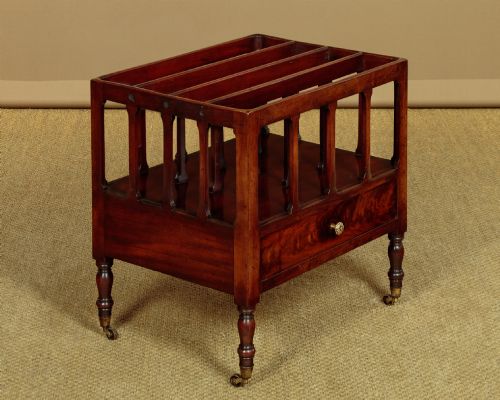
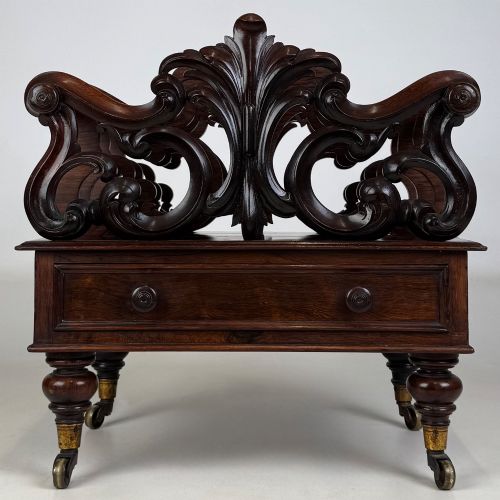
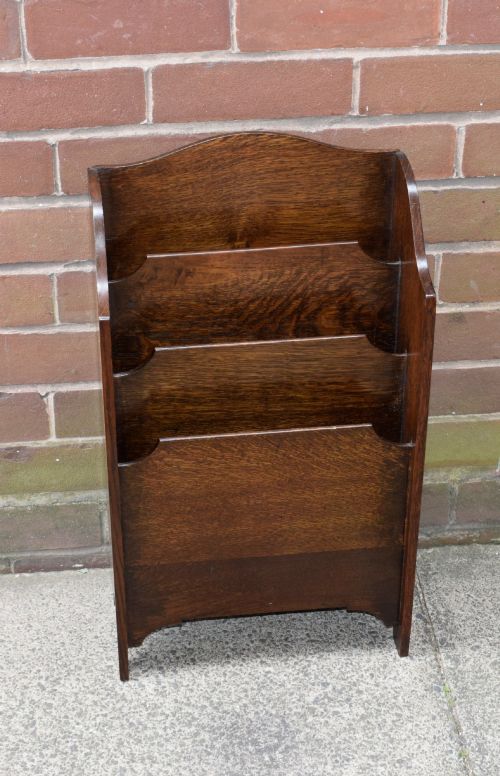
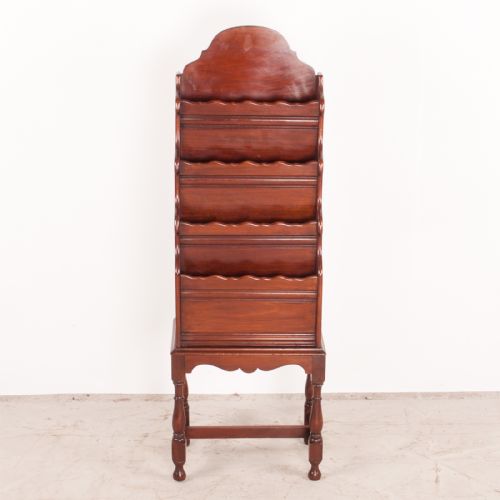
A vintage magazine canterbury is a dedicated storage piece that organises reading material into upright partitions, often above a low drawer. These stands trace their ancestry to the late eighteenth century but appear in forms ranging from Regency mahogany to Edwardian oak.
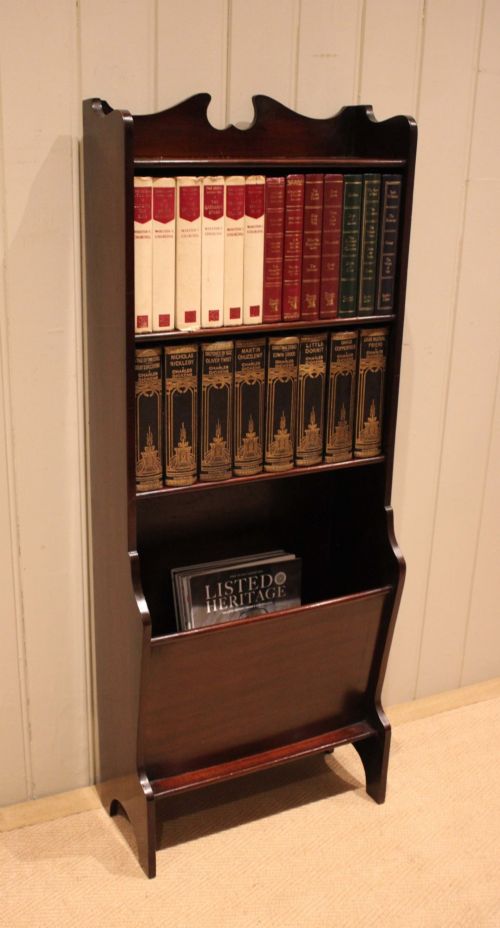
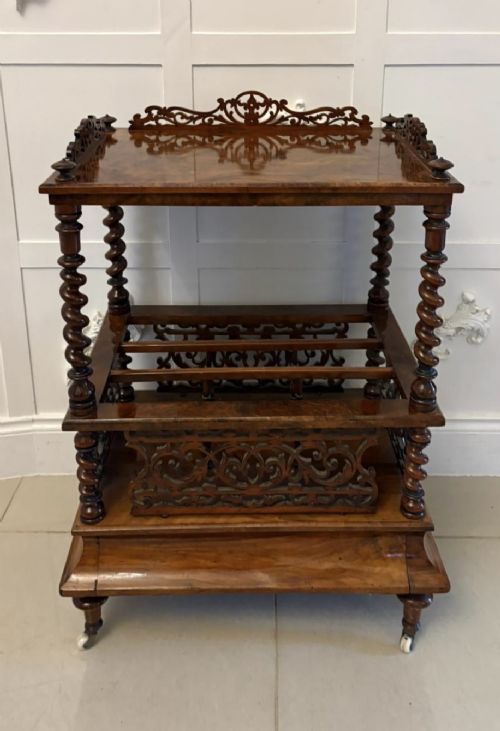
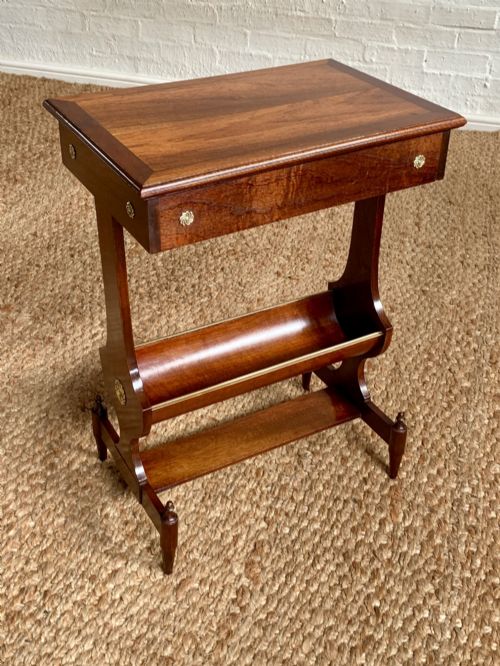
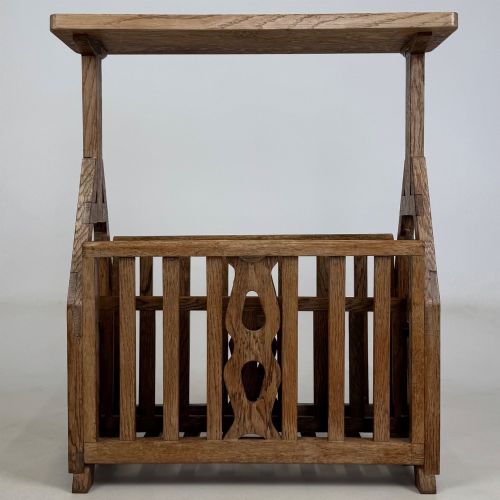
The pieces on this page include traditional freestanding canterburys alongside related forms such as music racks, side tables with magazine compartments, and revolving brass stands. Most examples follow established nineteenth-century designs adapted later for lighter domestic settings.
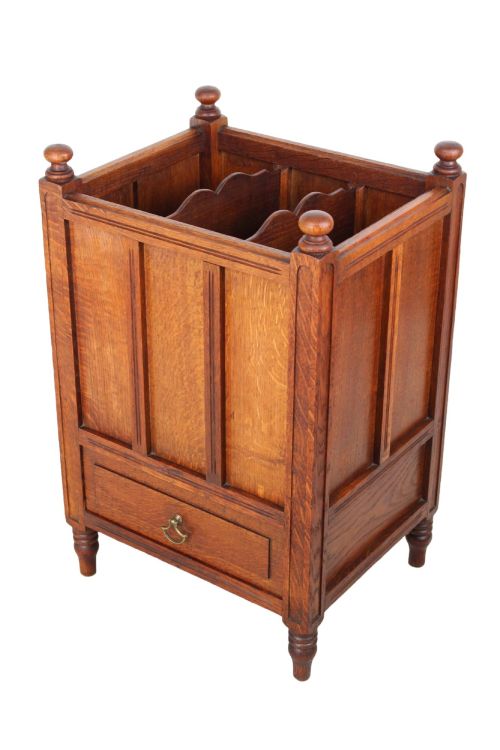
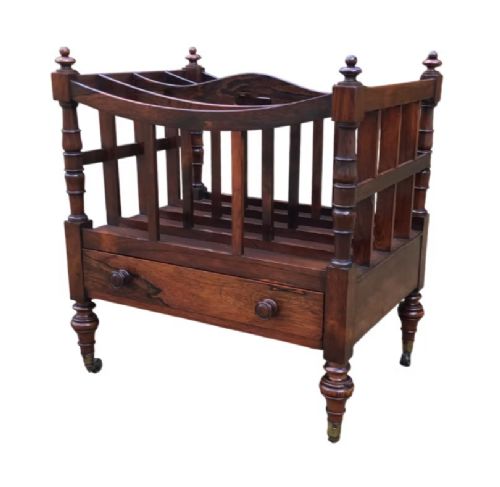
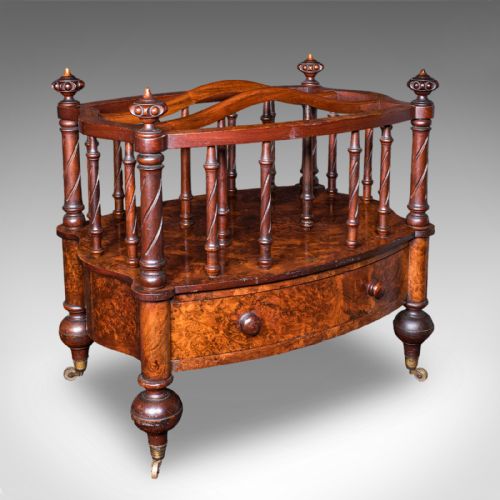
Buyers meet variations spanning Georgian and Victorian periods through to Arts and Crafts and Edwardian iterations. The simpler items rely on clean architectural timber frames, while more decorative versions feature turned supports, castors, or inlaid woodwork.
How they were made
Cabinet makers constructed these stands predominantly in timbers such as mahogany, rosewood, walnut, and oak, occasionally selecting burr walnut or fruitwood for figured grain. Joinery combined structural framing with slatted or pierced divisions to keep the weight manageable.
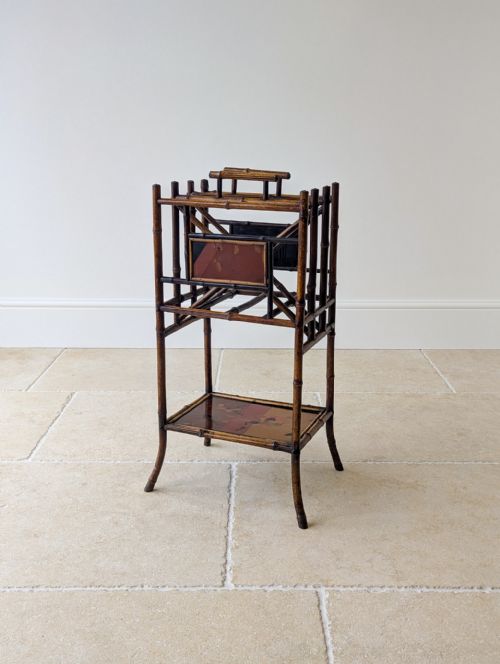
Metal components played a structural and decorative role, particularly in brass handles, castors, and revolving mechanisms on later stands. Some pieces incorporate bamboo frames or copper highlights, reflecting Aesthetic Movement and Arts and Crafts preferences.
Vintage Magazine Canterbury Retail Price Guide 2026
Typical asking prices for vintage magazine canterbury among the pieces listed under this phrase on Sellingantiques today, from the lower quarter to the upper quarter. They describe what is for sale here now, not the wider market.
Listings feature mahogany, rosewood, walnut, oak, burr walnut, bamboo, and lacquer across periods from the eighteenth century to the twentieth.
What varies in quality
Quality rests in the choice of timber and the crispness of the joinery rather than the sheer complexity of the ornament. Dense Cuban mahogany, finely figured rosewood, and well-matched burr walnut distinguish the finer workshops from standard production.
Proportion and stability determine the success of a piece, particularly in stands featuring slender turned legs or revolving tiers. Refined turnings, clean joints, and intact original brass castors separate superior examples from more ordinary utility items.
The Vintage Magazine Canterbury Glossary
- Regency
- A style spanning the early nineteenth century defined by classical restraint, elegant turned supports, and architectural clarity. Pieces often utilise dark timbers like mahogany and rosewood.
- Aesthetic Movement
- A late nineteenth-century design current that favored lighter materials such as bamboo and turned structural elements over heavy Victorian revivalism.
- Arts and Crafts
- A movement prioritising visible construction, honest materials, and plain oak or copper finishes. It rejects mass-produced ornament in favour of handcrafted utility.
- Metamorphic
- Describing furniture designed to transform or serve multiple functions, such as combining a table surface with an integrated magazine rack.
Vintage Magazine Canterbury: Frequently Asked Questions
What is a canterbury used for?
A canterbury was originally designed to hold folios and sheet music beside a piano or in a drawing room. Over time, the upright partitions made them ideal for newspapers and weekly periodicals.
Today they serve a similar purpose in living spaces, keeping current reading materials organised and elevated off the floor.
How do I date a canterbury?
Dating relies on timber selection, structural form, and decorative details. Georgian and Regency pieces favour solid mahogany with slender turned legs, while Victorian examples often introduce rosewood, burr walnut, and heavier carving.
Later Edwardian and Arts and Crafts versions shift towards plain oak, bamboo, and copper fittings that reflect lighter domestic interiors.
How do I place a canterbury in a room?
These compact stands work well beside armchairs, sofas, or desks where reading material collects. Freestanding designs look best positioned where the slatted partitions remain visible from multiple angles.
Revolving stands or table combinations can sit comfortably in corners or serve as occasional side tables while keeping storage accessible.