
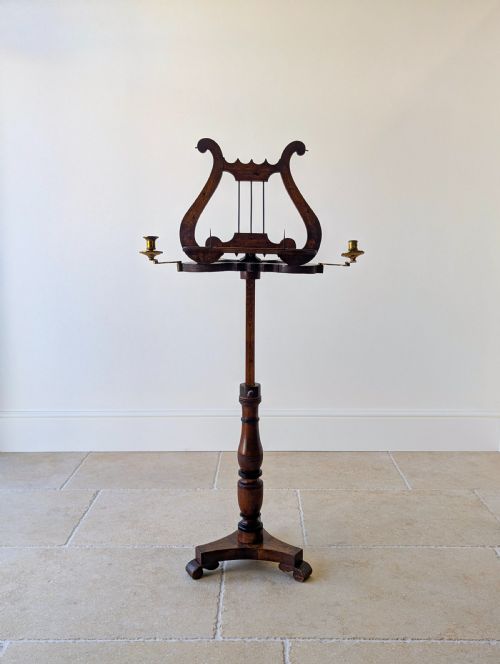


Regency Wooden Music Rack
A regency wooden music rack organises folios and scores with the refined joinery of the early nineteenth century.
Regency Wooden Music Rack
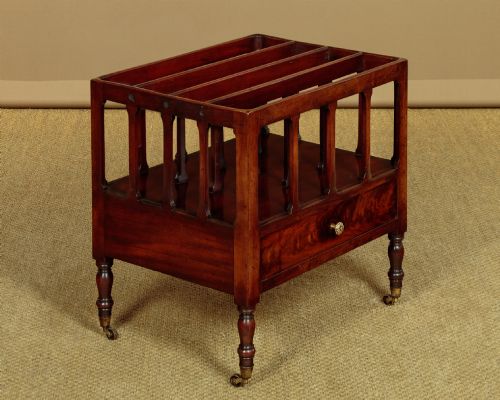
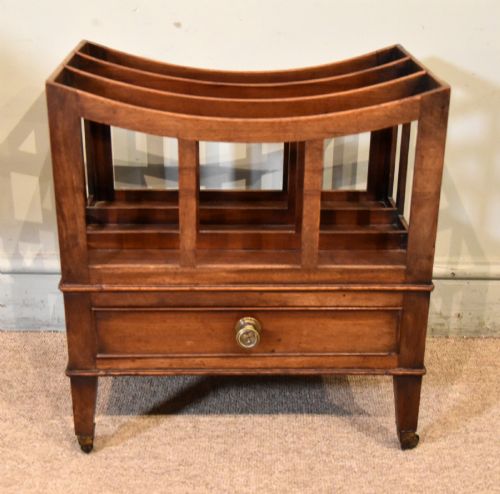
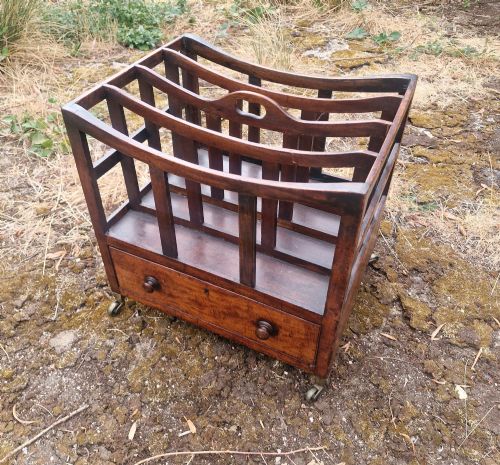
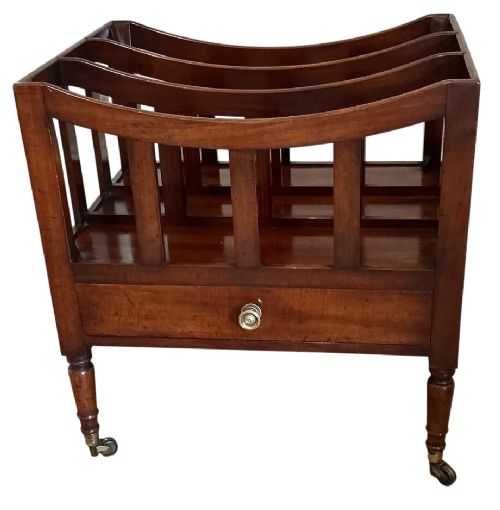
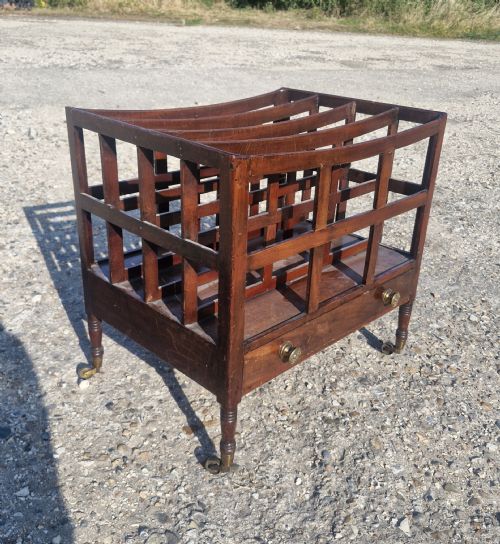
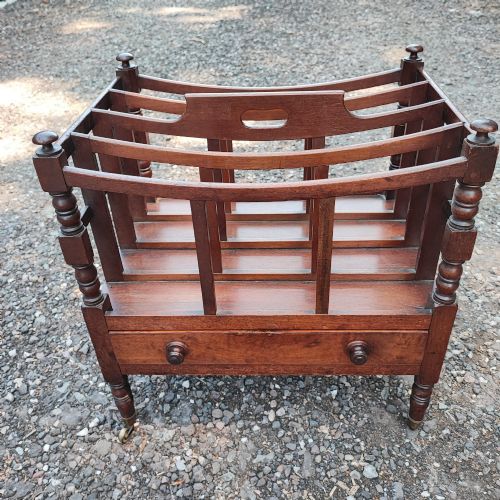
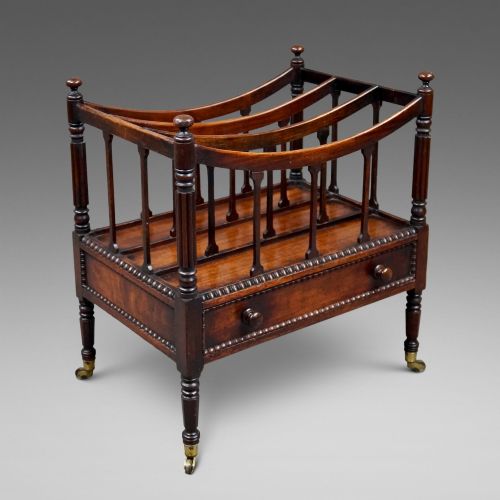
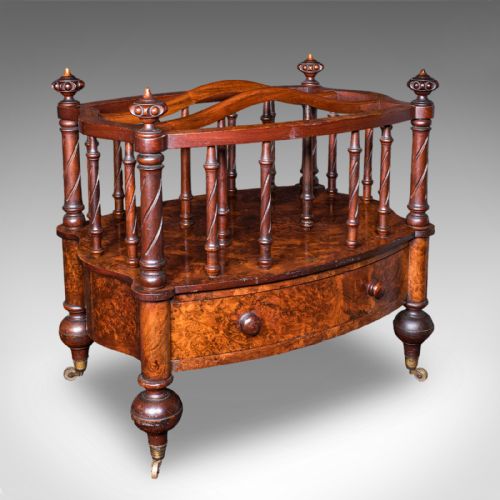
A regency wooden music rack is typically encountered on this page in the form of a Canterbury, music stand, or folio stand designed for domestic use. These pieces serve to hold sheets, magazines, and newspapers in divided compartments or upon adjustable desks.
The selections span the Georgian, Regency, William IV, and Victorian periods, with standard forms including boat-shaped bodies, lyre-form music stands, and four-division stands resting on castors. Most examples function as movable floor-standing furniture rather than wall-mounted items.
Makers and craftsmen of the era constructed these items to meet the parlour and drawing room demands of musicians and readers. The overarching design vocabulary draws upon classical lines and upright partitions.
How they were made
Cabinet makers utilised dense hardwoods such as mahogany, Cuban mahogany, rosewood, burr walnut, and walnut for the primary structures. Satinwood inlay and ebony banding frequently provide contrast along the edges and panels.
Metal fittings such as brass castors allow the stands to move smoothly across floor coverings. Turned legs and lyre motifs are shaped from solid timber to support the weight of heavy paper folios.
A Canterbury was named after an archbishop who requested a partitioned stand for his folios.
What varies in quality
The degree of refinement in timber selection separates standard items from exceptional ones. Highly figured burr walnut, rich Cuban mahogany, or striking rosewood grain denote superior workshop choices.
The complexity of the joinery and detailing dictates the tier of the piece. Fine turns on the legs, precise ebony banding, and integrated brass hardware distinguish the most accomplished examples.
Gillows of Lancaster
The Regency Wooden Music Rack Glossary
- Canterbury
- A low, freestanding stand with upright divisions used for holding sheet music, folios, and newspapers. It often incorporates a drawer or is mounted on castors.
- Folio Stand
- A large rack designed to hold oversized books, maps, or unbound sheets of music. These pieces typically feature hinged or upright frames.
- Lyre-Form
- A decorative shape resembling an ancient stringed instrument, frequently utilised for the central support of music stands. This motif is carved from solid hardwood.
- Boat-Shaped
- A hull-like curved profile seen on the body of certain Canterburys from the Regency period. This contour gives the sides a sweeping, symmetrical grace.
- Whatnot
- An open set of multi-tiered shelves used for display, sometimes combined with a Canterbury base. These items combine vertical storage with display space.
Regency Wooden Music Rack: Frequently Asked Questions
What is a Canterbury used for?
A Canterbury is a compartmented stand designed to hold sheet music, folios, and newspapers within easy reach of a piano or seating area.
Many examples include lower drawers for small accessories or castors for shifting position across the room.
How do I identify a Regency period piece?
Regency pieces often display classical proportions, dark hardwoods like mahogany or rosewood, and restrained decorative motifs such as brass inlay or turned legs.
Makers of this era favoured clean architectural lines over heavy ornamentation.
Are music stands adjustable?
Certain music stands feature mechanisms to alter the angle of the reading desk to suit standing or seated performers.
Lyre-form music stands and folio stands prioritise sturdy fixed frames built to support heavy paper volumes.
What woods were commonly used?
Mahogany and rosewood form the majority of the structures, often selected for their deep grain and durability in daily domestic use.
Burr walnut, satinwood, and ebony appear as accent materials for banding and visual contrast.