
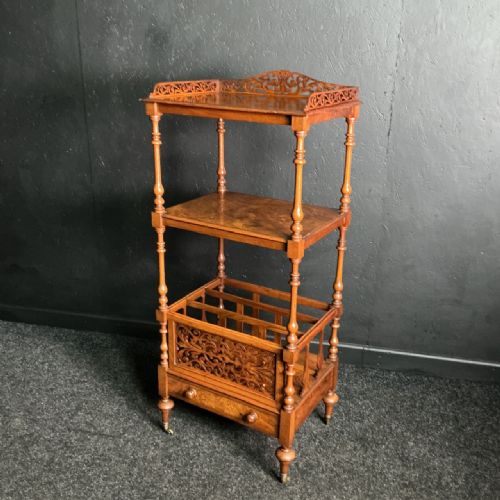
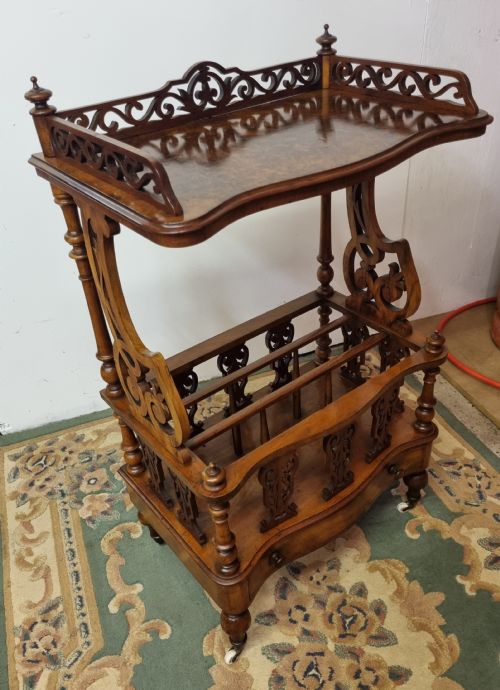
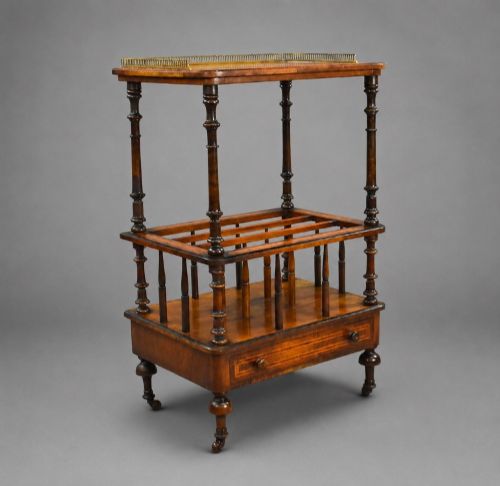
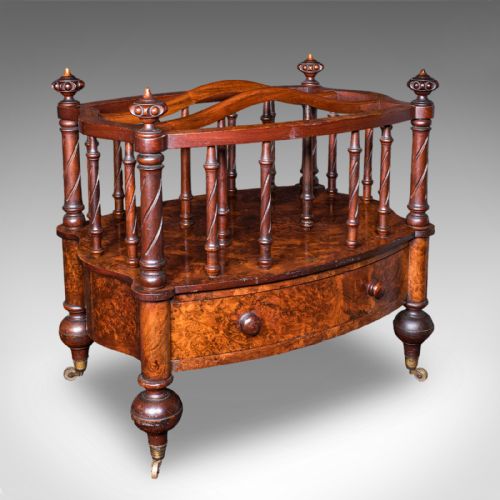


Walnut Music Canterbury Stand
A walnut music canterbury stand brings traditional divided storage and refined woodwork into a room for newspapers, sheets and books.
Walnut Music Canterbury Stand
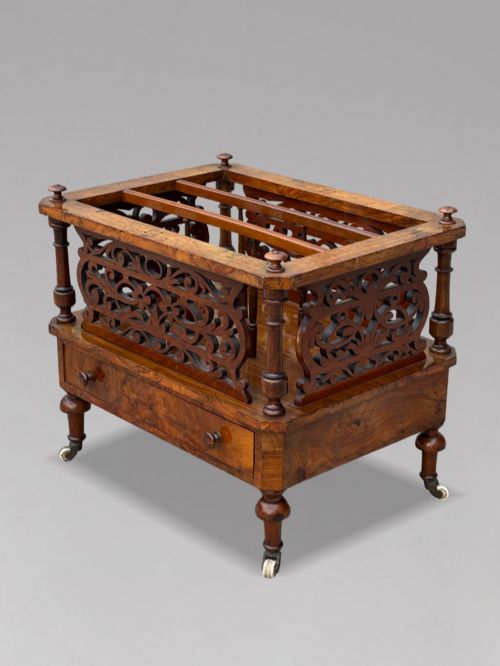
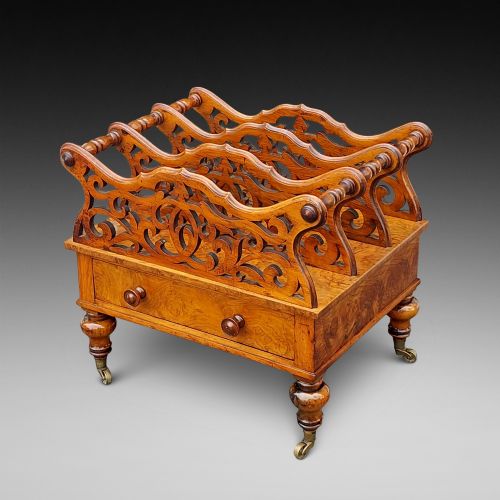
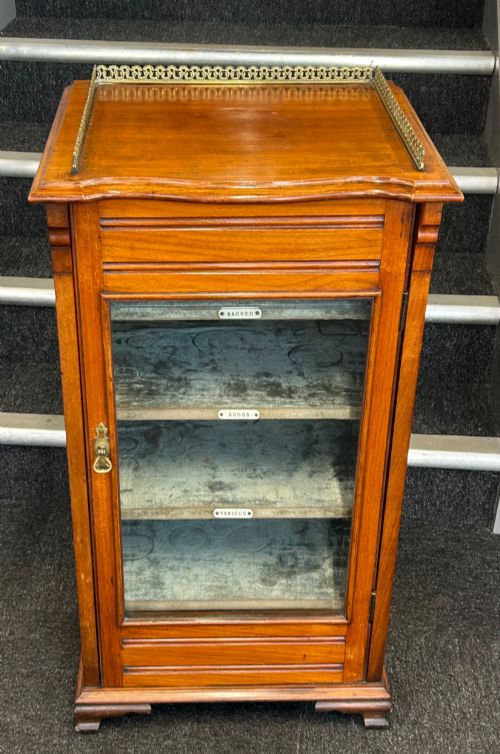
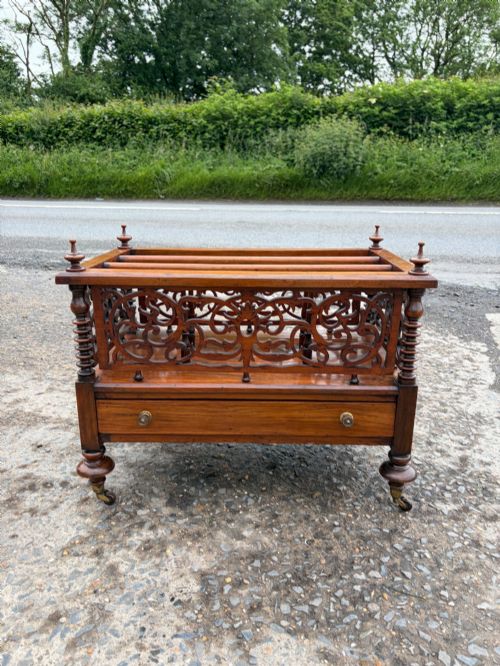
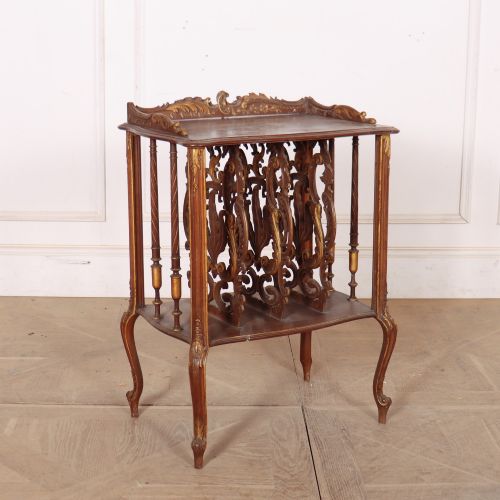
A walnut music canterbury stand combines partitioned compartments for folios and newspapers with open display shelves or enclosed cabinet storage. These furnishings span the Victorian, Edwardian and Regency periods, utilising rich timber figures to create practical library and drawing room pieces.
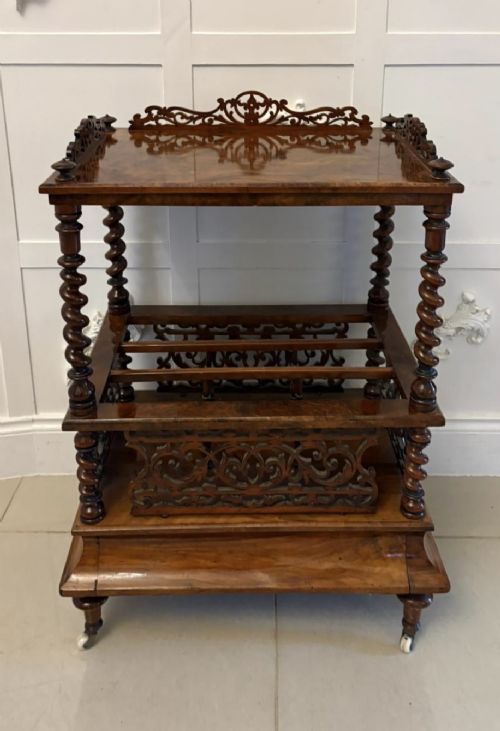
The most common examples encountered here date from the nineteenth century, particularly the Victorian era, featuring burr walnut veneers and occasional table tops. Makers combined compartmentalised upright divisions with turned supports, drawers, and lower shelves to serve multiple household functions.
Materials and construction
Craftsmen utilised solid walnut, highly figured burr walnut veneers, and contrasting light timbers for stringing and wood inlay details. Brass castors, ceramic elements, and glass components frequently completed the hardware and display elements of these furnishings.
Joinery techniques included fine fretwork, serpentine shaping, and marquetry to decorate the panels and partitions. Stands were built as freestanding items, often incorporating drawers beneath the main rack or rising into multi-tiered whatnots and music cabinets.
Listings feature walnut, burr walnut, and boxwood inlay across nineteenth-century and early twentieth-century periods.
Quality and craftsmanship
The standard of a walnut music canterbury stand rests on the depth of the timber figuring and the crispness of any inlay or pierced fretwork. Superior pieces display carefully matched burr veneers across curved serpentine profiles rather than plain flat surfaces.
Structural refinement distinguishes finer examples, visible in the turning of the support columns, the integration of dovetailed drawers, and the robustness of the interior partitions. Maker attribution, such as work by Edwards & Roberts or Shoolbred, reflects this elevated level of workshop execution.
Edwards & Roberts·Shoolbred
The Walnut Music Canterbury Stand Glossary
- Canterbury
- A low piece of furniture fitted with upright divisions for holding sheet music, folios, and newspapers. It often includes a drawer or a small table top.
- Burr walnut
- A prized timber cut from walnut tree growths, producing swirling, highly decorative grain patterns. It is typically applied as a fine veneer.
- Whatnot
- An open shelving unit with multiple tiers supported by pillars, used for displaying ornaments and books. These are frequently combined with canterbury bases.
- Marquetry
- The art of applying decorative pieces of wood veneer to a structure to form intricate pictorial or geometric designs. It is common on Victorian table tops.
- Fretwork
- Ornamental perforated woodwork created by cutting intricate patterns through a thin panel. It often appears on the partition dividers of these stands.
Walnut Music Canterbury Stand: Frequently Asked Questions
What is a canterbury stand used for?
These furnishings were designed to hold sheet music, folios, newspapers, and periodicals within partitioned vertical sections near a piano or seating area.
Many examples also incorporate drawers, shelves, or table tops, allowing them to function as lamp tables or multi-tiered display pieces.
How do I tell a Victorian from an Edwardian piece?
Victorian stands typically feature rich burr walnut veneers, serpentine shapes, elaborate marquetry inlay, and turned supports characteristic of mid-nineteenth-century cabinet making.
Edwardian versions often take the form of enclosed music cabinets with glass doors, showing lighter framing and simpler proportions.
Where should I place a music stand in a room?
A freestanding canterbury works well beside a piano, armchair, or sofa where its divided sections can keep reading material close at hand.
Pieces with upper tiers or display shelves also serve effectively as occasional tables or decorative corner units in a study or drawing room.
What is the difference between a canterbury and a whatnot?
A traditional canterbury consists primarily of a low partitioned rack for holding papers and music, sometimes resting on small legs with castors.
A whatnot is a tiered shelving unit designed for display, though many nineteenth-century makers combined both forms into a single hybrid piece.