

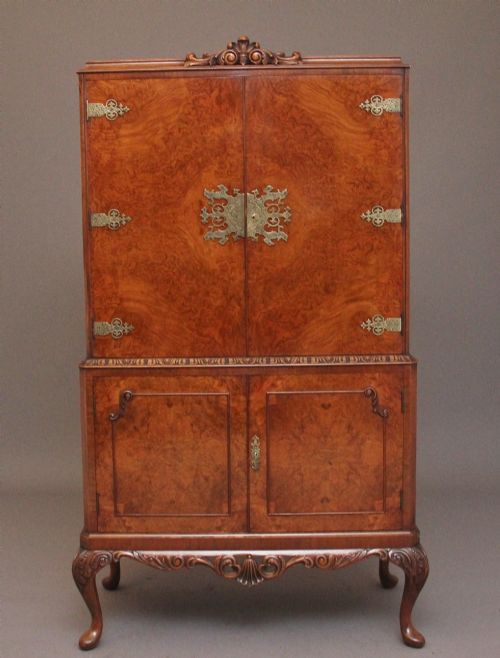
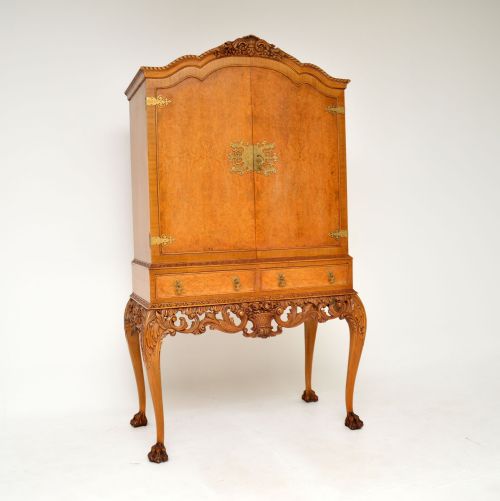
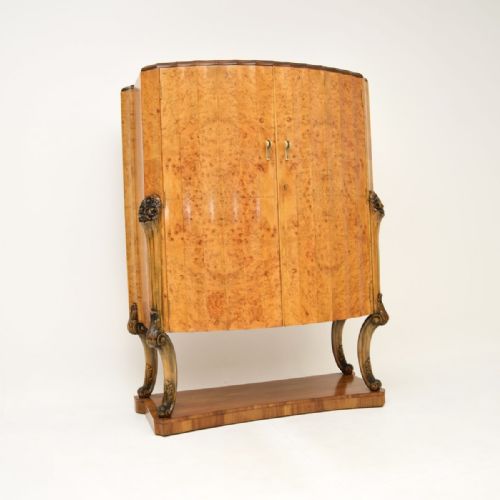
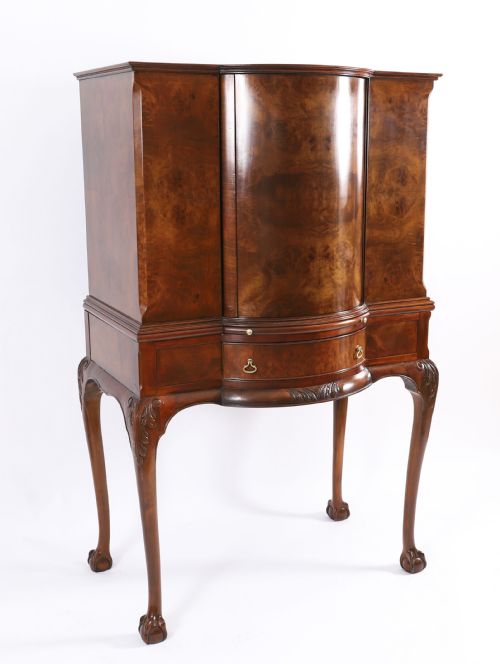
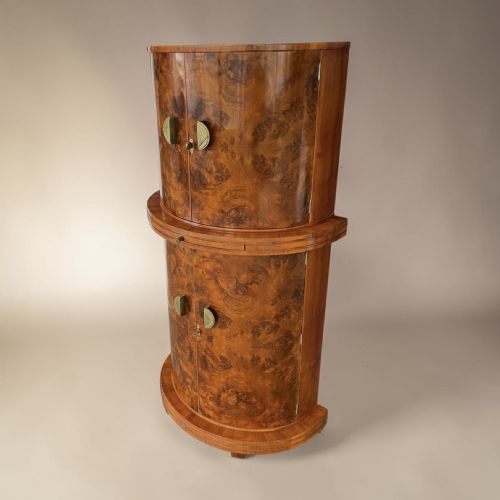
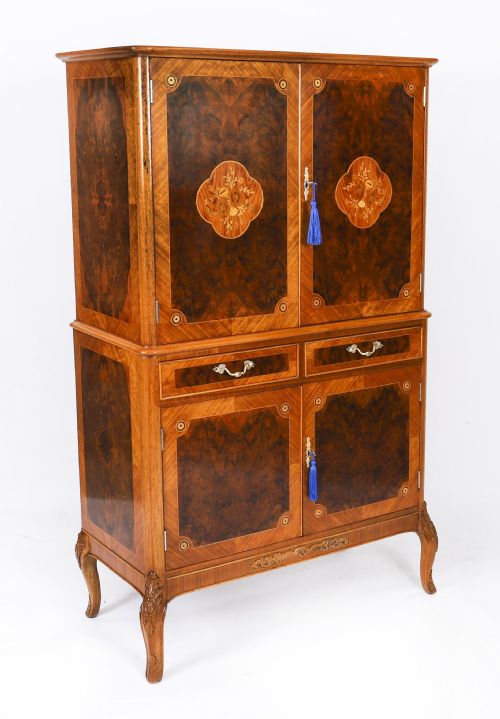
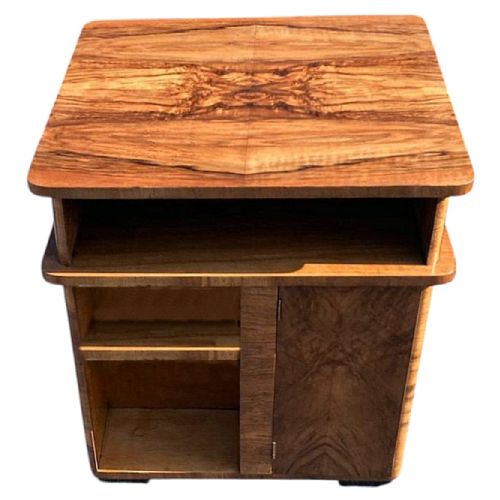


Burr Walnut Liquor Cabinet
A burr walnut liquor cabinet is a striking entertainment piece prized for its rich, swirling grain and clever internal storage for hosting.
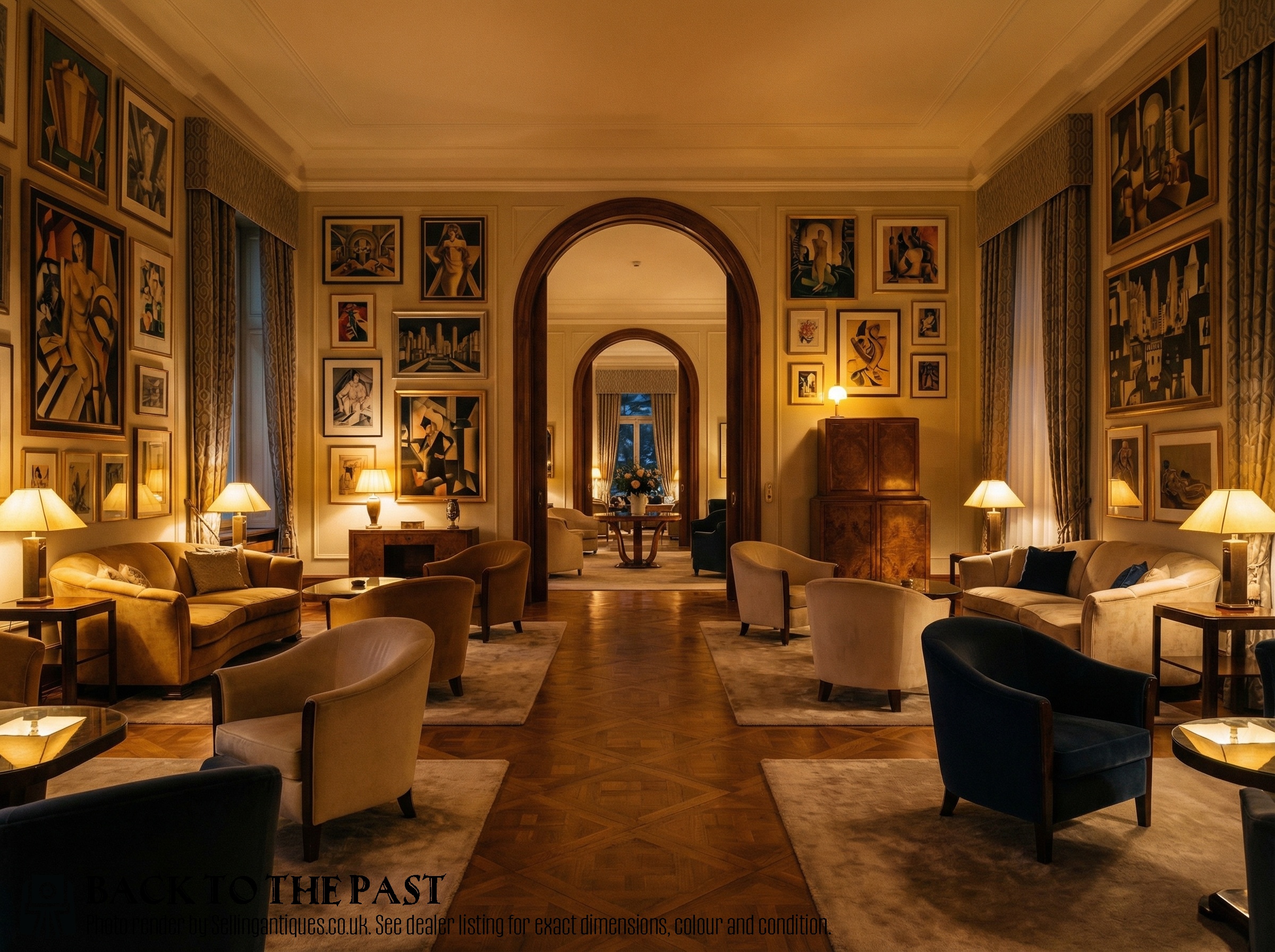
Burr Walnut Liquor Cabinet
A burr walnut liquor cabinet brings warmth and theatricality to a room, functioning as a dedicated station for hosting drinks and displaying glassware. When you search for a burr walnut liquor cabinet, you encounter forms ranging from upright cocktail chests to revolving dry bars and compact tantalus boxes.
The pieces on this page span the Victorian era, the Edwardian period, and the 1930s, with Art Deco examples predominating. Makers such as Epstein, Hille, and Waring and Gillow contributed significant designs during the early 20th century.
Beyond standard upright cabinets, the selection includes demi-lune shapes, corner units, and occasional cocktail tables. Each variation serves the fundamental purpose of housing bottles and decanters in style.

Materials and Construction
Cabinet makers applied highly figured burr walnut veneer over solid timber carcases to achieve dramatic patterning on the exterior surfaces. This technique required immense skill in matching and balancing the natural growths of the walnut tree.
Interiors often combine contrasting timbers with glass shelving, mirror backs, and fitted compartments for accessories. Brass hardware, bakelite details, and secure locking mechanisms complete the functional design of these drinks chests.
Listings feature burr walnut, walnut veneer, solid walnut, brass, glass, mirror, and bakelite across the Victorian, Edwardian, and 1930s periods.
Markers of Distinction
Quality in these pieces rests primarily on the choice and execution of the timber veneer. The most accomplished cabinets display symmetrical, uninterrupted burr patterns that wrap harmoniously around the curved or rectilinear forms.
Internal engineering and maker attribution elevate certain examples above standard production. Pieces bearing the mark of prominent firms like Epstein or Hille demonstrate superior interior fittings, heavier gauge brass, and refined joinery.
Epstein·Hille·Harry and Lou Epstein·Waring and Gillow·Epstein and Co Furniture
The Burr Walnut Liquor Cabinet Glossary
- Burr walnut
- Timber cut from the wart-like growths on walnut trees, yielding highly ornamental, swirling grain patterns. This veneer defines the aesthetic of the finest liquor cabinets.
- Tantalus
- A locking wooden frame holding decanters that displays the contents while preventing unauthorized access. These devices often feature brass mountings and key locks.
- Art Deco
- A design style spanning the 1920s and 1930s characterised by streamlined geometric forms and luxurious materials. Many cocktail cabinets on this page reflect this modernist aesthetic.
- Demi-lune
- Half-moon shape used for specialised cabinet designs intended to fit flush against a wall. This profile allows for substantial interior storage within a compact footprint.
- Marquetry
- Decorative technique applying various wood veneers to form pictorial or geometric patterns on furniture surfaces. It appears on select Art Deco dry bars.
Burr Walnut Liquor Cabinet: Frequently Asked Questions
What is inside a typical liquor cabinet?
These cabinets generally feature mirror backs, glass shelves for glassware, and dedicated pull-out slides for mixing drinks.
Many examples also include built-in lighting, bottle racks, and specific compartments for squeezers and cocktail accessories.
How do I date a burr walnut cabinet?
Dating relies on stylistic clues, construction methods, and prevailing design movements. Victorian and Edwardian pieces lean towards traditional Revival styles, whereas 1930s items typically exhibit geometric Art Deco lines.
Makers' stamps or labels from firms such as Epstein or Hille provide definitive chronological markers.
Where should I place a drinks cabinet?
These statement pieces suit living rooms, dining rooms, or home entertaining spaces where their decorative grain can be appreciated.
Position them away from direct sunlight and heat sources to protect the delicate burr walnut veneer from drying out.
What is the difference between a tantalus and a cocktail cabinet?
A tantalus is a portable or stationary box holding visible decanters behind a locking bar, designed to secure spirits from guests.
A cocktail cabinet is a larger piece of furniture enclosing a complete dry bar with preparation surfaces, glass storage, and bottle shelving.