
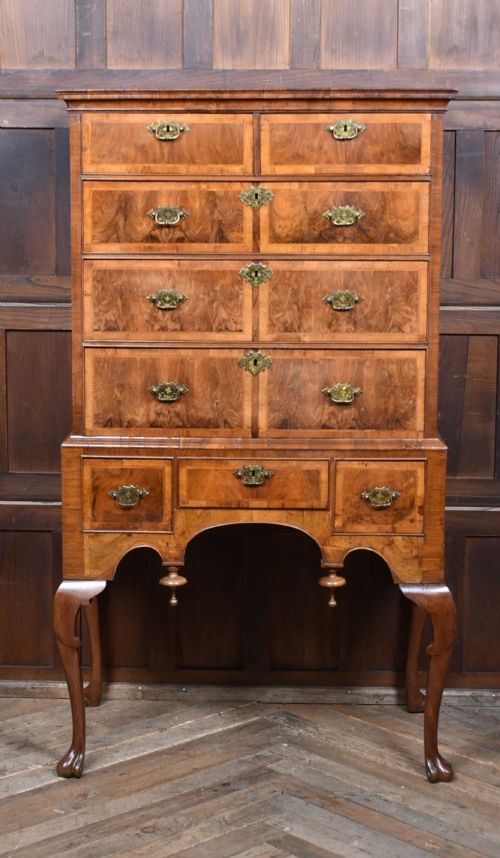
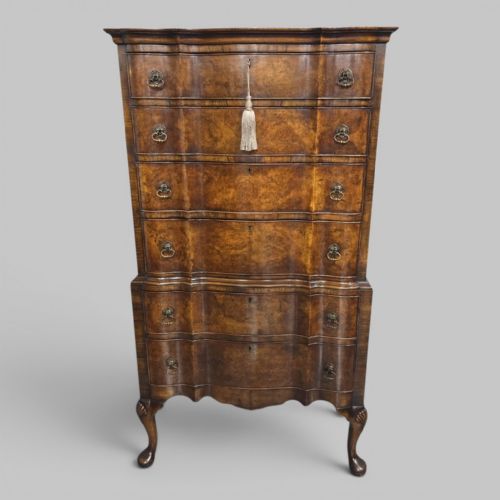


Burr Walnut Highboy
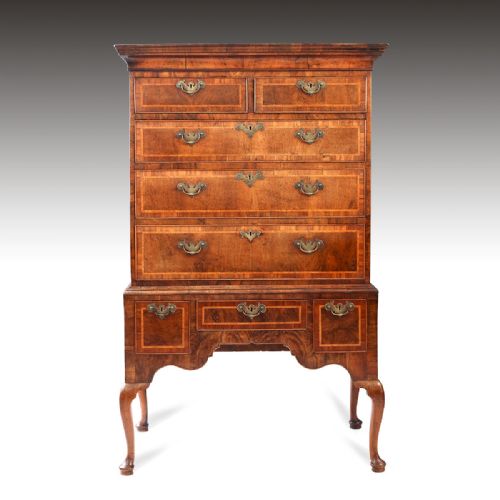
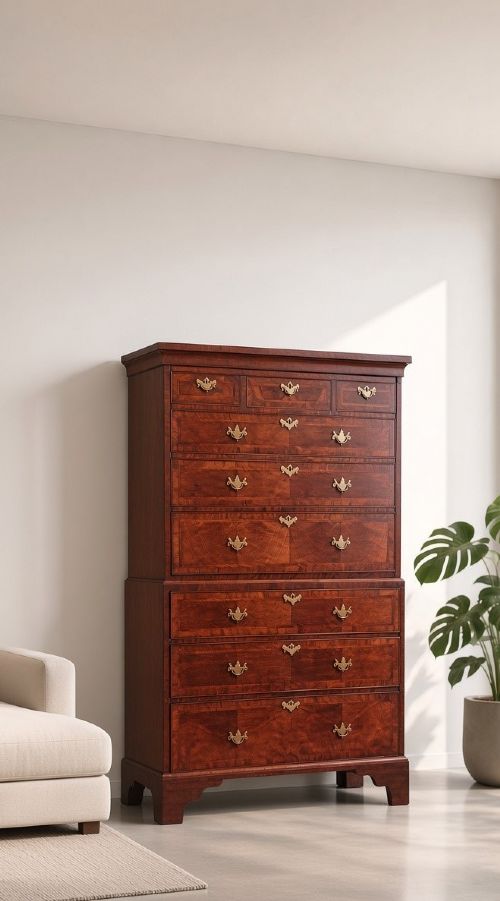
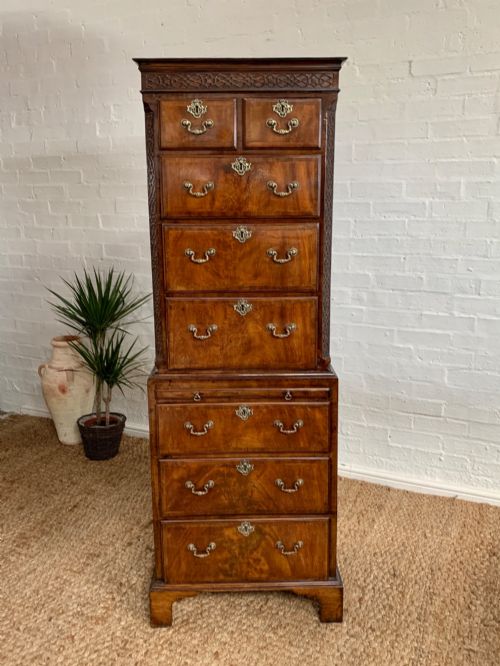
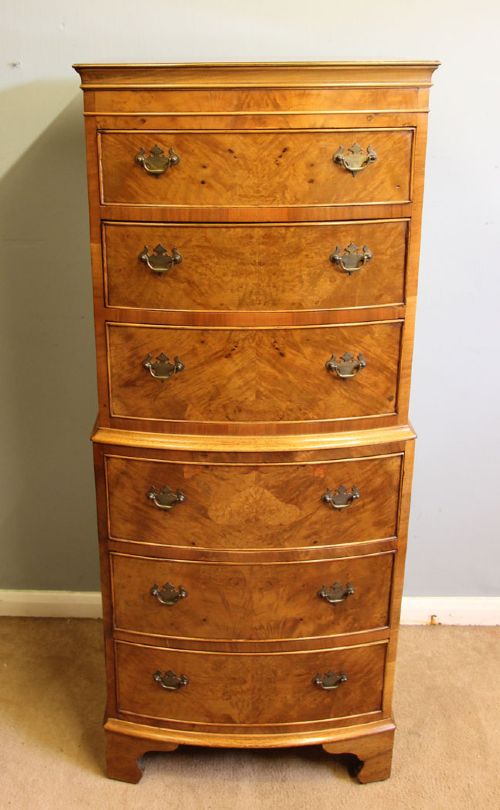
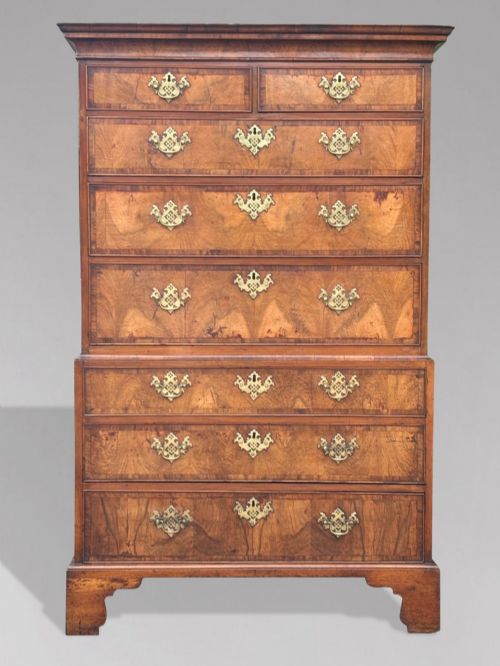
A burr walnut highboy brings remarkable grain and stature to a room, uniting stacked drawer sections in walnut, burr walnut veneer, and oak.
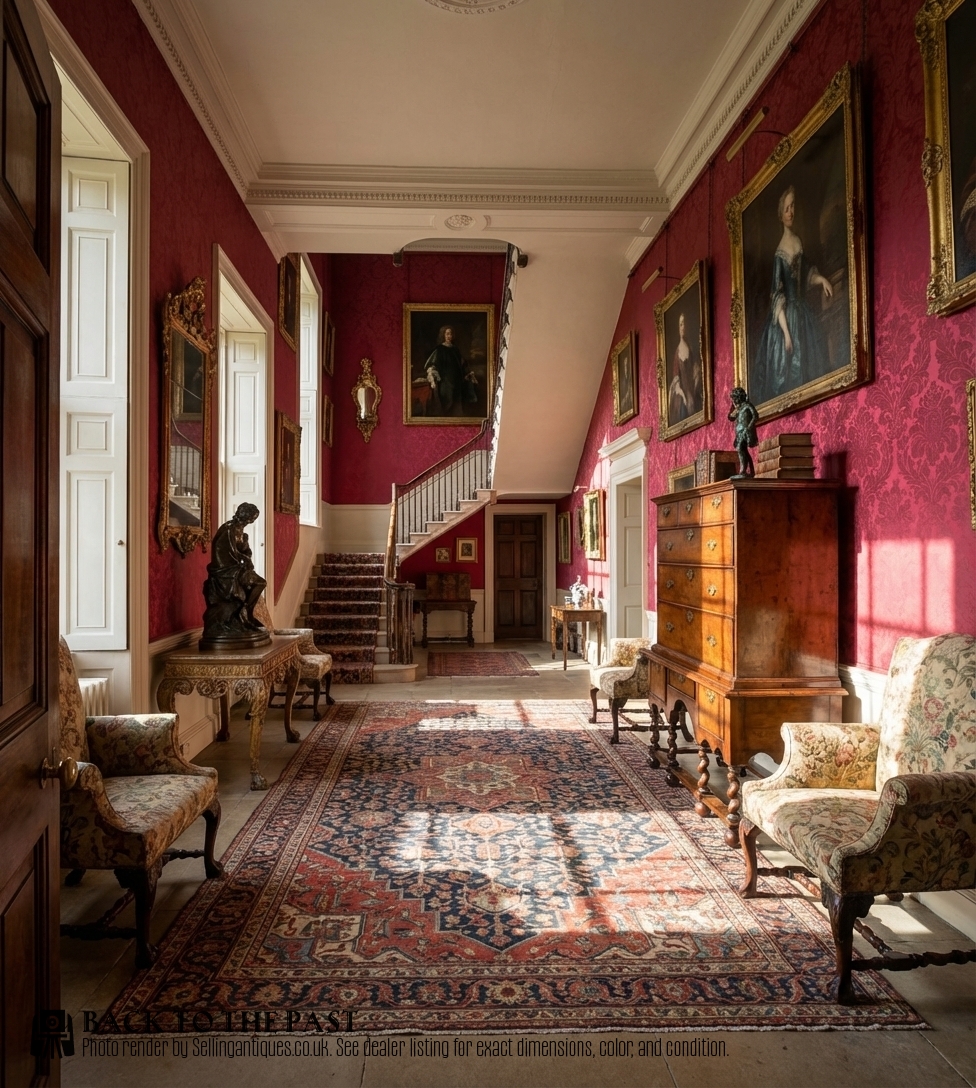
Burr Walnut Highboy
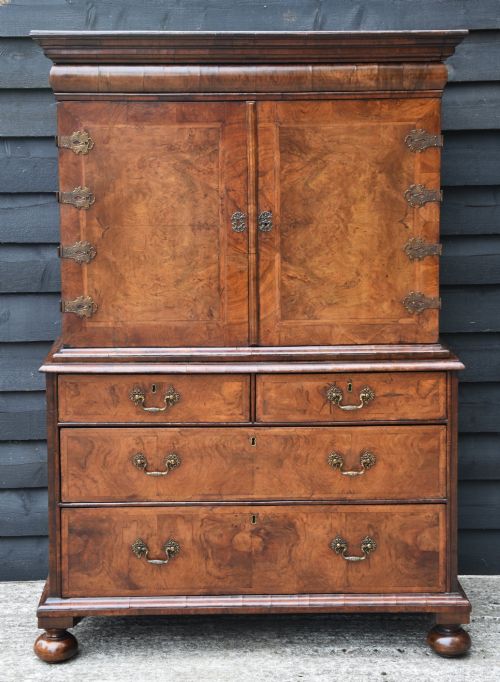
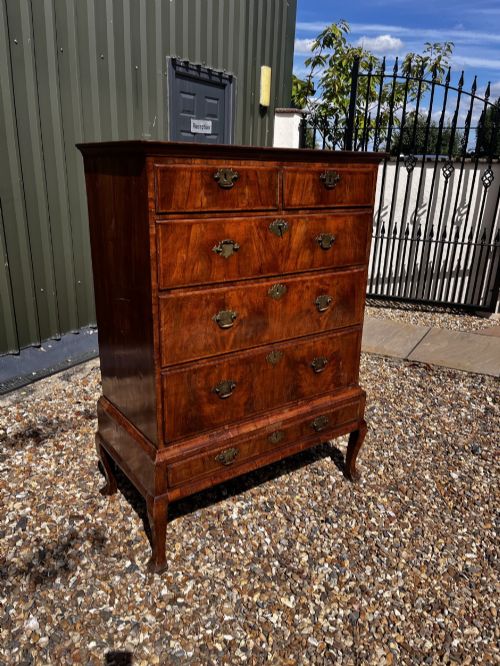
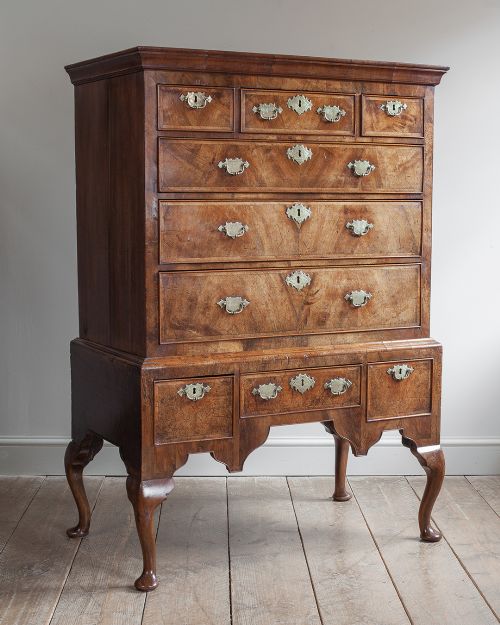
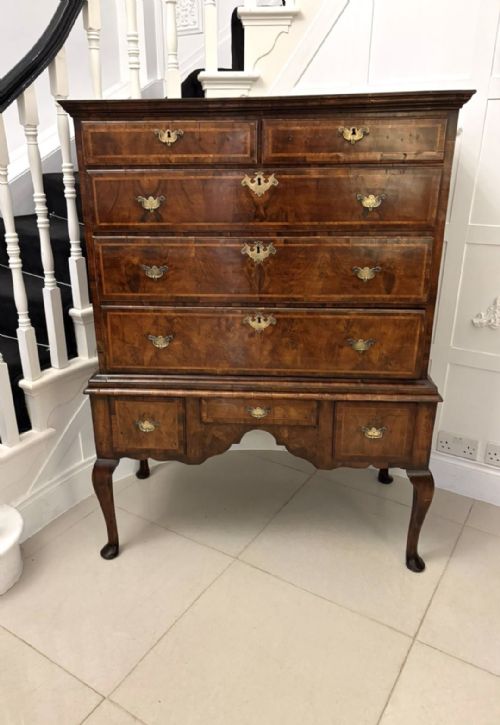
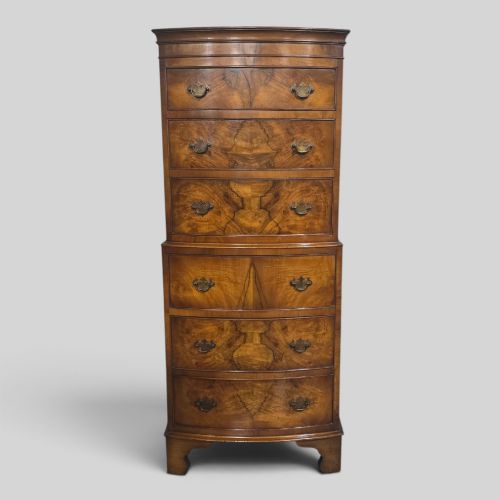
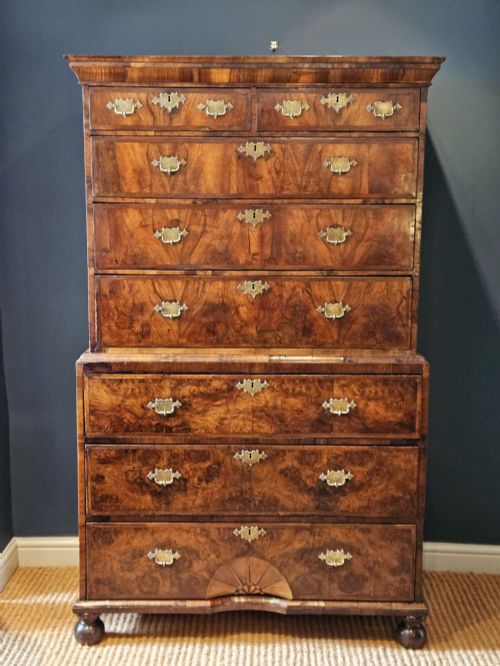
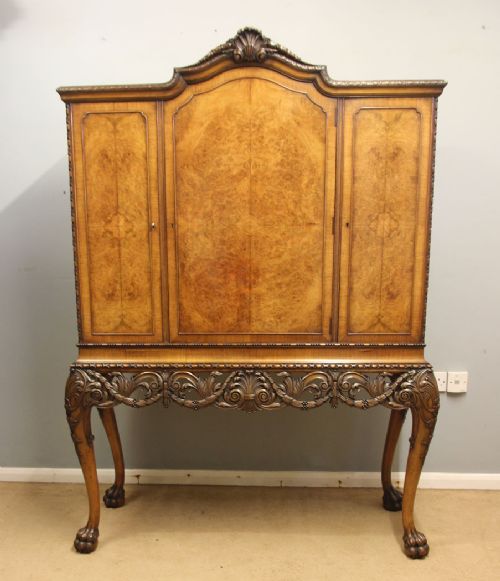
A burr walnut highboy encompasses tall forms such as chests on chests, tallboys, and cabinets on chests originating primarily from the seventeenth and eighteenth centuries, alongside later revivals from the twentieth century. These tall case pieces divide into an upper and lower section, providing substantial vertical storage while occupying a modest footprint on the floor.
The pieces on this page appear in various guises, from Queen Anne and George I designs with distinct walnut veneer to later Art Deco and revival interpretations. Buyers frequently encounter forms bearing brass hardware, such as brass drop handles and escutcheons, mounted upon stands or lower chests.
What varies in quality
Quality rests upon the choice and arrangement of the timber veneers, where symmetrical matching of burr walnut across drawer fronts distinguishes superior cabinet work. The crispness of carved details on stands, the retention of original brass hardware, and the integrity of the underlying oak or pine structure also set finer examples apart.
Period proportion and the harmony between the upper and lower sections dictate the visual success of each tallboy or chest on chest. Pieces retaining their original surface patination and proportioned architectural cornices represent the pinnacle of the cabinet maker's output.
Burr Walnut Highboy Retail Price Guide 2026
Typical asking prices for burr walnut highboy among the pieces listed under this phrase on Sellingantiques today, from the lower quarter to the upper quarter. They describe what is for sale here now, not the wider market.
Listings span the 17th Century, Georgian period, and 1920s revivals, constructed in walnut, oak, brass, and burr walnut veneer.
The Burr Walnut Highboy Glossary
- Burr walnut
- A figured timber taken from the growth excrescences of walnut trees, prized for its swirling knot patterns used in veneering. Cabinet makers sliced this wood thinly to cover primary surfaces.
- Chest on chest
- A tall storage unit formed of two stacked carcases, where a smaller upper chest sits directly upon a deeper lower chest. This form maximises vertical capacity.
- Chest on stand
- A cabinet or chest raised upon a separate framed base with legs, typical of seventeenth and early eighteenth century design. These elevated structures often feature shaped aprons.
- Tallboy
- A traditional British term for a tall chest of drawers or a chest on chest. These pieces provide multiple tiers of storage within a vertical carcass.
- Veneer
- A thin layer of decorative wood applied over a secondary timber carcass such as oak or pine. This method displays expensive grain patterns efficiently.
Burr Walnut Highboy: Frequently Asked Questions
What is a highboy?
A highboy is a tall chest of drawers or chest on chest arrangement designed to maximise vertical storage space.
These pieces combine two distinct sections to provide numerous drawers while maintaining a compact floor footprint.
How do I date a piece?
Dating relies on examining construction methods, timber choices, brass hardware styles, and overall period characteristics.
Seventeenth and eighteenth-century examples display different moulding profiles and carcass timbers compared to twentieth-century revivals.
Where were they placed?
These tall case pieces historically stood in bedrooms and private chambers for storing garments and linens.
Their impressive vertical presence also suited grand hallways and dressing rooms in period homes.
What is burr walnut?
Burr walnut is a specialised wood veneer derived from the knotted growths of walnut trees.
It creates complex, swirling patterns that cabinet makers arranged symmetrically across drawer fronts.