

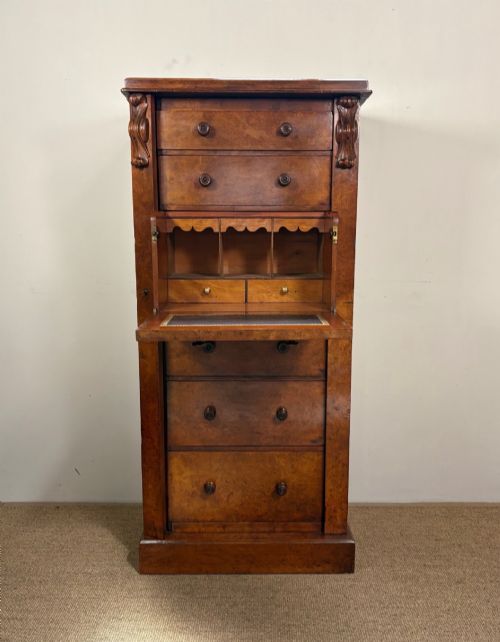
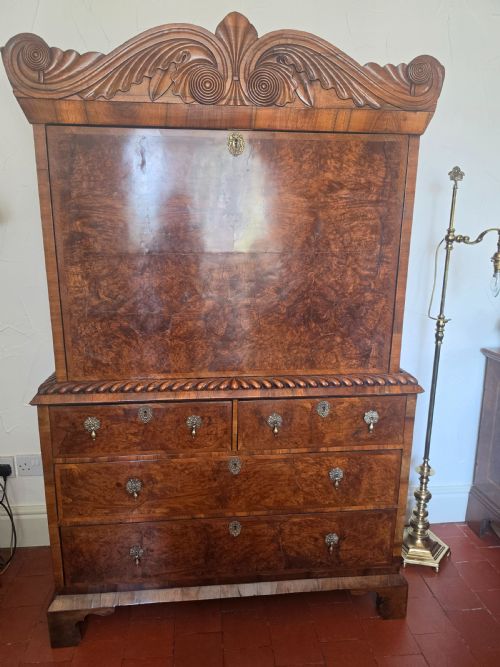
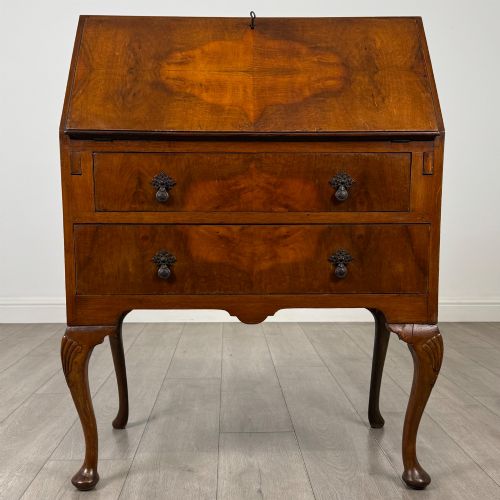
Burr Walnut Desk Cabinet
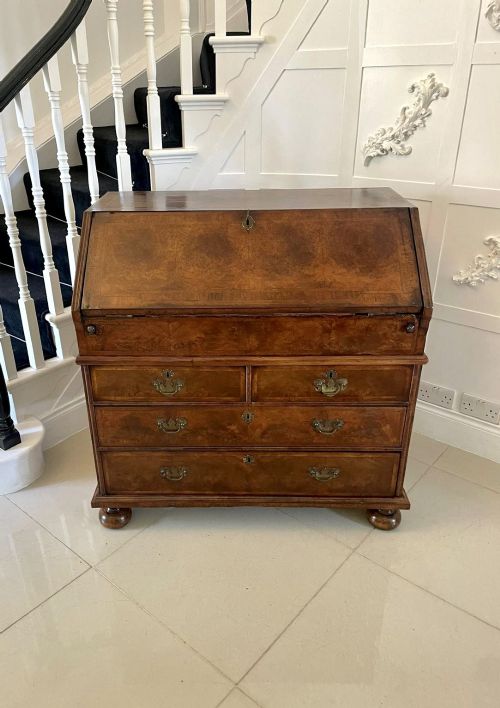
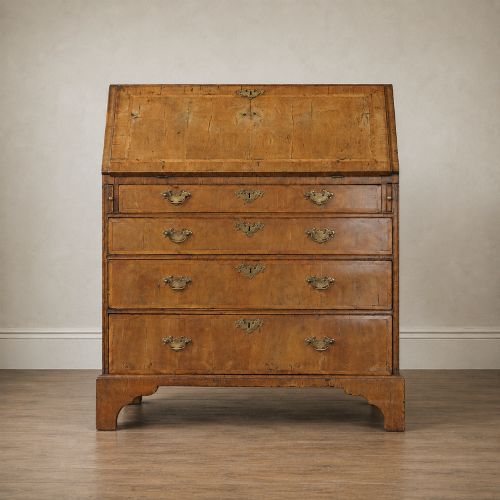
These burr walnut desk cabinet pieces bring together figured grain and practical writing spaces from the seventeenth century onwards.
Burr Walnut Desk Cabinet
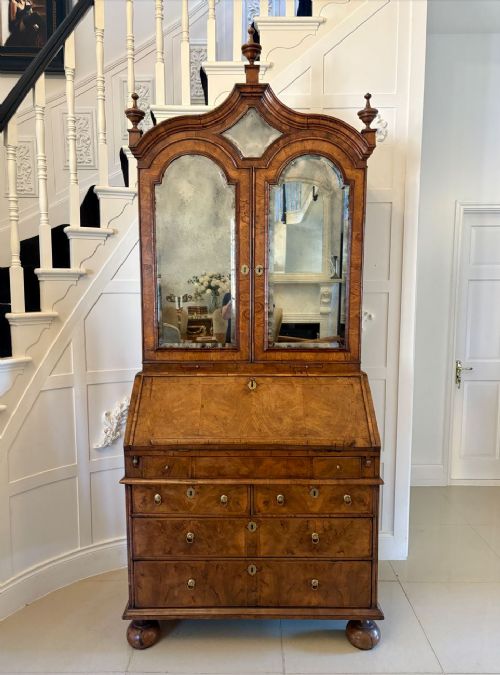
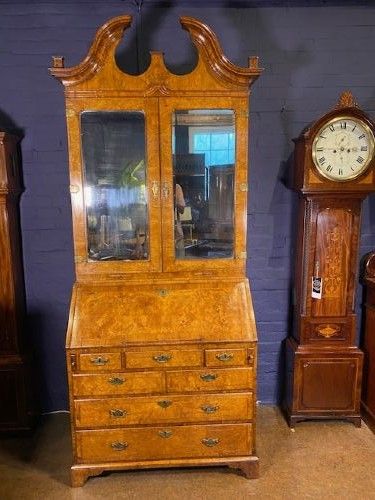
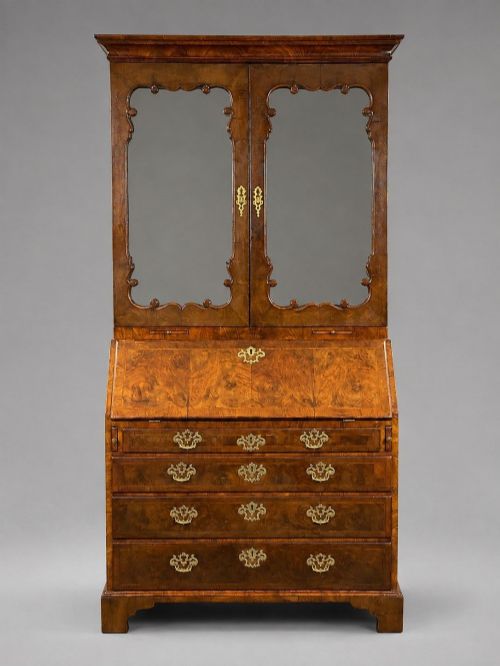
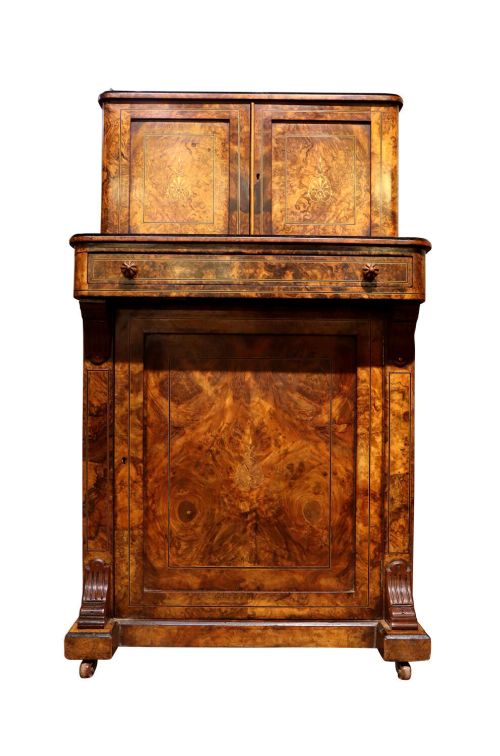
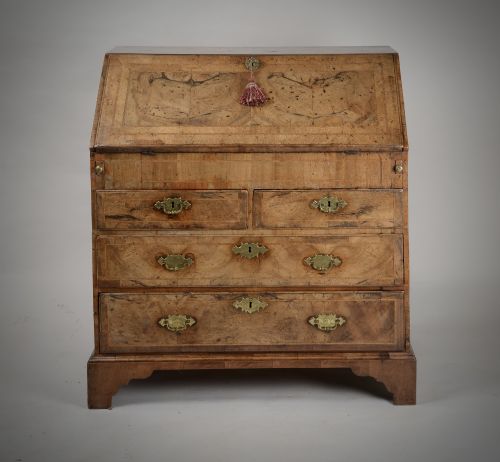
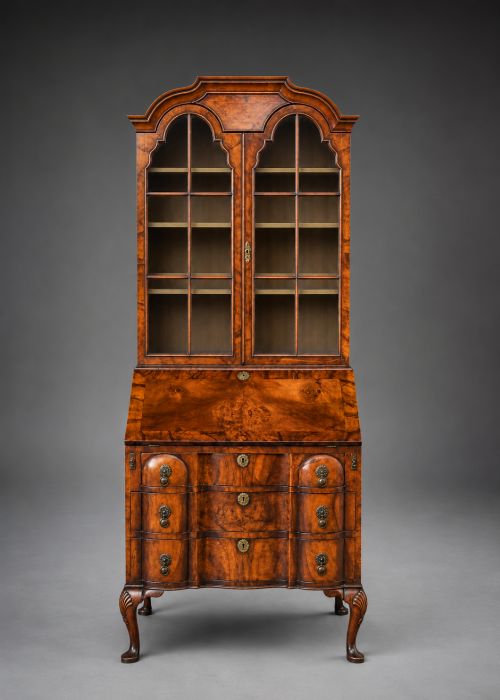
A burr walnut desk cabinet search covers a range of writing furniture, from bureau bookcases and escritoires to smaller davenports and stationery boxes. Buyers most frequently encounter tall bureau bookcases with glazed or paneled upper sections alongside compact Victorian writing desks.
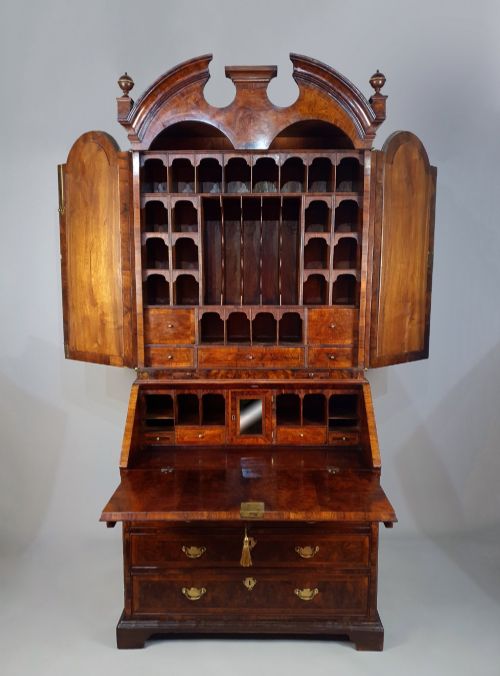
The periods span from seventeenth-century William and Mary examples through Queen Anne and Georgian iterations to Victorian and Edwardian interpretations. Early pieces often employ two-part construction with fitted interiors and candle slides, whilst later Victorian versions introduce compact writing tables and pop-up davenports.
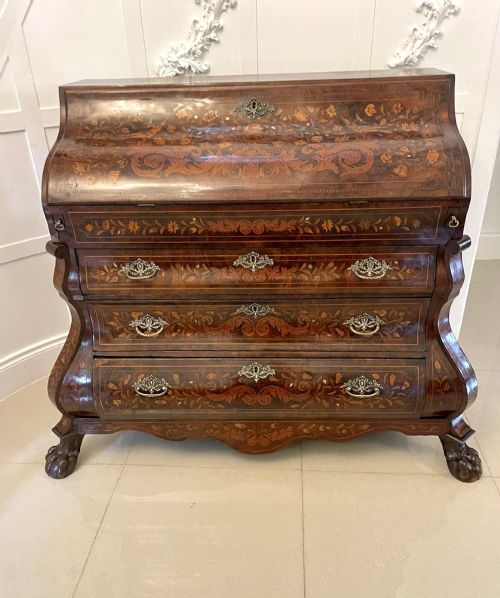
Origins include English workshops alongside continental makers, encompassing Dutch baroque influences and floral marquetry inlay. These objects combine storage for correspondence with dedicated writing surfaces, utilising the rich figuring of burr walnut timber across bureau desks and cabinet doors.
Materials and construction
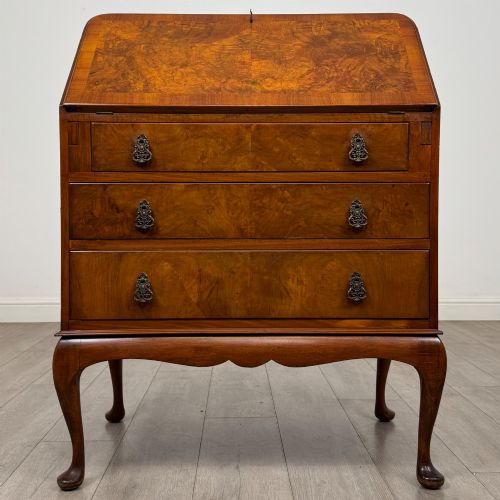
Cabinet makers utilised burr walnut veneers applied over solid secondary timbers such as oak, creating striking patterns across large flat surfaces. Featherbanding and herringbone stringing frequently frame the drawer fronts and doors of earlier pieces.
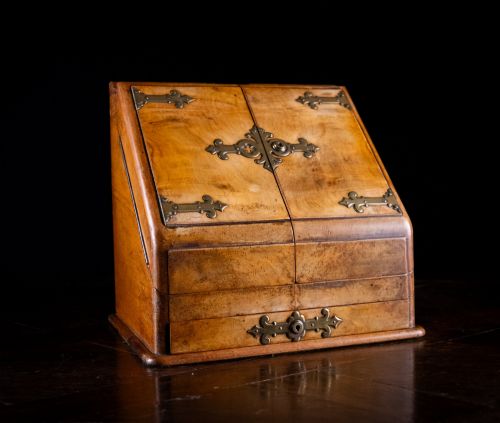
Brass hardware, including escutcheons, hinges and drop handles, provides functional contrast to the dark timber. Leather inserts appear on writing surfaces, whilst glass panels feature in the doors of tall bureau bookcases.
Ebonised wood and mirror glass occasionally accent the primary walnut structure, particularly in nineteenth-century interpretations. Marquetry inlay employing floral motifs demonstrates meticulous hand-cutting techniques across seventeenth- and eighteenth-century examples.
Listings feature burr walnut pieces spanning the seventeenth, eighteenth, nineteenth and twentieth centuries, alongside materials including brass, oak, ebonised wood and leather.
Judging quality and execution
The hierarchy of quality rests primarily on the selection and matching of the burr walnut veneer. Superior examples display symmetrical grain patterns that wrap continuously across drawer fronts and fall-front panels.
Internal architecture dictates the grade of a bureau or desk cabinet. Finely fitted compartments, secret drawers and well-executed pigeonholes distinguish ambitious commissions from standard commercial production.
The integrity of secondary timbers and the crispness of marquetry or featherbanding separate master workshops from later provincial copyists. Original brass furniture and undisturbed timber patination elevate an individual piece.
Gillow and Co
The Burr Walnut Desk Cabinet Glossary
- Burr walnut
- A veneer sliced from the grotesque growths on walnut trees, prized for its swirling, highly figured grain patterns. It creates a rich, mottled surface texture on cabinet fronts.
- Bureau bookcase
- A dual-purpose piece featuring a sloping writing flap above drawers, surmounted by a glazed or panel-doored bookcase top. These tall structures dominate seventeenth- and eighteenth-century production.
- Featherbanding
- A type of inlay consisting of small diagonal strips of veneer arranged in a herringbone or chevron pattern. It typically borders drawer edges on walnut furniture.
- Escritoire
- A tall writing cabinet, sometimes known as a secretaire, featuring a fall-front writing surface that conceals internal compartments. Early examples often rest on stand bases.
- Davenport
- A compact Victorian writing desk featuring a sloping top and side drawers. Lift-up stationery compartments and pull-out writing slides are common characteristics.
Burr Walnut Desk Cabinet: Frequently Asked Questions
How do I identify a George I bureau bookcase?
George I pieces, dating from the early eighteenth century, generally exhibit restrained architectural proportions with double-dome or arched tops. They frequently employ exceptional figured walnut veneers enhanced by delicate herringbone stringing.
The lower section houses a fitted bureau interior whilst the upper cabinet contains adjustable shelving behind mirrored or glazed doors. Candle slides often pull out directly beneath the upper doors to illuminate the workspace.
Are stationery cabinets separate from desks?
Desktop stationery cabinets are portable boxes designed to hold writing paper, envelopes and inkwells, often featuring sloping lids or tambour doors. They function independently as tabletop accessories.
Desk cabinets integrate this storage directly into larger writing furniture or combine with compact writing surfaces. Both forms utilise burr walnut veneers to match larger library and parlour furnishings.
How should I care for burr walnut furniture?
Burr walnut requires stable environmental conditions away from direct heat sources and strong sunlight to prevent the veneer from lifting or drying out. Consistent indoor humidity protects the underlying timber and secondary woods.
Periodic application of appropriate wax polish maintains the lustre of the finish. Avoid excessive moisture and abrasive cleaners on antique polished surfaces.