

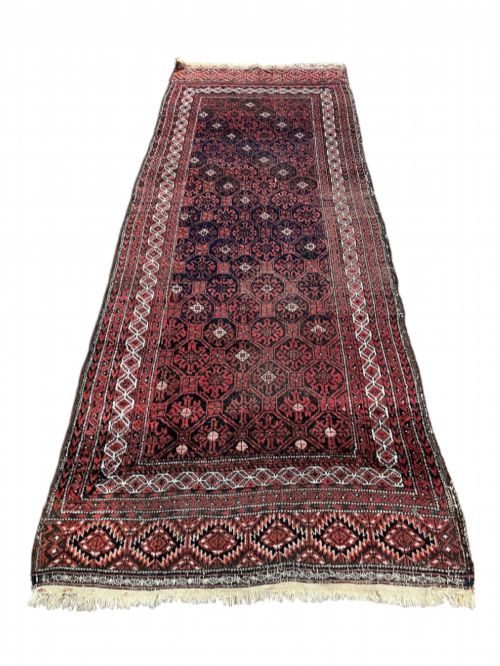
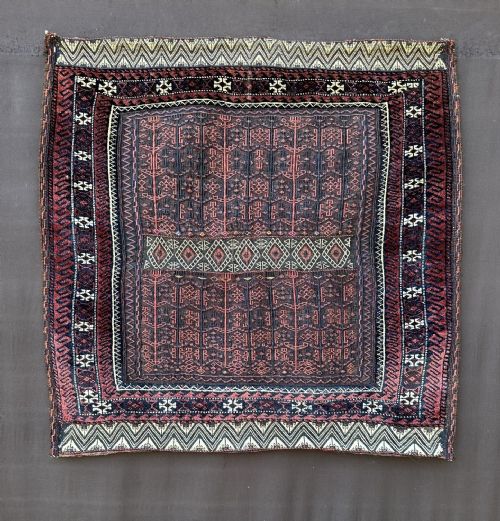


Burgundy Tribal Rug
A burgundy tribal rug brings the rich tones and geometric mastery of Central Asian weaving directly into modern spaces.
Burgundy Tribal Rug
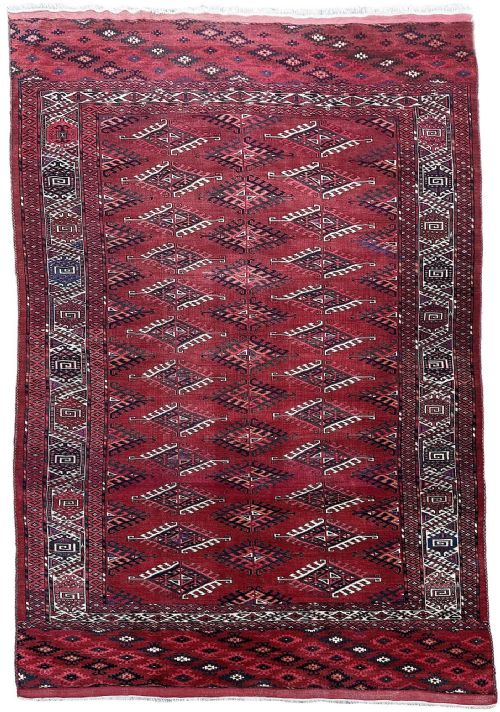
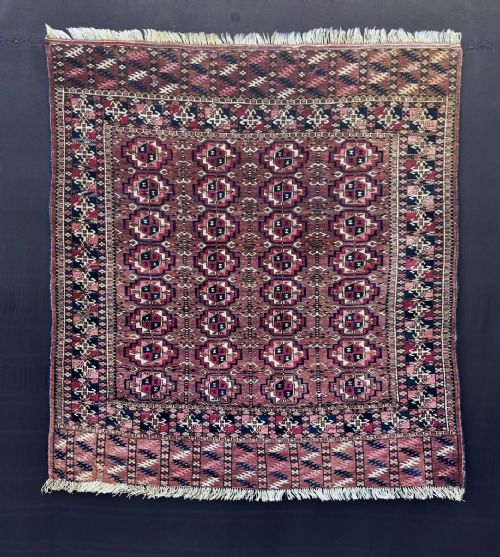
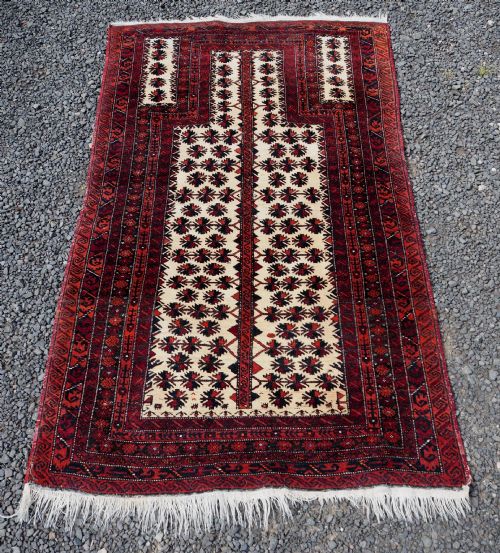
A burgundy tribal rug encompasses hand-knotted and flat-woven pieces originating from nomadic and village traditions across Central Asia and Persia. These textiles include utilitarian forms such as prayer rugs, runners, dowry bags, tent bands, and main carpets created by groups like the Yomut, Tekke, Saryk, and Baluch. When searching for a burgundy tribal rug, collectors encounter deep madder-dyed textiles spanning the mid-nineteenth to early twentieth centuries.
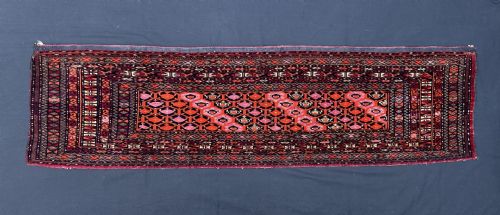
The regional variety within this category reflects specific tribal identities expressed through distinct layouts and field patterns. Pieces range from large carpets featuring repetitive guls to smaller torba faces and asmalyks designed for camel decorations during wedding processions. Each format serves as a primary example of nomadic artistry recorded in the historical record.
Materials and construction
The foundation of these textiles relies heavily on sheep wool, cotton, and occasionally hand-spun wool fibres subjected to natural dyes. Weavers utilised traditional dyeing methods to achieve deep reds and burgundy shades derived from madder and other plant materials, sometimes incorporating silk highlights to accentuate specific motifs. The yarn structure demonstrates a dense, sturdy pile or flat-weave construction designed for endurance.
Techniques vary from symmetrical and asymmetrical knotting to soumak and soumak kilim flat-weaving methods. Artisans completed pieces with plain weave backs, kilim ends, and structural details that ensured stability whether the textile functioned as a floor covering, wall hanging, or storage bag.
Burgundy Tribal Rug Retail Price Guide 2026
Typical asking prices for burgundy tribal rug among the pieces listed under this phrase on Sellingantiques today, from the lower quarter to the upper quarter. They describe what is for sale here now, not the wider market.
Factors determining quality
Knot density and structural fineness separate superior examples from standard village productions. A tightly compressed weave allows intricate geometric designs, such as curled leaves and complex guls, to retain sharp definition.
The depth and brilliance of the natural dyes directly influence visual impact. Superior pieces display rich, saturated colour variations resulting from skilled mordanting and high-grade wool, whereas lesser examples show flat or uneven coloration.
The Burgundy Tribal Rug Glossary
- Gul
- A primary octagonal medallion motif repeated across Turkmen carpets and tent bags. This design element serves as a tribal emblem identifying specific groups.
- Torba
- A small horizontal wall-hanging bag utilised in nomadic tents for storage. These pieces frequently exhibit intricate border work and field patterns.
- Soumak
- A flat-weave technique where coloured weft threads wrap around warp threads in a continuous brocading motion. This method produces a durable, textured surface without a cut pile.
- Asmalyk
- A pentagonal trapping traditionally hung on the flanks of a camel during wedding processions. They display elaborate symbolic designs intended to ward off misfortune.
- Engsi
- A rug featuring a cross-shaped division on the field, traditionally hung over the entrance doorway inside a yurt. These textiles carry specific protective and domestic functions.
Burgundy Tribal Rug: Frequently Asked Questions
How are tribal rugs cleaned?
Maintenance requires gentle surface cleaning and professional textile washing rather than aggressive chemical immersion. Natural wool fibres and vegetable dyes respond best to careful dusting and periodic specialist care.
Avoiding excessive moisture and direct sunlight preserves the structural integrity and colour depth of older weaves over decades of domestic use.
Can I use these rugs on the floor?
Many examples function well as floor coverings in low-traffic areas, while finer torbas and wall hangings suit vertical display. Evaluating the pile thickness and foundation strength helps determine appropriate placement in a home.
Underlays provide additional protection against friction and movement, extending the lifespan of antique flat-weaves and pile carpets alike.
How do I identify tribal motifs?
Motifs typically follow ancestral patterns associated with specific clans, such as repeated guls, prayer mihrabs, and diamond lattices. Comparing structural layouts and border arrangements clarifies tribal attributions.
Literature on Central Asian carpets offers comprehensive visual guides for matching specific field designs to particular weaving groups.