
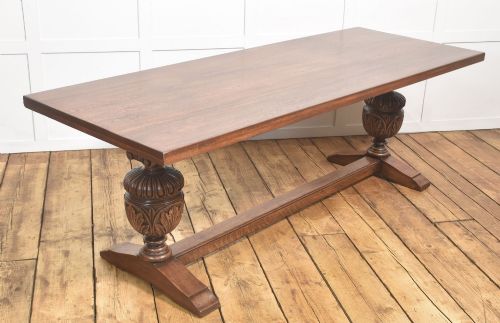
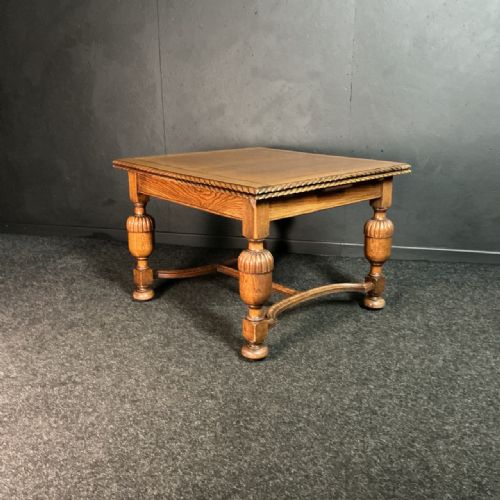
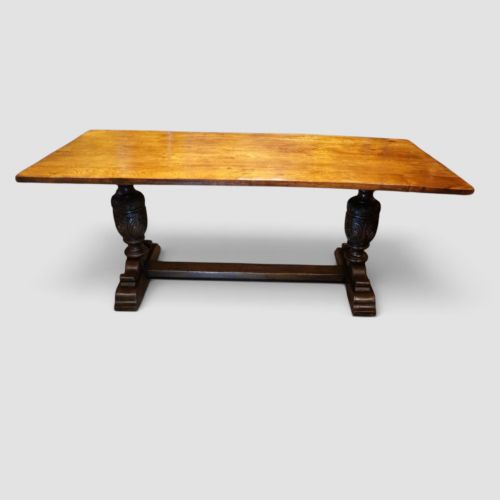
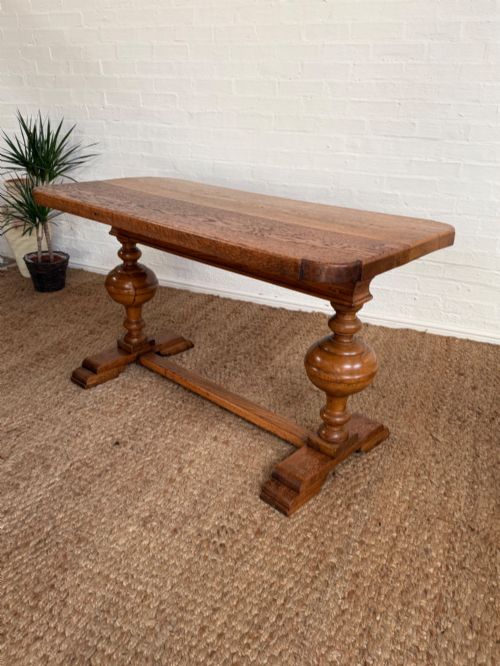


Bulbous Leg Dining Table
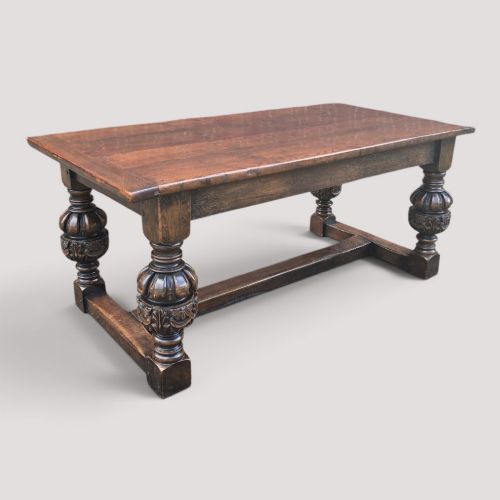
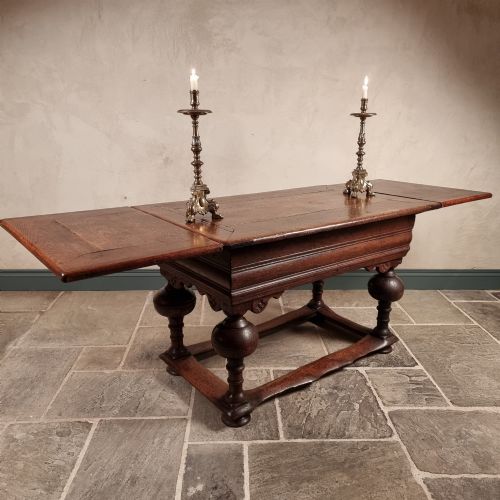
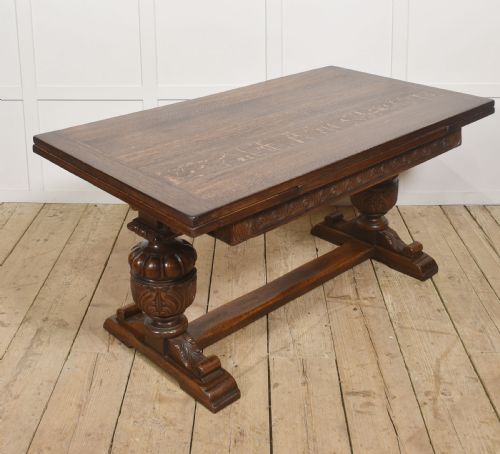
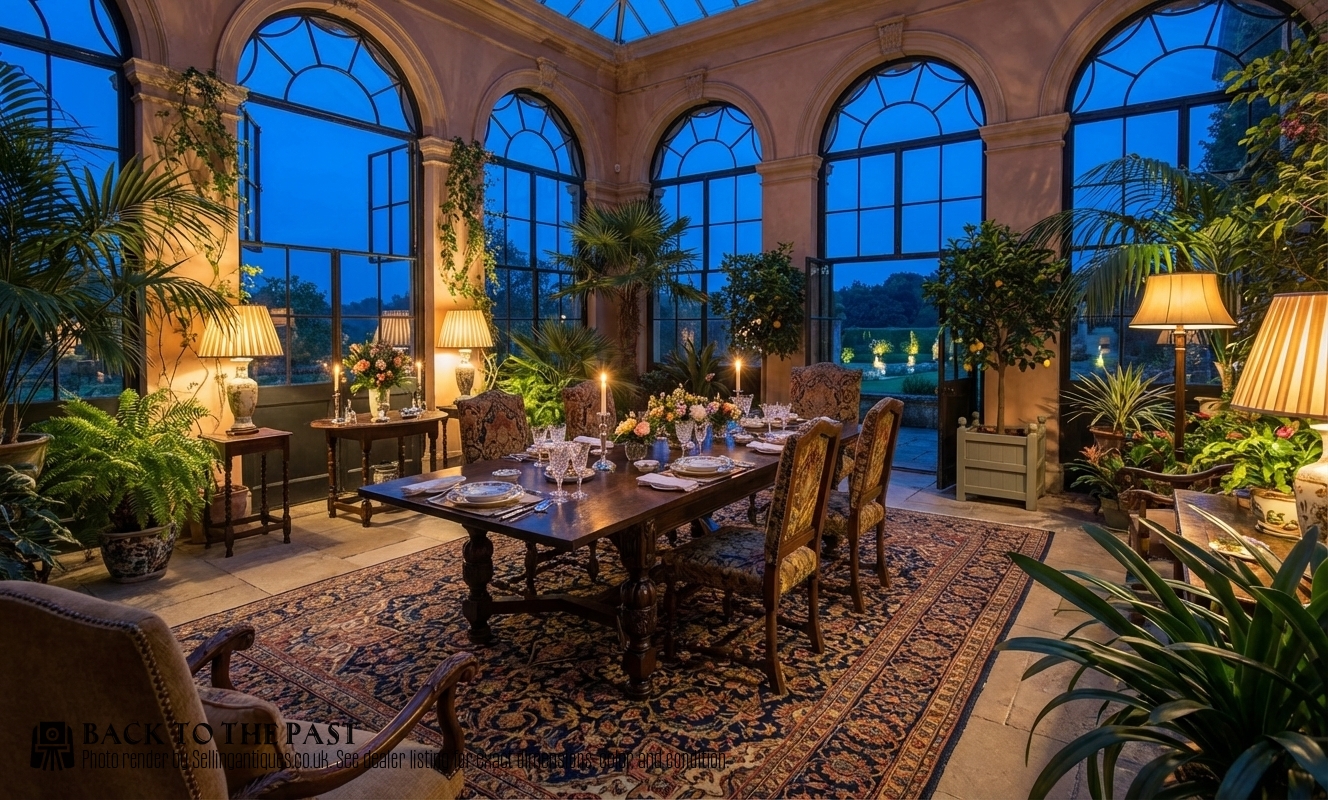
A bulbous leg dining table anchors a room with solid proportions and carved supports that command attention.
What these tables are
A bulbous leg dining table centres around sturdy timbers and pronounced turned supports, providing a robust surface for daily meals. Buyers searching for a bulbous leg dining table find pieces spanning the seventeenth century up to the twentieth century.
The selection on this page demonstrates forms such as refectory tables, draw-leaf tables, and gateleg versions. Origins reach from seventeenth-century Dutch examples through to Jacobean revival, Tudor revival, and Edwardian interpretations.
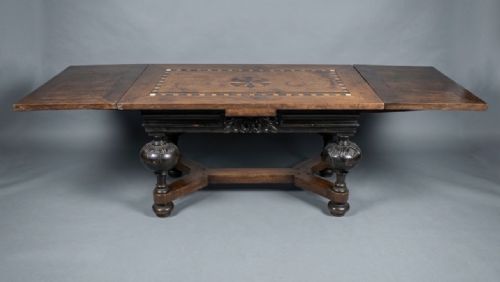
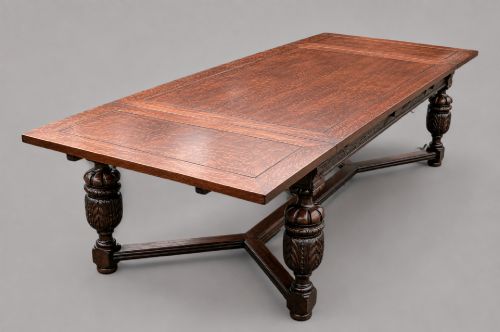
Oak dominates the selection, occasionally enhanced with wood inlay or decorative carving. Extending mechanisms appear frequently, allowing tables to accommodate larger gatherings through pull-out leaves or draw-leaf actions.
How they were made
Construction relies heavily on solid oak, shaped and joined using traditional methods to support heavy dining tops. Carving is applied directly to the timber, particularly on the prominent bulbous legs and skirting boards.
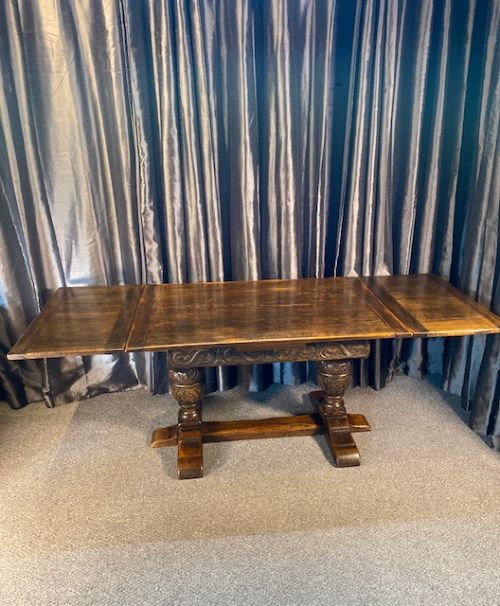
Extension systems utilise sliding draw-leaves or pull-out extensions built into the framework of the table. Inlaid wood details appear on selected pieces, adding contrast to the natural grain of the wood.
Retail Price Guide 2026
Typical UK retail prices for bulbous leg dining table, calculated from the Sellingantiques database of over a million retail prices indexed since 2003. This retail price guide relies exclusively on Sellingantiques data; no external sources or auction records are used, so the figures do not describe the wider market.
Some bulbous legs are stout enough to double as miniature architectural columns.
What varies in quality
Quality rests in the depth and crispness of the carving on the bulbous supports and the structural integrity of the extending mechanisms. Tables with well-executed turning and substantial timber frames command greater attention from discerning buyers.
The choice of oak and the precision of joinery define the longevity of each piece. Finer examples balance decorative carved elements with practical proportions suited for contemporary dining spaces.
Maple and Co
The Bulbous Leg Dining Table Glossary
- Refectory table
- A long dining table traditionally used in monastic refectories and later adopted for domestic dining rooms. These tables feature long wooden tops supported by substantial legs often linked by stretchers.
- Draw-leaf table
- An extending table with two leaves hidden beneath the main top that slide out to lengthen the surface. This mechanism allows the table to expand without removing the central top section.
- Jacobean revival
- A nineteenth and twentieth-century style imitating the heavy, dark oak furniture of the early seventeenth century. Pieces in this style typically display geometric mouldings, strapwork, and turned bulbous legs.
- Gateleg table
- A table with hinged leaves supported by swing-out legs that resemble a opening gate. This design enables the table to fold down compactly when not in use.
Frequently Asked Questions
How do I operate a draw leaf table?
Draw leaf tables utilise hidden leaves tucked underneath the main surface. You simply pull both ends outward to let the leaves slide into place.
This mechanism increases the surface length smoothly while keeping the central boards stable.
What is a refectory dining table?
A refectory table is a long, narrow dining table originally designed for communal dining in monasteries. They feature sturdy wooden construction built to withstand heavy daily use.
Over the centuries, cabinetmakers adapted the form for domestic dining rooms using oak and decorative turnings.
How do I date a carved oak table?
Dating relies on examining the construction methods, tool marks, and stylistic details such as revival styles versus seventeenth-century work. Oak colouration and timber shrinkage also offer clues to age.
Comparing the turning style on the bulbous legs helps distinguish between seventeenth-century originals and later revival pieces.
Can I seat six people comfortably?
Many examples are designed to seat six or more diners, particularly those featuring extending mechanisms or refectory lengths. Pull-out leaves and draw-leaf actions expand the seating capacity.
Checking the overall length and leg placement ensures chairs fit underneath the framework without obstruction.