


Tudor Style Dining Table
These tudor style dining table examples bring robust timber construction and historic Revival character straight into the modern dining room.
Tudor Style Dining Table
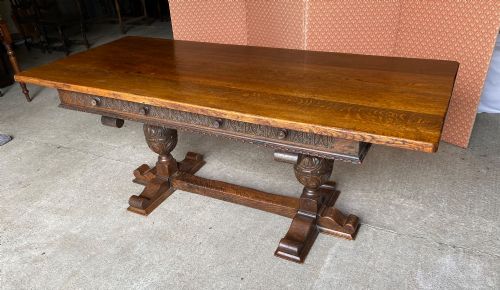
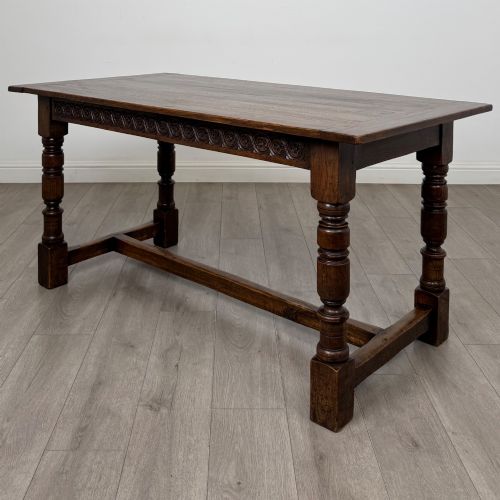
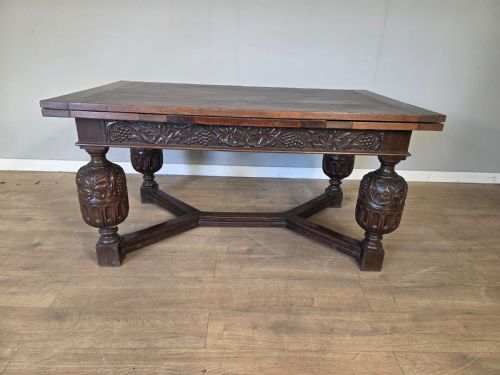
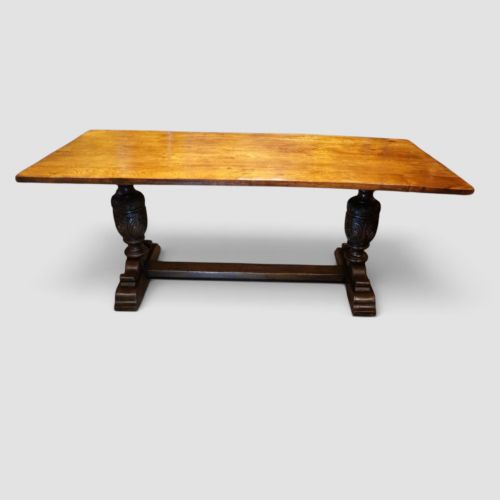
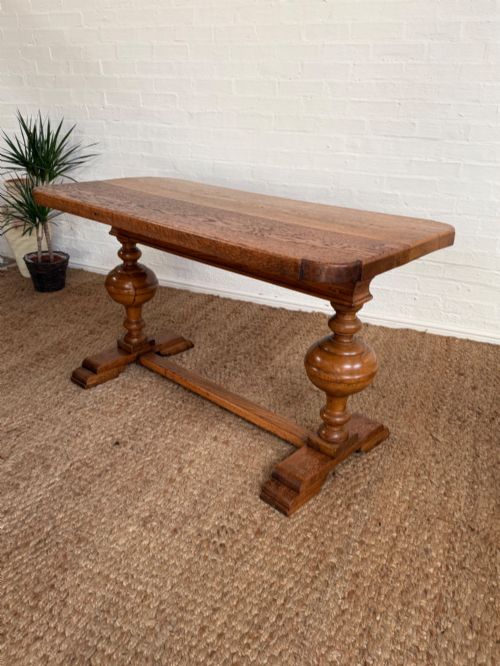
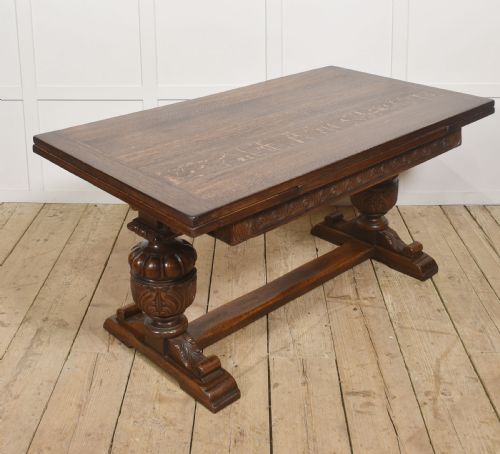
A tudor style dining table is typically a refectory or draw leaf form rooted in Revival aesthetics from the nineteenth and twentieth centuries. These large timber boards and extending formats were built to host substantial gatherings.
You will most commonly encounter twentieth century pieces on this page, spanning the Edwardian era through to the nineteen thirties. These later interpretations lean heavily on Jacobean, Elizabethan, and rustic farmhouse influences.
The heavy frames and stretcher bases replicate earlier centuries while providing practical modern dining utility. Buyers look to these sturdy boards for daily family use and traditional interior schemes.
Assessing quality
Quality rests in the selection of the oak timber and the crispness of any carved ornamentation. Superior examples display dense grain patterns and well proportioned framing that feels balanced rather than clumsy.
The mechanism of extending tables marks a clear division in grade. Smoothly operating draw leaf or pull out extensions demonstrate superior cabinetmaking compared to stiffer, heavier alternatives.
Tudor Style Dining Table Retail Price Guide 2026
Typical asking prices for tudor style dining table among the pieces listed under this phrase on Sellingantiques today, from the lower quarter to the upper quarter. They describe what is for sale here now, not the wider market.
Some extending formats hide their leaves so cleverly that dinner guests might think the table grew by magic.
The Tudor Style Dining Table Glossary
- Refectory table
- A long narrow dining table originally used in monasteries and large houses. These pieces provide ample seating along the length of the board.
- Draw leaf table
- An extending table with leaves stored beneath the main top that pull out from each end. This mechanism lengthens the surface quickly without removing centre sections.
- Stretcher base
- Horizontal wooden bars connecting the lower legs of a table for added stability. They keep heavy frames from wobbling during heavy use.
Tudor Style Dining Table: Frequently Asked Questions
How do I date a modern revival table?
Twentieth century revival pieces often show machine cut components and lighter secondary timbers underneath. Examining the hardware and underside reveals the actual period of manufacture.
Hardware such as modern screws or newer metal runners points directly to a nineteenth or twentieth century date rather than the sixteenth century.
Will a refectory table fit my room?
These tables are built long and narrow, making them suitable for rectangular dining spaces. Measuring your clearance for chairs is essential.
Stretcher bases can sometimes limit legroom underneath, so check the height from the floor to the underside of the apron before seating guests.
How do I care for solid oak?
Solid oak responds best to simple dusting and occasional waxing to nourish the grain. Avoid placing timber near direct heat sources.
Using coasters and placemats protects the polished surface from moisture rings and heat marks while preserving the original finish.
What is a draw leaf extension?
A draw leaf system allows the main surface to remain intact while hidden leaves slide out from beneath. This design keeps the top flat when closed.
Pulling out the leaves increases the seating capacity instantly, which makes these extending formats very practical for hosting dinner parties.