


Brown Wool Runner Carpet
When you search for brown wool runner carpet, you are looking at tribal and village floor coverings shaped by nomadic traditions.
Brown Wool Runner Carpet
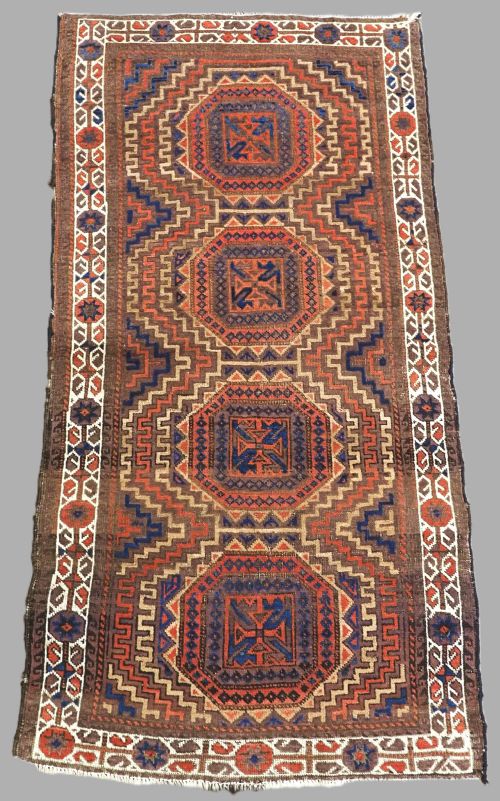
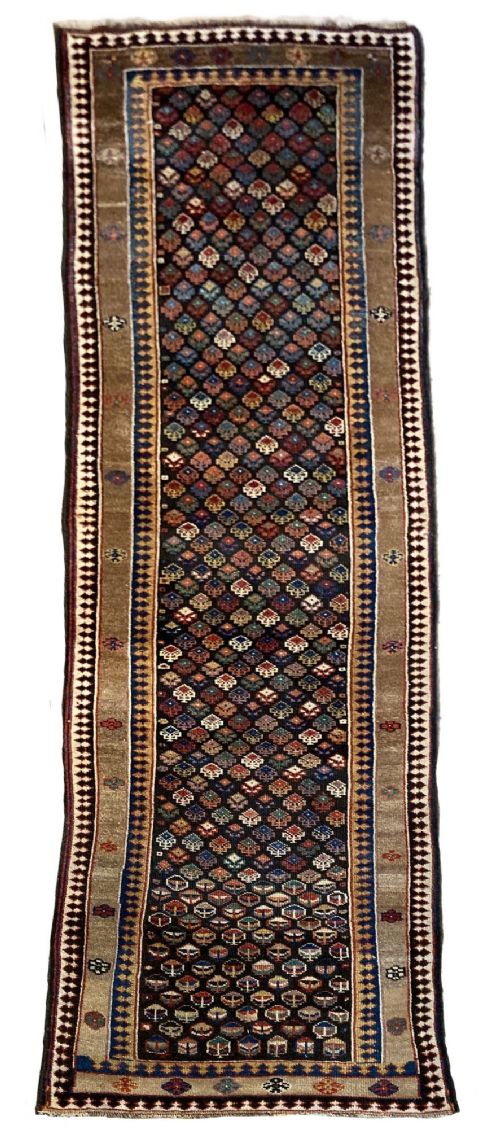
A brown wool runner carpet search directs attention toward elongated tribal formats and nomadic village weaves designed for narrow spaces. These textiles emerge primarily from nineteenth and early twentieth century traditions across Central Asia, Persia, and the Caucasus.
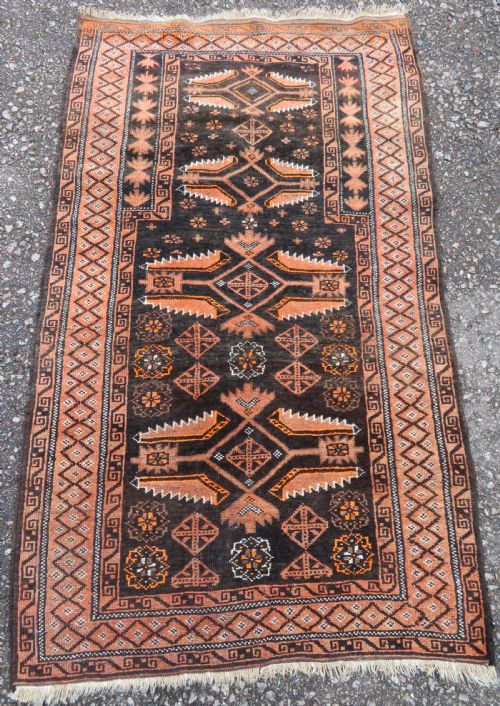
The inventory encompasses runner rugs, hallway runners, kilims, and prayer rugs created by groups such as the Baluch, Turkmen, Kurdish, and Uzbek communities. While the specific search term implies a long format, the available pieces span various regional proportions alongside traditional tribal carpets.
Buyers encounter formats woven in single panels or joined sections, reflecting authentic village production methods intended for utilitarian domestic use rather than formal court display.
How they were made
Production relies heavily on hand-spun wool and camel wool, often reinforced with goat hair for structural durability along the edges. Natural dyes provide the foundational palette, yielding deep earthy tones characteristic of nomadic weaving.
Weavers employ diverse technical methods, ranging from pile weaving with large guls to flat-woven kilim structures and mixed-technique constructions. Yurt rugs and specific runner formats are frequently woven in separate strips and joined subsequently to achieve the desired length.
Several nomadic carpets demonstrate practical ingenuity by being woven in separate strips and joined together to fit narrow spaces.
What varies in quality
Quality rests in the fineness of the weave and the integrity of the materials, distinguishing tightly constructed village pieces from coarser utility items. The handling of hand-spun wool and the depth achieved through natural dyes dictate the visual character of each textile.
Structural preservation and the clarity of regional motifs, such as tribal guls or prayer designs, separate standard examples from superior survivals of nineteenth and early twentieth century weaving.
The Brown Wool Runner Carpet Glossary
- Gul
- A medallion pattern frequently found in Central Asian and tribal carpets. These repeating octagonal motifs often identify specific weaving groups.
- Kilim
- A flat-woven carpet or rug produced without a pile. The technique creates a lightweight textile with identical patterns visible on both sides.
- Mafrash
- A storage bag face or panel originating from Persian and Caucasian tribal groups. These panels are frequently repurposed into smaller flat-woven rugs.
- Prayer rug
- A small rug featuring a mihrab design used to indicate the direction of prayer. These pieces typically display directional arches at one end.
Brown Wool Runner Carpet: Frequently Asked Questions
Where were these rugs made?
These textiles originate from tribal and village communities across Central Asia, Persia, and the Caucasus. Nomadic groups produced them for practical domestic use in tents and dwellings.
Production centres include regions associated with Baluch, Turkmen, Kurdish, and Uzbek weavers, whose distinct cultural designs define the visual language of the pieces.
How do I maintain wool runner carpets?
Regular gentle vacuuming without a rotating brush helps remove embedded grit from the wool pile. Professional cleaning suited to antique textiles preserves the natural fibres.
Keeping the rugs away from prolonged direct sunlight prevents the fading of natural dyes, while breathable underlays protect the foundation during daily use.
What is the difference between a rug and a kilim?
Rugs possess a raised pile created by knotting yarn onto a foundation warp and weft. This construction yields a plush texture and substantial weight.
Kilims are flat-woven without any pile, resulting in a thin, tapestry-like fabric created entirely by tightly interlacing warp and weft threads.
How are tribal motifs identified?
Motifs such as guls, geometric borders, and shrub designs correspond to specific tribal lineages and geographic regions. Collectors study these patterns to trace origins.
Variations in knotting style, structural materials like camel wool or goat hair, and colour palettes further clarify which weaving group produced a given piece.