


Hand Knotted Passage Rug
A hand knotted passage rug brings history and warmth to narrow spaces through enduring craftsmanship.
Hand Knotted Passage Rug
When searching for a hand knotted passage rug, buyers encounter elongated textiles designed specifically for corridors, hallways, and staircases. These pieces originate primarily from Persian and Caucasian weaving traditions, spanning the late nineteenth and early twentieth centuries.
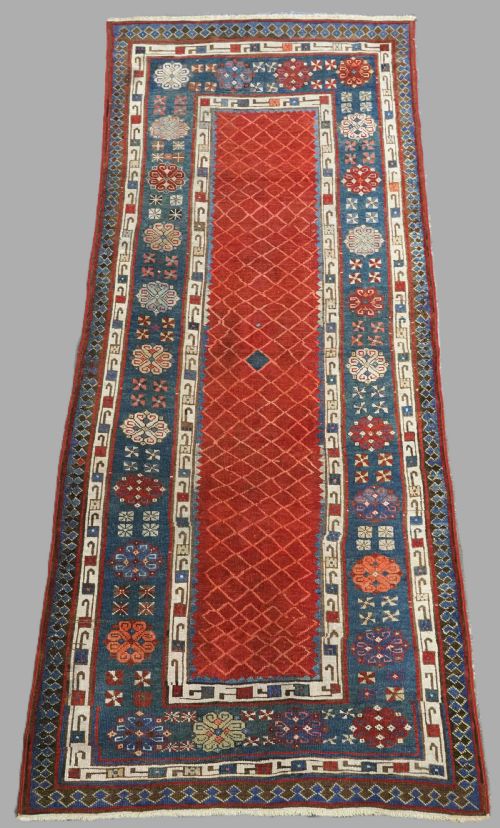
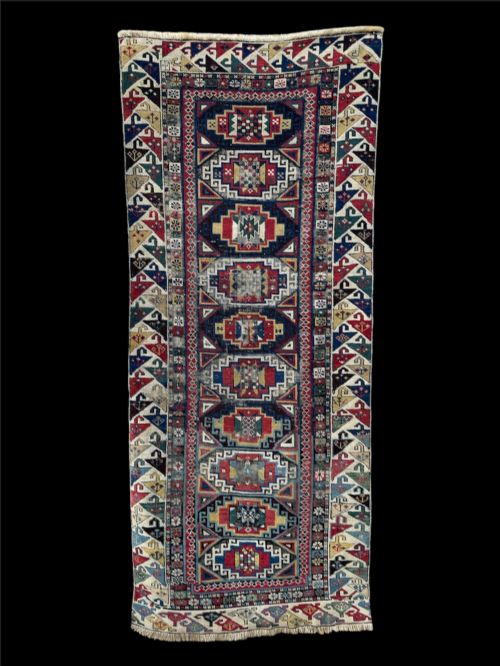
The inventory on this page consists of runners, long rugs, and gallery carpets that utilise traditional village and tribal designs. Common formats include narrow proportions suited to domestic corridors, alongside larger formats from regions such as Heriz, Kurdish areas, and Shirvan.
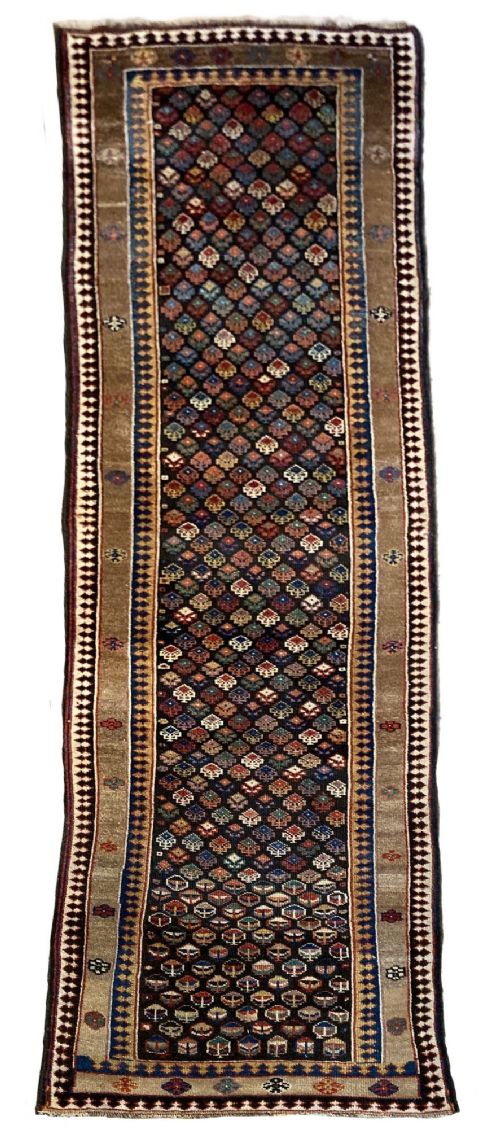
Makers and weavers from these historical workshops produced dense floor coverings using time-honoured techniques. Buyers find examples displaying lattice work, shrub patterns, and geometric motifs characteristic of Persian and Caucasian production.
How they were made
These floor coverings utilise natural wool for the pile, providing resilience underfoot through dense hand-knotting. Cotton typically forms the foundation warps and wefts, giving the long runners structural stability along their narrow frames.
Weavers tied individual knots by hand onto vertical looms, incorporating natural dyes that yielded mellow and saturated colours. The resulting textile balances flexibility with durability, allowing long formats to withstand heavy foot traffic in passages.
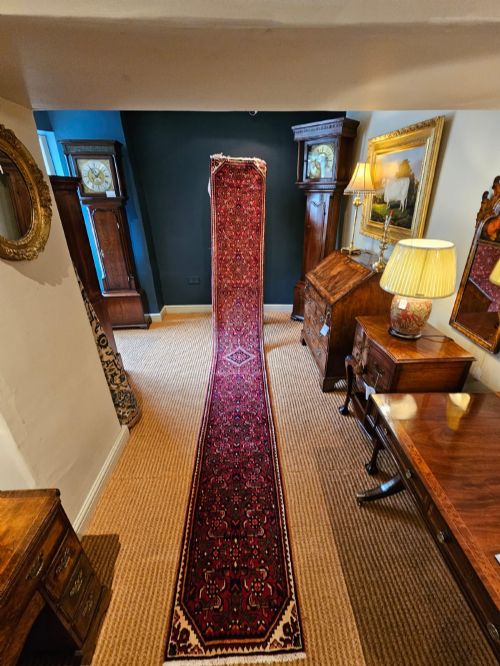
Several runners stretch to immense lengths exceeding seven or twelve metres, designed for grand country house hallways.
What varies in quality
Quality rests upon the fineness of the knotting and the precision of the geometric or floral layout. Tighter construction yields crisper design outlines in traditional motifs like lattice and boteh patterns.
The depth and harmony of the natural dyes distinguish superior examples. Age patination and the preservation of original wool pile across long dimensions elevate the visual appeal of these runners.
The Hand Knotted Passage Rug Glossary
- Runner
- A long, narrow carpet format designed for hallways, staircases, and passages. These pieces measure significantly longer than their width.
- Boteh
- A traditional almond-shaped or paisley motif representing a floral spray or cypress tree. This design appears frequently in Persian and Kurdish village weaving.
- Warps
- The vertical threads stretched across the loom that form the foundational skeleton of the rug. Weavers tie the pile knots directly around these parallel strands.
- Pile
- The dense surface layer of wool fibres standing up from the foundation. The pile absorbs wear and displays the visual pattern of the textile.
- Heriz
- A region in northwest Persia known for producing robust carpets with bold geometric medallions and durable structures. Runners from this area feature distinctive rectilinear drawing.
Hand Knotted Passage Rug: Frequently Asked Questions
Where should I place a long runner?
These narrow textiles fit naturally in hallways, corridors, and narrow entryways where floor warmth and visual interest are needed. They also suit placement along staircases to cushion footsteps.
Their elongated proportions bridge the gap between rooms while protecting wooden flooring in high-traffic areas.
How do I care for antique wool runners?
Regular gentle vacuuming without a rotating brush roll prevents dust accumulation within the wool pile. Professional cleaning suited for antique textiles preserves the natural fibres.
Keep these rugs out of direct, harsh sunlight to maintain the integrity of natural village dyes over decades of use.
What distinguishes Persian from Caucasian runners?
Persian pieces often display curvilinear floral designs, shrub motifs, or structured medallions originating from established weaving towns and tribal regions. Their palettes tend towards deep madder reds, blues, and earthy tones.
Caucasian examples favour sharp geometric lattices, diagonal stripes, and crisp tribal polygons with contrasting ivory or saturated ground colours.
How are nineteenth-century runners constructed?
Traditional makers set up vertical hand-looms using sturdy cotton warps and wefts. Artisans tied each knot by hand before beating down the rows with a heavy comb.
This labour-intensive method created a dense, flat textile capable of enduring generations of domestic passage.