

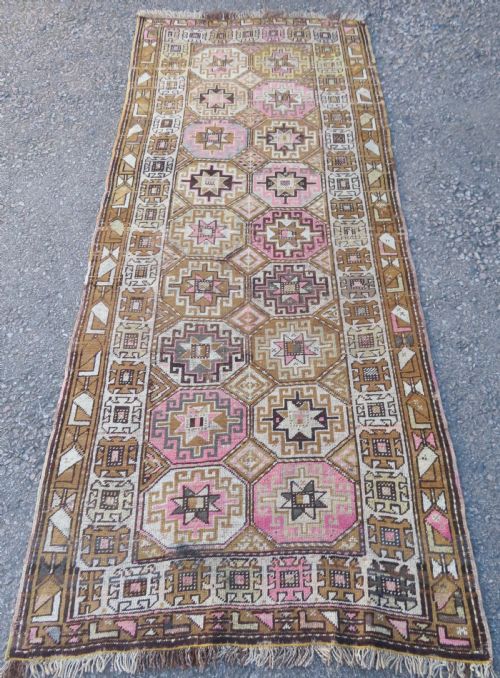
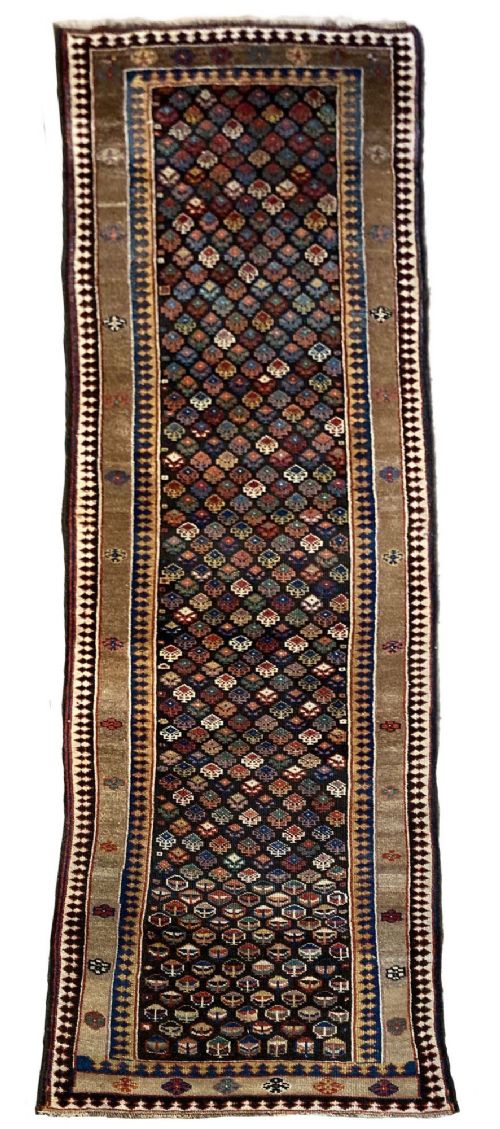


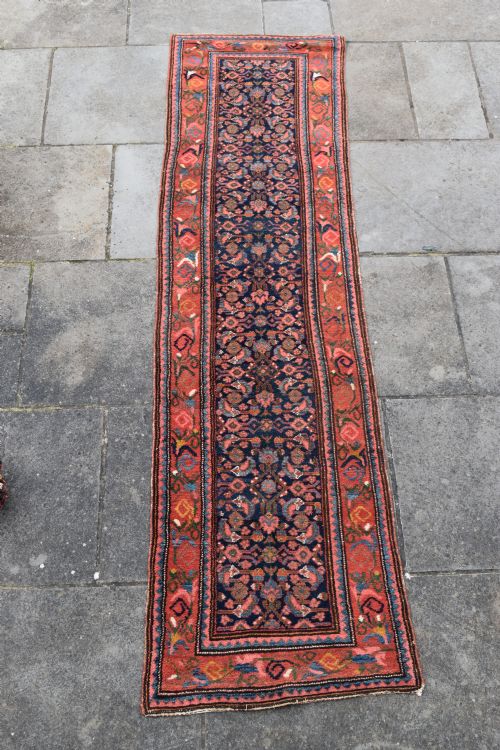


Kurdish Tribal Hall Runner
A Kurdish tribal hall runner brings grounded village character and dense wool underfoot to long spaces.
Kurdish Tribal Hall Runner
A Kurdish tribal hall runner is a long, narrow textile woven by village or nomadic weavers, primarily originating from north-west Persia. These pieces serve to line corridors and hallways, offering robust floor coverings designed for heavy use.
Most examples encountered here date from the late nineteenth century to the early twentieth century. They span styles described as Kurdish tribal, Persian tribal, Bidjar, and Varamin, typically taking the form of narrow runner rugs or long rugs.
How they were made
These textiles rely on handspun wool for the pile and foundation work, sometimes paired with cotton for structural support. The natural resilience of wool gives these narrow runners the density needed to withstand generations of foot traffic in hallways.
Weavers constructed these long carpets using traditional knotting techniques on upright looms, incorporating geometric motifs and stylized patterns such as the Mina Khana design. The resulting fabric is heavy, thick, and physically enduring.
Kurdish Tribal Hall Runner Retail Price Guide 2026
Typical asking prices for kurdish tribal hall runner among the pieces listed under this phrase on Sellingantiques today, from the lower quarter to the upper quarter. They describe what is for sale here now, not the wider market.
Listings span the nineteenth and early twentieth centuries, centring on the decades around nineteen hundred.
What varies in quality
Quality rests in the tightness of the weave and the crispness of the geometric drawing across the long field. Tightly packed wool knots create a firmer handle and a sharper definition in the borders and central medallions.
The sophistication of the palette and the complexity of the border work distinguish finer pieces from simpler village production. Strong structural integrity in the wool foundation ensures the runner lies flat and holds its shape in a hallway.
The Kurdish Tribal Hall Runner Glossary
- Runner
- A long, narrow carpet designed specifically for hallways, corridors, and stairs. These formats guide movement through a home while protecting timber or stone floors.
- Pile
- The upright surface of the rug formed by the ends of knotted yarn. This wool layer absorbs wear and provides the tactile texture underfoot.
- Foundation
- The underlying structure of warp and weft threads that supports the knotted wool pile. Cotton and wool are typical foundation materials in these regional weaves.
- Warp
- The stationary vertical threads stretched onto the loom before weaving begins. The fringe of the rug is usually a continuation of these structural threads.
- Weft
- The horizontal threads passed back and forth across the warp to bind the knots in place. This contributes to the firmness and rigidity of the finished textile.
Kurdish Tribal Hall Runner: Frequently Asked Questions
Where were these runners made?
These textiles originate primarily from the villages and tribal regions of north-west Persia. Weavers in these areas produced robust carpets suited for domestic utility and local trade.
The attribution often connects them to specific regional styles such as Bidjar or Varamin. Each district employed distinct geometric vocabularies and structural methods.
How do I care for a wool runner?
Regular gentle vacuuming without a rotating power brush keeps grit from settling into the wool pile. Professional cleaning should be undertaken periodically by specialists in antique textiles.
Using a quality underlay prevents slipping on smooth hallway floors and reduces friction between the wool foundation and the ground. This simple addition extends the working life of the textile.
Are these rugs durable enough for hallways?
The dense wool construction and tight knotting traditions of these pieces were specifically engineered for high-traffic domestic areas. They handled heavy daily use in nineteenth-century homes and continue to do so today.
The natural lanolin remaining in the traditional wool helps repel surface dirt and resists crushing underfoot. This makes them exceptionally practical for modern corridors.
What patterns appear on these runners?
Geometric repeats, stylized floral motifs, and strong border arrangements dominate the visual structure of these pieces. Patterns like the Mina Khana layout frequently organise the narrow field.
Design elements often reflect the specific tribal heritage and visual traditions of the makers. Variations range from stark tribal geometries to more structured village compositions.