




Brown Wooden Wall Box
A brown wooden wall box brings practical storage off the floor and onto the room boundary, offering timber utility shaped by centuries of domestic habit.
Brown Wooden Wall Box
When you search for a brown wooden wall box, you encounter a variety of hanging receptacles designed to hold salt, candles, spices, or letters within domestic spaces. These pieces span from the 17th century through the Georgian and Victorian eras, reflecting shifting household storage needs.
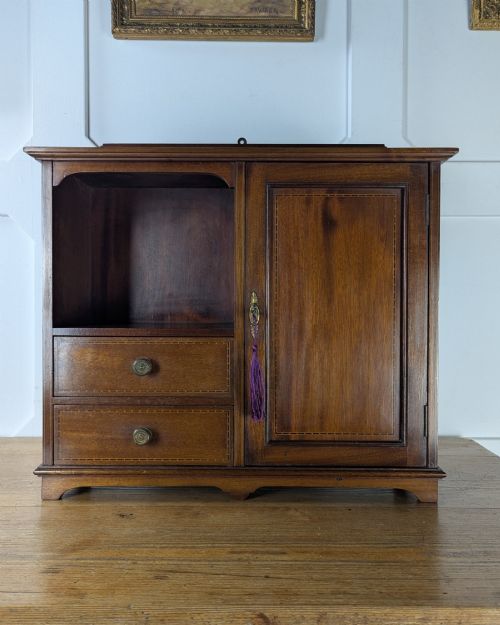
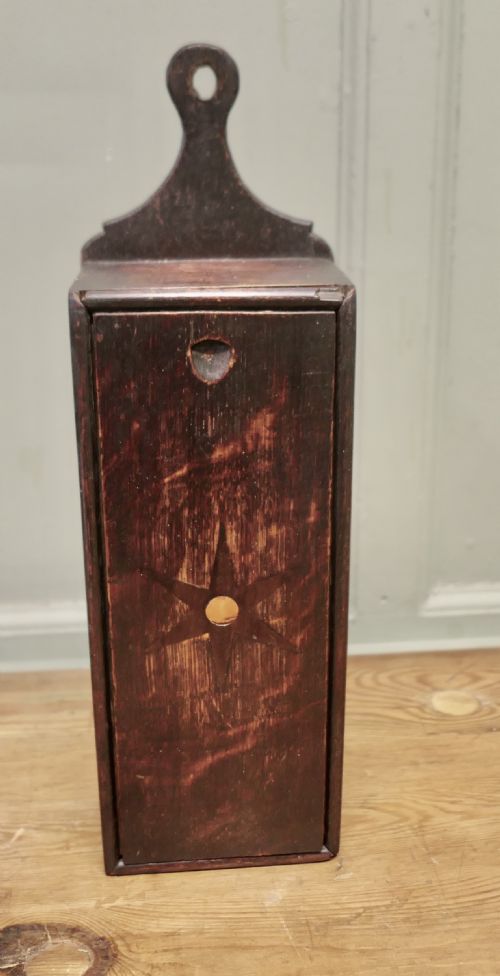
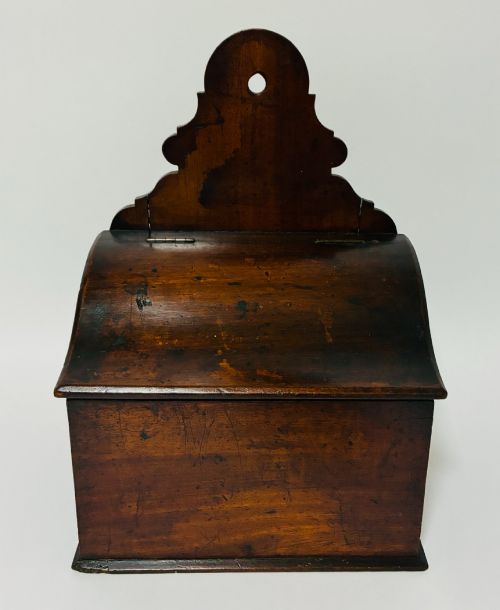
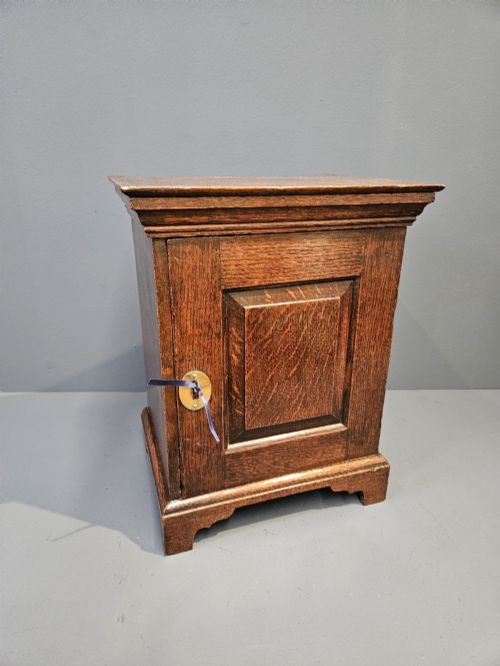
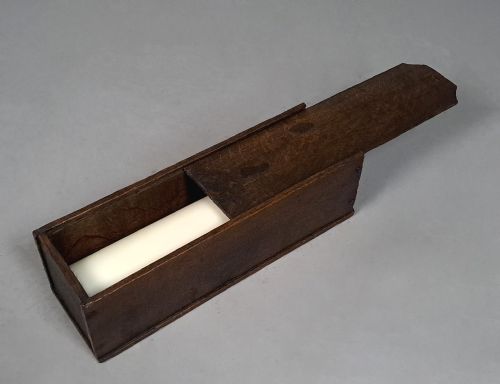
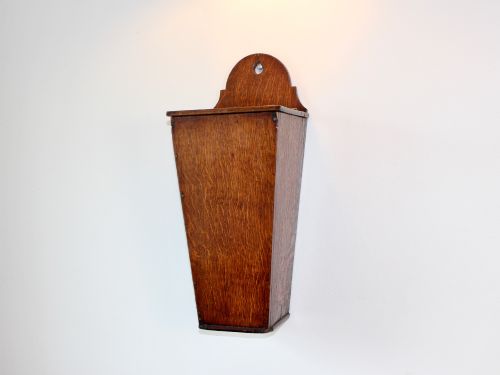
The most frequent examples on this page are oak and mahogany candle boxes and salt boxes, alongside small wall cupboards and spice cabinets. Their forms range from simple tapered rectangular hanging boxes to carved cupboards and glazed display units.
Origins stretch across British, French, Dutch, and wider European traditions, encompassing country vernacular workshop pieces alongside more formal Georgian and Arts and Crafts designs.
How they were made
Construction relies heavily on native hardwoods like oak and mahogany, shaped into panels and joined with traditional carpentry methods. Workshops utilised brass and original iron hardware for hinges, latches, and hanging brackets.
Surface decoration appears through carved detailing, inlayed satinwood, and occasionally traces of early paint or contrasting pine elements. Joinery was built to endure daily domestic handling while mounted securely to plaster or timber walls.
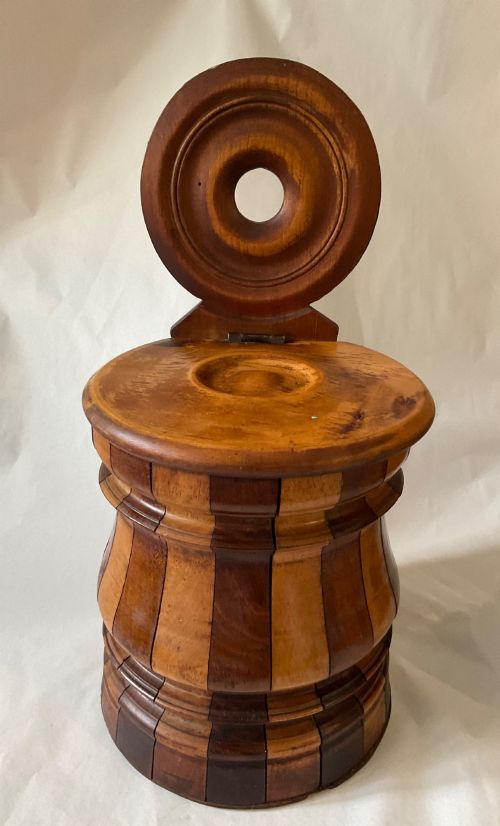
Some salt boxes retain traces of bright red paint beneath generations of kitchen smoke and grease.
What varies in quality
Quality rests in the integrity of the timber selection, the crispness of any carved or inlayed detail, and the retention of original hardware. Well-proportioned forms with honest patination command greater interest than heavily altered or later assembled pieces.
The sophistication of the joinery and the survival of secondary surfaces, such as early red paint traces or original glass panels, separate standard utilitarian containers from finer examples of period craftsmanship.
The Brown Wooden Wall Box Glossary
- Salt box
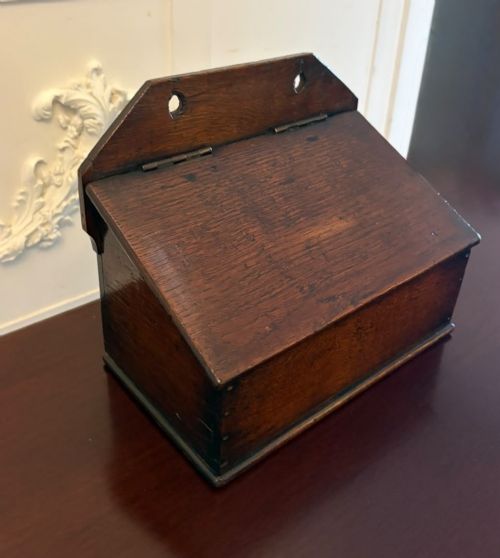
- A wall-mounted container traditionally used to keep salt dry and accessible near a hearth or kitchen workspace. They typically feature a sloping hinged lid and a high back with a hanging hole.
- Candle box
- A narrow rectangular box designed to protect tallow or wax candles from dust and pests. These often display sliding or hinged lids and tapering profiles.
- Spice cupboard
- A small wall cabinet fitted with internal small drawers or shelving to store culinary spices and herbs. They frequently feature panelled or carved doors.
- Treen
- Small handmade wooden household objects created by turners and woodworkers. The term encompasses utilitarian items shaped for domestic service.
- Panetière
- A traditional freestanding or wall-mounted bread store cabinet featuring turned spindles or ventilation slats. Originating in France, they kept loaves safe from household animals.
Brown Wooden Wall Box: Frequently Asked Questions
How were wall boxes mounted?
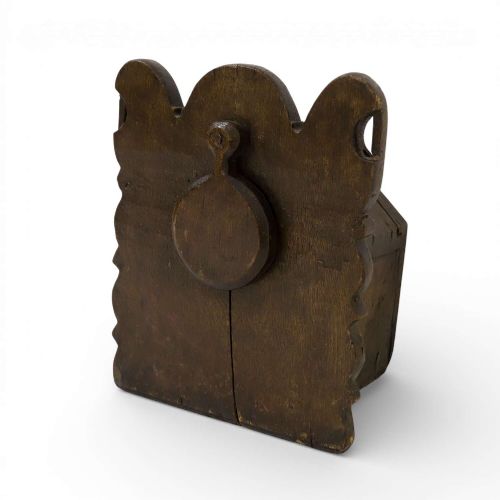
Most period boxes feature a shaped backboard pierced with a hanging hole designed to hook securely over a wall peg or nail.
Heavier cupboards and cabinets rely on internal fixing points or sturdy brackets to distribute weight evenly against the wall surface.
Why do salt boxes have sloping lids?
The sloping top sheds dust and prevents objects from being balanced haphazardly on top of the container in busy kitchens.
This angled form also allowed easy access for a hand or scoop to retrieve salt quickly near the hearth.
Are these boxes strictly for the kitchen?
While many served culinary purposes for salt, spices, and candles, others functioned in hallways for letters and keys.
Their compact wall-hanging nature made them adaptable to bedrooms, parlours, and workshops alike depending on the owner's needs.
How do I care for antique wood?
Keep wooden wall pieces away from direct heat sources and fluctuating humidity to prevent timber splitting and shrinkage.
Occasional dusting with a dry cloth maintains the surface, avoiding heavy modern polishes that build up over historic patination.