
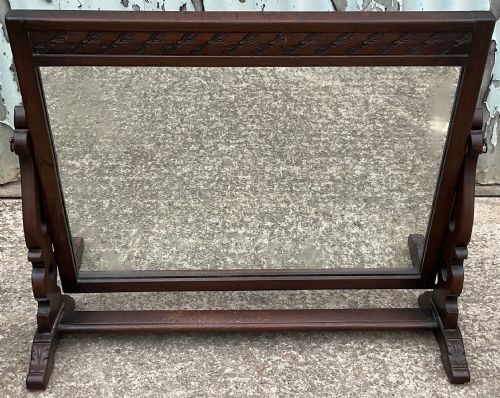


Brown Wooden Standing Mirror
These pieces for a brown wooden standing mirror bring warmth and practical full-length reflection to a room, rooted in nineteenth and early twentieth-century design.
Brown Wooden Standing Mirror
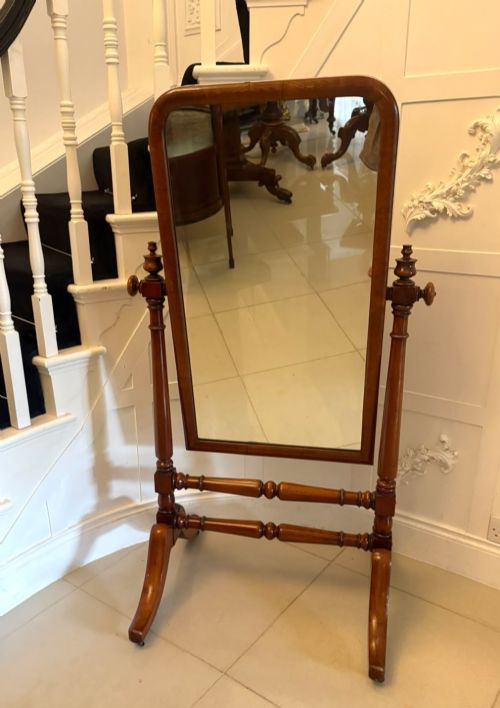
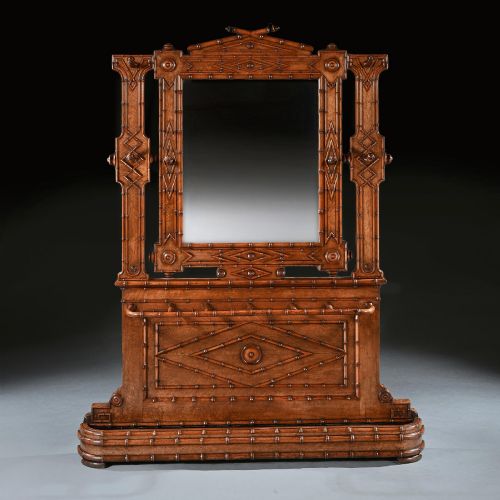
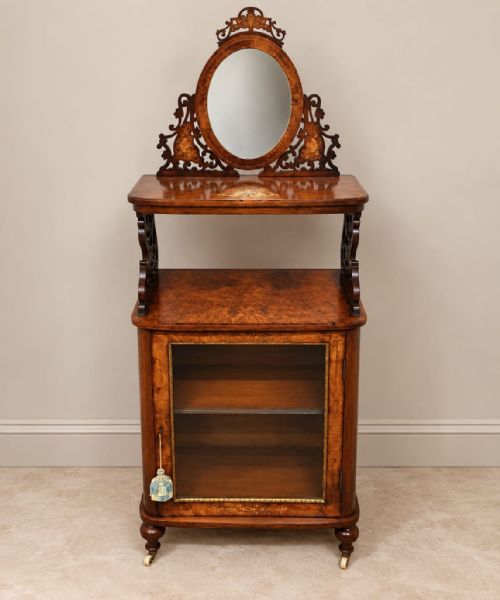
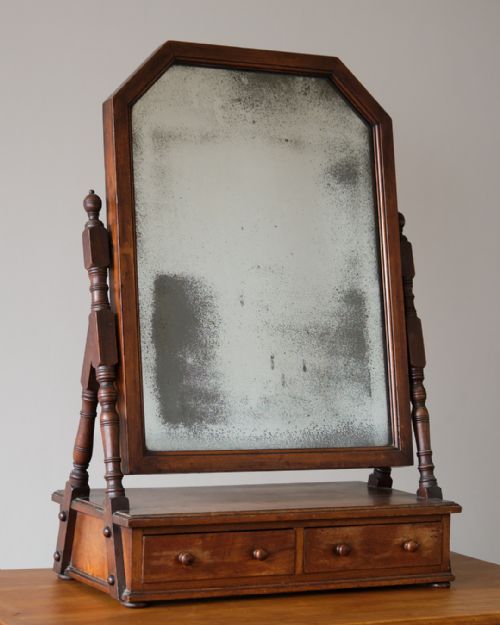
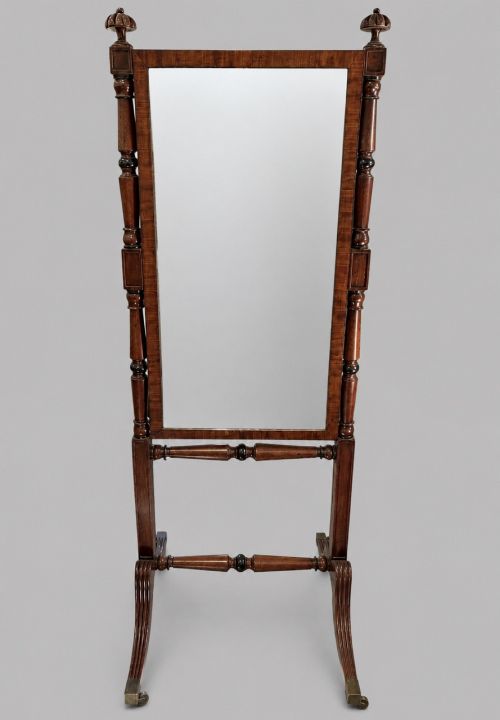
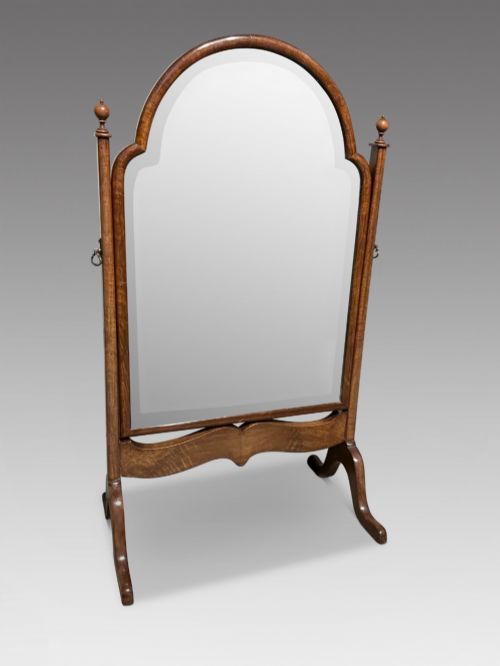
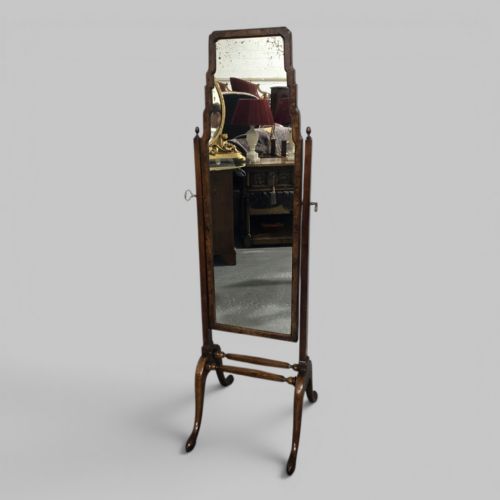
A brown wooden standing mirror provides a movable, full-length or table-height reflection supported by a timber frame, most commonly encountered here as Victorian and Edwardian cheval mirrors or dressing mirrors. These objects range from tall floor-standing pivoting frames in rich mahogany and walnut to compact toilet mirrors designed for tabletops and washstands.
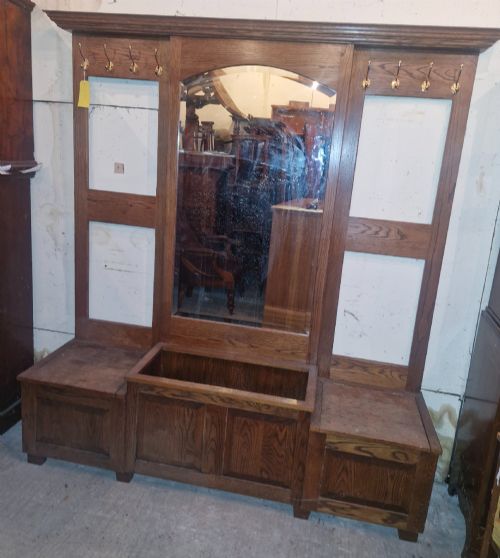
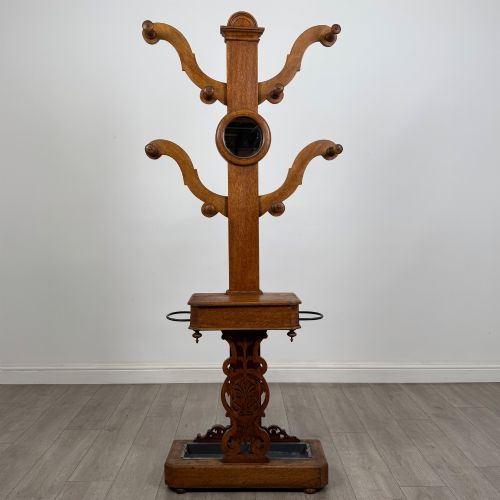
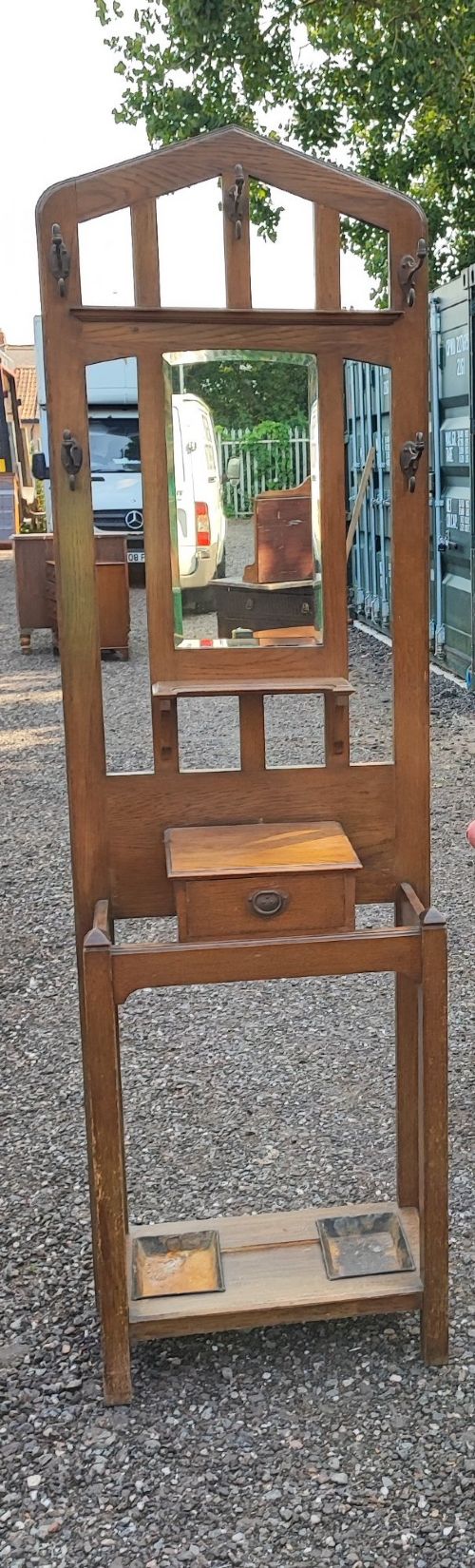
The selection also encompasses multifunctional hall stands and shaving stands incorporating adjustable mirror glass alongside timber storage or coat hooks. Dating principally from the nineteenth century into the early decades of the twentieth century, these wooden pieces draw on periods like the Victorian, Edwardian, and Regency eras.
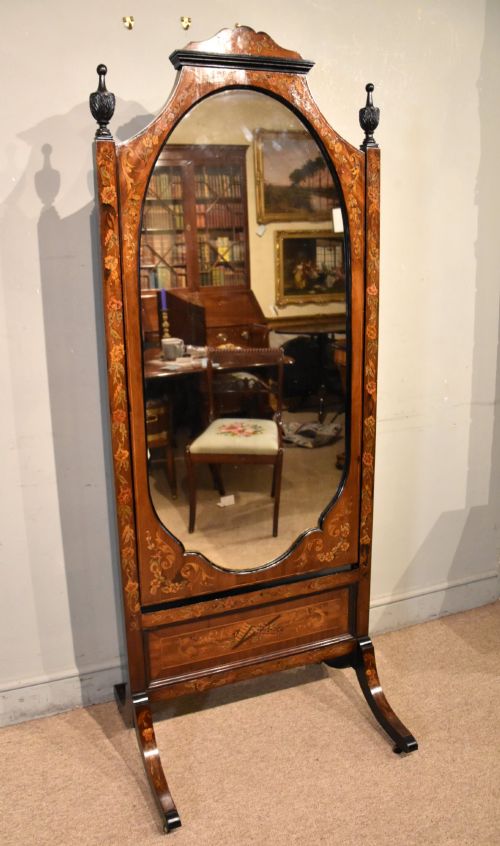
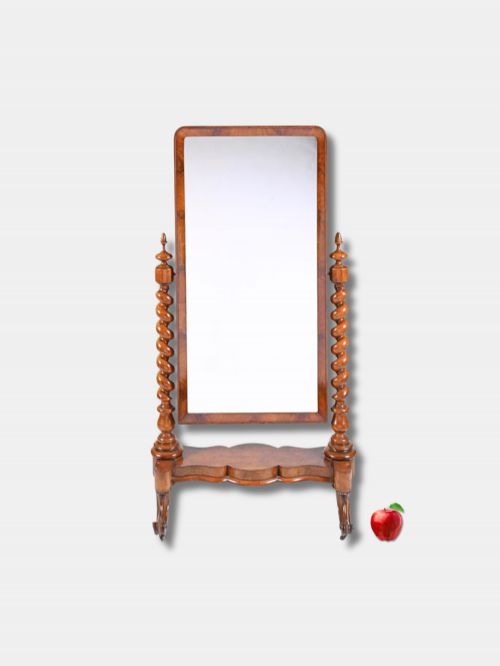
Buyers will find that mahogany and oak form the backbone of the available selection, often complemented by walnut and decorative details such as barley twist supports or inlaid woodwork. Whether utilised in a bedroom for dressing or an entrance hall for a final check before departure, these standing mirrors combine practical utility with traditional cabinet-making.
How they were made
Craftsmen utilised dense hardwoods like mahogany, oak, and walnut, selecting timbers for their rich grain patterns and durability in structural framing. Burr walnut and birdseye maple frequently appear as decorative veneers applied to carcass work, while brass fittings secure the pivoting mechanisms of the mirror plates.
Mirror glass of the period was set into rebated wooden frames and supported by sturdy side standards, often fixed to platforms with scroll feet or heavy trestle bases. Joinery relied on traditional mortise and tenon construction, complemented by hand-carved detailing and turned elements such as barley twist columns.
The furniture selection includes floor-standing cheval mirrors, tabletop dressing glasses, and multi-functional hall stands with integrated mirror plates.
What varies in quality
The distinction between ordinary and superior examples lies in the selection of the timber and the refinement of the cabinet-making. Dense, highly figured mahogany or burr walnut veneers combined with crisp hand-carving and substantial brass hardware elevate a piece far above simpler, plain-timber utility items.
Structural stability also determines quality, particularly in tall standing frames where the weight of the glass places stress on the pivoting side supports. Well-balanced proportions, heavy original mirror glass with minimal foxing, and robust framing ensure the mirror functions smoothly over time.
Heal And Sons·James Shoolbred
The Brown Wooden Standing Mirror Glossary
- Cheval mirror
- A large floor-standing mirror suspended in a frame that allows it to swing or pivot vertically. The name derives from the French word for horse, referencing the four-legged trestle stand.
- Barley twist
- A type of turning resembling a rope or a stalk of barley wound in a spiral. This decorative technique appears frequently on the vertical supports of Victorian stands and mirror frames.
- Shaving stand
- A specialist piece of furniture incorporating an adjustable mirror, small drawers, and sometimes a basin ring. They were designed for gentleman's grooming in bedrooms or dressing rooms.
- Burr walnut
- Timber taken from a tree growth or burl, yielding intricate, swirling grain patterns. It was highly prized for decorative veneer on nineteenth-century furniture.
- Toilet mirror
- A smaller mirror mounted on a small set of drawers or a plinth designed to sit upon a dressing table or washstand. These are also referred to as dressing mirrors.
Brown Wooden Standing Mirror: Frequently Asked Questions
What is a cheval mirror?
A cheval mirror is a tall standing glass frame supported by four legs or a heavy trestle base, designed for full-length viewing. The mirror plate pivots on side pins, allowing the user to tilt the angle.
These pieces were essential bedroom furnishings in the nineteenth century, particularly during the Victorian and Edwardian periods, offering a complete view of attire before stepping out.
How do I date an antique wooden mirror?
Dating relies on examining the timber species, construction methods, fixing screws, and the condition of the mirror glass itself. Victorian pieces often utilise solid mahogany or walnut with hand-turned supports and brass hardware.
Later Edwardian and early twentieth-century examples may display lighter oak frames or machine-cut elements while retaining traditional mortise and tenon joinery.
Are these mirrors adjustable?
Most standing and table mirrors from this era feature side pivots or thumb screws that allow the glass to tilt. This mechanism lets the user adjust the viewing angle to suit their height.
Over time, the brass hardware may need minor tightening to hold the heavy glass securely in the desired position without slipping.
Where were these pieces used in the home?
Cheval and dressing mirrors traditionally stood in bedrooms or dressing rooms to assist with daily grooming and selecting attire. Smaller toilet mirrors sat atop washstands or chests of drawers.
In addition to bedrooms, hall stands combined standing mirrors with coat hooks and umbrella racks to serve guests right inside the front entrance.