

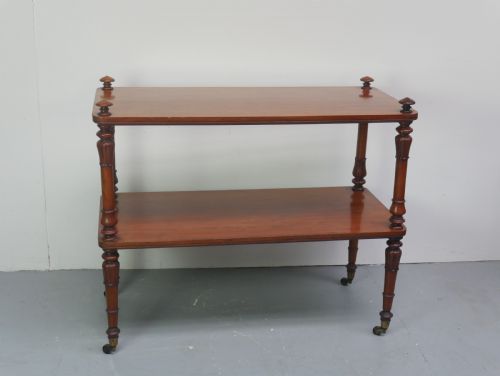
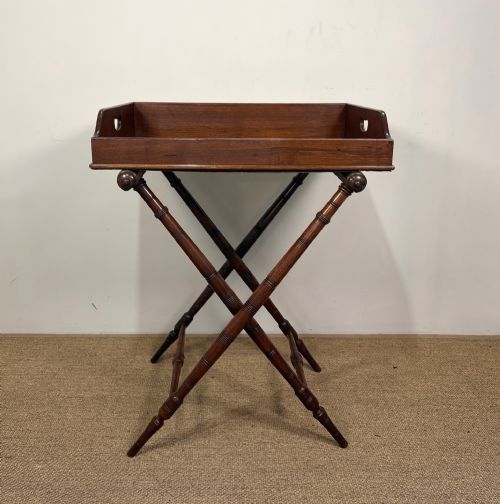


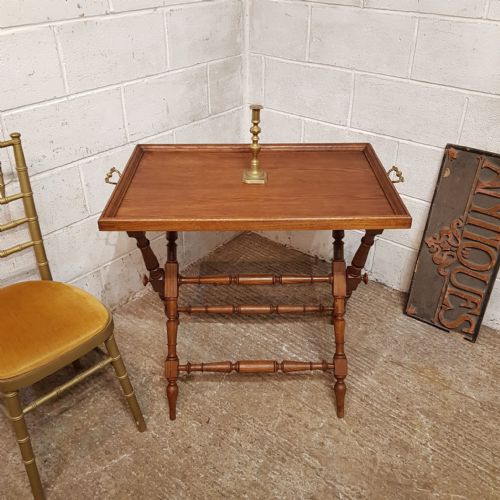

Brown Wooden Serving Tray
A brown wooden serving tray brings tangible warmth and utility to a room, offering a durable surface for afternoon tea or drinks.
What these pieces are
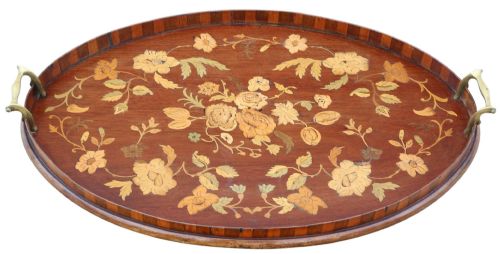
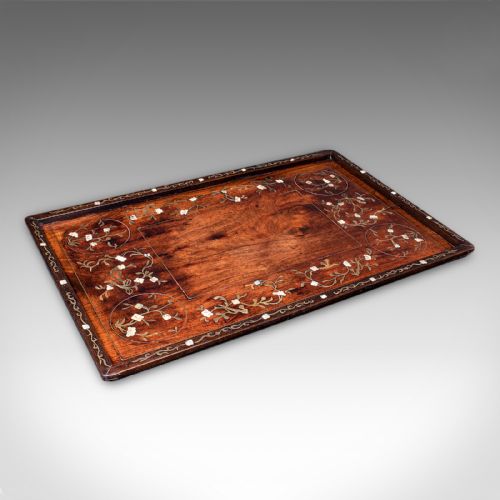
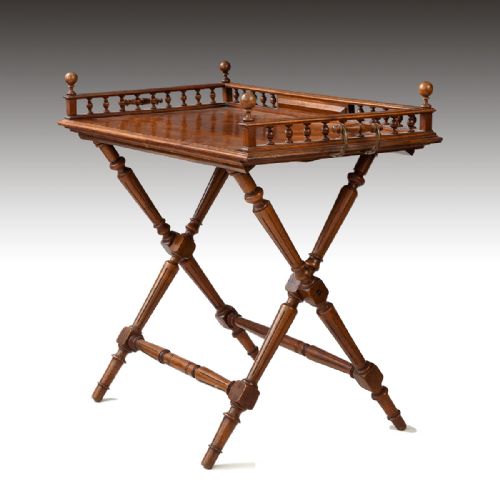
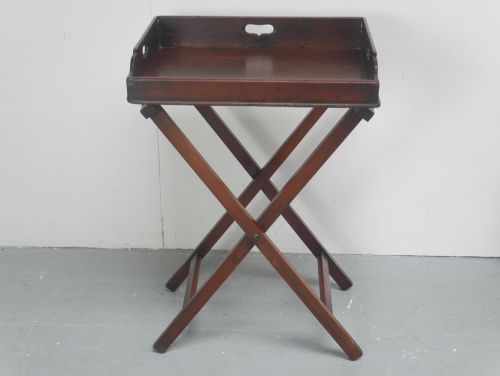
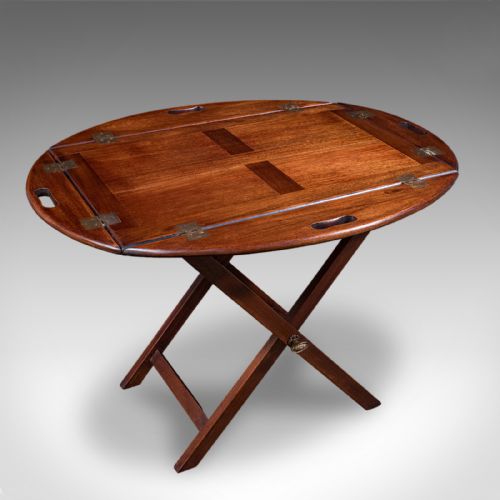
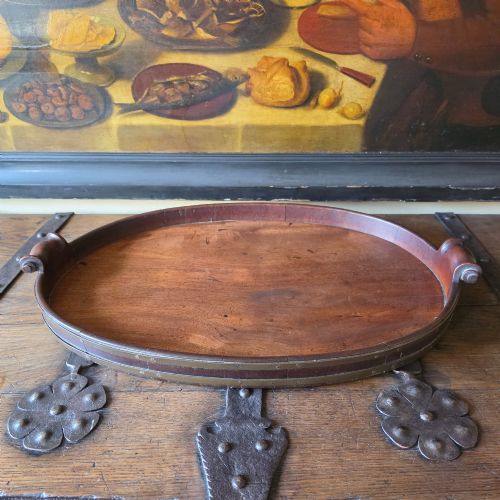
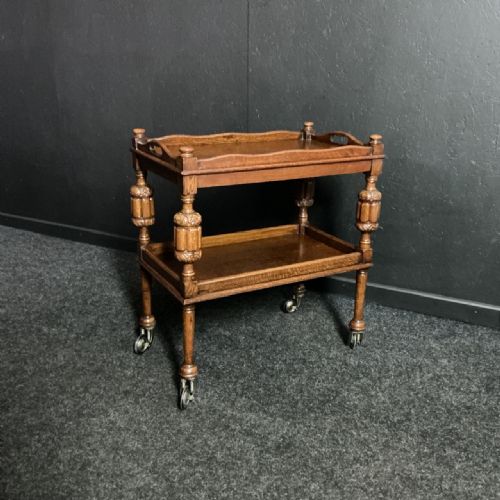
A brown wooden serving tray unites practicality with period craftsmanship, appearing in forms from simple afternoon tea platters to glass-bottomed drinks trays. When searching for a brown wooden serving tray, buyers encounter pieces spanning the Regency, Victorian, and Edwardian eras through to the Art Deco period. These serving trays and platters reflect the domestic habits of their respective decades, utilising various timber species to create functional decorative objects.
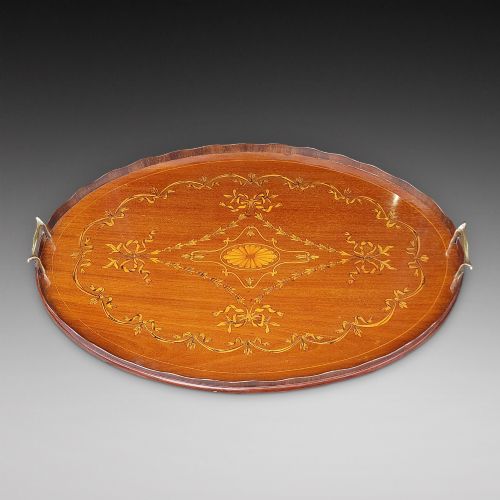
The selection on this page demonstrates considerable variety in origin and aesthetic, ranging from geometric Edwardian inlaid designs to exotic 1930s Brazilian butterfly trays. Early nineteenth-century examples sit alongside later Georgian Revival interpretations, showing how traditional forms persisted well into the twentieth century. Each brown wooden serving tray serves as a surviving domestic artefact from eras that valued both hospitality and fine cabinet-making.
How they were made
Cabinet-makers constructed these objects using a foundation of solid timber such as mahogany, walnut, or satinwood, often enhanced with wood veneer or oyster veneering. Workshops employed precise joinery to ensure the base boards remained stable within the surrounding raised rims. Handles were frequently integrated into the wooden framework or reinforced with brass fittings to withstand the weight of heavy decanters and glassware.
Decorative surface techniques included intricate marquetry inlay, where contrasting woods created geometric or floral motifs directly onto the field of the tray. Specialised items, such as the 1930s Brazilian butterfly trays, incorporated natural specimens beneath protective glass alongside scenic views. Finished surfaces were polished to highlight the natural grain and deep colour of the underlying wood.
One exceptional tray preserves an entire scenic view of Rio De Janeiro constructed from real Brazilian butterfly wings.
What varies in quality
The distinction between standard domestic wares and superior examples rests upon the selection of timber and the precision of the cabinet-making. Finer trays utilise figured mahogany, rich walnut, or intricate satinwood banding, whereas simpler pieces rely on plain timber planks. The crispness of marquetry inlay and the secure integration of brass mounts further separate utilitarian items from pieces intended for formal display.
Proportion and structural balance also dictate the standing of a tray, with high-quality versions maintaining rigid bases despite decades of handling. The preservation of original polished surfaces without excessive modern intervention preserves the visual depth of the wood. Ultimately, quality is measured by the harmony between decorative ambition and the durability of the wooden construction.
The Brown Wooden Serving Tray Glossary
- Oyster veneering
- Cutting small branches obliquely to produce circular or oval motifs resembling oyster shells, popular in decorative cabinet-making. This technique creates a distinctive repeating pattern across the surface of the wood.
- Marquetry inlay
- The art of applying pieces of veneer to a structure to form decorative patterns, utilising contrasting timbers. Craftsmen meticulously cut these pieces to fit flush within the primary wood.
- Satinwood
- A durable, yellowish timber prized for its lustrous sheen and smooth texture, frequently used for contrasting borders. It adds brightness and visual contrast to darker woods like mahogany.
- Regency
- An English architectural and decorative style spanning the early nineteenth century, characterised by classical restraint and elegance. Pieces from this period often emphasise clean lines and structural clarity.
- Georgian Revival
- A style from the late nineteenth and early twentieth centuries that reinterprets eighteenth-century furniture designs. Makers utilised earlier proportions while applying contemporary manufacturing techniques.
Frequently Asked Questions
How do I clean a wooden tray?
Dust the surface regularly with a soft, dry cloth to prevent dirt accumulation. Avoid using excessive water or chemical cleaners that might damage the polished wood finish.
For stubborn marks, wipe gently with a barely damp cloth and dry immediately. Applying occasional appropriate wax helps maintain the lustre and protects the timber.
Are these trays safe for drinks?
Most antique wooden trays accommodate glasses and teacups perfectly well during normal use. However, prolonged exposure to standing moisture can harm vintage polished surfaces.
Using coasters or placing a protective cloth beneath sweating glassware prevents water rings. Glass-bottomed variations offer additional resistance against liquid spills reaching the underlying wood.
How do I date a wooden tray?
Examine the timber species, construction methods, and decorative styles visible across the piece. Edwardian and Victorian examples often feature distinct inlay patterns and standardised handle placement.
Comparing the overall aesthetic to known period pieces helps narrow down the era. Subtle tool marks on the underside can also indicate whether a tray dates from the nineteenth or twentieth century.
Can I hang a serving tray on the wall?
Many decorative trays, particularly those with pictorial marquetry or scenic views, function well as wall art. Utilising secure, padded brackets ensures the wooden frame bears no undue stress.
Avoid hanging trays in areas subject to direct sunlight or dramatic humidity changes, which can warp the timber. Proper mounting protects both the structural integrity and the decorative surface.