
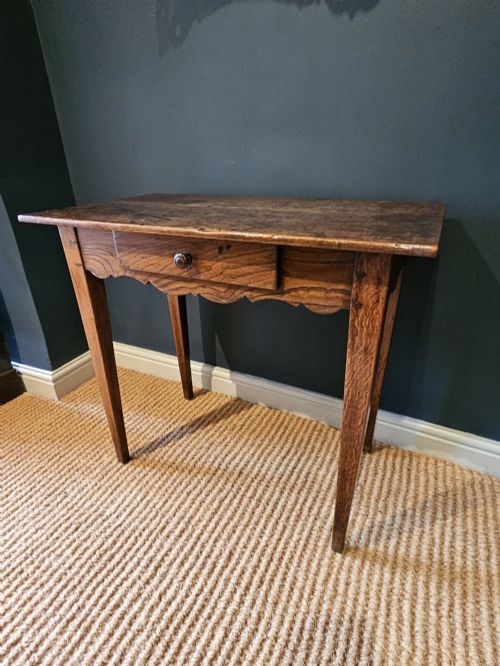
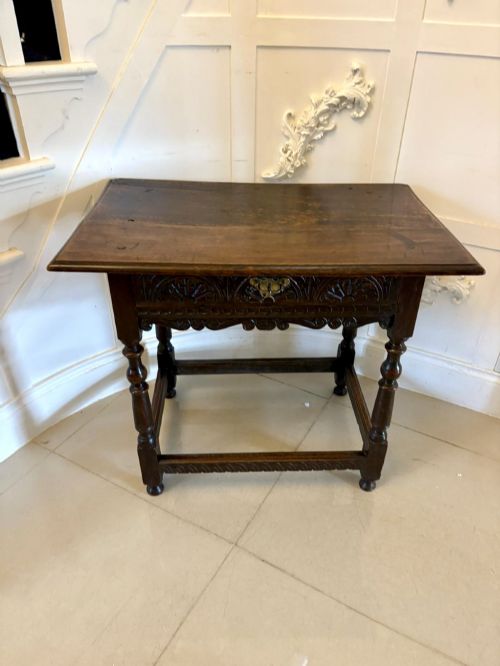
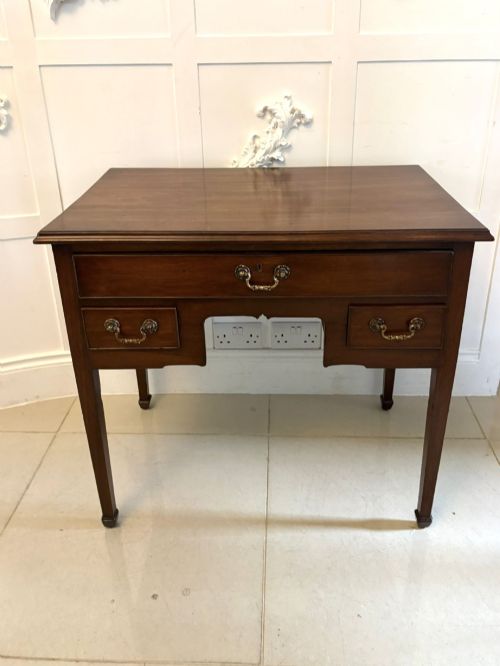
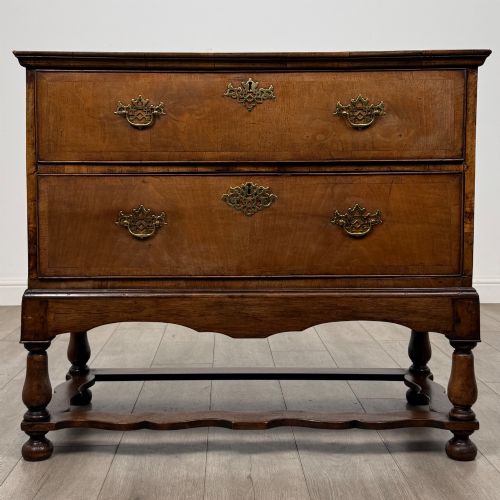
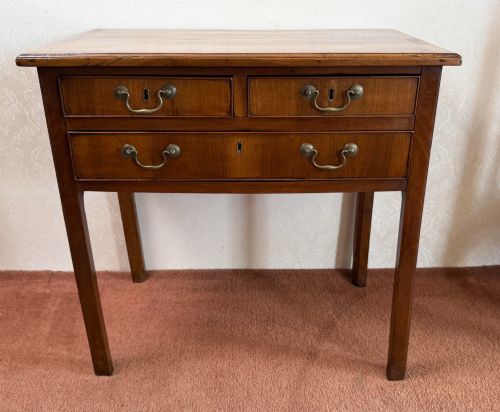
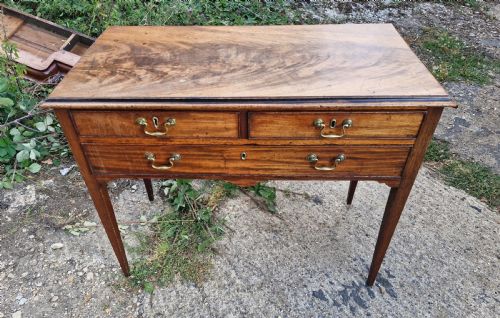
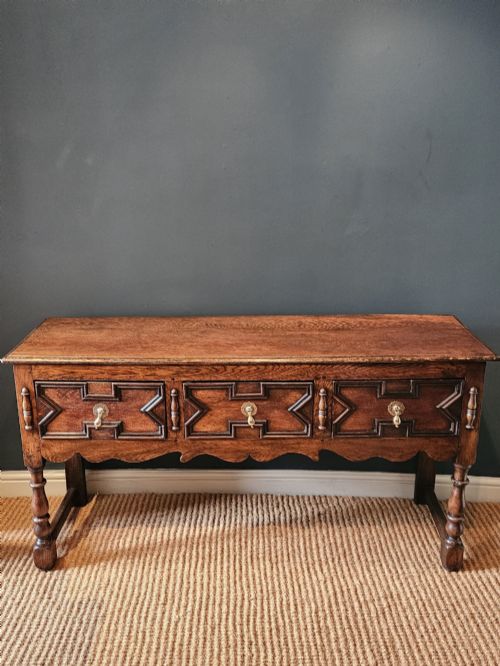
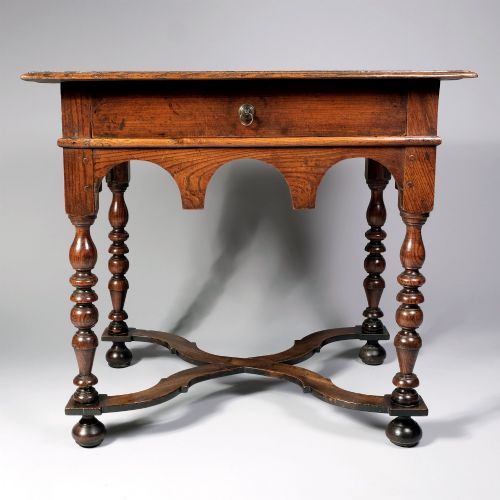
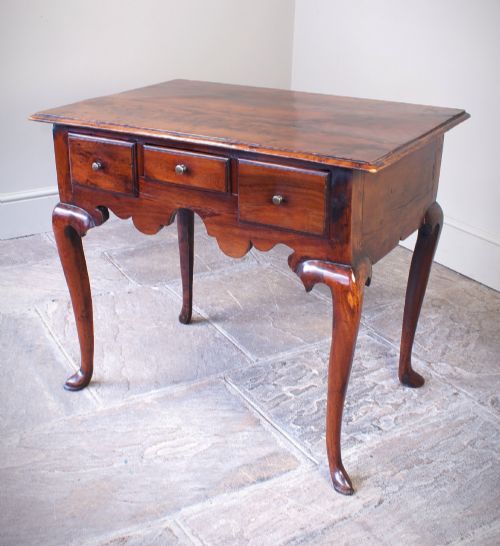
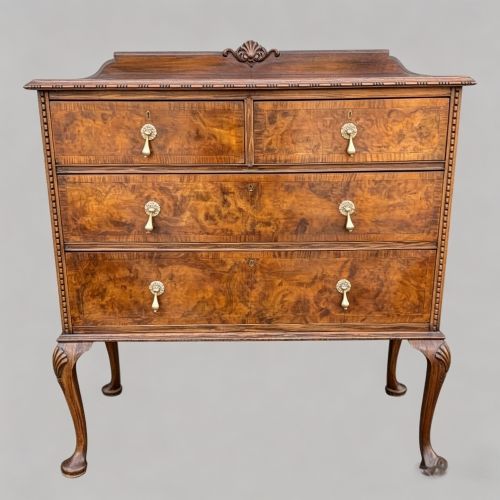


Brown Wooden Lowboy
A brown wooden lowboy is a compact, low table with drawers designed for grooming or writing, offering versatile surface space and traditional craftsmanship.
Brown Wooden Lowboy
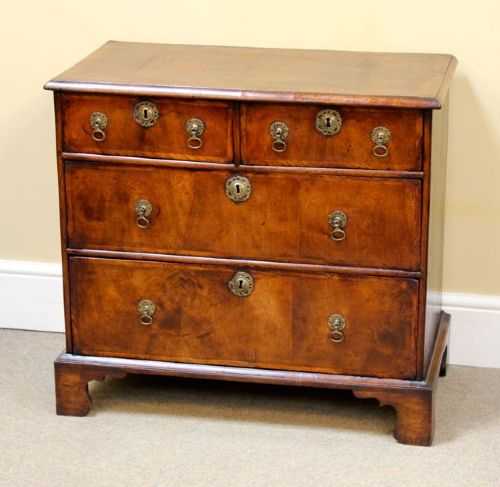
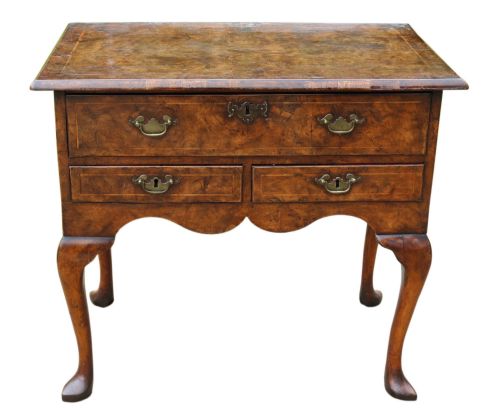
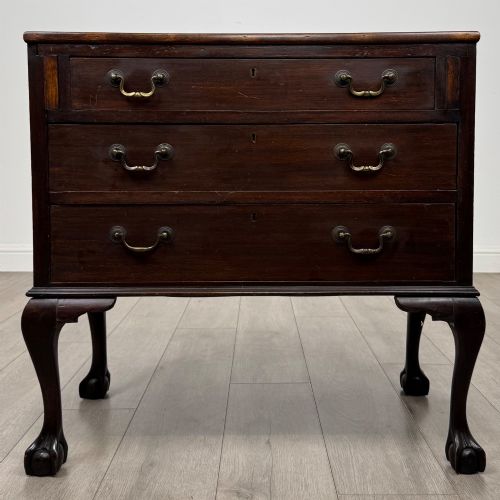
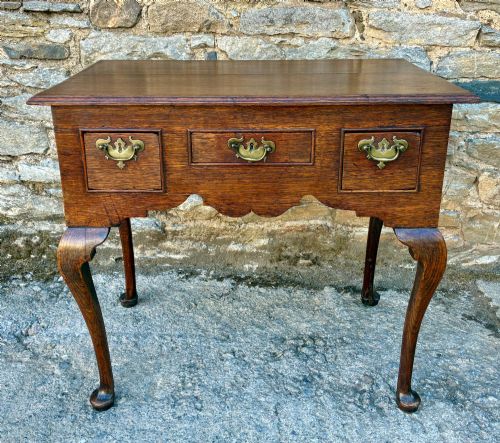
A brown wooden lowboy functions primarily as a small table equipped with drawers, appearing frequently in oak, walnut, and mahogany across Georgian and later periods. These low tables serve utilitarian and decorative roles in traditional interiors, often functioning as dressing tables, writing desks, or side tables.
The pieces grouped under this search span multiple eras, from 17th-century craftsmanship through to Edwardian and revival interpretations. Buyers encounter formats ranging from authentic 18th-century oak and burr elm examples to later mahogany and fruitwood adaptations.
Materials and construction methods
Cabinetmakers utilised native and imported hardwoods, selecting oak, mahogany, walnut, and elm for their durability and grain patterns. Secondary timbers such as pine appear in drawer linings, while brass handles and escutcheons complete the hardware.
Joinery methods rely on traditional hand-cut dovetails for drawer construction and pegged mortise and tenon joints for frames. Surfaces show the character of hand-planing, turning, and occasional geometric moulding or inlay.
Some diminutive tables include secret compartments hidden behind decorative moulding.
Distinctions in quality
The refinement of the timber selection determines much of the visual appeal, particularly when cabinetmakers utilised burr walnut, figured mahogany, or rich fruitwood veneers. Finer pieces display carefully matched grain patterns across drawer fronts and tops.
Proportion and execution of detail separate standard examples from exceptional ones, seen in the grace of cabriole legs, crispness of mouldings, and originality of brass hardware. The integrity of the underlying structure and survival of aged patina also influence overall standing.
The Brown Wooden Lowboy Glossary
- Lowboy
- A small table with one or more rows of drawers, standing on relatively short legs. These pieces were originally used for personal grooming or as dressing tables.
- Dresser base
- A lower sideboard or table structure, often featuring multiple drawers and occasionally cupboards. They share similarities with larger lowboys and side tables.
- Cabriole leg
- A furniture leg that curves out and then in, resembling the leg of an animal. This form appears frequently on Queen Anne and George II examples.
- Dovetail
- A joint formed by interlocking wedge-shaped fingers, used extensively in drawer construction. Hand-cut dovetails indicate traditional cabinetmaking methods.
- Escutcheon
- A protective plate surrounding a keyhole. These metal fittings are often made of brass and help date the period of manufacture.
Brown Wooden Lowboy: Frequently Asked Questions
What is a lowboy used for?
A lowboy serves as a compact table featuring drawers, traditionally utilised for personal grooming, writing, or as a small side table in a hallway or bedroom.
Today, owners place them in living rooms or studies where surface space is limited, using the drawers to store small household items.
How do I date a wooden lowboy?
Dating relies on examining the timber species, construction techniques, hardware, and stylistic details such as leg shape and moulding profiles. Oak and walnut predominate in earlier periods, while mahogany becomes more common later.
Secondary woods inside the drawers and the presence of hand-cut dovetails provide further clues to the manufacturing era.
Are lowboys and side tables the same?
While many lowboys function as side tables, a true lowboy specifically incorporates one or more rows of drawers beneath the work surface. General side tables may simply have a flat top without drawer storage.
Historical terminology often overlaps, leading makers and dealers to use both terms interchangeably.
What timber was used for lowboys?
Cabinetmakers constructed these tables from a variety of hardwoods depending on the period and region. Oak and walnut are common in 18th-century examples, alongside elm, fruitwood, and yew.
Later Victorian and Edwardian pieces frequently utilise mahogany or pine.