





Walnut Entry Table
A walnut entry table brings rich warmth and striking grain to a hallway, offering a surface for letters and keys.
Identifying the Walnut Entry Table
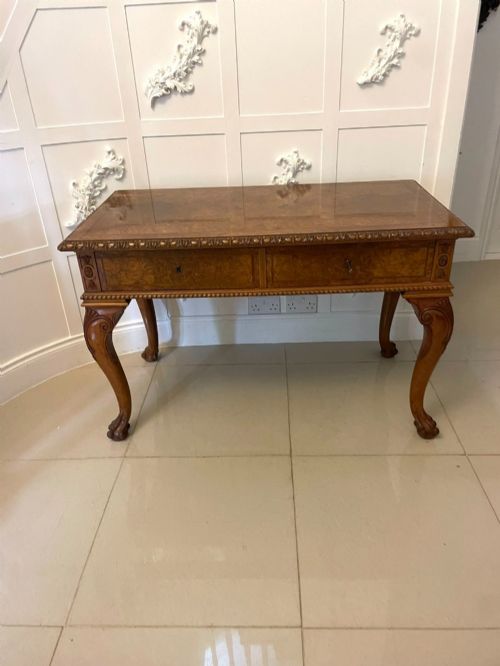
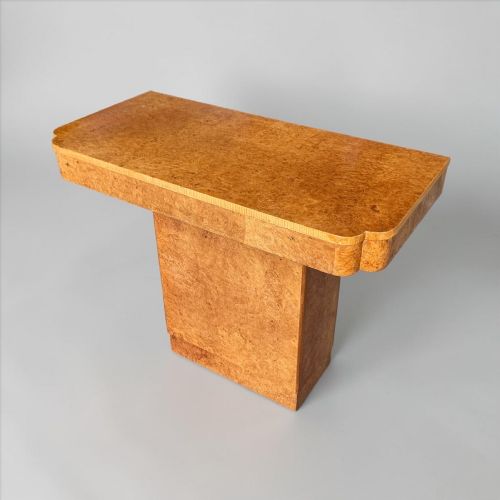
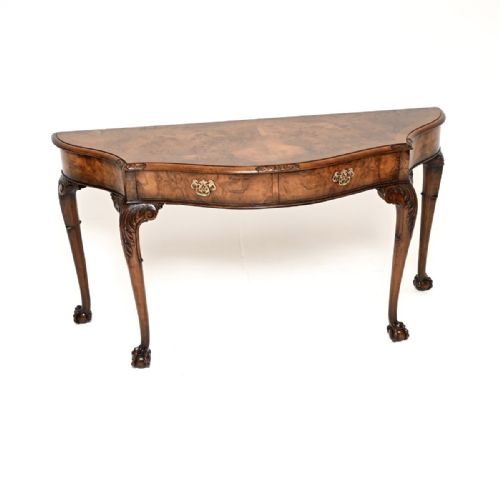
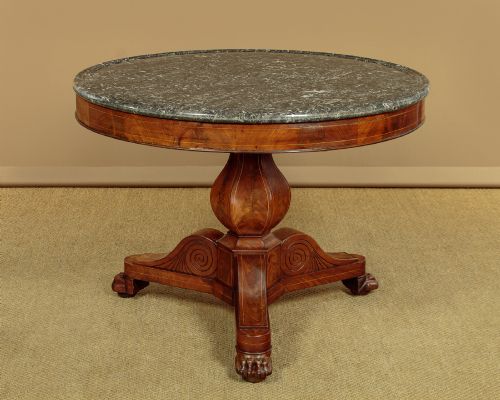
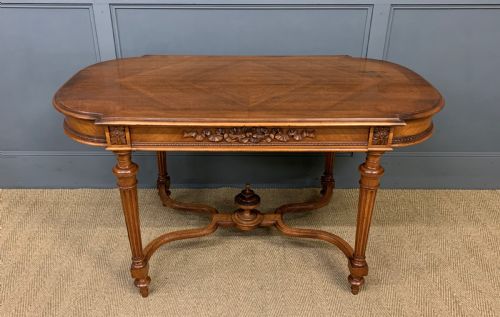
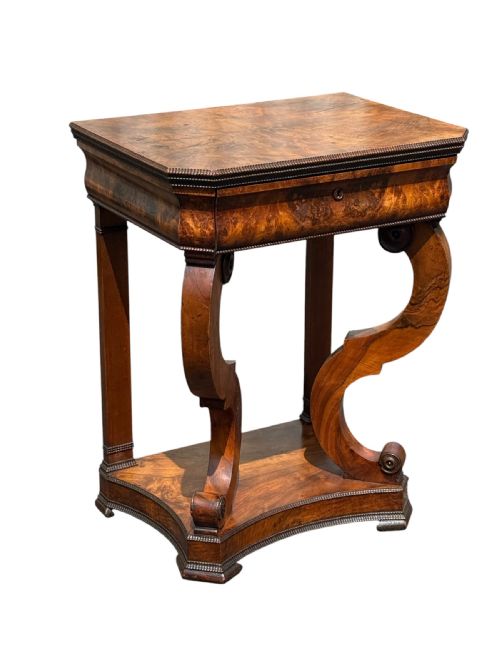
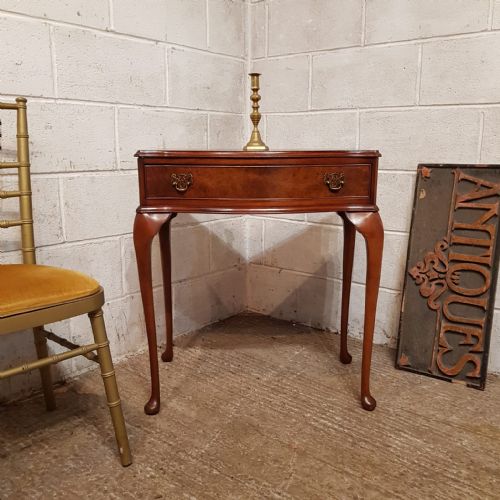
A walnut entry table encompasses console and side tables designed to sit against a hallway wall, combining practicality with decorative presence. These pieces emerge from the nineteenth century and the early twentieth century, drawing on historical aesthetics like Queen Anne, Louis Philippe, Georgian Revival, Rococo Revival, and French Empire. Buyers meet console tables and side tables shaped by Italian, French, and British revival idioms.
The most common forms on this page include console tables and lowboy side tables, often displaying distinct regional characteristics. Nineteenth-century examples demonstrate French Louis Philippe, Italian craftsmanship, and Empire styling, while a nineteen-twenty piece captures the Queen Anne Revival taste. Each object functions primarily as an anchor for an entrance or narrow passage.
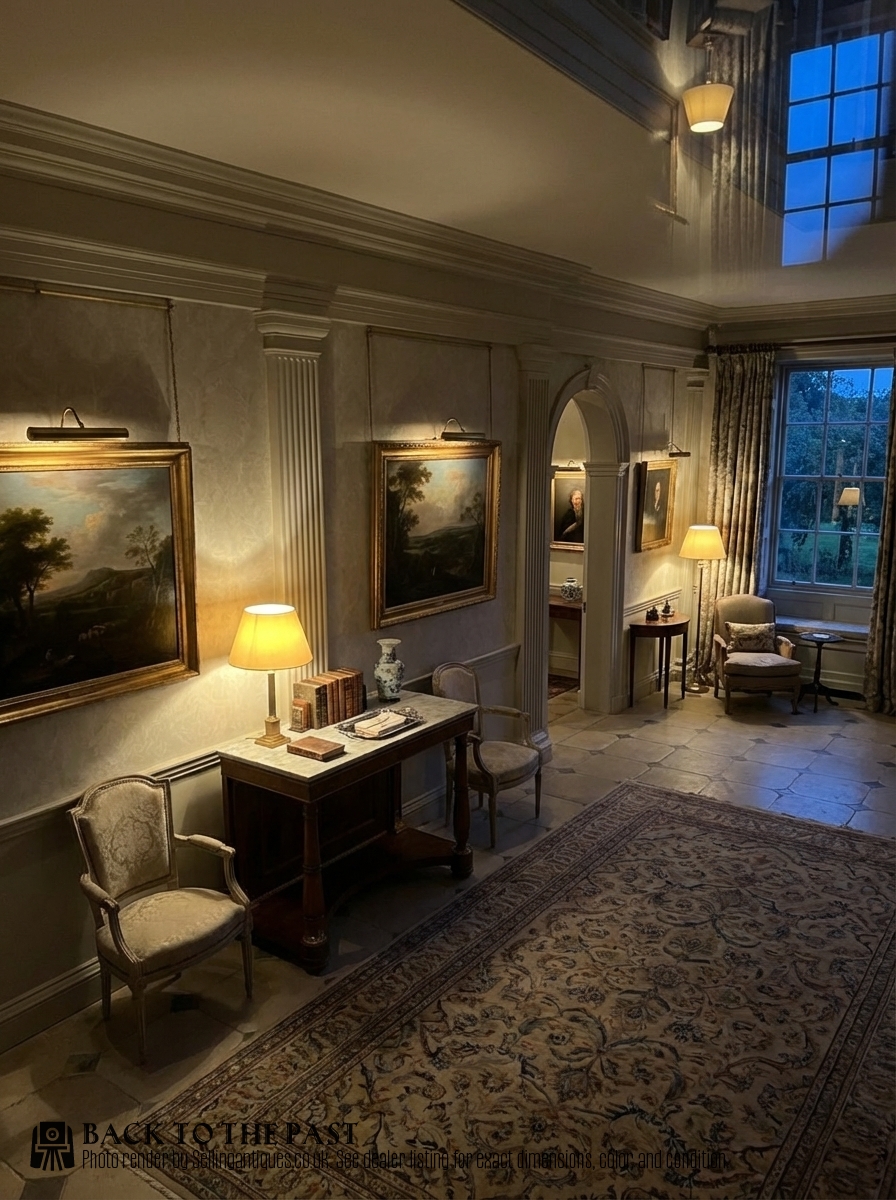
Materials and Construction
Construction relies heavily on walnut and burr walnut veneer, chosen for deep colour and intricate grain patterns. Artisans enhanced these wooden surfaces with marquetry inlay, bringing geometric or floral motifs into the tabletop.
Metal and stone elements frequently complement the woodwork. Brass fittings, ormolu mounts, and marble tops appear across these tables, adding structural contrast and tactile variety to the console and side table designs.
Retail Price Guide 2026
Typical UK retail prices for walnut entry table, calculated from the Sellingantiques database of over a million retail prices indexed since 2003. This retail price guide relies exclusively on Sellingantiques data; no external sources or auction records are used, so the figures do not describe the wider market.
Current listings span the nineteenth century and nineteen-twenty, incorporating walnut, burr walnut veneer, brass, marble, and ormolu.
Judging Quality and Distinction
Quality rests on the selection of burr walnut veneer and the precision of marquetry inlay across the top. Finer examples display harmonious grain matching and meticulous execution in decorative details.
The integration of secondary materials such as ormolu mounts and marble slabs dictates the refinement of a piece. Superior execution in these mounts and stones elevates the overall decorative authority of the console.
The Walnut Entry Table Glossary
- Console table
- A table designed to be fixed against a wall, often supported by two legs, featuring prominently in hallways and entrance spaces. These pieces prioritize surface display over freestanding utility.
- Burr walnut veneer
- Thin slices of wood taken from the knotty growths of walnut trees, prized for swirling, highly decorative grain patterns. It forms the primary visual feature on many tabletops.
- Marquetry inlay
- Pieces of contrasting wood or other materials fitted into the wooden surface to create decorative patterns. This technique demands high skill from the maker.
- Ormolu
- Gilded bronze ornamentation applied to furniture, popular in French Empire and revival designs. It provides a bright metallic contrast to dark wood.
- Lowboy
- A small side table with drawers, originating in the eighteenth century and revived later. It sits low to the ground and serves multiple functional roles.
Frequently Asked Questions
Where should I place a walnut entry table?
These tables suit narrow hallways, entrance passages, and reception rooms where floor space is limited. Their shallow depth allows them to sit flush against a wall without obstructing movement.
They provide a convenient landing space for everyday items while establishing a strong decorative tone at the entrance of a home.
How do I care for burr walnut surfaces?
Burr walnut requires gentle dusting with a dry, soft cloth to maintain its finish and protect the delicate veneer. Avoid using harsh chemical polishes or placing the table in direct sunlight.
Consistent indoor humidity prevents the wood and veneer from drying out or splitting over time.
What is the difference between a console and a side table?
A console table is traditionally designed to stand against a wall, sometimes requiring wall fixing for stability. Side tables are generally freestanding four-legged items.
In historical furniture, these terms often overlap, particularly with pieces intended for hallways.
How do I identify a revival style?
Revival styles appropriate earlier aesthetics, such as Queen Anne or George II, using nineteenth- and twentieth-century timber and construction methods. Look for historical silhouettes combined with later finishing techniques.
Examining the underside and drawer construction helps determine the true age of the piece.