
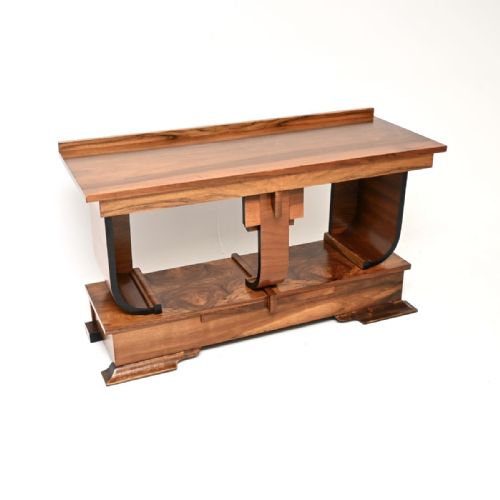
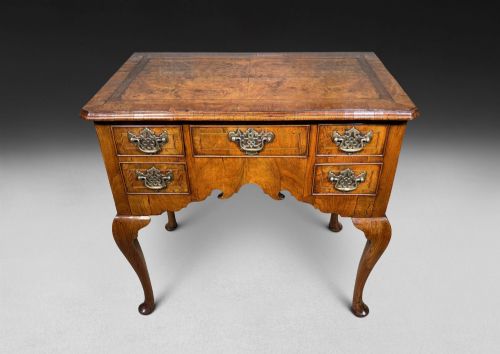
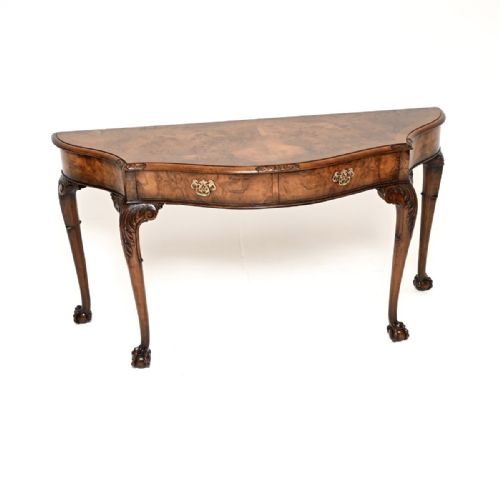
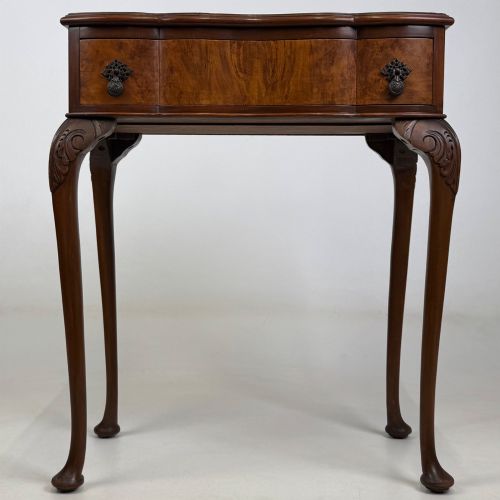




Figured Walnut Hall Table
Figured walnut hall table pieces bring deep timber grain and warm tone to an entranceway, offering a practical surface with period character.
Figured Walnut Hall Table
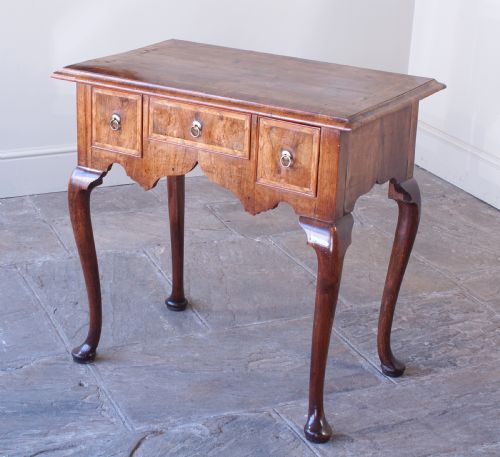
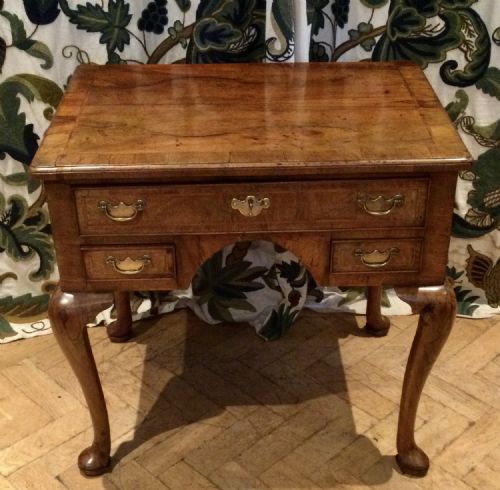
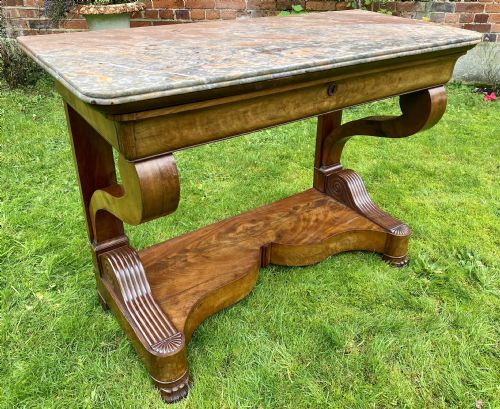
A figured walnut hall table encompasses various forms including console tables, lowboys, and side tables designed for narrow spaces. These pieces emerge from periods spanning the early eighteenth century through the Art Deco era of nineteen thirty.
Buyers frequently encounter lowboys from the eighteenth century alongside Victorian burr walnut centre tables and later console variations. Stylistic influences range from Queen Anne and George II to Edwardian and Art Deco aesthetics.
Makers utilised rich timbers such as burr walnut and figured walnut, often paired with secondary woods like pine and brass hardware. Each iteration reflects the prevailing taste of its specific era, from early Georgian simplicity to Victorian and twentieth-century interpretations.
Materials and Construction Methods
Craftsmen selected walnut for its striking grain patterns, frequently employing burr or figured veneers applied over solid timber foundations. Pine often served as a secondary structural wood for drawer construction and internal framing.
Surface finishing relied on traditional polishing techniques that highlighted the natural figure and deep brown tones of the walnut. Metal components such as brass handles and pulls added functional detail to drawers and cabinets.
Some nineteenth-century tables were designed to stand proudly in the centre of a room rather than against a wall.
Distinguishing Quality in Walnut Tables
Superior examples display exceptional selection and matching of veneer grains across the top surface, creating a balanced visual harmony. Lesser pieces show less dramatic figuring or standard timber grain without the distinctive swirls of burr walnut.
Originality of surface finish and hardware dictates the standing of an antique table within its period. Tables retaining their early patination and untouched construction details command greater interest from discerning collectors.
The Figured Walnut Hall Table Glossary
- Figured walnut
- Wood harvested from walnut trees that displays complex, highly decorative grain patterns due to growth irregularities. This timber is sliced into veneers for prominent display on furniture surfaces.
- Lowboy
- A small table with one or more rows of drawers, standing on relatively tall legs, originating in the late seventeenth century. It functions well as a compact hall or side table.
- Console table
- A table designed to be placed flat against a wall, traditionally supported by legs or brackets at the front. These pieces suit narrow hallways and entrance spaces.
- Burr walnut
- Timber taken from a growth or wart on a walnut tree, producing dense, swirling clusters of knots. It forms highly prized decorative veneers.
- Centre table
- A freestanding table finished on all sides, intended to stand away from walls in the middle of a room. Victorian examples often feature circular or oval tops.
Figured Walnut Hall Table: Frequently Asked Questions
What is a figured walnut hall table?
A figured walnut hall table is a compact surface piece featuring decorative wood grain, utilised in entranceways and corridors.
These items encompass forms like console tables, lowboys, and side tables originating from the eighteenth to the twentieth century.
How do I date an antique walnut table?
Dating relies on examining construction methods, timber choice, hardware, and stylistic traits associated with periods like Queen Anne or Art Deco.
Secondary woods such as pine and the specific cut of the walnut veneer also offer clues to the era of manufacture.
Where should I place a lowboy?
A lowboy suits placement in an entrance hall, landing, or living space where surface area is needed without bulk.
Its compact footprint and drawer storage make it practical for holding keys, post, or small decorative objects.
What is the difference between burr and figured walnut?
Figured walnut refers to wood grain with natural waves and patterns, while burr walnut comes from specific tree growths containing dense clusters of tiny knots.
Both were utilised by makers to create highly decorative surfaces on fine tables.