


Traditional Lowboy Desk
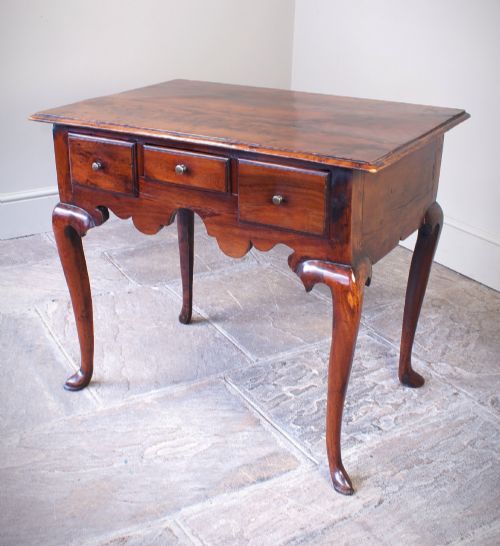
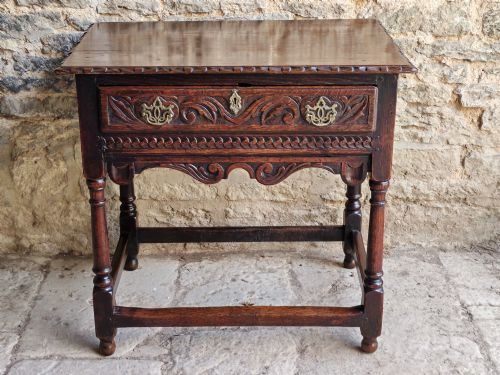
A traditional lowboy desk is a compact wooden table with drawers, offering sturdy surface space and character for a study or bedroom.
Traditional Lowboy Desk
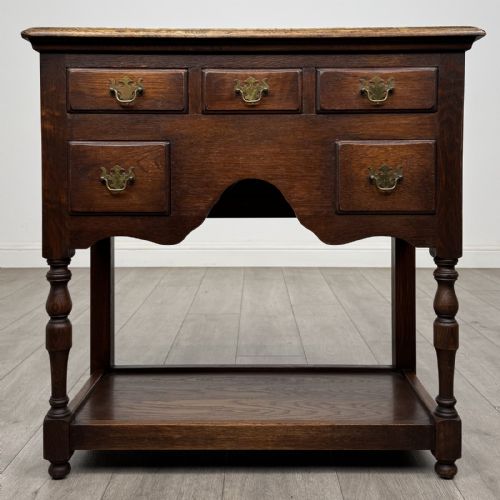
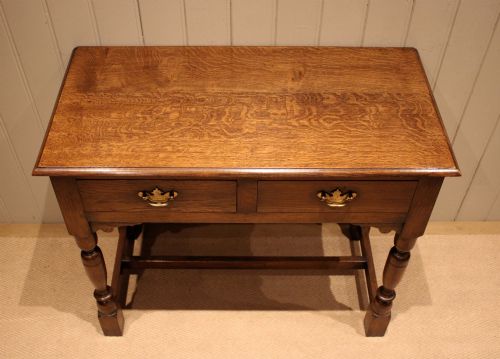
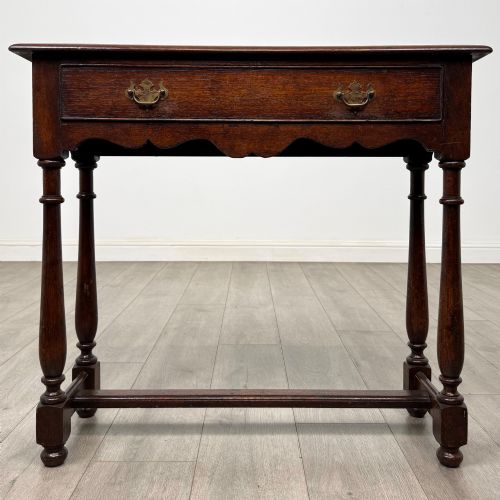
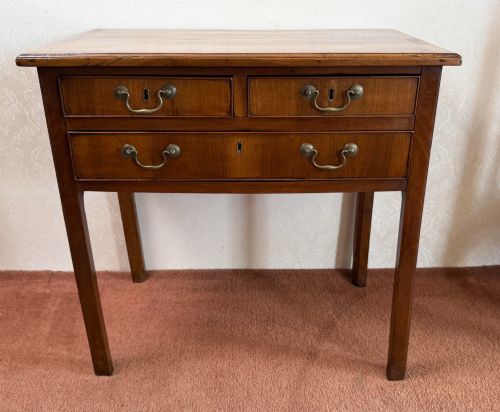
A traditional lowboy desk is a compact form combining a table surface with practical under-counter drawer storage, frequently listed as a side table or writing table. The pieces found here span from the mid eighteenth century and the Georgian era through to Edwardian interpretations and twentieth century revivals.
The selection ranges from early eighteenth century oak and walnut specimens to later mahogany, yew wood, fruitwood, and burr walnut veneer pieces. These items serve flexibly as writing desks, dressing tables, and hall tables while retaining their characteristically low proportions.
Materials and Construction
Makers utilised native timbers such as oak, walnut, mahogany, fruitwood, and yew wood, sometimes applying burr walnut veneer to create decorative surface patterns. Brass handles and drawer fittings complete the construction.
Joinery methods reflect the periods of manufacture, pairing solid timber construction with multi-drawer layouts designed for correspondence and storage.
Several lowboys moonlighted across history as dressing tables before finding new life holding paperwork and lamps.
Factors of Quality
Quality rests in the choice of timber and veneer, distinguishing simple oak construction from finely figured burr walnut or rich mahogany. The crispness of the drawer joinery and the integrity of the brass hardware also separate standard examples from finer pieces.
Period authenticity plays a central role, distinguishing eighteenth century originals from Edwardian and later twentieth century revivals that imitate earlier Queen Anne and Georgian styles.
The Traditional Lowboy Desk Glossary
- Lowboy
- A small table with drawers, typically standing on four legs, used historically for writing, dressing, or serving. This form sits lower than a standard desk.
- Burr walnut
- A wood harvested from the burl growth of a walnut tree, prized for its swirling grain patterns. It is often applied as a veneer on cabinet furniture.
- Side table
- A small table placed against a wall, sharing the compact footprint seen in traditional lowboy desks. These tables often feature one or more drawers.
- Writing table
- A freestanding table designed specifically for correspondence and paperwork, frequently equipped with drawers beneath the top surface.
Traditional Lowboy Desk: Frequently Asked Questions
What is a traditional lowboy desk used for?
These pieces function primarily as compact writing desks, dressing tables, or hall tables. Their modest height and built-in drawers provide surface space without dominating a room.
Historically, they accommodated correspondence and personal grooming items in bedrooms and parlours. Today, they suit small studies and hallways as versatile accent furniture.
How do I date a lowboy?
Dating relies on identifying the timber species, construction techniques, and stylistic markers such as Queen Anne or Georgian design details. Eighteenth century pieces show period specific joinery and timber patination.
Revival pieces from the Edwardian era and the nineteen twenties often emulate these earlier styles using twentieth century methods.
Are these desks suitable for daily work?
Their compact dimensions make them ideal for laptops and occasional writing rather than heavy office setups. The built-in drawers help keep stationery and small items organised.
Buyers should check the knee clearance beneath the drawers to ensure comfortable seating during extended use.
What woods were commonly used?
Cabinetmakers worked with a range of hardwoods including oak, walnut, mahogany, yew wood, and fruitwood. Burr walnut veneer appeared frequently on decorative pieces.
Lighter woods like oak dominate the earlier country styles, while walnut and mahogany often feature in more formal Georgian designs.