
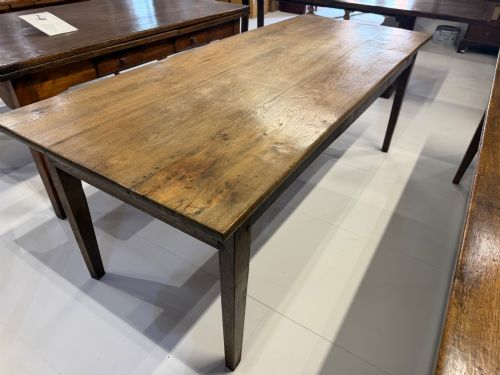
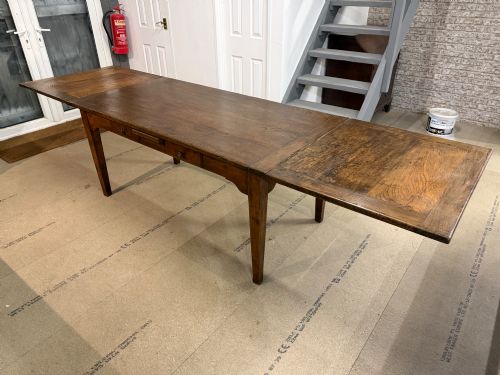
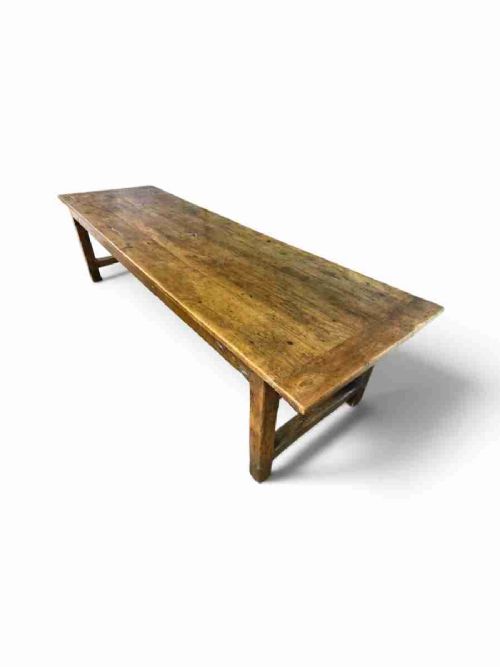
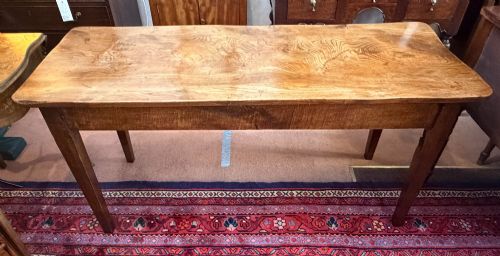
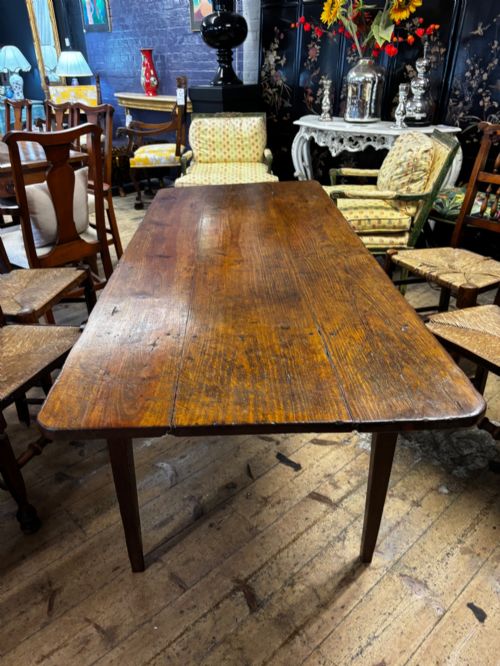
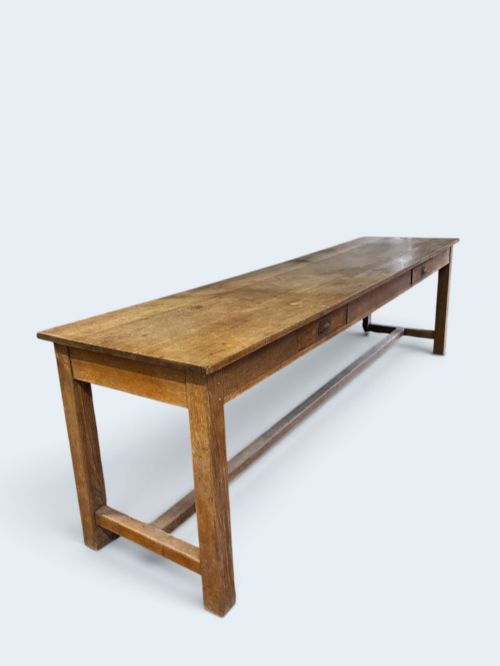
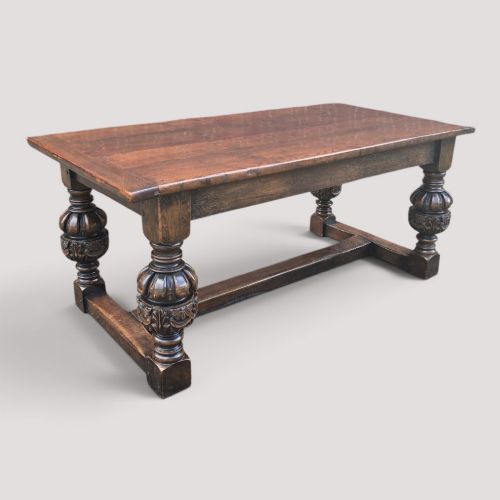
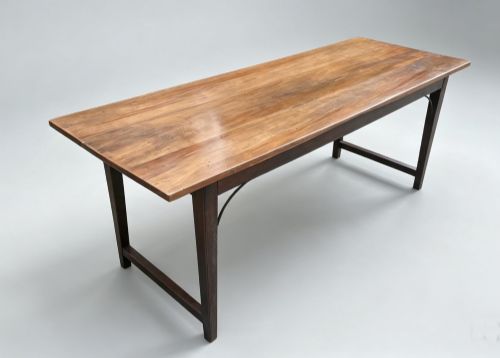
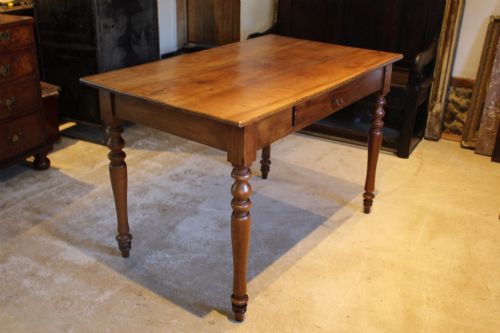
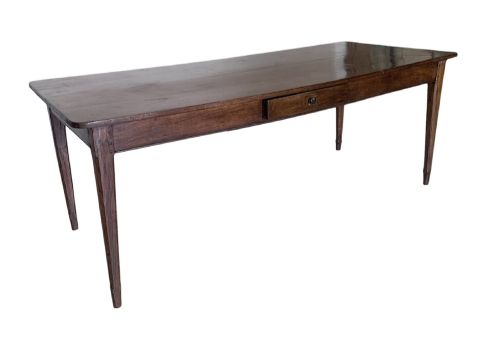
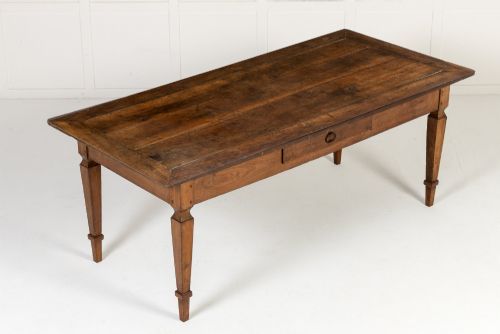
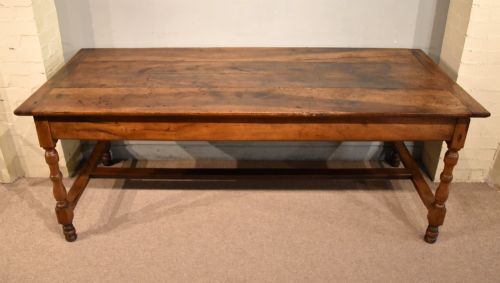
Brown Wooden Farmhouse Table
Brown wooden farmhouse table pieces bring domestic history into daily use, offering sturdy timbers and well-worn surfaces for modern dining rooms.
Brown Wooden Farmhouse Table
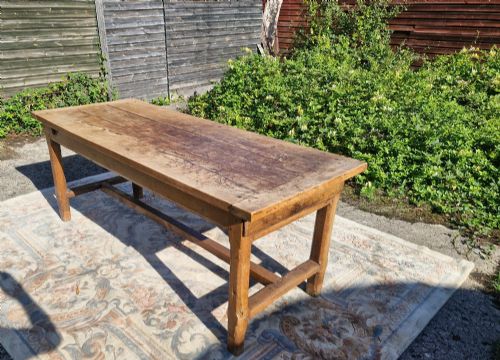
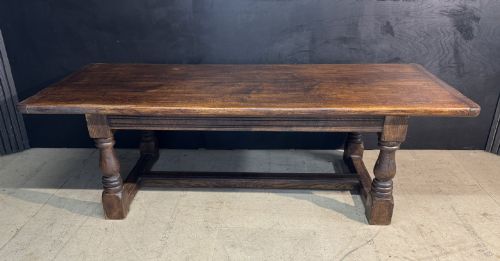
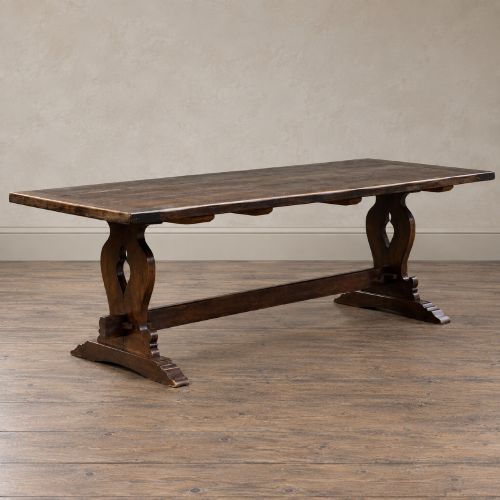
A brown wooden farmhouse table serves as a robust domestic centrepiece, originating primarily from 18th and 19th-century domestic and provincial settings. These pieces range from substantial refectory forms to simpler kitchen and dining variants.
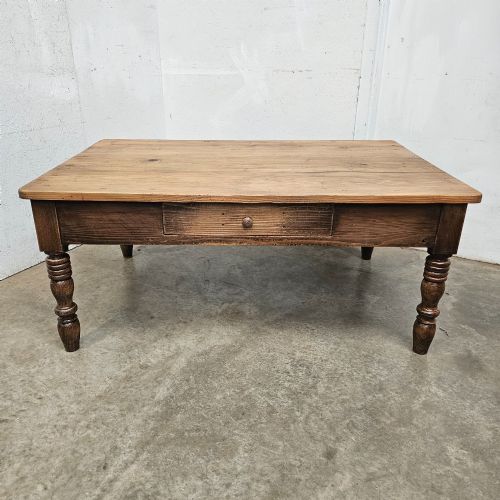
The most common version met on this page is the 19th-century oak or fruitwood dining table, often featuring generous proportions designed for heavy daily use. Alongside standard dining formats, related types such as serving tables, benches and coffee tables appear.
Geographic styles span English country workshops to French provincial establishments, incorporating regional characteristics like tapered legs, draw leaves and thick plank tops.
Materials and construction
Construction relies heavily on durable hardwoods like oak, fruitwood, cherrywood, elm and walnut, sometimes joined by secondary timbers such as beech or pine. Metal elements like iron and brass occasionally appear in structural braces or hardware.
Cabinetmakers utilised traditional joinery methods to build sturdy frames, employing pegged mortise and tenon joints alongside heavy plank tops to withstand generations of communal meals and labour.
Listings feature oak and fruitwood predominantly, spanning 18th-century country workshops to early 20th-century refectory designs.
Quality variations in domestic tables
Quality rests primarily in the integrity of the primary timber and the cleverness of the structural joinery, where thick, stable top planks and well-fitted aprons distinguish superior examples. Age and regional provenance also influence the standing of a piece.
The Brown Wooden Farmhouse Table Glossary
- Refectory table
- A long, narrow dining table traditionally used in monastic or communal dining halls. These examples often feature stretcher bases for added stability.
- Draw leaf table
- A dining table equipped with pull-out leaves stored beneath the main top. This mechanism allows the surface area to expand quickly.
- Provincial
- Pertaining to regions outside the capital city, denoting local interpretations of prevailing furniture styles. These pieces often display practical, unpretentious construction.
- Plank top
- A table surface constructed from wide wooden boards joined edge to edge. This method creates a sturdy, durable workspace.
Brown Wooden Farmhouse Table: Frequently Asked Questions
How do I clean a wooden farmhouse table?
Maintenance requires little beyond a soft, damp cloth to remove dust and debris from daily use. Avoid harsh chemical cleaners that strip the historic finish and dry out the grain.
Applying natural beeswax periodically helps nourish the timber and preserves the rich patina built up over centuries of handling.
Can I use a farmhouse table outdoors?
These tables are constructed for indoor domestic environments and lack weatherproofing treatments. Exposure to rain, direct sunlight and humidity causes timber to warp, split and rot.
Keeping the furniture inside ensures the antique wood remains stable and protected from extreme environmental fluctuations.
What is the difference between oak and fruitwood?
Oak provides a dense, heavy structure with prominent grain patterns, making it ideal for robust refectory and tavern tables. Fruitwood, including cherry, offers a smoother texture and warmer tones favoured in French provincial workshops.
Both timbers deliver exceptional durability, though their visual appearance and regional origins differ significantly.
How do I seat guests around a large table?
Generous proportions and sturdy stretcher bases allow for flexible seating arrangements using benches or mismatched chairs. Benches slide neatly underneath the surface when not in use to save floor space.
Positioning guests along the long planks maximises capacity during gatherings while highlighting the substantial scale of the furniture.