
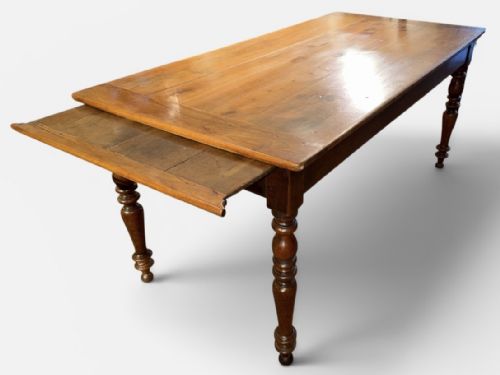
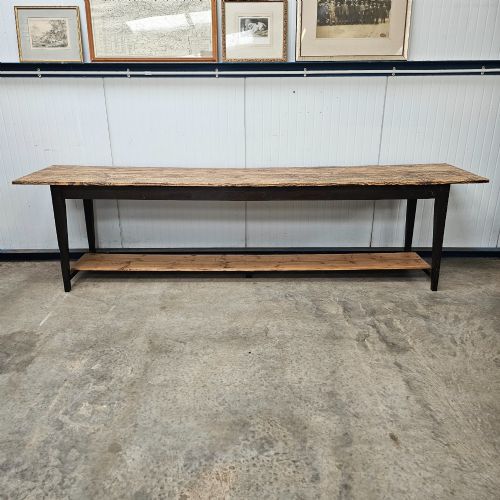
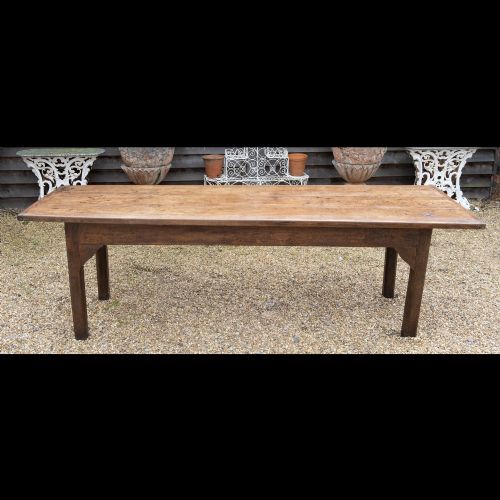


Antique Oak Harvest Table
An antique oak harvest table is a sturdy timber board designed for communal dining, built to seat large groups with enduring rustic character.
Antique Oak Harvest Table
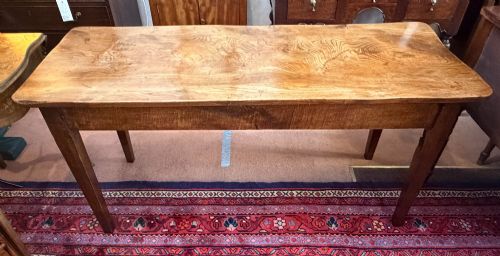
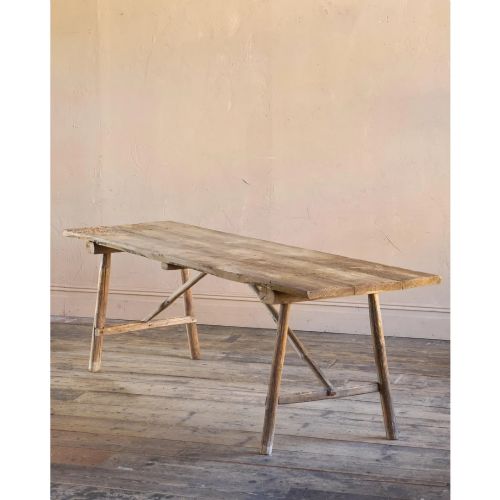
When you search for an antique oak harvest table, you are looking at substantial wooden boards historically used for communal estate dining and kitchen work. These pieces span several centuries, including examples from the 17th, 18th, and 19th centuries, alongside later pieces from 1900 and 1920.
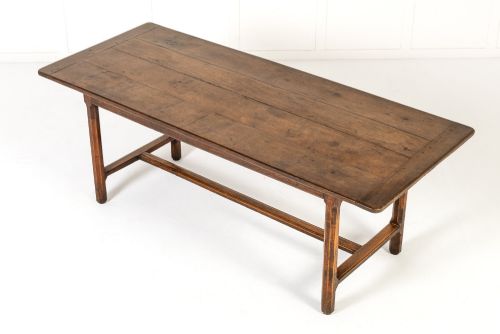
The versions most commonly met on this page are rustic farmhouse tables and refectory styles, often originating from English workshops or French provincial settings. They appear in various lengths, including large formats seating up to twelve people, as well as smaller country variations.
Makers utilised a mix of domestic and regional timbers for these utilitarian surfaces, creating functional furniture designed for heavy daily use. The enduring appeal lies in the honest construction and the rich patina accumulated across generations of service.
Factors of quality
The distinction between ordinary and superior pieces rests upon the integrity of the timber selection and the retention of original structural framing. Tables built with dense, old-growth oak and well-joined stretcher bases command greater appreciation than those assembled from softer secondary woods.
Proportion and scale also govern the hierarchy, as exceptionally long dining boards or tables retaining authentic surface wear present superior visual balance. Quality resides in the harmony between the utilitarian purpose of the design and the unpretentious execution of the carpentry.
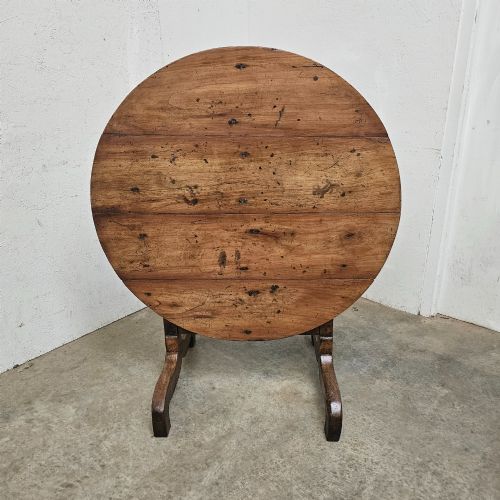
Some folding vendange tables were designed specifically to be packed away after grape harvests in French vineyards.
The Antique Oak Harvest Table Glossary
- Refectory table
- A long dining table historically used in monastic or communal dining halls. These pieces are characterised by their extended length and supportive stretcher systems.
- H stretcher
- A horizontal wooden brace connecting the legs of a table in the shape of the letter H. This component provides vital rigidity to long timber frames.
- Primitive country
- A descriptive term for utilitarian furniture made without sophisticated stylistic pretension. These objects prioritize basic function and straightforward regional construction.
- Fruitwood
- Timber sourced from fruit-bearing trees such as cherry or pear, utilised by makers for contrasting colour and texture. It provides a warmer tone alongside standard oak boards.
- Patina
- The deep sheen and surface alteration developed on wooden furniture through age, light exposure, and frequent cleaning. It serves as an indicator of historical continuity.
Antique Oak Harvest Table: Frequently Asked Questions
How do I clean an antique oak harvest table?
Maintain the surface by dusting with a dry cloth and occasionally applying natural beeswax to nourish the timber.
Avoid commercial silicon sprays or excessive moisture, which can damage the historic finish and dry out the grain.
Can these tables be used for daily dining?
These tables were originally engineered for heavy domestic or communal work, making them exceptionally robust for modern dining.
Use protective mats for hot dishes to preserve the aged surface without compromising everyday utility.
How do I determine the age of a harvest table?
Examine the construction methods, tool marks on the underside, and the type of timber used in the frame.
Earlier pieces from the seventeenth and eighteenth centuries display hand-cut joinery and heavy oak boards distinct from later nineteenth-century adaptations.
Are French and English farmhouse tables different?
French regional tables often incorporate fruitwood or lighter oak alongside stretcher configurations distinct from British institutional designs.
English examples generally favour heavier oak framing linked to Georgian or seventeenth-century vernacular traditions.