

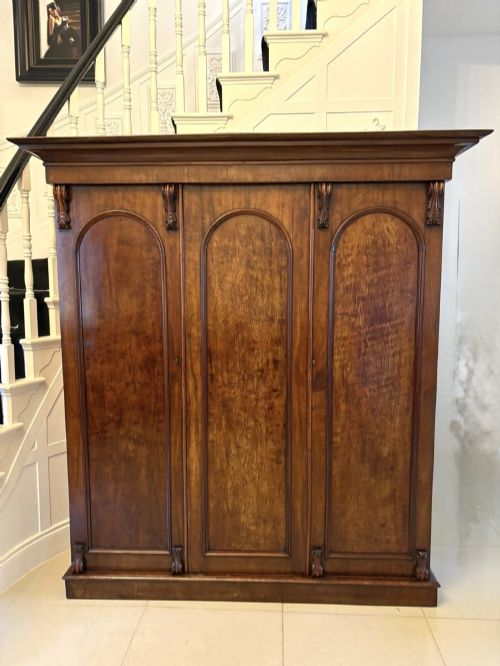
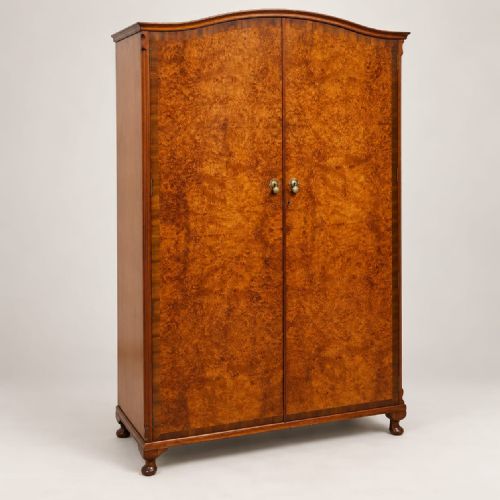
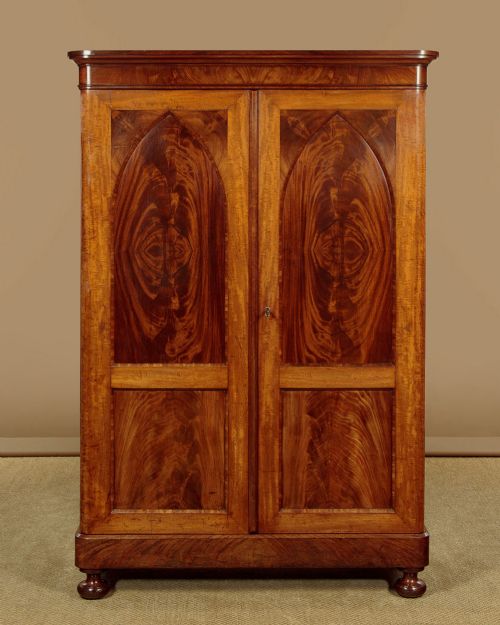
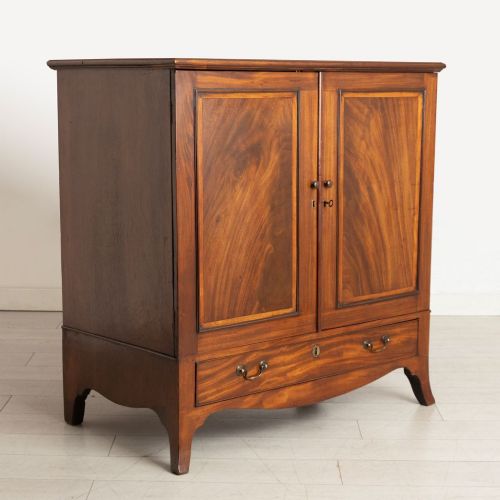
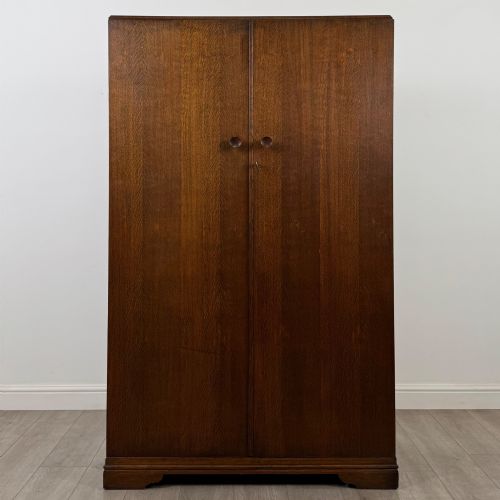
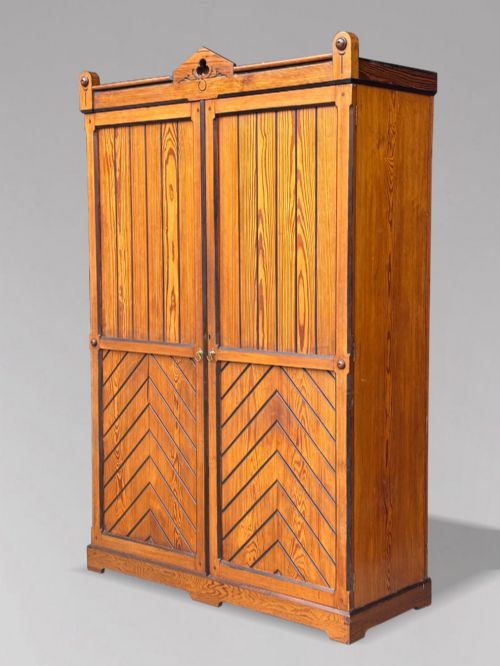
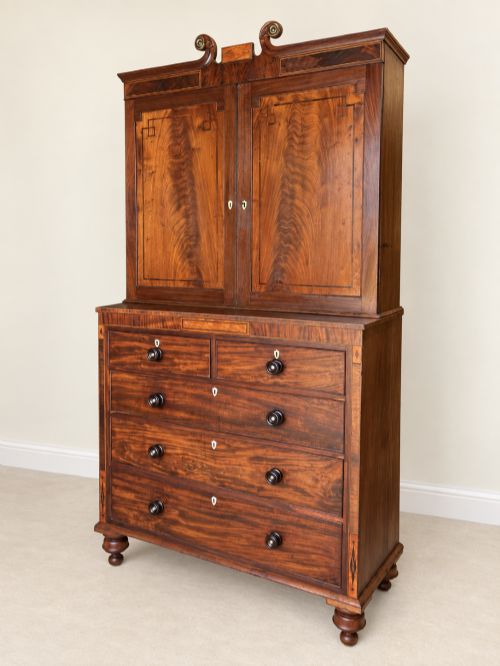
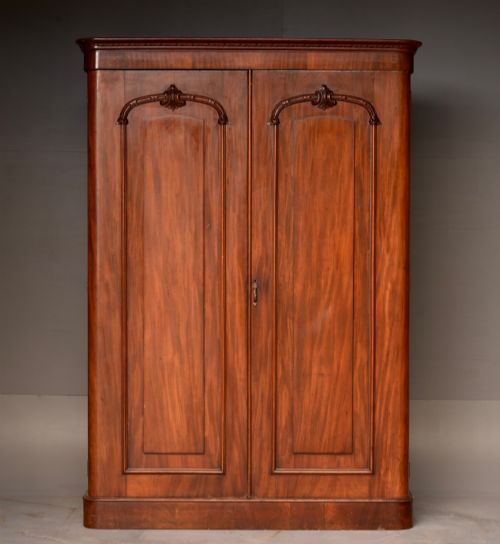
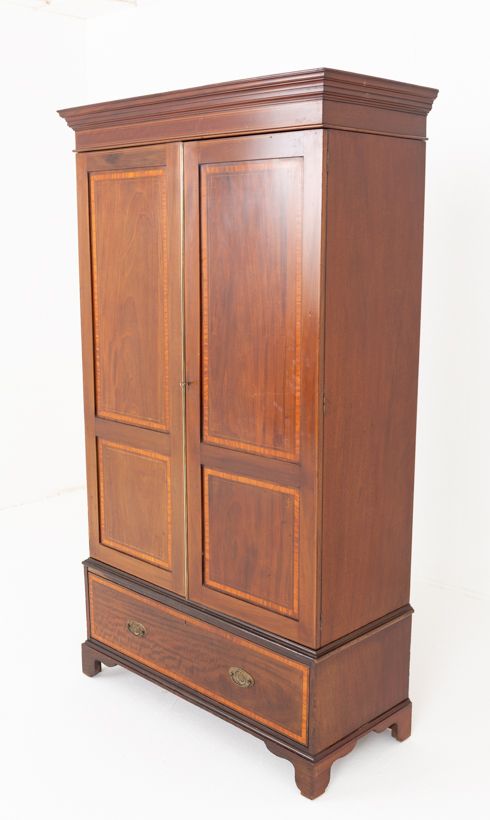
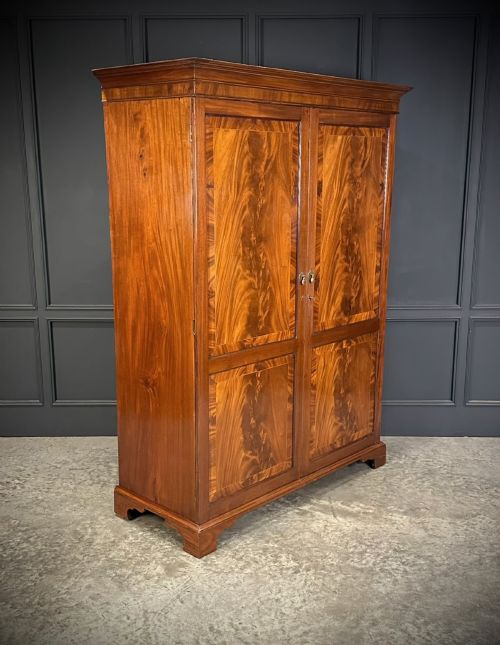
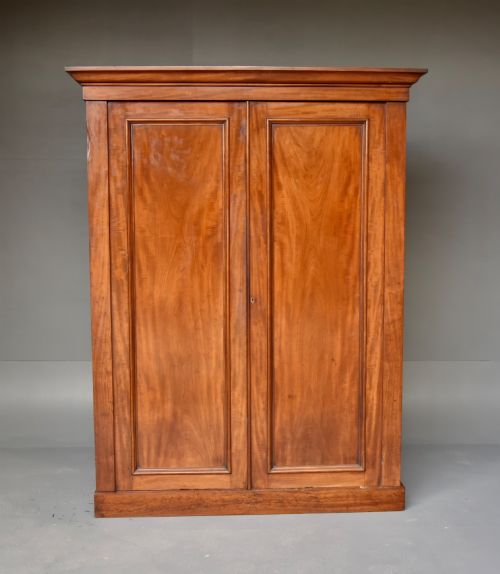
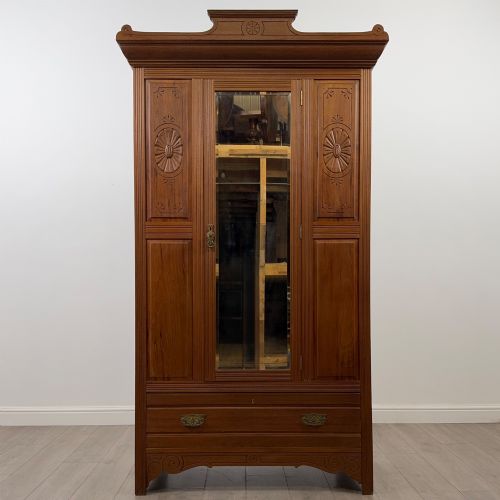
Brown Wooden Clothes Press
A brown wooden clothes press is a substantial storage piece built to house garments and linen, offering timeless utility and classic timber character.
Brown Wooden Clothes Press
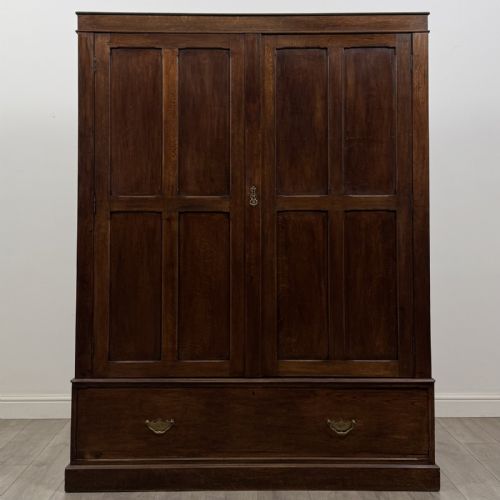
A brown wooden clothes press combines traditional storage with architectural timber presence, appearing primarily as wardrobes, linen presses, armoires, and compactum units. Buyers seeking this search phrase encounter pieces spanning the 18th century, Georgian, Victorian, Edwardian, and William IV periods, alongside later 1920s examples.
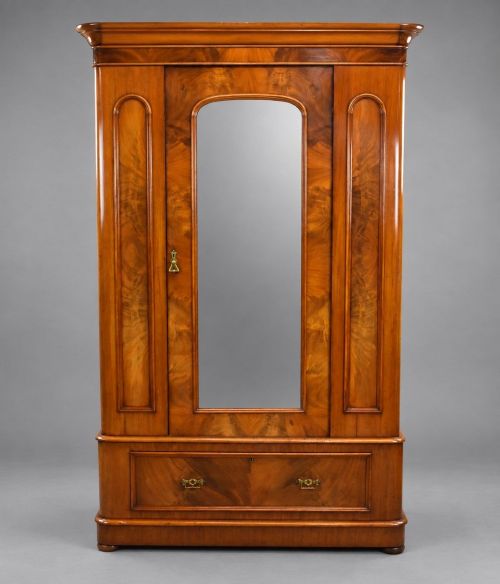
Early iterations from the George III and Georgian eras often integrate upper linen press cupboards with lower drawer sections, whilst later Victorian and Edwardian variations tend towards large double or triple wardrobe formats. Woods like mahogany, oak, and walnut dominate the forms, frequently enriched by flame mahogany veneers or satinwood inlays.
Materials and construction
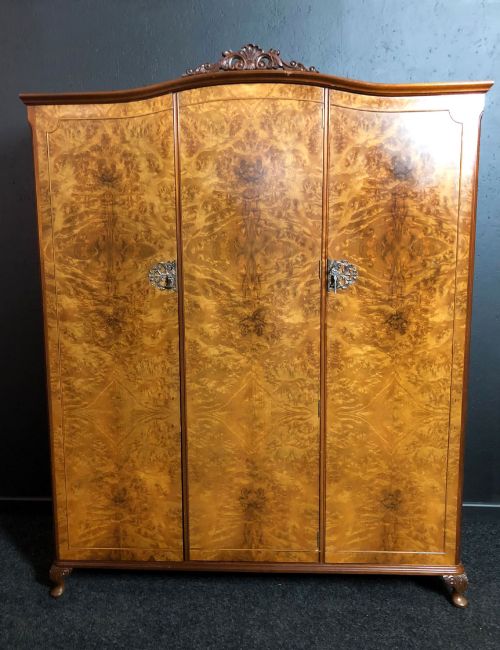
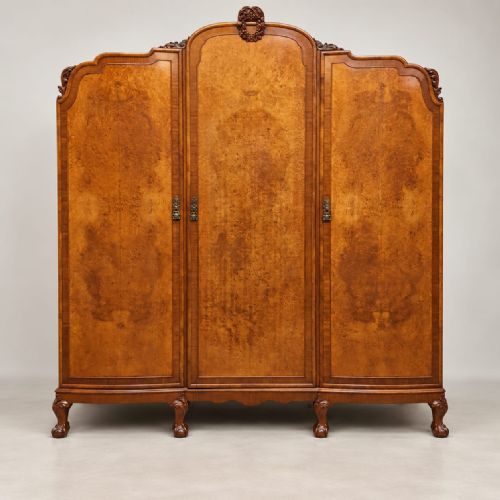
Cabinet makers utilised dense native and imported timbers, building carcasses primarily in solid mahogany, oak, and walnut. Flame mahogany veneer and burr walnut provided highly figured decorative surfaces on door panels and drawer fronts.
Joinery techniques combined traditional frame and panel construction with hand-cut dovetails for internal drawers, complemented by brass handles, escutcheons, and glass elements where fitted.
Brown Wooden Clothes Press Retail Price Guide 2026
Typical asking prices for brown wooden clothes press among the pieces listed under this phrase on Sellingantiques today, from the lower quarter to the upper quarter. They describe what is for sale here now, not the wider market.
Several grand wardrobes carry the quiet echoes of Channel Island hallways and London cabinet makers inside their deep timber drawers.
Judging execution
Quality separates through the selection of timber figures, such as symmetrical flame mahogany or richly patterned burr walnut veneers, against plain planking. The crispness of carved details, inlay precision, and the substantial weight of brass hardware distinguish superior workshop output.
Internal configuration also dictates distinction, where fitted linen slides, secondary drawer divisions, and original panelled doors reflect the care invested by makers like Maple & Co or Heals during construction.
maples & co·S & H Jewell·Heals·Maple & Co
The Brown Wooden Clothes Press Glossary
- Linen press
- A traditional piece of furniture featuring upper doors enclosing sliding trays for linen, set above a chest of base drawers. These units evolved into modern wardrobe storage during the nineteenth century.
- Compactum
- A fitted wardrobe designed to maximise internal storage by combining hanging space, drawers, and linen shelves within a single footprint. This form became particularly popular during the Edwardian period.
- Flame mahogany
- A veneer cut from the fork of a mahogany tree where the branches join the trunk, creating a distinct flickering flame pattern. Cabinet makers used this figure on prominent drawer fronts and door panels.
- Burr walnut
- Timber sourced from the abnormal growths on walnut trees, yielding highly swirled and mottled grain patterns. It served as a luxury veneer on high-end Victorian and Edwardian carcases.
- Inlay
- A decorative technique where contrasting woods or materials like satinwood are inserted into recesses cut into the primary surface. This method creates geometric or floral borders on panels and friezes.
Brown Wooden Clothes Press: Frequently Asked Questions
What is a clothes press?
A clothes press is a tall storage cabinet traditionally used to store folded linen and garments before full-length hanging wardrobes became common.
Early examples split the storage between sliding trays enclosed by upper doors and a chest of drawers below.
How do I date a wooden press?
Dating relies on observing timber choices, architectural styles, and construction methods. Georgian pieces often show linear mahogany proportions, whilst Victorian examples favour heavier walnut and burr veneers.
Hardware styles, secondary woods inside drawers, and joinery marks further help narrow the decade of manufacture.
Can these fit modern clothes hangers?
Many older presses and wardrobes feature shallow internal depths designed for folded textiles rather than modern coat hangers. Some pieces require custom rail placement or suit folded garments and shelving better.
Checking internal depths before purchase ensures the cabinet accommodates contemporary garments.
How should I care for timber surfaces?
Maintenance involves keeping wooden furniture away from direct heat sources and sudden humidity changes to prevent timber splitting. Regular dusting with a dry, soft cloth preserves the polished finish of mahogany and oak.
Applying traditional wax polish occasionally nourishes the grain without building up heavy chemical residues.