

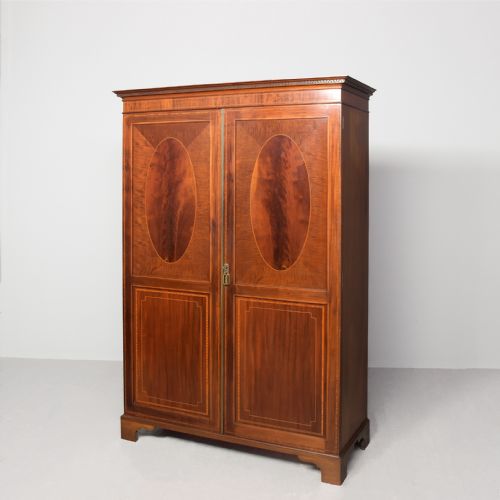


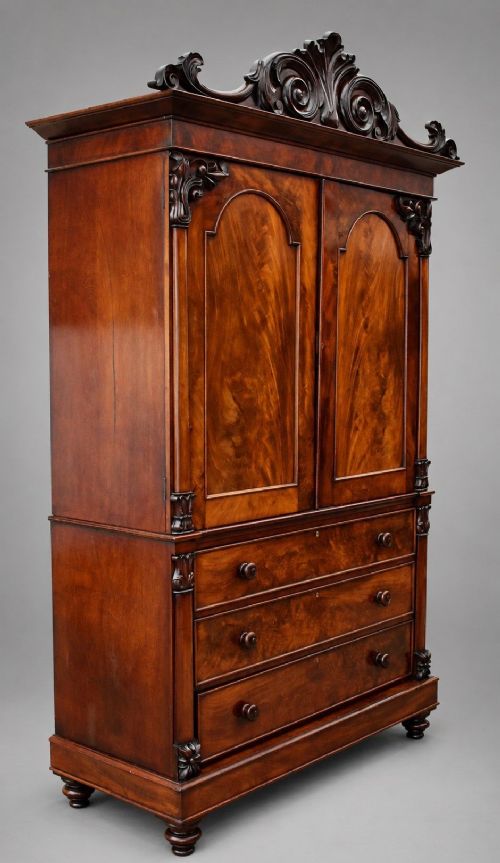


Traditional Mahogany Clothes Press
These traditional mahogany clothes press pieces offer noble timber and generous storage for any bedroom.
Traditional Mahogany Clothes Press
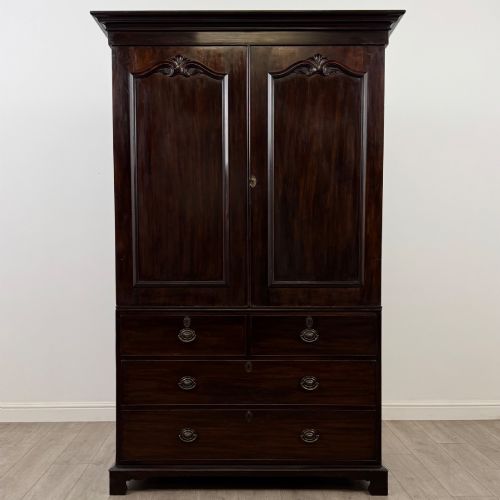
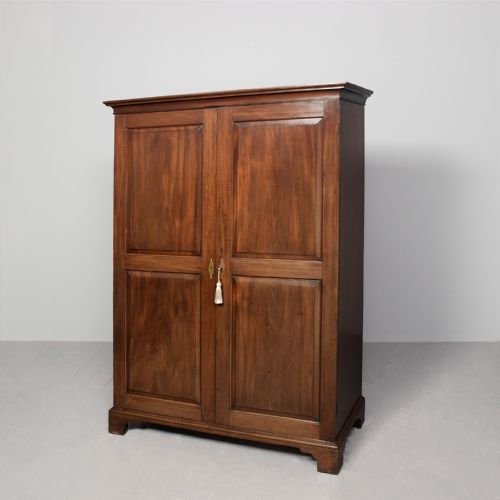
When you search for a traditional mahogany clothes press, you are looking at substantial case furniture designed to store garments and linen. These pieces range from Georgian and Regency eras through to the Victorian period and Edwardian times, often combining hanging space with sliding shelves.
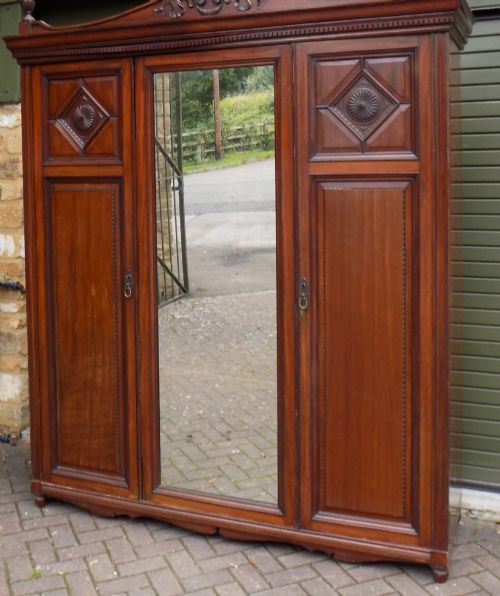
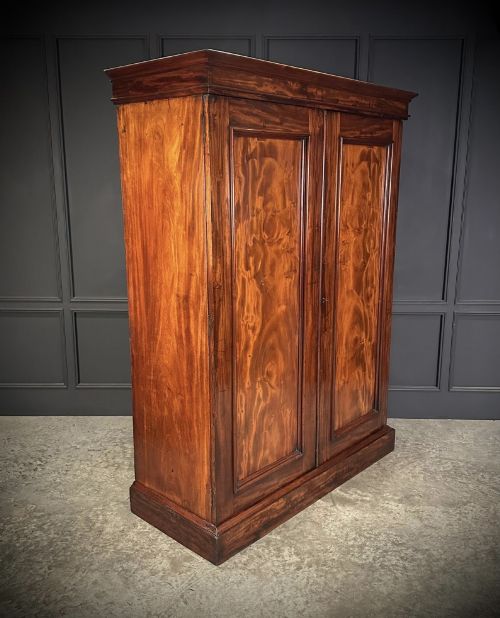
On this page, you are most likely to meet wardrobe and linen press variations constructed from solid mahogany or flame mahogany veneer. Cabinet makers across the eighteenth and nineteenth centuries built these dual-purpose storage items to anchor grand domestic bedrooms.
How they were made
Cabinet makers selected dense timber such as Cuban mahogany and figured flame mahogany veneer, laying these over secondary woods like oak. They integrated brass hardware for handles and escutcheons, alongside occasional boxwood inlay to delineate panels.
Construction relied on traditional joinery methods to build heavy breakfront frames, double or triple door configurations, and fitted interior trays. Skilled hands applied French polish or wax to draw out the deep reddish-brown grain patterns.
Traditional Mahogany Clothes Press Retail Price Guide 2026
Typical asking prices for traditional mahogany clothes press among the pieces listed under this phrase on Sellingantiques today, from the lower quarter to the upper quarter. They describe what is for sale here now, not the wider market.
The listings span from the eighteenth century through the Georgian, Regency, and Victorian eras up to Edwardian times.
What varies in quality
The choice of timber dictates the visual depth of a traditional mahogany clothes press, with figured flame veneers and Cuban mahogany sitting at the upper end of the scale. Subtle boxwood stringing and well-executed classical carving elevate the cabinet work.
Internal architecture marks the difference between standard production and superior craftsmanship, seen in smoothly running sliding linen trays and original brass fittings. The weight and stability of the multi-door framework reveal the integrity of the original construction.
The Traditional Mahogany Clothes Press Glossary
- Linen press
- A tall cabinet featuring upper sliding trays for folded textiles and lower drawers for garments. Many examples later converted into hanging wardrobes.
- Cuban mahogany
- A dense, heavy timber sourced from the Caribbean, prized for its rich colour and durability. Cabinet makers utilised this species for high-status eighteenth and nineteenth-century pieces.
- Compactum
- A multi-compartment wardrobe that combines hanging space, linen slides, and drawers within a single unified carcass. These large pieces often date from the late Victorian or Edwardian periods.
- Breakfront
- A cabinet design where the central section projects forward from the flanking wings. This architectural arrangement adds depth and shadow to large triple or four-door wardrobes.
Traditional Mahogany Clothes Press: Frequently Asked Questions
What is a clothes press?
A clothes press is a traditional piece of case furniture designed primarily for storing folded textiles and garments before modern hanging wardrobes became standard.
Upper sections typically house sliding trays behind panelled doors, while lower sections provide deep drawer storage.
How do I date these wardrobes?
Dating relies on observing structural proportions, timber selection, and decorative details like boxwood inlay or Gothic revival mouldings.
Georgian and Regency pieces tend to show lighter frames and finer veneers, whereas Victorian and Edwardian examples often present heavier, breakfront carcasses.
Can I use these for modern clothes hangers?
Many traditional linen presses retain their original sliding trays, which suit folded garments better than modern coat hangers.
Some examples feature converted interiors with hanging rails installed to accommodate contemporary clothing lengths.
How do I care for mahogany furniture?
Maintenance involves keeping the timber away from direct heat sources and sudden humidity changes to prevent veneer cracking.
Regular dusting with a dry cloth and occasional application of traditional beeswax preserves the rich polish of the mahogany.