

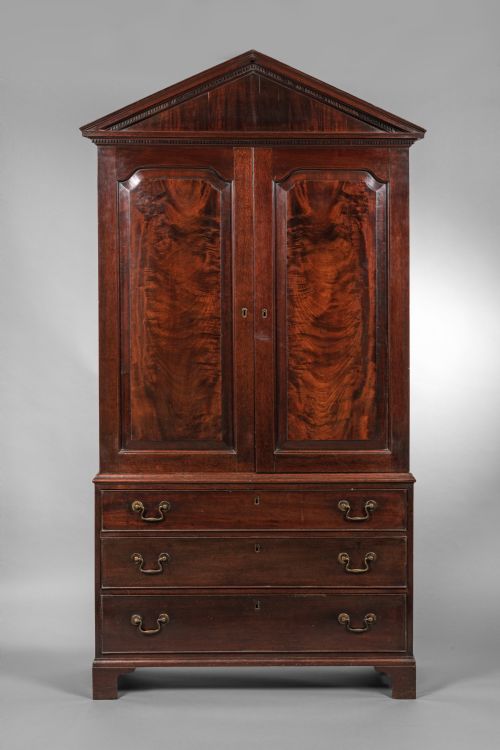


Pedimented Mahogany Wardrobe
A pedimented mahogany wardrobe brings architectural authority to a bedroom, combining rich cabinet timber with a classical upper crown.
Pedimented Mahogany Wardrobe
When you search for a pedimented mahogany wardrobe, you are looking at large storage furniture built during the eighteenth and nineteenth centuries, characterised by a prominent architectural top crown above timber doors. The examples listed on this page span the Georgian, Regency, and William IV periods, alongside later nineteenth-century and turn-of-the-century interpretations.
The most common forms you will meet here include linen presses, gentleman's cupboards, and tall two-door wardrobes. These pieces combine a cornice or swan-neck pediment with panelled mahogany doors, often concealing sliding trays or hanging space within the upper section above drawer chests.
Origins represented in these listings point firmly to English and Irish workshops working from the mid-eighteenth century onward. You encounter distinct regional character, from strict George III neoclassical restraint to more decorative Irish Regency proportions and French Empire styling.
How they were made
Cabinet makers constructed these large pieces using solid mahogany and figured flame mahogany veneers laid over secondary timbers such as oak. The striking grain patterns seen on the doors rely on careful timber selection and expert sawing to bring out the natural chatoyancy of the wood.
Decorative surface enrichment relied on contrasting inlay work, utilising satinwood banding and boxwood stringing to frame panels and cornices. Structural hardware typically included brass escutcheons and handles, while architectural pediments were painstakingly carved and joined to the main carcase.
Pedimented Mahogany Wardrobe Retail Price Guide 2026
Typical asking prices for pedimented mahogany wardrobe among the pieces listed under this phrase on Sellingantiques today, from the lower quarter to the upper quarter. They describe what is for sale here now, not the wider market.
Some gentleman's presses conceal clever sliding trays behind their grand pediments, originally designed to keep linen crisp before the invention of the coat hanger.
What varies in quality
The distinction between ordinary and exceptional pieces rests upon the architectural ambition of the pediment and the choice of mahogany veneers. A swan-neck pediment with finely carved wooden details or crisp satinwood banding demonstrates a higher level of cabinet-making skill than a plain moulded cornice.
Proportion and interior configuration also separate standard pieces from the finest examples. Linen presses featuring original sliding linen trays, intact brasswork, and harmonious drawer arrangements beneath the upper cabinet command greater appreciation among collectors.
The Pedimented Mahogany Wardrobe Glossary
- Pediment
- An architectural crowning feature at the top of a piece of furniture, derived from classical building design. Swan-neck versions curve upwards to a central scroll or finial.
- Linen Press
- A tall two-door cupboard containing sliding wooden trays for storing folded textiles, traditionally set above a chest of drawers.
- Flame Mahogany
- A figured timber veneer cut from the branch forks of the mahogany tree, displaying a distinctive flame-like pattern across the door panels.
- Satinwood Banding
- A narrow decorative border of pale, lustrous exotic timber inlaid into the darker mahogany carcase to create visual contrast.
- Gentleman's Press
- A specific form of storage cabinet designed for a man's wardrobe, combining upper linen storage with a fitted writing drawer or chest base.
Pedimented Mahogany Wardrobe: Frequently Asked Questions
What is a pedimented mahogany wardrobe?
It is a tall storage piece defined by its rich mahogany timber and an architectural crowning pediment at the very top. These items originated primarily in the eighteenth and nineteenth centuries as functional bedroom furniture.
They often combine hanging space or sliding linen trays with chest bases, offering substantial storage beneath a decorative classical facade.
Were these always used for clothes?
Many were built specifically as linen presses to store household textiles flat on sliding wooden shelves before modern wardrobes with hangers became standard.
Over time, interiors were frequently adapted to accommodate modern clothes rails while preserving the historic exterior facade.
How do I fit one into a modern room?
These large wardrobes require careful measurement of ceiling height to accommodate the prominent pediment without obstruction. Position them against a principal wall where their architectural presence can anchor the room.
Ensure adequate clearance for doors to open fully, particularly if the interior retains pull-out linen slides or deep drawers.