

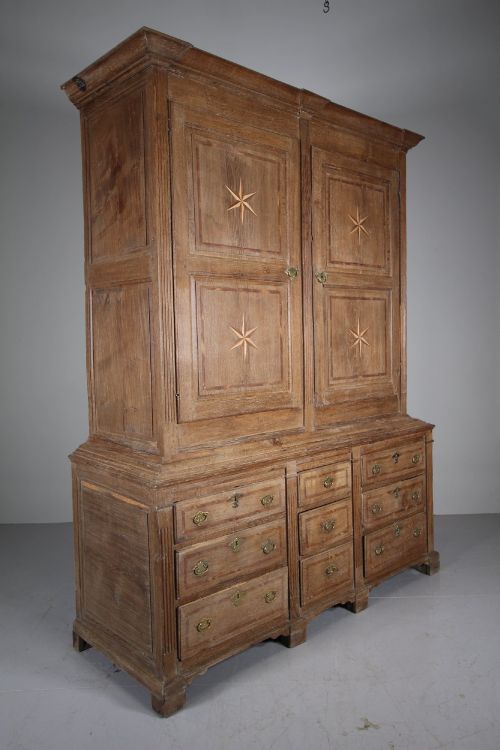
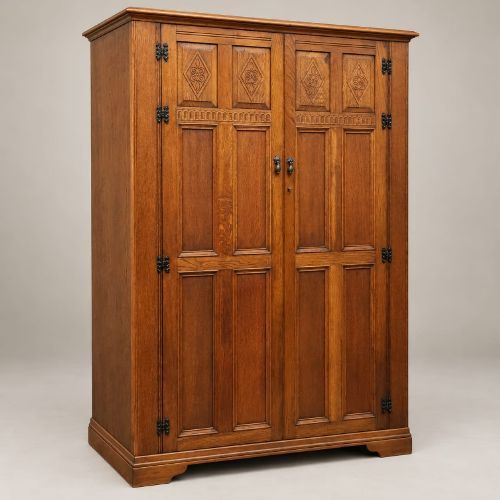
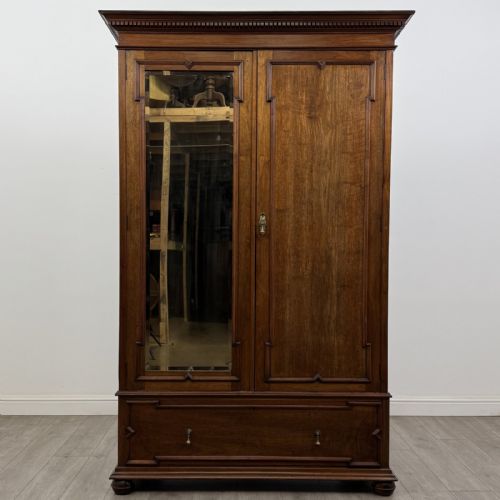
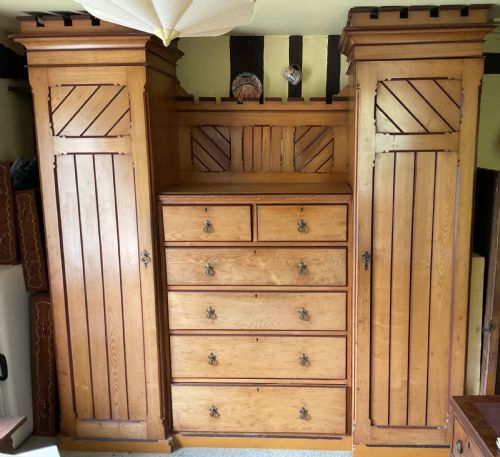
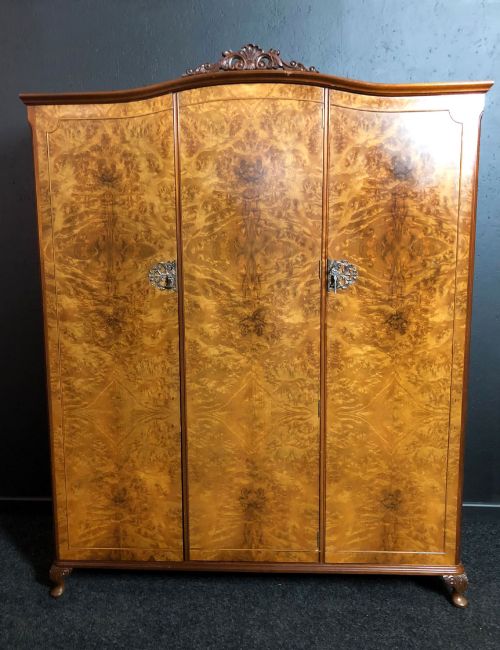
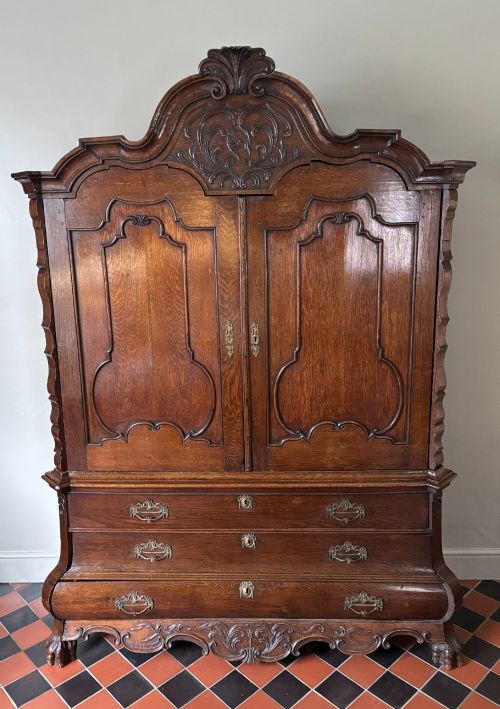
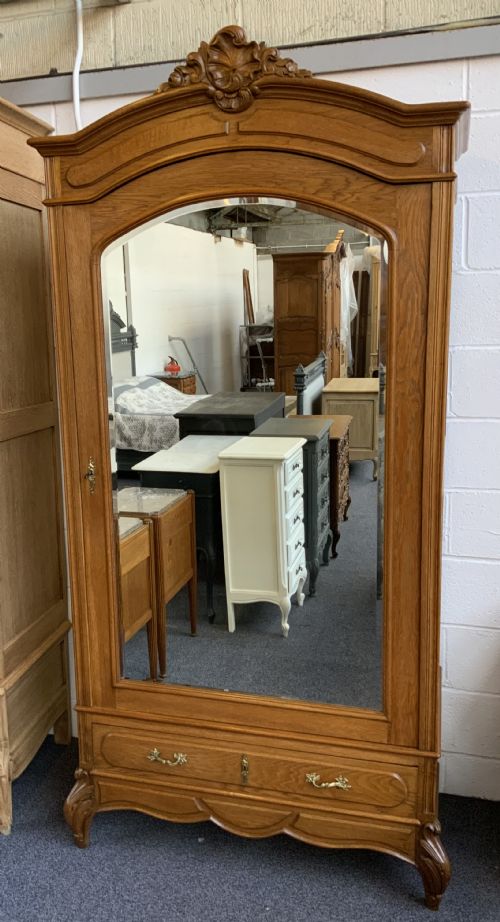
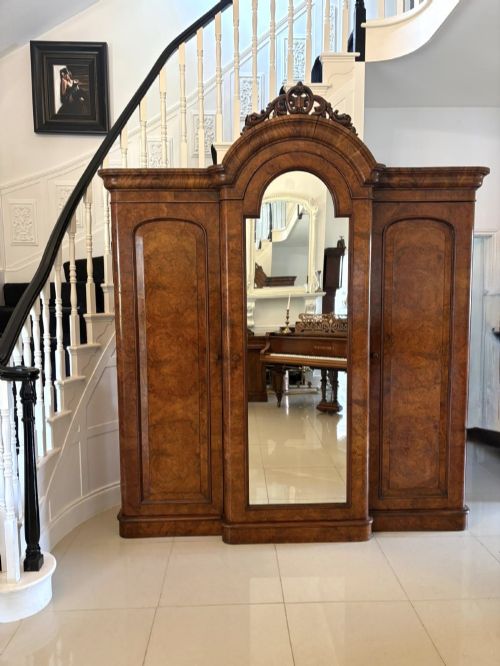
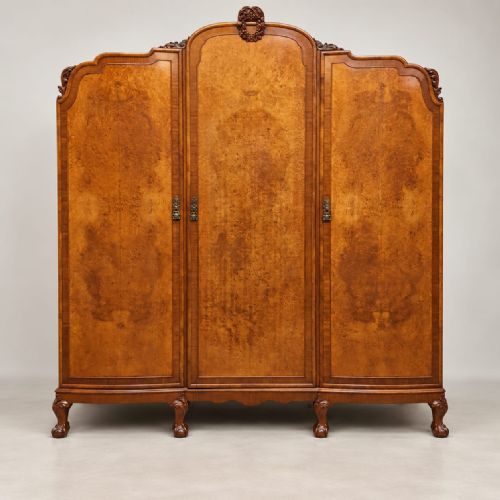
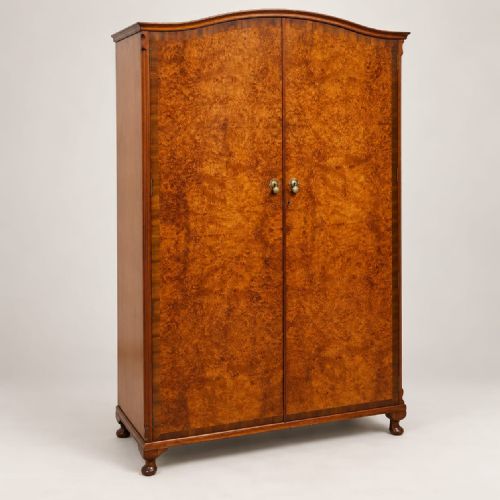
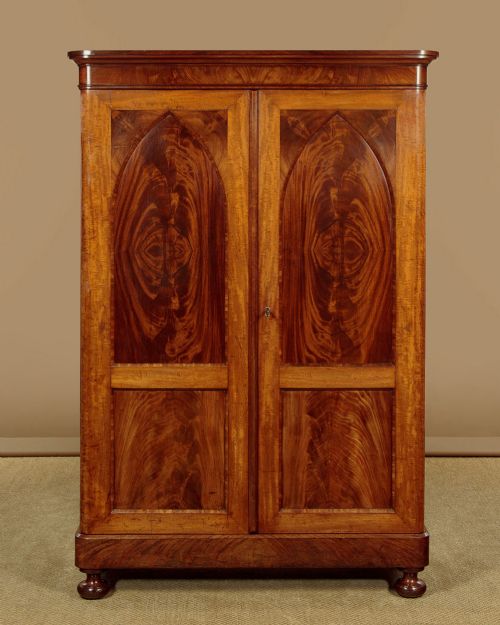
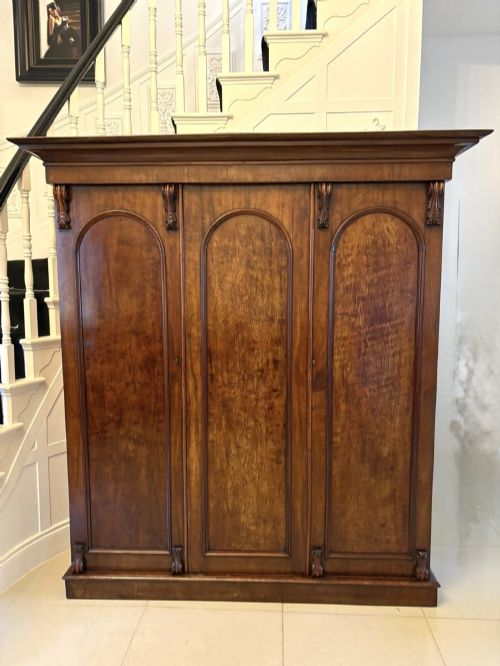
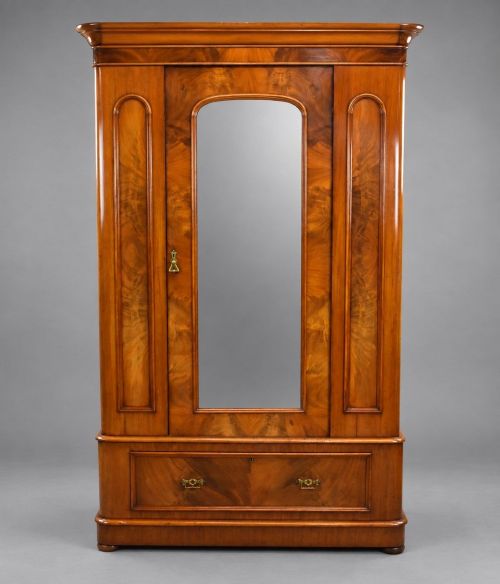
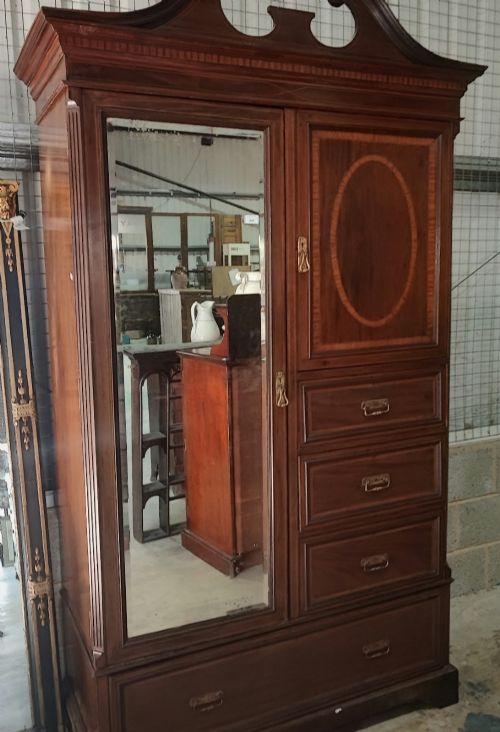
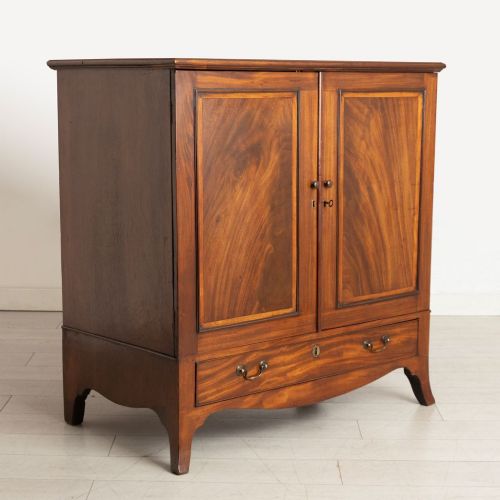
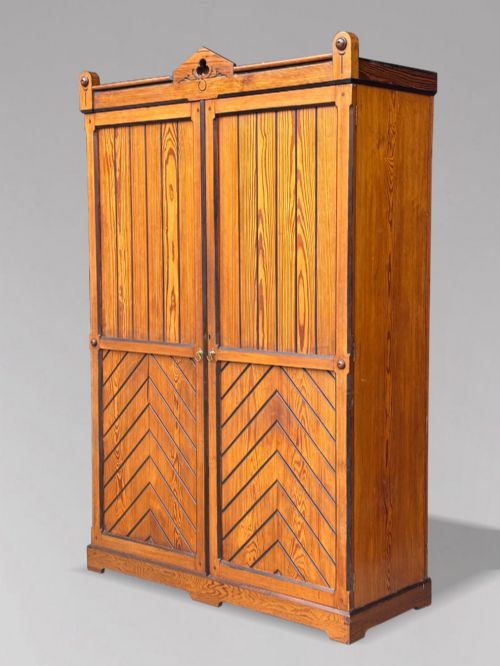
Brown Wooden Armoire
A brown wooden armoire offers substantial storage through periods ranging from Georgian to Edwardian in mahogany, oak, and walnut.
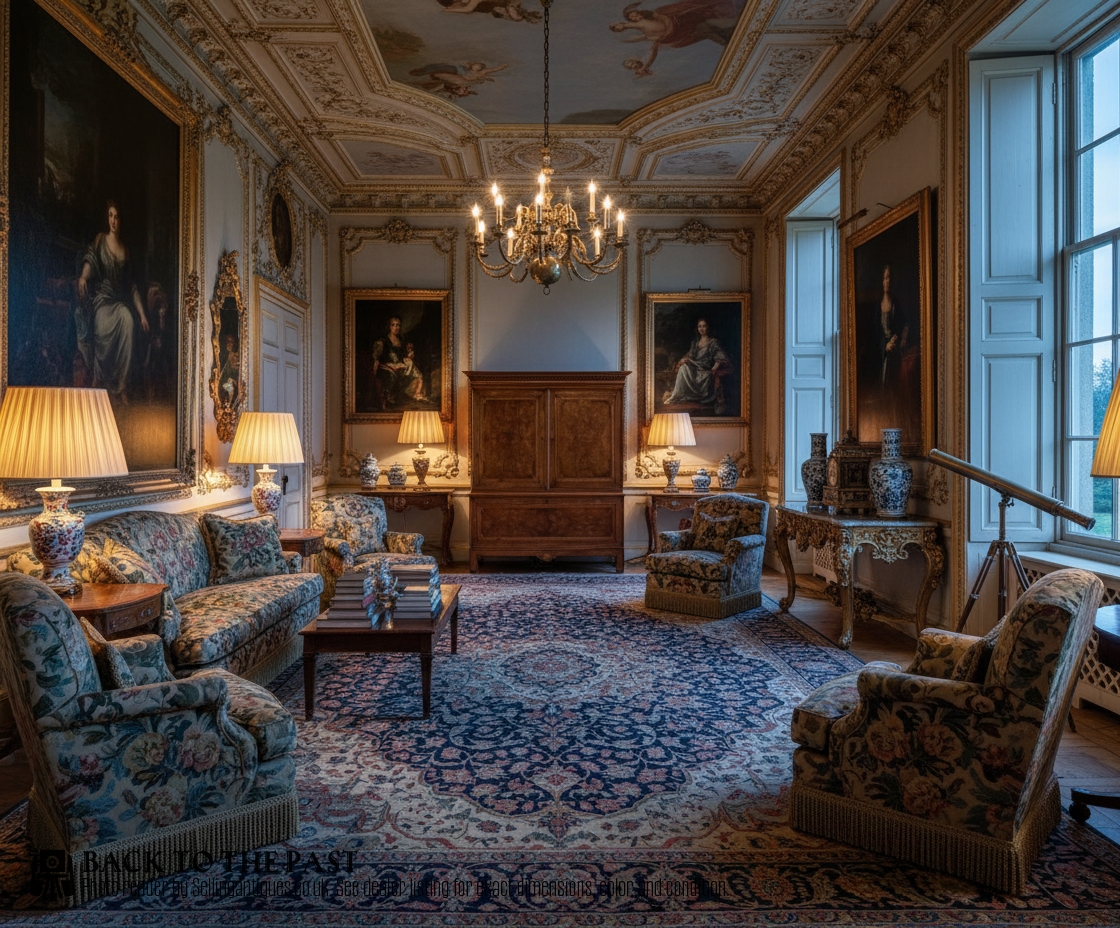
Brown Wooden Armoire
A brown wooden armoire spans practical storage forms including wardrobes, linen presses, compactums, and cupboards across the eighteenth, nineteenth, and twentieth centuries. Buyers search this phrase to find large timber storage furniture that anchors a bedroom or hall with period presence.
The pieces appearing here lean heavily toward nineteenth-century production, alongside Georgian and Edwardian examples. Woods run from rich mahogany and burr walnut to oak, ash, pine, and cherry.
Forms vary from simple two-door wardrobes to breakfront linen presses, triple-door combination compactums, and tall corner cabinets. French and continental armoires sit alongside British farmhouse and urban pieces.
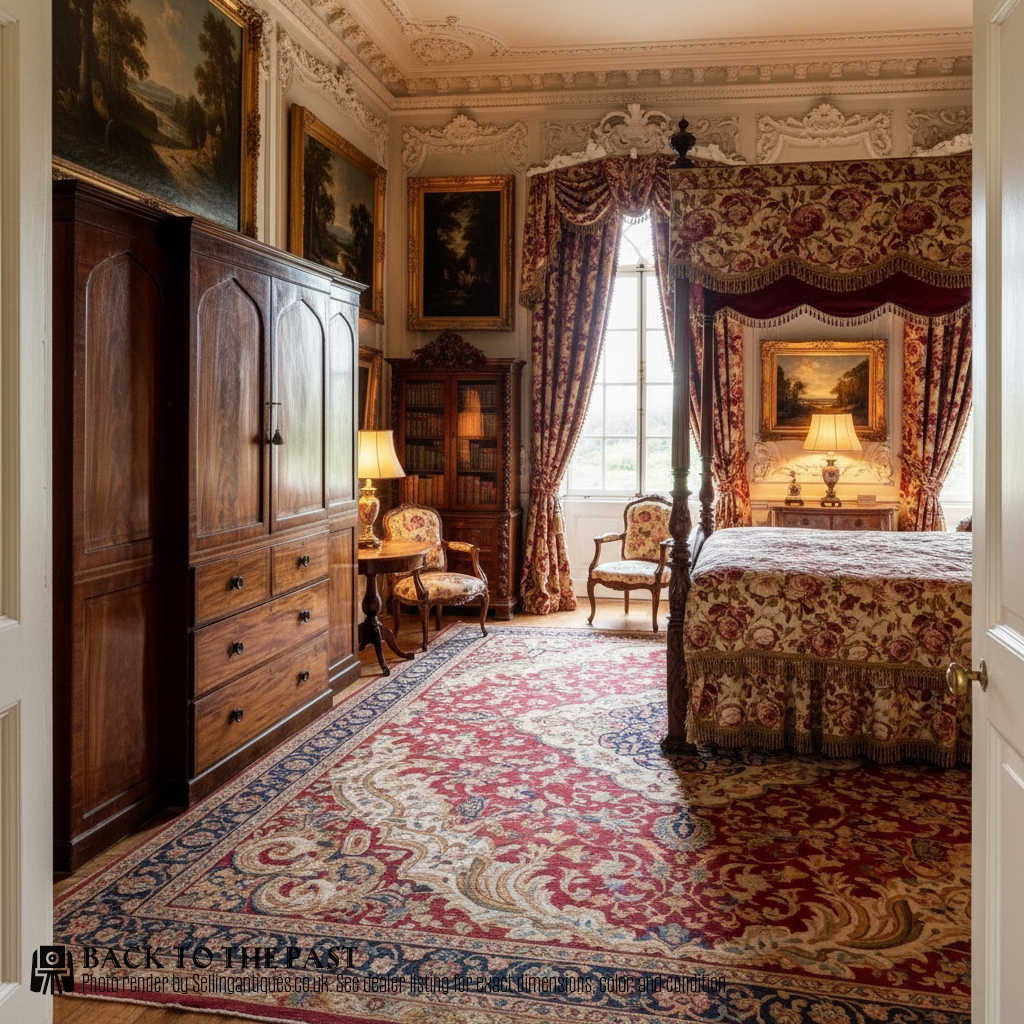
How They Were Made
Cabinetmakers built these pieces using solid timbers and veneers over secondary woods, selecting mahogany, walnut, oak, and ash for both structural integrity and decorative grain. Brass hardware, iron hinges, and glass panels appeared alongside inlaid satinwood and marquetry details.
Construction methods relied on traditional joinery, hand-carved panels, and dovetailed carcases. Larger items were often designed in two parts or as breakfront units to facilitate movement and assembly in period homes.
Brown Wooden Armoire Retail Price Guide 2026
Typical asking prices for brown wooden armoire among the pieces listed under this phrase on Sellingantiques today, from the lower quarter to the upper quarter. They describe what is for sale here now, not the wider market.
Periods range from eighteenth-century Georgian and George III pieces through Victorian and Edwardian up to nineteen-twenty.
What Varies in Quality
The grade of timber selection distinguishes standard utility pieces from exceptional commissions, particularly in the figuring of flame mahogany and burr walnut veneers. Master workshops invested care in matching grain patterns across large doors and drawer fronts.
Internal configuration and joinery refinement mark the upper tier of production, especially in fitted compactums and gentleman's wardrobes by known makers. Carved ornamentation, inlay precision, and original brass or metal fittings indicate the level of craftsmanship.
maples & co·Edwards and Roberts·Holland and Sons·S & H Jewell·Heals
The Brown Wooden Armoire Glossary
- Armoire
- A tall wardrobe or cupboard used for hanging garments and storing textiles. These large storage pieces often feature double doors enclosing shelves or hanging space.
- Compactum
- A fitted multi-section wardrobe combining hanging space, drawers, and linen slides. This efficient design organises diverse apparel within a single large piece.
- Linen Press
- A dual-purpose piece with upper sliding trays for folded textiles and lower drawers for bulkier items. Georgian and Victorian examples frequently use mahogany or oak.
- Marquetry
- Decorative veneer work forming intricate patterns using various coloured woods. Craftsmen applied these geometric or floral designs to door panels and drawer fronts.
Brown Wooden Armoire: Frequently Asked Questions
What is a brown wooden armoire used for?
These pieces provide heavy-duty storage for garments, folded linens, and household items. Interiors often combine hanging rails, sliding trays, and deep drawers.
Historically placed in bedrooms and dressing rooms, they serve the same practical function in modern homes while adding period timber character.
How do I date a brown wooden armoire?
Dating relies on timber choices, construction methods, and stylistic cues from periods like the Georgian era or Victorian reign. Mahogany and walnut dominated eighteenth and nineteenth-century workshops, while oak and ash appeared across both country vernacular and revival pieces.
Hardware details, dovetail construction, and internal linings provide further clues to the decade of manufacture.
Will a large armoire dismantle for transport?
Many larger examples, particularly nineteenth-century wardrobe sections and two-part housekeeper cupboards, were built to separate into modular components. Cornices, bases, and side panels often disconnect to ease delivery.
Checking construction specifics helps confirm whether a given cabinet disassembles before moving it through tight doorways.
What is the difference between an armoire and a linen press?
An armoire focuses primarily on vertical hanging space enclosed by large doors. A linen press incorporates internal sliding trays designed specifically for flat-stored textiles.
Both forms utilise rich timbers like mahogany and oak, but their internal architecture reflects different domestic storage needs.