
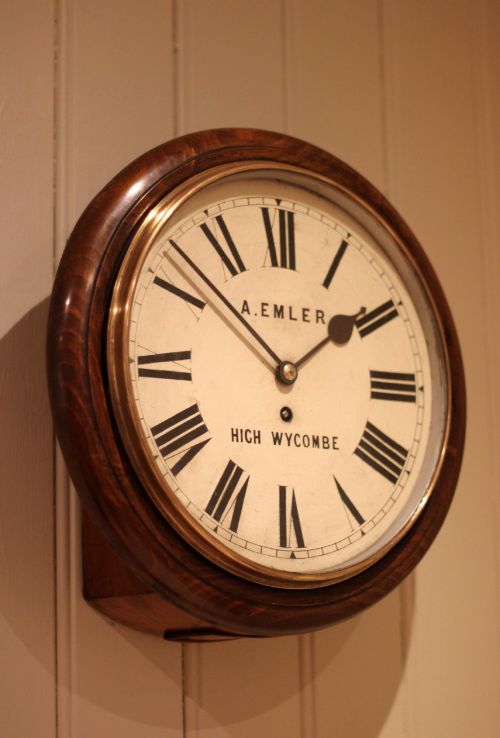
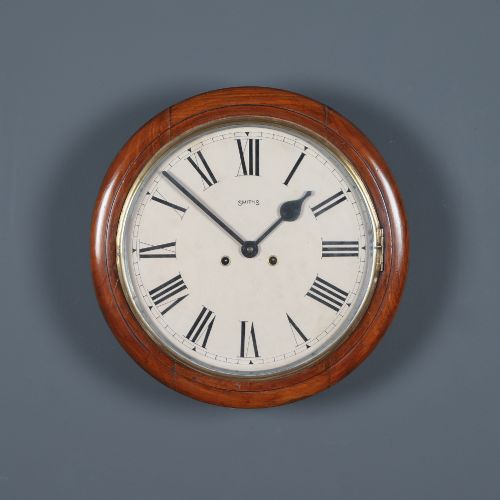
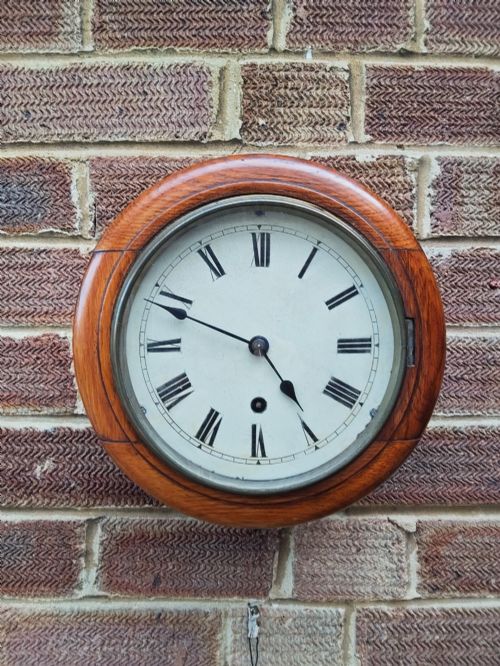
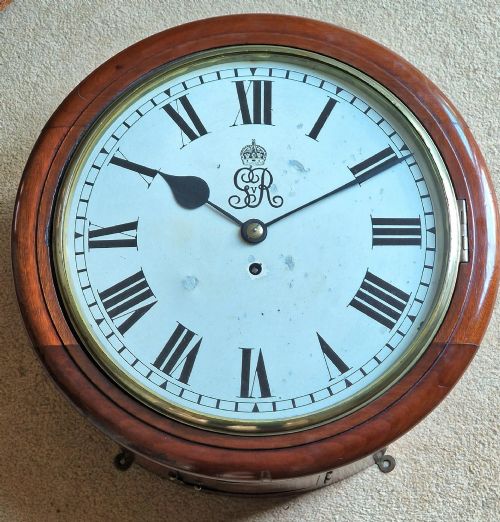


Brown Wood Wall Clock
When you need a brown wood wall clock, you find timepieces shaped by Victorian precision and interwar utility, built to anchor a room.

Brown Wood Wall Clock
A brown wood wall clock brings mechanical timekeeping into domestic and public spaces through dial clocks, drop-dial pieces, and cuckoo clocks. These objects emerge from the nineteenth and early twentieth centuries, spanning Victorian, Georgian, and interwar periods.
The versions most common on this page are mahogany and oak dial clocks, alongside walnut and beech examples. Makers housed these movements in round or drop-dial timber cases designed to hang securely against plaster and wood panelling.
Beyond standard timepieces, the selection extends to combined wall barometers and thermometers housed in matching timber frames. Their origins stretch from British workshops in London and High Wycombe to Black Forest and Japanese production.
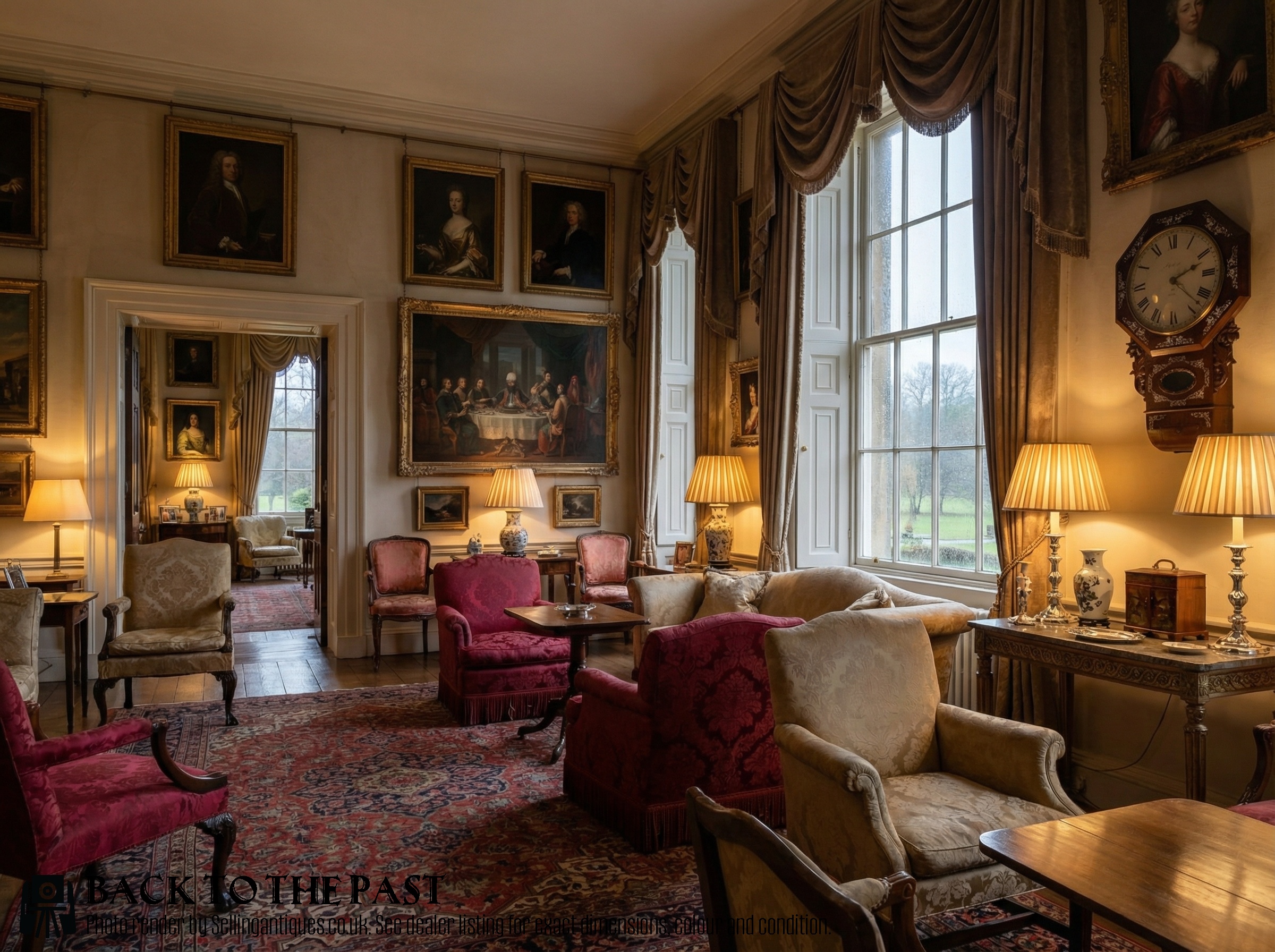
How they were made
Cabinetmakers constructed the housing using solid hardwoods like mahogany, oak, walnut, and beech, frequently applying burr walnut veneers or rosewood inlays for decorative depth. Brass components form the bezels, dial surrounds, and internal fusee or striking mechanisms.
Glass protects the painted or enamelled dials, held within hinged brass or wooden rims. Carved details and turned bezels emerge from the nineteenth-century workshop tradition, joining timber and metal with hand-fitted precision.
Brown Wood Wall Clock Retail Price Guide 2026
Typical asking prices for brown wood wall clock among the pieces listed under this phrase on Sellingantiques today, from the lower quarter to the upper quarter. They describe what is for sale here now, not the wider market.
Materials span mahogany, burr walnut, oak, beech, and rosewood, paired with brass bezels and glass dial covers.
What varies in quality
The standard of timber preparation and case construction defines the upper tier of these timepieces, where selected mahogany or burr walnut shows crisp carving and tight joints. Simpler beech or general trade pieces rely on straightforward utility rather than decorative cabinetwork.
Movement sophistication sets the grade across these clocks, distinguishing standard spring-driven dials from complex twin fusee or bell-striking mechanisms. Dial legibility, original painted numerals, and undamaged brass bezels further separate ordinary items from finer examples.
Smiths·Edward Hannam·Negretti and Zambra·J Fisher Esq
The Brown Wood Wall Clock Glossary
- Fusee
- A conical pulley connected to the mainspring by a chain or cord, designed to equalise the torque as the spring unwinds. This mechanism ensures consistent timekeeping power throughout the duration of the wind.
- Drop-dial
- A clock case featuring a circular dial at the top and an extended lower wooden trunk to accommodate the pendulum swing. This drop-dial form became a staple of nineteenth-century office and railway architecture.
- Dial clock
- A wall-mounted timepiece dominated by a prominent circular face with minimal surrounding timber case. They were widely utilised in railway stations, schools, and offices for clear visibility.
- Aneroid barometer
- An instrument measuring atmospheric pressure through the expansion and contraction of a sealed metal capsule without liquid mercury. These barometers often share timber wall cases with clock movements.
- Twin fusee
- A clock movement utilising two separate fusee cones to power both the timekeeping train and the striking train independently. This arrangement maintains equal force for the bell strike.
Brown Wood Wall Clock: Frequently Asked Questions
Where do I hang a wall clock?
Mount your brown wood wall clock on a solid wall using fixings appropriate for the weight of the timber case and internal movement. Ensure the position avoids direct sunlight and damp conditions to protect the wood and mechanism.
Position the clock at eye level where the dial remains easily readable from your primary living spaces. Leave sufficient clearance below drop-dial models for the pendulum to swing freely without obstruction.
How do fusee clocks work?
A fusee clock uses a conical pulley and a chain to regulate the pull of the mainspring. As the spring loses tension, the chain moves to a wider part of the cone, maintaining steady power to the gears.
This system allows the clock to keep more accurate time than a standard spring-driven movement as the power diminishes. Winding the clock turns the chain back up the cone to reset the mechanism.
What is a school clock?
A school clock is a traditional wall timekeeper featuring a clear white dial and a sturdy wooden surround designed for institutional legibility. These clocks were built to withstand heavy daily use in classrooms and public buildings.
They typically house reliable fusee or eight-day movements inside straightforward mahogany or oak cases. Their plain aesthetic makes them versatile for domestic interiors today.
How do I identify a Victorian clock?
Victorian brown wood wall clocks often display characteristic mahogany or walnut timber cases with turned bezels and carved lower brackets. Look for hand-painted dials, brass fittings, and traditional fusee movements dating from the nineteenth century.
Maker signatures on the dial or movement backplate can also point toward specific Victorian workshops and decades of production. The weight of the timber and the depth of the case generally reflect the period's cabinet standards.