
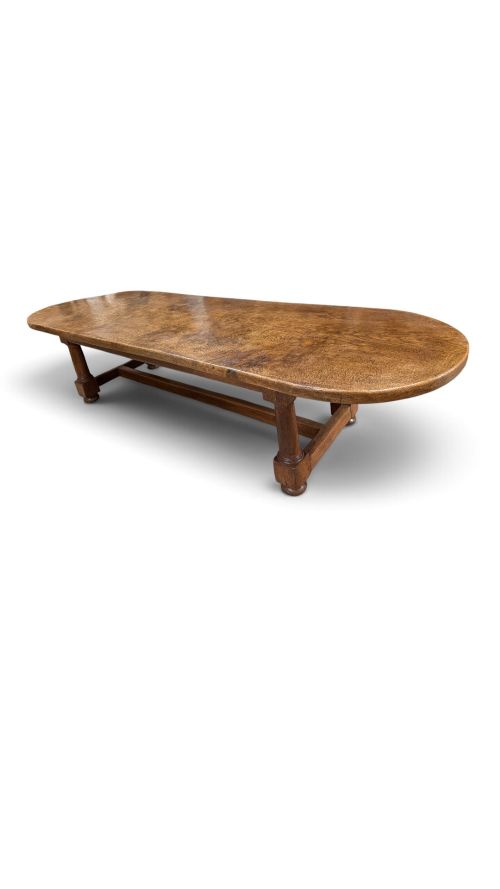
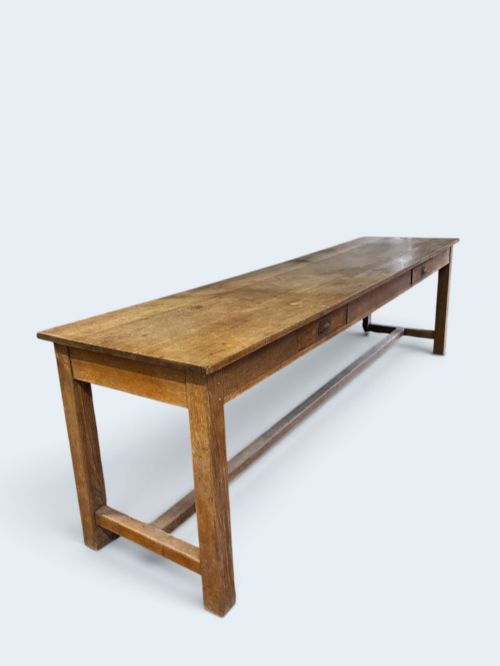
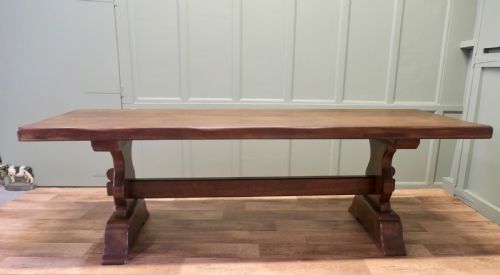
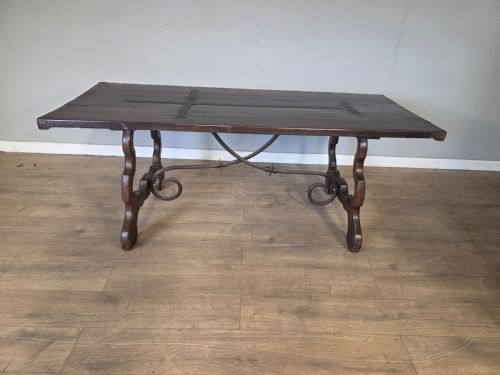
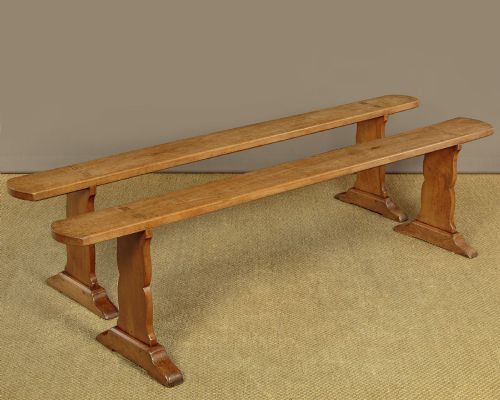
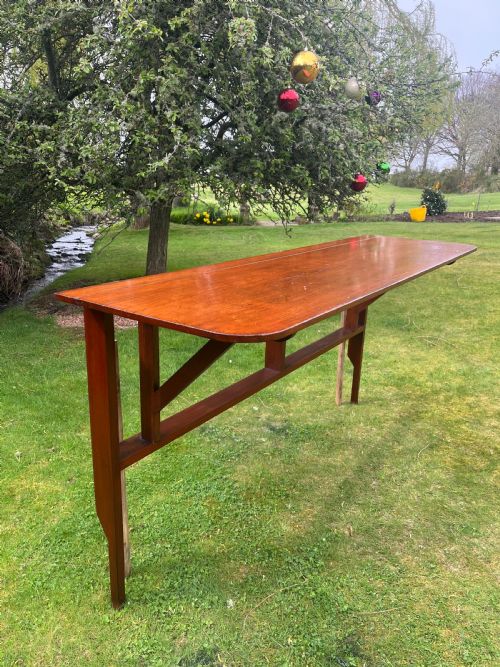


Brown Wood Trestle Table
A brown wood trestle table provides a sturdy surface built for gathering, rooted in centuries of practical carpentry.
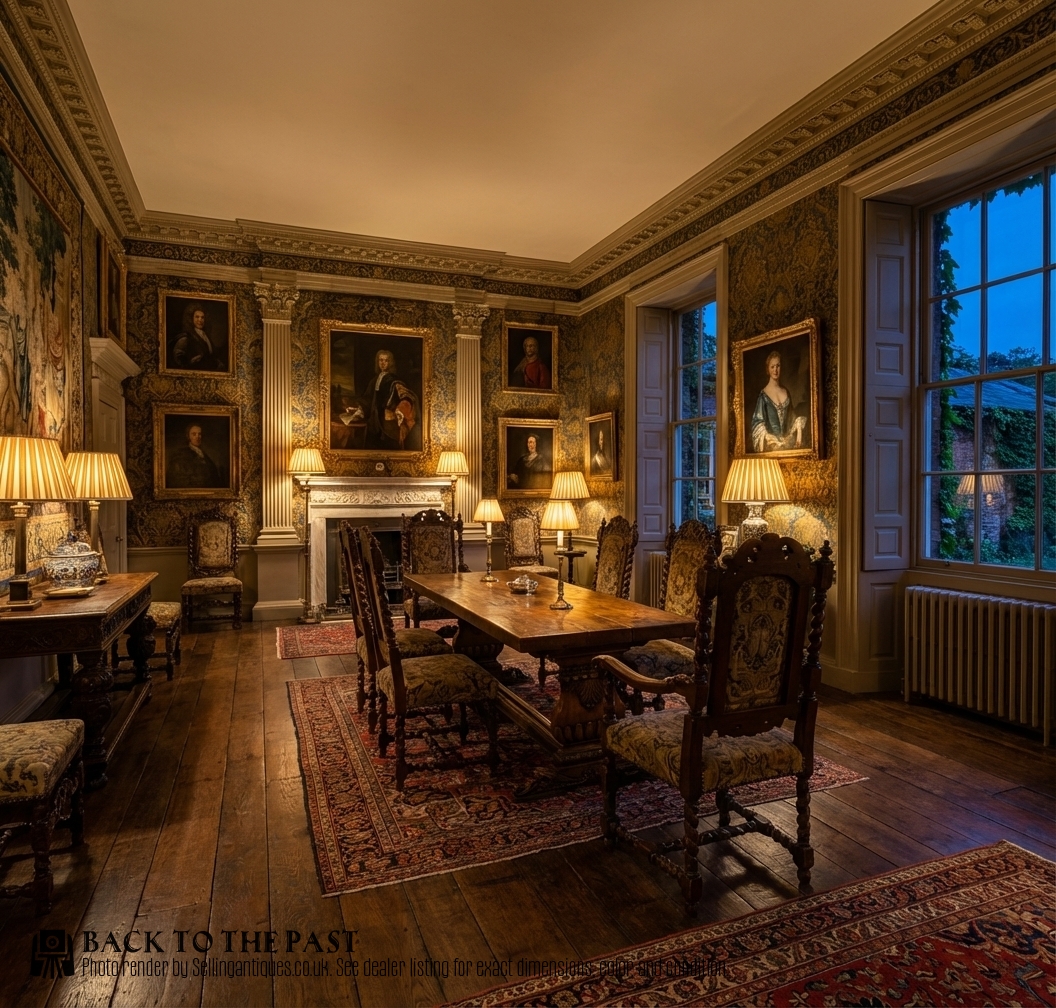
Brown Wood Trestle Table
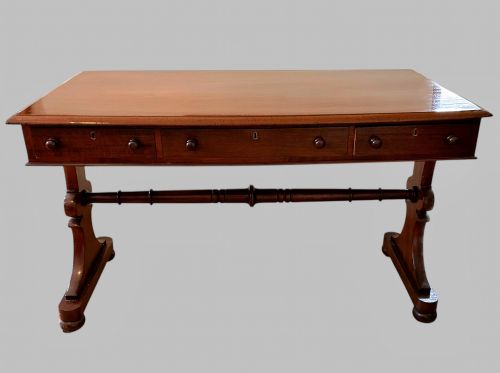
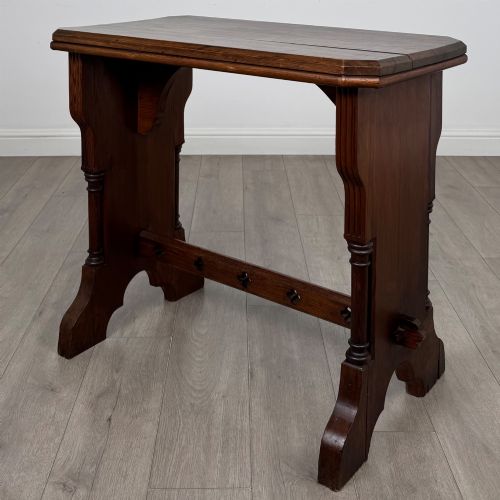
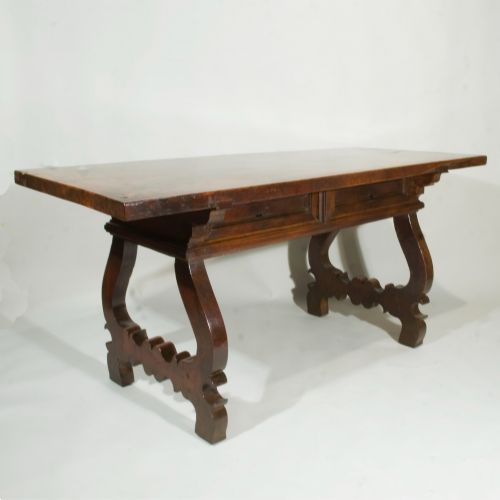
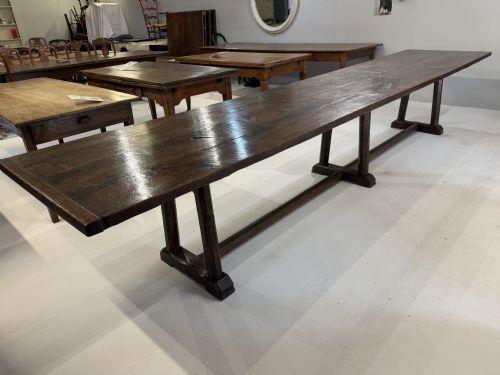
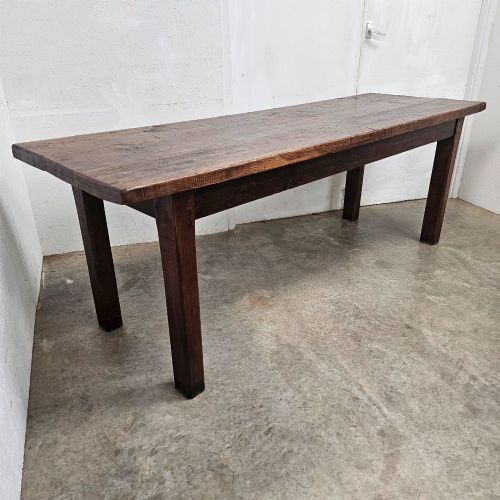
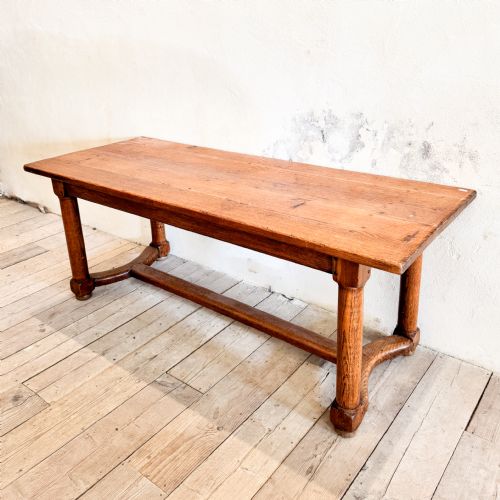
A brown wood trestle table is primarily identified by a top supported by upright legs connected to a central stretcher or base, appearing across dining tables, refectory tables, and side tables. Buyers seeking a brown wood trestle table encounter substantial timbers and functional framing designed for communal dining and utility.
The selections span multiple eras, including the eighteenth century and the Victorian period, alongside styles such as rustic country, rustic farmhouse, Spanish Baroque, and French provincial. Oak, walnut, and mahogany dominate the forms, while specialised variants like Chinese hardwood and Spanish walnut highlight regional carpentry traditions.
Refectory and dining tables represent the most frequent forms in this group, often featuring thick plank tops and simple structural braces. Smaller variations such as side tables and quartetto tables adapt the format to domestic spaces while retaining timber construction.
Materials and construction
Makers utilised solid hardwoods including oak, walnut, mahogany, and cherrywood, selecting timber for density and grain pattern. Planks were frequently joined to form thick tops capable of enduring heavy daily use.
Joinery relied on traditional framing methods, securing trestle bases and feet with tenons and wooden pins. Metal components such as brass fittings and wrought iron braces occasionally reinforced the wooden structures.
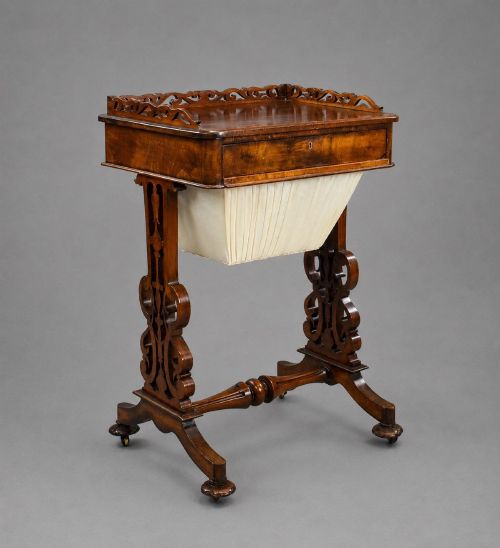
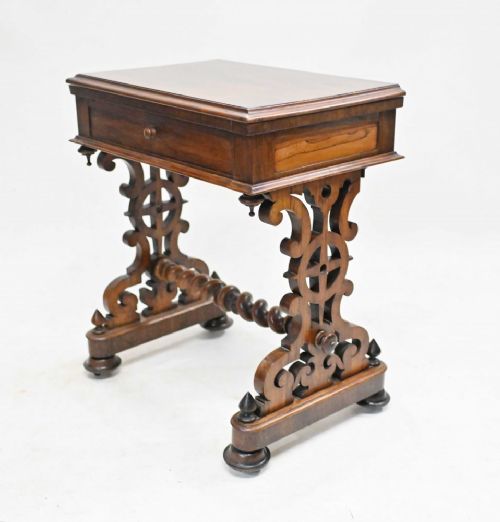
Surfaces received finishes suited to the timber, ranging from polished flame mahogany veneers to oiled or waxed oak and walnut planks. Marquetry and carved details appeared on select library and games tables.
Some nineteenth-century tables come with hidden chess boards and backgammon boards built right into the top, ready for an impromptu match.
Distinctions in craftsmanship
The selection of timber dictates the initial tier of quality, with dense quarter-sawn oak, figured walnut, and flame mahogany marking superior examples. Grain alignment across multi-plank tops and the depth of natural figuring separate standard utility items from finer formal furniture.
Structural integrity depends on the precision of the trestle joints and the stability of the central stretchers. Tables retaining thick, single-plank tops without excessive warping demonstrate deliberate material selection by the maker.
Surface treatment and decorative execution differentiate workshops, from simple vernacular planing to intricate marquetry, Killarney ware, or carved padouk details.
The Brown Wood Trestle Table Glossary
- Trestle table
- A table featuring a horizontal beam supported by two vertical legs or frames. This configuration maximises legroom along the length of the top.
- Refectory table
- A long, narrow dining table traditionally used in monastic refectories and large domestic halls. They frequently utilise heavy oak or walnut planks and sturdy stretcher bases.
- Quartetto tables
- A set of four graduating occasional tables designed to nest inside one another. Regency makers often produced these in rosewood or mahogany.
- Vendange table
- A round or oval French table associated with grape harvesting and wine production. They typically feature folding or pivoting tops supported by trestle or barrel-leg bases.
- Marquetry
- The art of applying pieces of veneer to a structure to form decorative patterns. Craftsmen utilised contrasting timbers like yew and mahogany to create geometric or pictorial designs.
Brown Wood Trestle Table: Frequently Asked Questions
How do I style a brown wood trestle table?
Pair the table with benches or simple chairs to let the timber top remain the visual focus of the room. Keep centrepieces low to maintain the line of the surface.
In a dining space, allow adequate clearance around the trestle ends for seating. Layering textiles such as table runners can soften the darker tones of walnut and oak.
Are these tables suitable for daily dining?
Solid hardwood construction makes these pieces well suited to regular daily use. Thick plank tops withstand heavy items and daily activity without compromising stability.
Using coasters and mats protects polished mahogany and walnut finishes from moisture and heat. Regular waxing maintains the moisture barrier on oak and cherry surfaces.
What is a refectory table?
A refectory table is a long dining table originally designed for communal dining halls. The design uses inset legs or trestles connected by a low stretcher to provide stability along the length.
Examples on this page date from the eighteenth century onwards in oak and walnut. Their proportions suit large dining rooms and open-plan spaces.
How do I identify mahogany furniture?
Mahogany displays a reddish-brown hue that deepens with age and exposure to light. The grain ranges from straight patterns to highly figured flame effects.
Victorian and Regency makers frequently utilised this timber for library, writing, and sofa tables. The weight and dense grain distinguish it from lighter softwoods.