
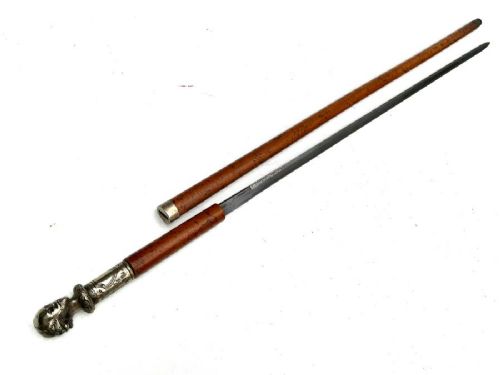
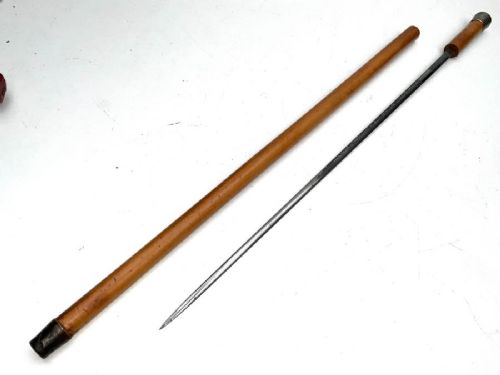


Brown Wood Sword Stick
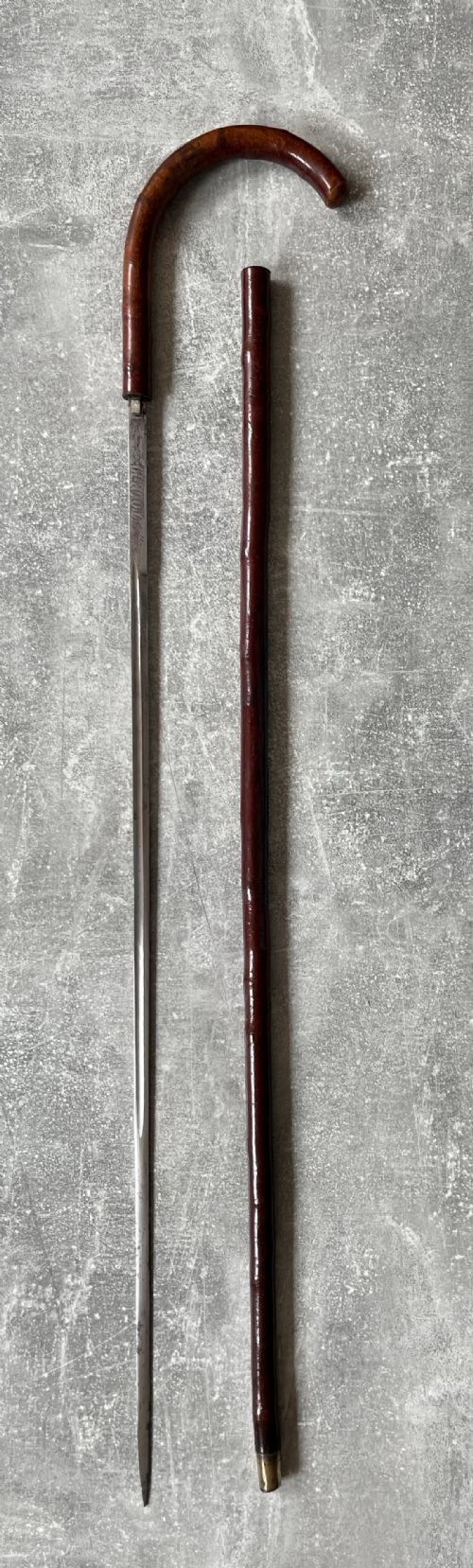
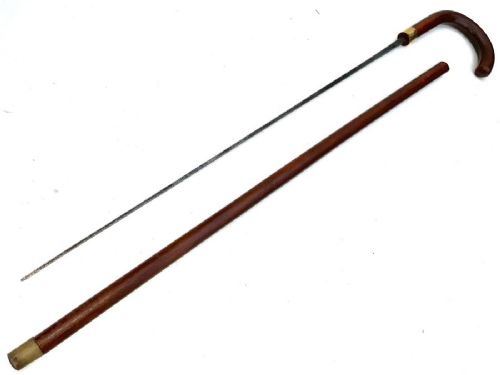
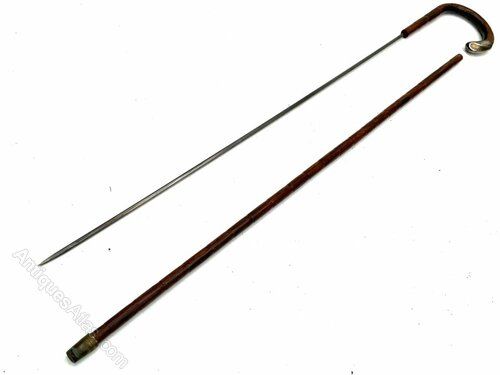
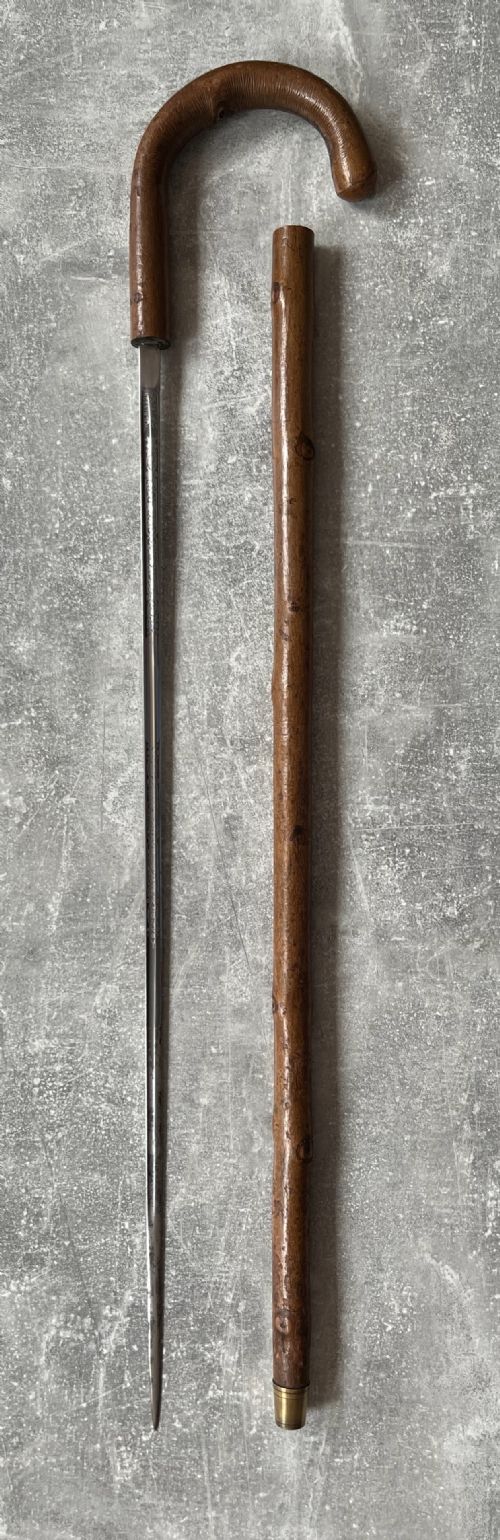
A brown wood sword stick combines a conventional walking cane with a concealed steel blade, offering discreet protection for the Victorian and Edwardian gentleman.
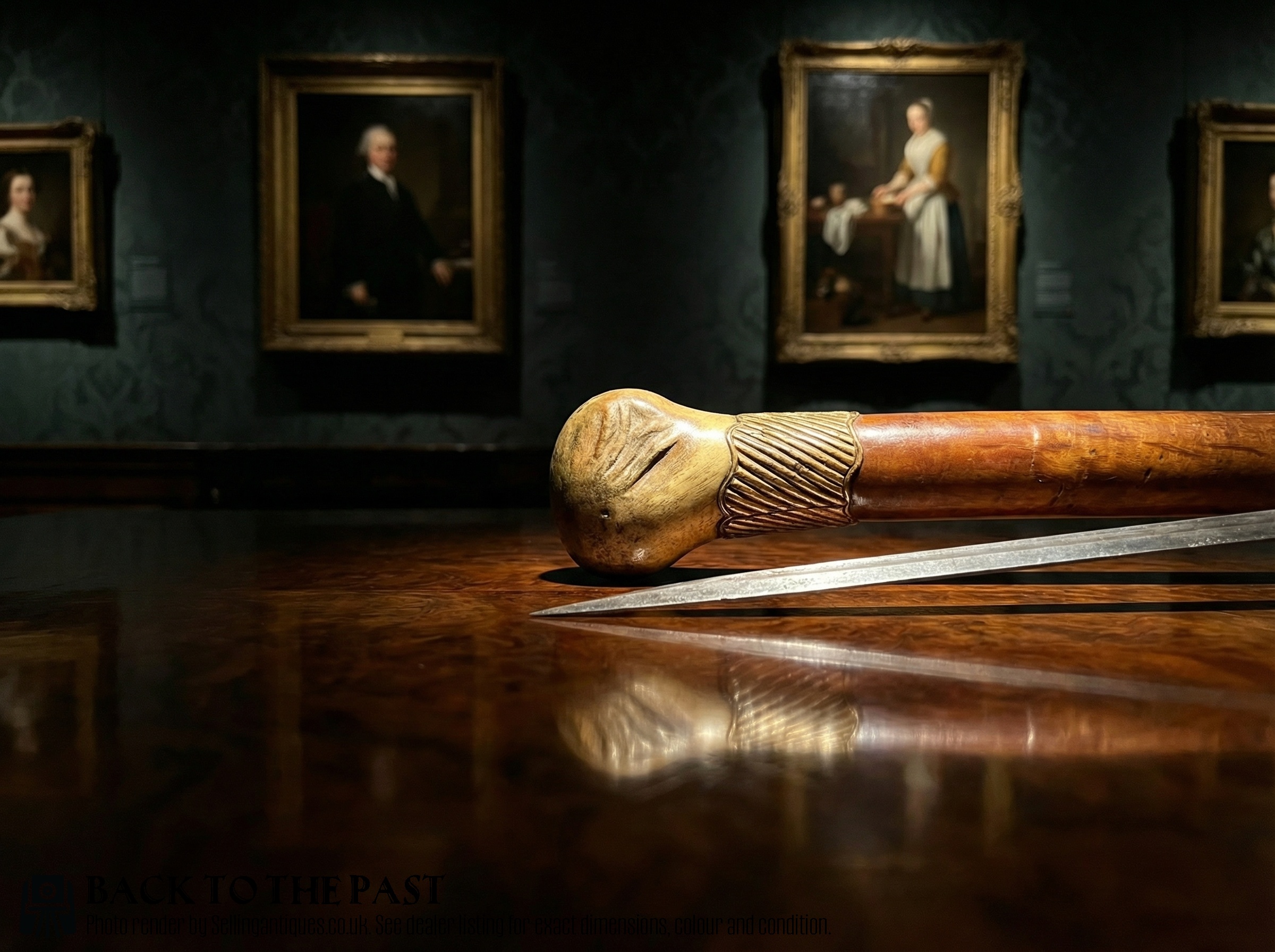
Brown Wood Sword Stick
A brown wood sword stick serves as a dual-purpose implement, housing a sharp metal blade within a timber shaft disguised as a standard gentleman's walking stick. The pieces found here span the Victorian era, the Edwardian period, and the early twentieth century up to nineteen twenty.
The selection includes specific timber varieties such as partridge wood, cherrywood, malacca cane, chestnut, and hazel wood. Handles vary from simple crook shapes to root ends, antler grips, and silver-topped mountings.
Military associations are common among these items, with several examples linked to military officers and imperial German regiments, alongside masonic connections. Each piece maintains the appearance of an everyday walking aid while concealing a functional steel weapon inside.
Materials and construction
Makers utilised dense natural timbers like partridge wood and malacca cane to form the outer scabbard, ensuring the shaft could withstand daily use as a walking stick without warping and trapping the internal blade. Timber selection required seasoned hardwoods capable of holding a hollow core.
Blades forged from steel, including notable examples bearing Toledo and Wilkinson signatures, sit securely within the wooden housing, often released by a screw or catch mechanism. Brass and silver mounts frequently reinforce the collar and handle joints to prevent splitting during extraction.
Brown Wood Sword Stick Retail Price Guide 2026
Typical asking prices for brown wood sword stick among the pieces listed under this phrase on Sellingantiques today, from the lower quarter to the upper quarter. They describe what is for sale here now, not the wider market.
Listings feature woods including malacca, partridge wood, cherrywood, chestnut, and hazel, alongside steel blades from makers like Wilkinson.
Factors of quality and origin
The distinction between standard walking aids and superior examples rests on the quality of the blade maker and the selection of timber. Blades bearing signatures from renowned makers such as Wilkinson or Toledo elevate the piece significantly above uncredited workshop production.
Material choice and handle embellishment further differentiate the work, with solid silver mounts, antler grips, and dense figured woods like partridge wood or malacca indicating higher status than basic hazel or chestnut shafts.
Wilkinson·Toledo
The Brown Wood Sword Stick Glossary
- Swagger stick
- A short walking cane traditionally carried by military officers as a symbol of authority rather than a primary mobility aid.
- Malacca cane
- A high-quality stem of the rattan palm featuring distinctive brown mottled markings and notable flexibility used for walking sticks.
- Partridge wood
- A dense, durable tropical timber prized for its distinctive feather-like grain patterns resembling partridge feathers.
- Crook handle
- A curved top formed on a walking stick to allow the owner to hook it over an arm when not in use.
Brown Wood Sword Stick: Frequently Asked Questions
What is a sword stick?
A sword stick is a walking cane with a concealed metal blade housed inside the wooden shaft.
They were designed for personal defence and carried by gentlemen in the nineteenth and early twentieth centuries.
How do you release the blade?
Most examples release through a simple screw thread, a catch, or a pull mechanism near the collar.
This secures the blade inside the wooden scabbard until needed.
Were these used by the military?
Many surviving examples were carried by military officers during the Victorian and Edwardian periods.
Some bear specific regimental connections or swagger stick proportions.
How do I identify the wood type?
Examination of the grain and colour reveals whether a stick uses malacca, partridge wood, cherrywood, or hazel.
Heavier figured timbers often indicate higher quality construction.