




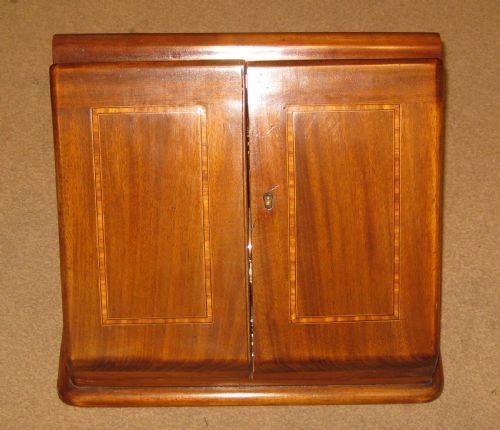


Brown Wood Stationery Box
These brown wood stationery box pieces combine practical desk organisation with fine period cabinetmaking from the eighteenth, nineteenth, and early twentieth centuries.
Brown Wood Stationery Box
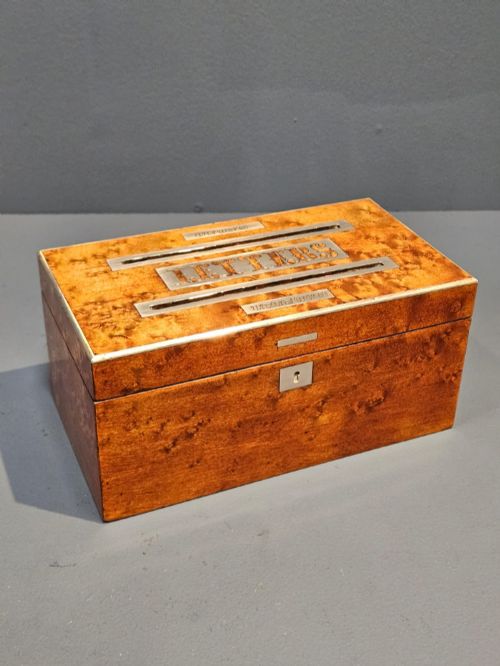
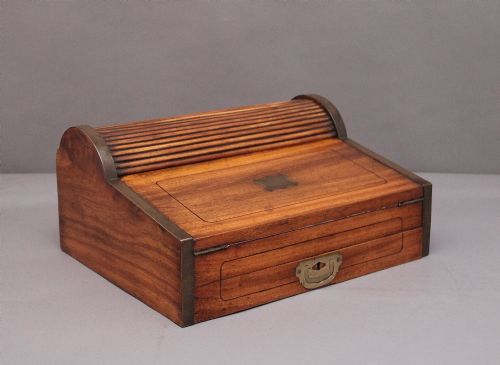
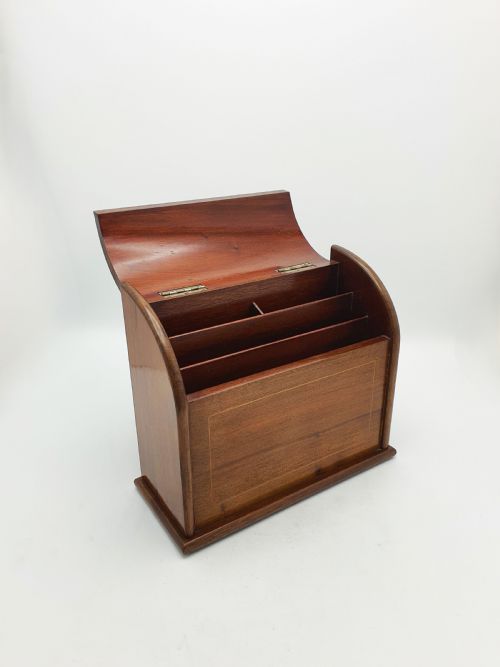
A brown wood stationery box provides a dedicated desktop storage solution for letters, correspondence, and writing materials. The pieces gathered here span Georgian, Victorian, and Edwardian periods, taking the form of slope boxes, letter holders, and hinged-lid cabinets.
Victorian examples dominate the selection, often rendered in mahogany, walnut, or exotic woods like burr satinwood and camphor. You will also encounter specialised items such as campaign writing slopes, Tunbridge ware boxes, and carved Black Forest desk tidies.
How They Were Made
Cabinetmakers utilised dense timbers like mahogany, rosewood, and oak, constructing carcasses with precise joinery to withstand daily desk use. Inlays of boxwood, contrasting woods, and detailed Tunbridge mosaic work decorate the surfaces of finer pieces.
Functional metal hardware forms an integral part of the construction, featuring brass carrying handles, escutcheons, hinges, and lock plates. Olive wood and camphor wood examples showcase regional carving traditions and specialised timber properties.
Among the desk tidies rests a carved Swiss Black Forest terrier dog box complete with an inkwell.
What Varies in Quality
Quality rests upon the choice of timber veneer, such as figured burr walnut or satinwood, and the precision of inlaid decorative details. Superior items exhibit harmonious grain matching across all exterior surfaces and finely fitted internal divisions.
The sophistication of the hardware and locking mechanisms distinguishes standard desk boxes from exceptional ones. Maker attribution, such as Tunbridge ware by Edmund Nye, elevates the standing of an individual piece.
Edmund Nye
The Brown Wood Stationery Box Glossary
- Stationery box
- A desktop container designed specifically to hold writing paper, envelopes, and letters in upright compartments or stacked trays.
- Writing slope
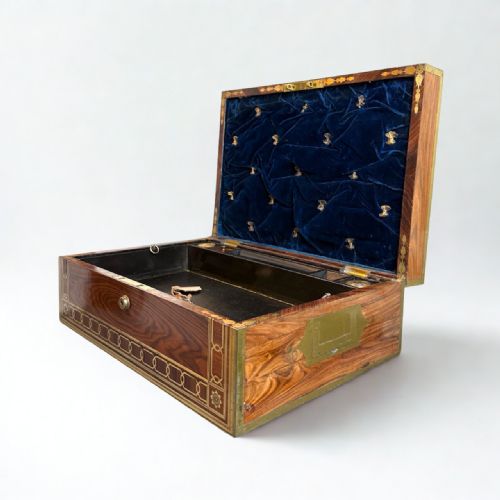
- A portable box with a hinged sloping lid that opens to reveal a slanted writing surface and concealed storage compartments for ink and pens.
- Tunbridge ware
- A form of British woodwork characterised by mosaic patterns assembled from thousands of tiny tinted wood blocks to create pictorial or geometric designs.
- Campaign box
- Portable furniture made in sections with recessed brass fittings, designed for easy dismantling and transport during military campaigns.
- Desk tidy
- A small desktop accessory or compartmented box intended to corral everyday writing implements, stamps, and small stationery items.
Brown Wood Stationery Box: Frequently Asked Questions
What is a brown wood stationery box used for?
These boxes organise writing paper, envelopes, and correspondence neatly upon a desk or writing table. Interior dividers keep letters sorted by size or urgency.
Historically, they kept personal writing materials private and secure using built-in locks and keys. Today, they serve both decorative and organisational roles in study spaces.
How do I identify a Victorian stationery box?
Victorian pieces frequently feature rich timbers such as coromandel, burr walnut, and mahogany, often enhanced with brass mounts or inlaid Tunbridge ware patterns. They typically date from the mid to late nineteenth century.
Many incorporate sloping fronts, hinged lids, or tiered letter slots designed for the Victorian fashion of daily correspondence.
What is the difference between a writing slope and a stationery box?
A writing slope opens to provide an angled writing surface lined with leather or velvet, housing inkwells and pen trays inside. Its primary purpose is to support the act of writing.
A stationery box remains stationary on the desk, functioning purely as a storage cabinet for paper and envelopes without a fold-out writing board.
How should I care for an antique wood box?
Keep wooden boxes away from direct sunlight and extreme temperature fluctuations to prevent timber warping and veneer cracking. Maintain the wood using appropriate beeswax or furniture polish.
Handle brass fittings gently and avoid applying heavy liquid cleaners near historic locks and hinges.