




Victorian Stationery Compendium
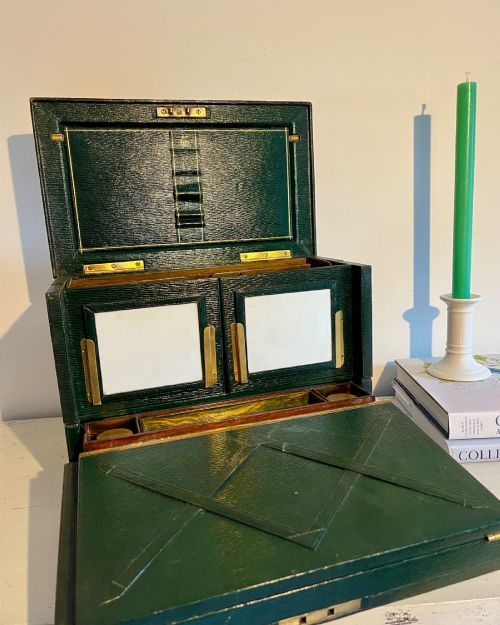
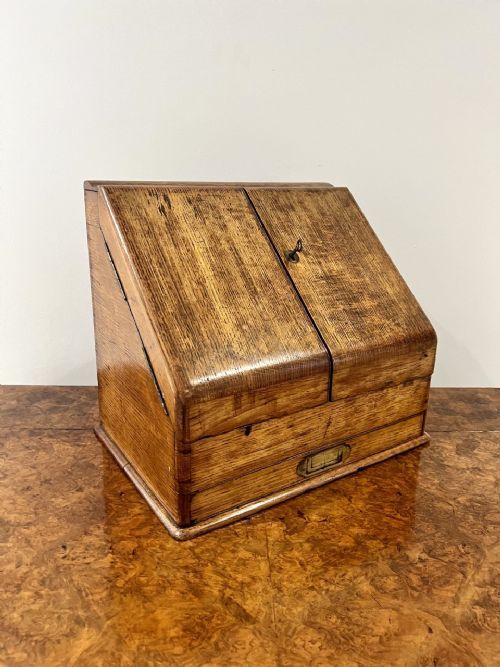
A victorian stationery compendium is a desk accessory for organising letters, and these examples combine brass, oak, and mahogany to keep desks orderly.
Victorian Stationery Compendium
A victorian stationery compendium serves as an organised desktop housing for envelopes, papers, and writing implements. The examples found here take the form of stationery cabinets, stationery boxes, writing boxes, and correspondence boxes.
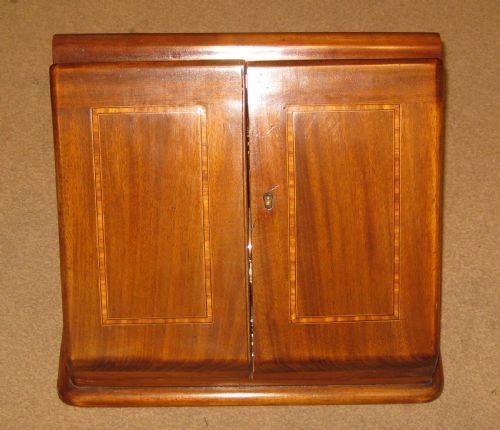
Most pieces on this page are constructed from oak, mahogany, or walnut, dating from the nineteenth century up to the early twentieth century. Buyers will also encounter variants incorporating glass, brass, leather, and exotic timbers such as coromandel and olivewood.
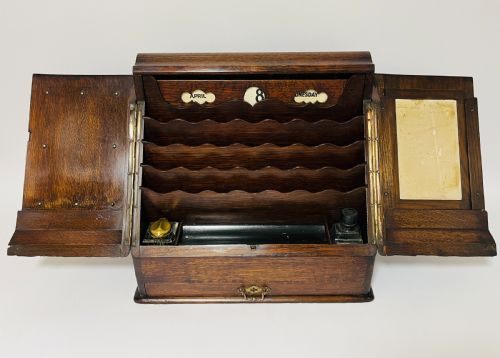
Makers often integrated practical additions alongside letter slots, including adjustable date calendars and drop-front compartments. These functional desktop accessories reflect the heavy correspondence culture of the Victorian era.
How they were made
Cabinet makers utilised dense hardwoods like oak, mahogany, and rosewood for structural durability and polished finishes. Finer iterations featured satinwood inlays, Japanese lacquer panels, or heavy brass mounts and hinges.
Interiors were lined with leather and fitted with partitioned wooden stationery slots designed to hold various paper sizes upright. Drop-front mechanisms and sloping writing surfaces required precise joinery to ensure smooth daily operation.
Victorian letter writers relied on built-in adjustable date calendars on their cabinets to keep track of heavy daily correspondence.
What varies in quality
The distinction between standard boxes and superior compendiums lies in the selection of cabinet timbers and secondary materials. Heavily figured coromandel, olivewood, and detailed marquetry inlay elevate certain cabinets well above plain utility oak models.
Original fitted hardware, functioning brass locks, and maker signatures separate mass-produced pieces from workshop-commissioned items. The inclusion of complex mechanisms like adjustable date perpetual calendars further demonstrates higher craftsmanship.
Houghton and Gunn·F Waller
The Victorian Stationery Compendium Glossary
- Stationery cabinet
- A desktop enclosure fitted with tiered vertical dividers specifically designed for sorting paper and envelopes. These upright cabinets replaced older flat writing slopes in many studies during the late nineteenth century.
- Correspondence box
- A secure lidded box intended to hold letters and private papers. They frequently feature hinged lids and internal velvet or leather surfaces.
- Drop front
- A hinged front panel that folds forward when opened to reveal pigeonholes and writing surfaces. This mechanism allows easy access to stacked stationery without removing the entire inner chassis.
- Coromandel
- A heavy, dark decorative timber with striking light brown stripes, sourced from Asia. It was prized by Victorian cabinet makers for luxury luxury desktop items.
- Marquetry
- The art of applying decorative pieces of veneer to a structure to form intricate patterns. Examples on these cabinets often utilise contrasting lighter woods against mahogany or walnut.
Victorian Stationery Compendium: Frequently Asked Questions
What is a stationery compendium?
A stationery compendium is a dedicated desk cabinet or box designed to keep writing paper, envelopes, and ink organised in one place. Victorian examples often included compartments for stamps and nibs.
These pieces sat on library and drawing room desks to manage the large volume of daily letter writing common in the nineteenth century.
How do I date a stationery box?
Dating relies on the primary wood choice, construction style, and integrated hardware like brass locks and hinges. Oak and mahogany models span the entire Victorian and Edwardian periods.
Maker labels, patent dates, and stylistic movements such as Arts and Crafts or Gothic Revival provide further chronological clues.
Can I use these for modern letters?
Yes, the internal slots and dividers accommodate standard modern stationery, cards, and envelopes easily. Many compartments are sized precisely for correspondence storage.
They serve as practical desktop organisers while adding period character to a modern study or office workspace.
What woods were commonly used?
Oak and mahogany appear most frequently across these listings as sturdy primary woods for everyday desk furniture. Walnut and satinwood also show up regularly.
Luxury models utilise exotic decorative veneers such as coromandel, olivewood, and Japanese lacquer to appeal to wealthier Victorian buyers.