
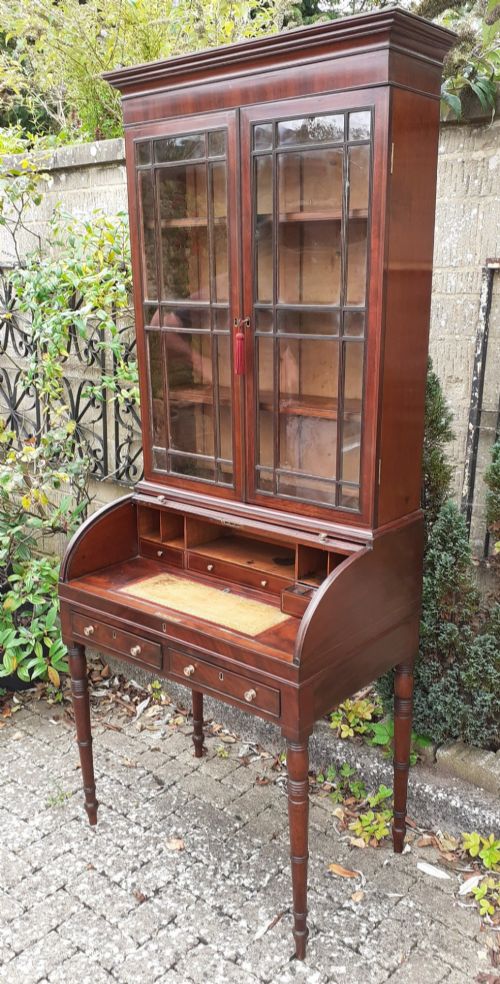
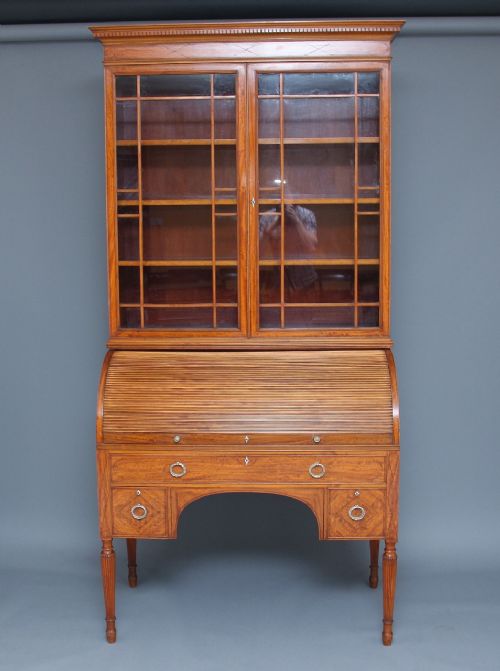

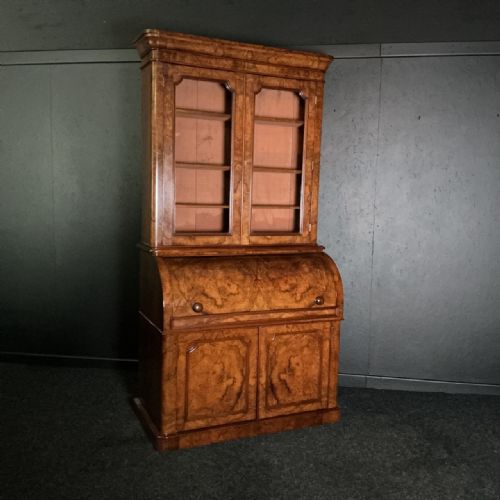
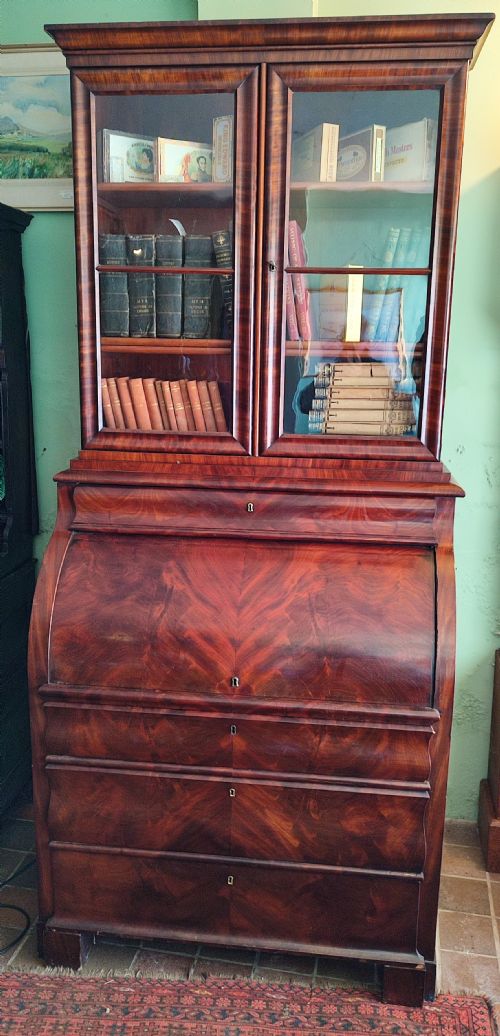
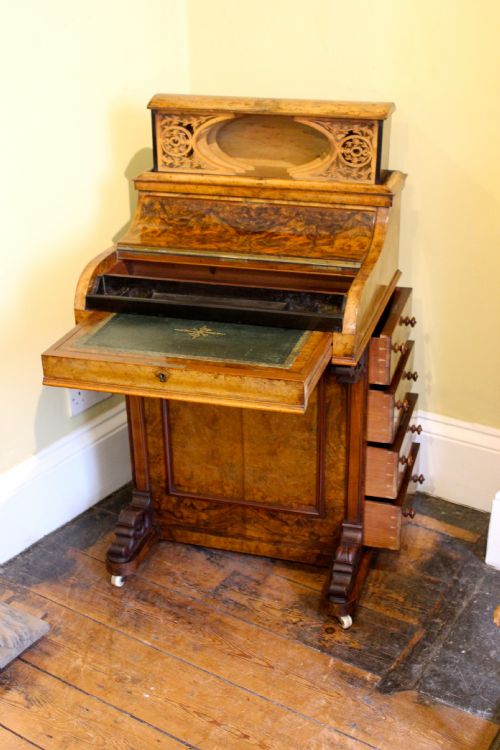


Antique Roll Top Desk Cabinet
An antique roll top desk cabinet combines enclosed privacy with writing space, housing drawers and pigeonholes beneath a curved wooden sliding cover.
Antique Roll Top Desk Cabinet
An antique roll top desk cabinet brings together fitted interior writing surfaces and secure sliding enclosures, drawing the eye with architectural proportions. When you search for an antique roll top desk cabinet, you encounter forms that range from compact stationery boxes and Davenport desks to grand bureau bookcases.
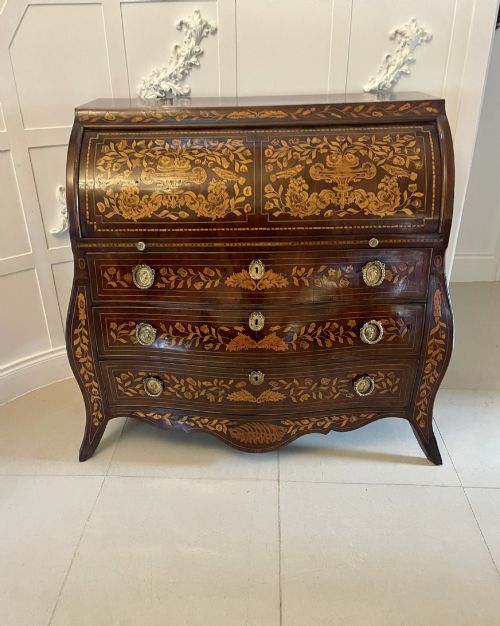
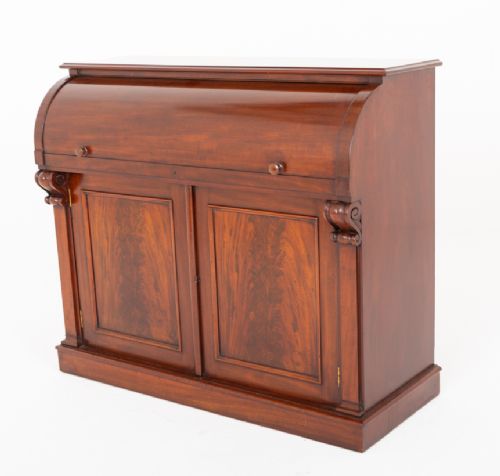
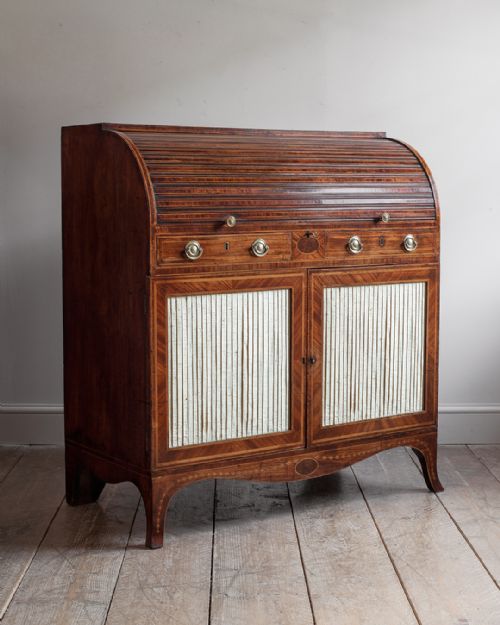
The pieces appearing here span the 18th century through the Edwardian period, executed in regional British styles as well as continental workshops. Mahogany, satinwood, and walnut dominate the offerings, often complemented by tambour slats or solid curved cylinders.
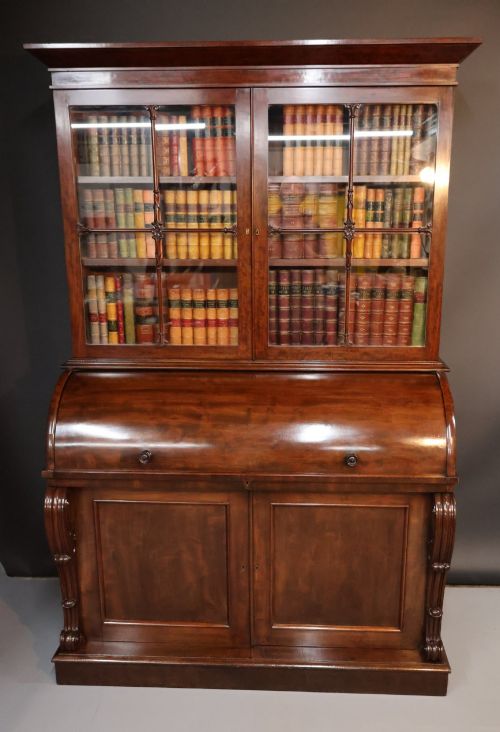
Bureau bookcases and cylinder desks form the core of the selection, providing concealed compartments alongside upper shelving units. Cabinet makers also produced specialised pieces such as correspondence boxes and dentist's cabinets featuring similar mechanical closures.
Materials and construction methods
Cabinet makers utilised dense hardwoods like mahogany, walnut, and oak for structural stability, applying veneers of satinwood and burr walnut to create decorative exterior surfaces. Brass hardware and leather inserts frequently accented the primary timber frames.
The distinctive rolling action relies on either narrow wooden tambour strips glued to a flexible canvas backing or solid curved cylinder panels running in precision-cut grooves. Master joiners executed complex dovetail joints for drawers and hand-cut marquetry inlays for decorative enrichment.
The selection includes regional British pieces alongside continental examples, featuring floral marquetry, brass inlay, and Japanese Yosegi work.
Distinctions in craftsmanship
Quality rests in the precision of the sliding mechanism and the integrity of the internal pigeonholes and small drawers. Pieces featuring smooth-running tambour slats or balanced cylinder lids demonstrate superior joinery compared to stiff or binding mechanisms.
The choice of timber grain and the complexity of floral marquetry or brass inlay set exceptional examples apart from utilitarian workshop pieces. Maker attribution, such as signed pieces by Edwards & Roberts or Tudor & Burrey, elevates the standing of an item within the range.
Tudor & Burrey·Edwards & Roberts·John Mclean·Wiggers
The Antique Roll Top Desk Cabinet Glossary
- Cylinder desk
- A writing desk featuring a quarter-circle solid wooden roll top that conceals the writing surface when closed. This mechanism rotates backward into the body of the desk to reveal pigeonholes and drawers.
- Tambour
- A flexible shutter formed of narrow vertical strips of wood glued to a fabric backing. It slides smoothly around a curved track to enclose a cabinet or desk interior.
- Marquetry
- The art of applying decorative veneer pieces in wood, metal, or shell to form intricate pictorial patterns. Craftsmen carefully cut these contrasting elements to fit flush within the primary surface.
- Bonheur du jour
- A small, light lady's writing desk with an enclosed set of drawers or shelves above the writing surface. Originating in France during the 18th century, these desks prioritise elegance and refined proportions.
- Secretaire
- A piece of furniture containing a drawer or compartment that drops down to form a writing surface. These often disguise their writing function behind drawer fronts or cylinder closures.
Antique Roll Top Desk Cabinet: Frequently Asked Questions
How do cylinder desks differ from tambour desks?
A cylinder desk uses a solid, curved piece of wood that rotates on a pivot to cover the desk interior. This solid panel slides back into the desk body in a smooth arc.
In contrast, a tambour desk uses many narrow wooden slats glued to a canvas backing. This flexible construction allows the cover to follow curved tracks around corners.
What periods do these cabinets represent?
The pieces span from the 18th century through the Edwardian era, encompassing Georgian, Regency, and Victorian aesthetics. Cabinet makers of each era adapted traditional forms to suit changing domestic fashions.
Key stylistic markers range from George III satinwood refinement to later solid oak Edwardian roll-top designs. Walnut and mahogany remain consistent choices across multiple centuries of production.
Where were these cabinets placed in a home?
These pieces served primarily in libraries, studies, and private dressing rooms as private writing and storage stations. Ladies' writing desks often stood in drawing rooms for correspondence and diary keeping.
Larger bureau bookcases combined workspace with book storage, functioning as central administrative hubs for country houses and town residences alike.
How should I care for the sliding mechanisms?
Keep the sliding tracks clean of dust and debris to ensure the cylinder or tambour runs smoothly without binding. Avoid applying modern synthetic lubricants, which can attract grit and damage historic timber.
Maintain stable room humidity to prevent the wood from expanding or contracting, which directly affects the alignment of curved sliding panels.