
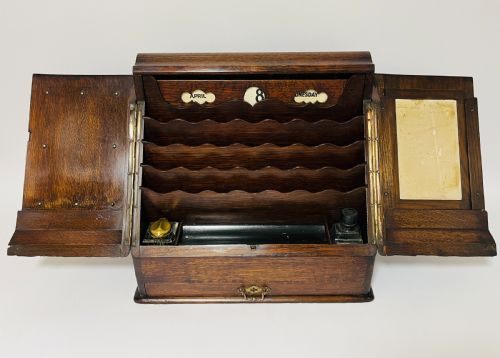


Victorian Oak Desk Organiser
A victorian oak desk organiser keeps letters, ink and papers in order upon the table, offering a solid and handsome companion for daily correspondence.
Victorian Oak Desk Organiser
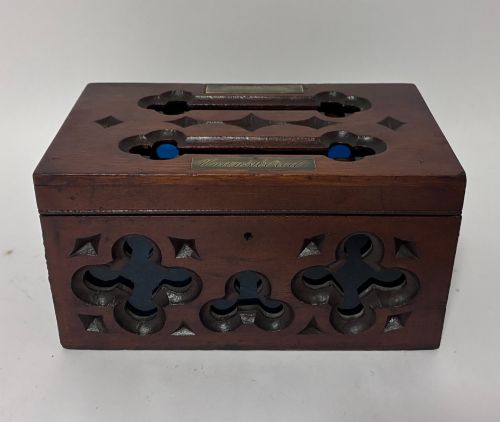
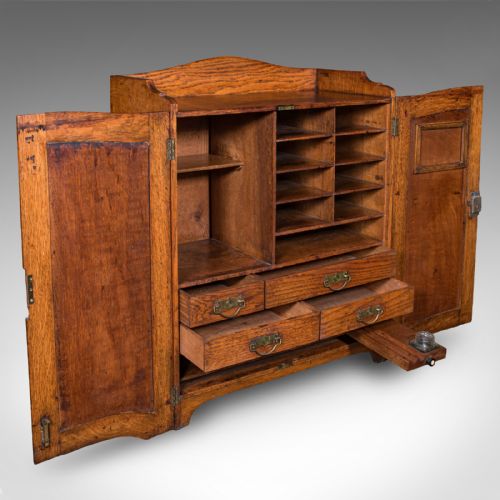
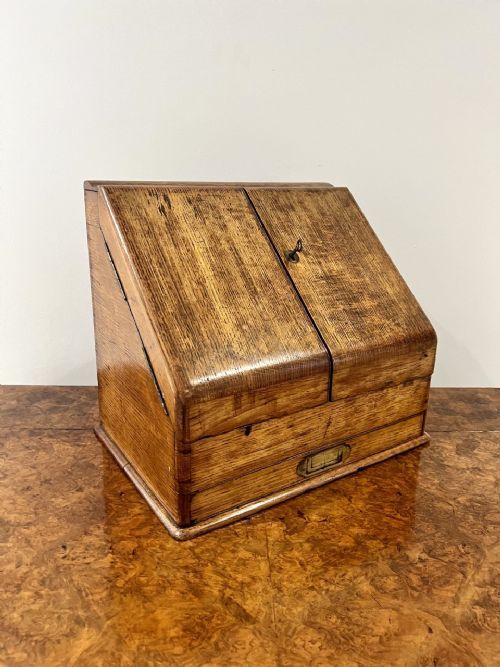
A victorian oak desk organiser takes many practical shapes, including stationery cabinets, correspondence boxes, letter racks and inkstands. These pieces serve to manage writing materials and keep the desktop tidy.
Most examples hail from the Victorian and Edwardian eras, with occasional pieces stretching back to the Georgian period or forward to 1920. Makers fashioned them as tabletop cabinets, clerks' cupboards and drop-front boxes.
Buyers encounter distinct regional and stylistic variations, such as Scottish Baronial pieces featuring horn and silver, or Arts and Crafts boxes with golden oak surfaces.
Materials and construction
Makers relied primarily on solid oak, often pairing the timber with brass handles, hinges and lock escutcheons. Glass ink bottles and metal components complete the functional fittings of these desk accessories.
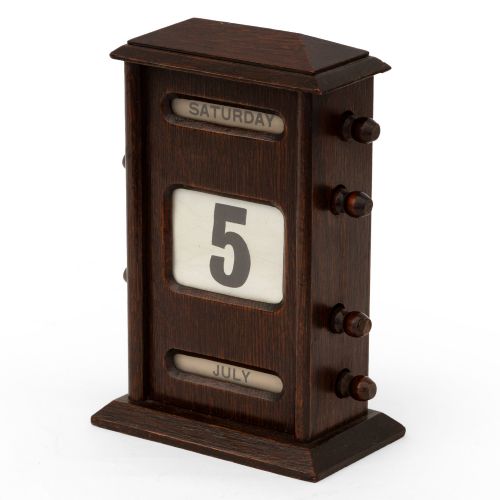
Construction techniques include carved ornamentation, drop-front panels and secret drawers hidden within the framework. Some organisers incorporate adjustable dates, perpetual calendars or extending book slides alongside letter compartments.
Gamekeepers kept order too, as proven by the rugged clerk's cupboard built for estate administration.
Quality and craftsmanship
The standard of carving and the selection of timber dictate the distinction between ordinary boxes and superior pieces. Finer organisers display thoughtful proportions, robust brass mounts and well-fitted internal compartments.
Makers of high-quality items integrated thoughtful mechanisms such as drop-front stationery sections, working locks with keys and securely housed ink bottles. The integration of auxiliary materials like horn, silver or glass elevates the execution of the piece.
Amberg
The Victorian Oak Desk Organiser Glossary
- Inkstand
- A desk stand designed to hold ink bottles, pens and sometimes small containers for wafers or sand. These stands anchor the writing implements of the desk.
- Stationery box
- A tabletop cabinet or box built with specific dividers to hold writing paper and envelopes upright. They often feature sloping or drop-front lids.
- Letter rack
- An open frame or tiered stand designed to sort incoming and outgoing post. They keep correspondence visible and readily accessible.
- Desk tidy
- A multipurpose desktop accessory combining compartments for letters, pens and sundries. These items bring order to the working surface.
- Amberg filing cabinet
- A specific nineteenth-century vertical filing system utilising indexed storage. These cabinets introduced systematic organisation to office paperwork.
Victorian Oak Desk Organiser: Frequently Asked Questions
What fits inside a stationery cabinet?
Stationery cabinets contain dedicated slots, shelves and partitions sized specifically for folded letters, writing paper and envelopes. Many incorporate small drawers for stamps and sealing wax.
Larger models include built-in ink bottles and pen trays, functioning as comprehensive writing stations rather than simple storage boxes.
How do I use a desk tidy today?
A desk tidy serves modern workspaces just as well by holding incoming post, notepads, pens and tablets. The compartmentalised layout keeps everyday desk items contained and organised.
Placing one on a home office table or hall console introduces period character while clearing away modern clutter.
What is the difference between an inkstand and a desk box?
An inkstand is primarily an open tray or stand holding ink bottles and pen rests for immediate writing use. A desk box provides enclosed storage with lids, doors or secret compartments for letters and valuables.
Some elaborate Victorian pieces combine both forms, uniting an enclosed stationery box with fitted inkwells on a shared wooden base.