
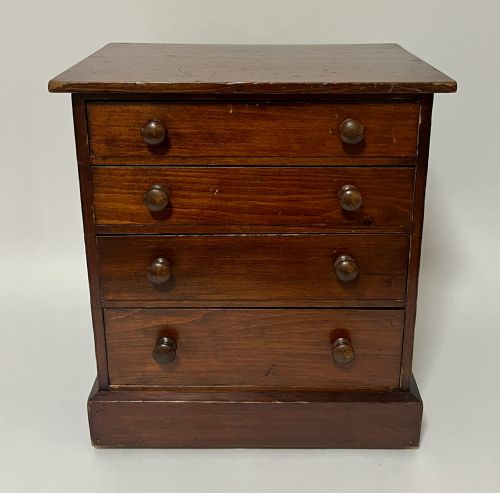


Brown Wood Specimen Cabinet
A brown wood specimen cabinet organises small treasures and natural wonders behind disciplined rows of drawers.
Brown Wood Specimen Cabinet
A brown wood specimen cabinet organises small treasures and natural curiosities behind disciplined rows of drawers or glass doors. When you search for a brown wood specimen cabinet, you encounter pieces designed to house everything from insects and eggs to minerals and watch parts.
These items emerge primarily from the Victorian era and the nineteenth century, though Georgian and Edwardian examples also appear. Forms range from table-top collectors cabinets and miniature chests of drawers to side tables and apothecary chests.
Mahogany, oak, walnut, and pine form the structural core of these pieces. Makers utilised brass for handles and locks, while glass fronts protect delicate contents from dust and handling.
Materials and Construction
Cabinetmakers constructed these pieces using dense hardwoods like mahogany, oak, walnut, and amboyna, alongside secondary softwoods such as pine and deal. Timber selection provided the stability required for tight-fitting drawer construction.
Joinery involved precise drawer runners and fine dovetails to ensure smooth operation across numerous shallow compartments. Brass hardware, including turned knobs and flush handles, completed the functional design of each cabinet.
Glass panels were integrated into doors and display cases to allow visibility while safeguarding internal collections. Polished finishes highlighted the natural grain of pollard oak, figured mahogany, and satinwood.
Distinctions in Quality
The refinement of internal drawer construction separates standard pieces from exceptional examples. Tighter tolerances in drawer fitting and the use of secondary woods dictate the overall integrity of the piece.
Timber selection and decorative embellishments drive the hierarchy of these cabinets. Finely figured mahogany, pollard oak, and intricate specimen wood inlays elevate a utilitarian storage box into a decorative focal point.
Original hardware, untouched glass panels, and retaining mechanisms preserve the historical authenticity of a cabinet. Alterations or replaced elements alter the character and integrity of the object.
The Brown Wood Specimen Cabinet Glossary
- Wellington chest
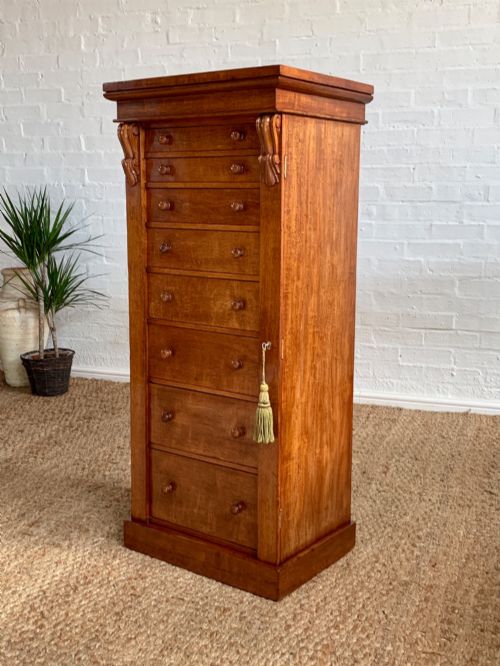
- A tall, vertical chest of drawers secured by a locking pilaster hinged on one side. This design originated in the nineteenth century and provided secure storage for documents or specimens.
- Specimen wood
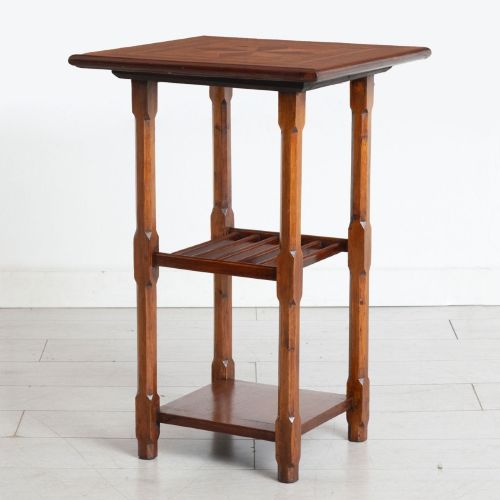
- An assemblage of various contrasting timbers utilised in decorative inlay work. Cabinetmakers arranged these woods to create geometric patterns and borders.
- Gothic Revival
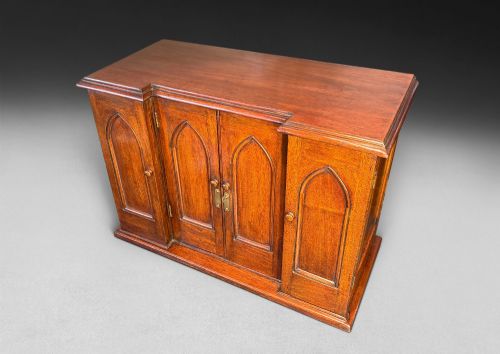
- An architectural and decorative style drawing inspiration from medieval forms. Pieces display pointed arches, tracery, and robust oak construction.
- Deal
- A softwood timber derived from pine or fir trees. Makers utilised it for internal framing and secondary drawer components.
Brown Wood Specimen Cabinet: Frequently Asked Questions
What were brown wood specimen cabinets originally used for?
These cabinets served naturalists, collectors, and specialists as secure storage for classified items. Drawers held lepidoptera, botanical samples, geological specimens, and precision tools.
Interior layouts were tailored to prevent movement and damage to delicate or scientific objects during examination.
How do I distinguish a Victorian cabinet from a Georgian one?
Georgian cabinets often display restrained mahogany veneers, subtle string inlay, and classical proportions. Victorian iterations tend to be more robust, incorporating heavier mouldings, gothic influences, or multi-drawer configurations.
Timber choice and construction methods inside the drawers also offer clues to the exact manufacturing decade.
Can I use these cabinets for modern collections?
The shallow drawers and compartmentalised layouts suit modern collections of coins, stamps, minerals, and jewellery perfectly. Glass-fronted variants allow display while protecting delicate items from dust and handling.
Placement in a room requires stable humidity levels to protect historic timber and internal linings.