



Antique Wood Specimen Chest
An antique wood specimen chest stores small treasures with absolute precision, offering multi-drawer organisation built for serious collectors.
Antique Wood Specimen Chest
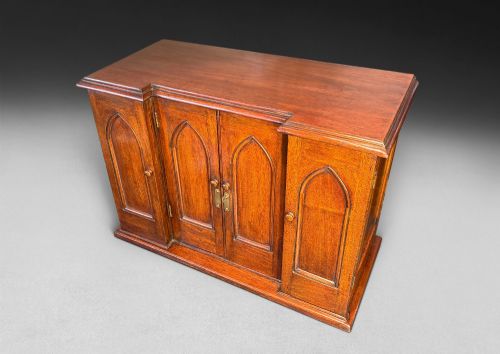
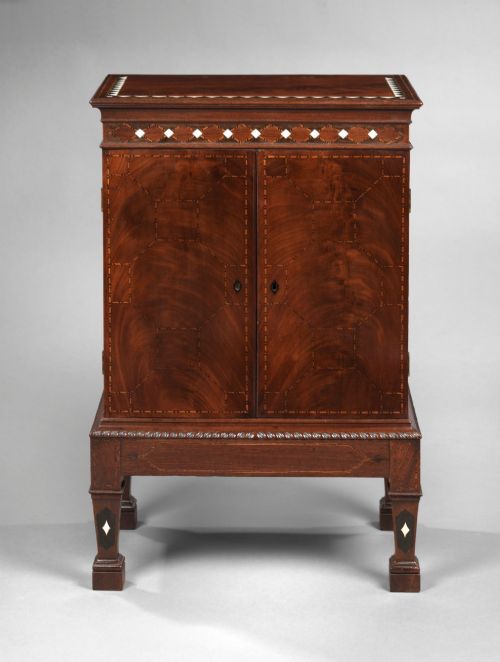
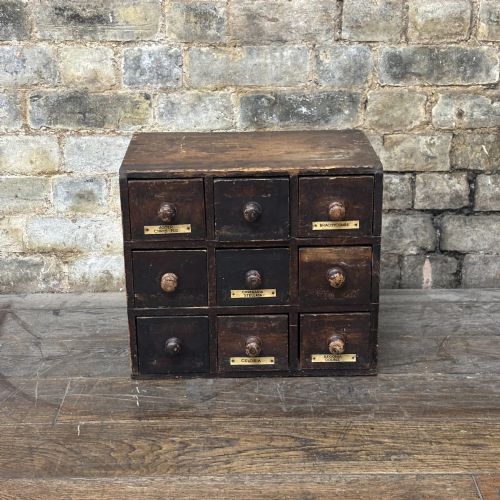
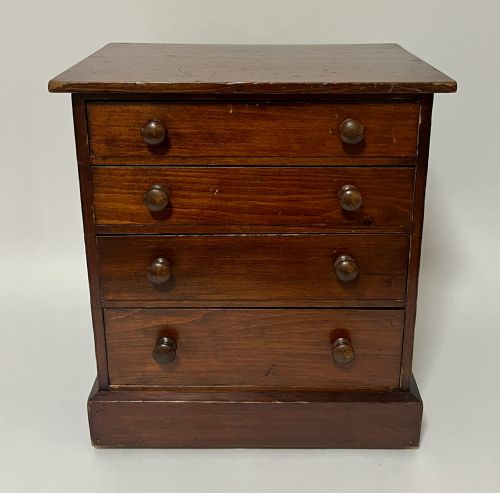
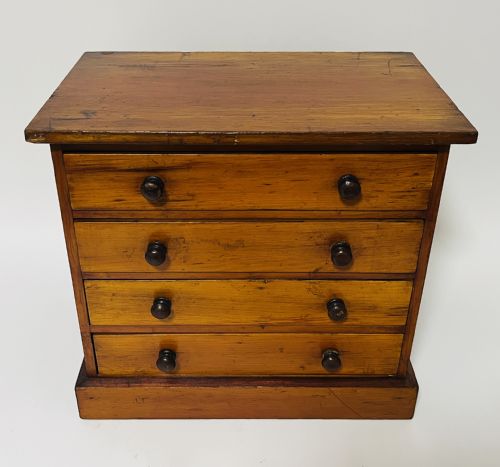
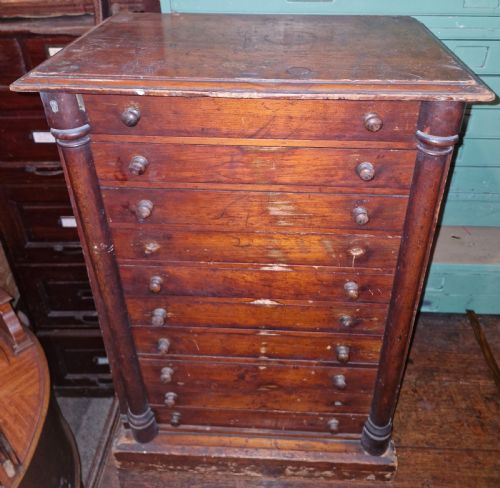
When you search for an antique wood specimen chest, you encounter compact multi-drawer cabinets designed to organise natural history collections, scientific samples or precious small items. The pieces on this page span Georgian, Regency and Victorian periods, taking forms such as table-top cabinets, Wellington chests and miniature chests of drawers.
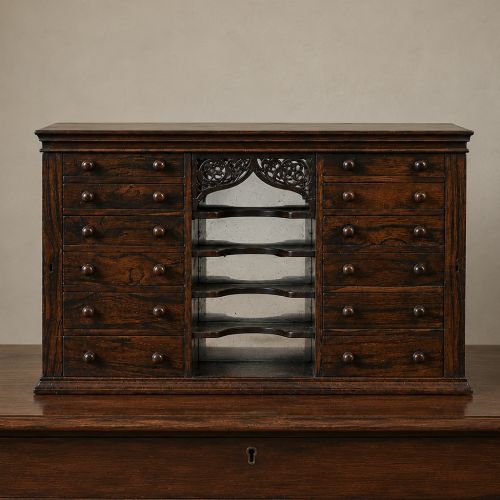
Makers constructed these chests primarily for desktop or table-top use, though larger floor-standing formats appear alongside miniature variants. Typical examples feature numerous shallow drawers intended for fossils, insects, coins, botanical samples or microscope slides.
Materials and Construction
Cabinet makers relied heavily on dense hardwoods like mahogany, oak and walnut to build rigid carcasses that protect delicate internal contents. Secondary timbers such as pine and deal appear in less visible areas, while select pieces incorporate decorative veneers like satinwood, amboyna, palmwood and rosewood.
Hardware played a functional role in daily handling, with brass drop handles, turned knobs and locking mechanisms securing the multiple drawers. Glass fronts or mirrored panels feature on specific display variants to allow viewing without opening the individual compartments.
The listings on this page span the Georgian, Regency, Victorian and Edwardian periods, utilising mahogany, oak, walnut, pine and satinwood.
Craftsmanship and Proportion
The distinction between standard utility storage and superior cabinet-making rests in the precision of the drawer construction and timber selection. Finely made examples display tight dovetail joints, uniform drawer depths and carefully matched grain patterns across the primary surfaces.
The presence of specialised internal fittings, original brass hardware and maker signatures elevates the standing of a piece. Simple stained pine or deal variants serve functional workshop roles, whereas dense mahogany or yew wood cabinets reflect bespoke workshop output.
Brady of Edmonton·Charles William Schofield
The Antique Wood Specimen Chest Glossary
- Wellington chest
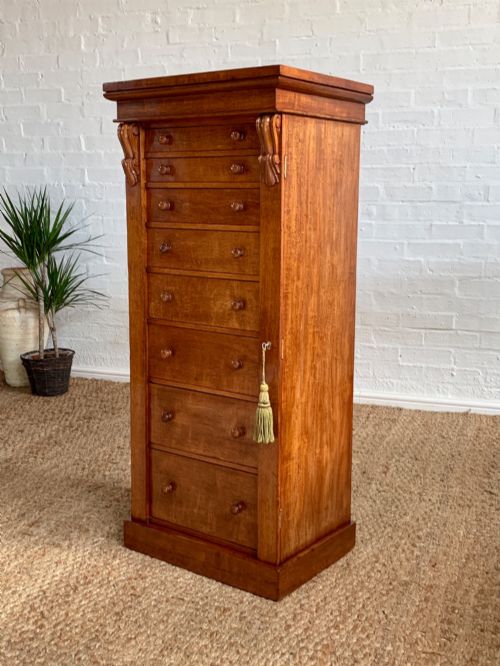
- A tall, narrow chest of drawers secured by a locking side flap that engages with the drawer edges. This specific form provides heightened security for valuable contents.
- Collectors cabinet
- A multi-drawer case designed specifically for sorting and housing classification specimens, minerals or coins. These pieces usually contain many shallow drawers.
- Specimen cabinet
- A piece built to hold natural history or scientific samples such as butterflies, eggs or geological finds. Interiors often feature glazed doors or dust-proof drawer seals.
- Miniature furniture
- A small-scale cabinet or chest built either as a master craftsman's demonstration piece or as a detailed desktop accessory. Proportions mirror full-size furniture exactly.
- Table-top cabinet
- A self-contained storage chest designed to sit directly on a desk, table or pedestal rather than resting on the floor. These items offer portable organisation.
Antique Wood Specimen Chest: Frequently Asked Questions
What did people store inside antique wood specimen chests?
Cabinet makers built these multi-drawer chests to house specific natural history collections, including butterflies, bird eggs, geological specimens and botanical samples. Other specialised variants stored microscope slides, watch repair tools, coins or tobacco.
The shallow drawers kept delicate items separated and protected from light, dust and handling damage. Many of these chests served scientific, medical or hobbyist pursuits in studies and laboratories.
How do I identify a Victorian specimen chest?
Victorian examples typically feature dense mahogany, oak or walnut construction with numerous shallow drawers fitted with turned wooden knobs or brass pulls. Gothic Revival and Arts and Crafts influences appear in decorative mouldings and sturdier joinery from this era.
Many Victorian pieces incorporate locking side stiles or glass-fronted doors to display the contents safely. The construction prioritises functional rigidity and dense hardwood frames to withstand heavy daily use by collectors.
Where should I place a table-top specimen chest?
These compact cabinets suit placement on sturdy desks, console tables or dedicated chests where the multi-drawer configuration remains easily accessible. Avoid locating them in direct sunlight or near heat sources to protect sensitive wood veneers and internal drawer linings.
Their small footprint allows them to sit comfortably in studies, libraries or living spaces as both display surfaces and functional storage for small curiosities.
What is the difference between a Wellington chest and a standard specimen chest?
A Wellington chest uses a hinged locking side stile that fastens over the edge of all drawers simultaneously with a single key. Standard specimen chests usually feature opening doors that conceal the drawers or rely on individual drawer fits without the side locking bar.
Both forms provide high drawer counts, but the Wellington mechanism adds a distinct vertical security element commonly seen in nineteenth-century mahogany pieces.