




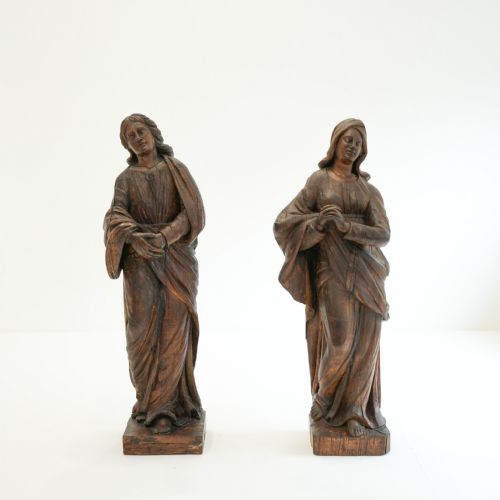


Brown Wood Saint Carving
These brown wood saint carving pieces offer devotional presence and centuries of hand-carved craftsmanship, making them striking focal points for a room.
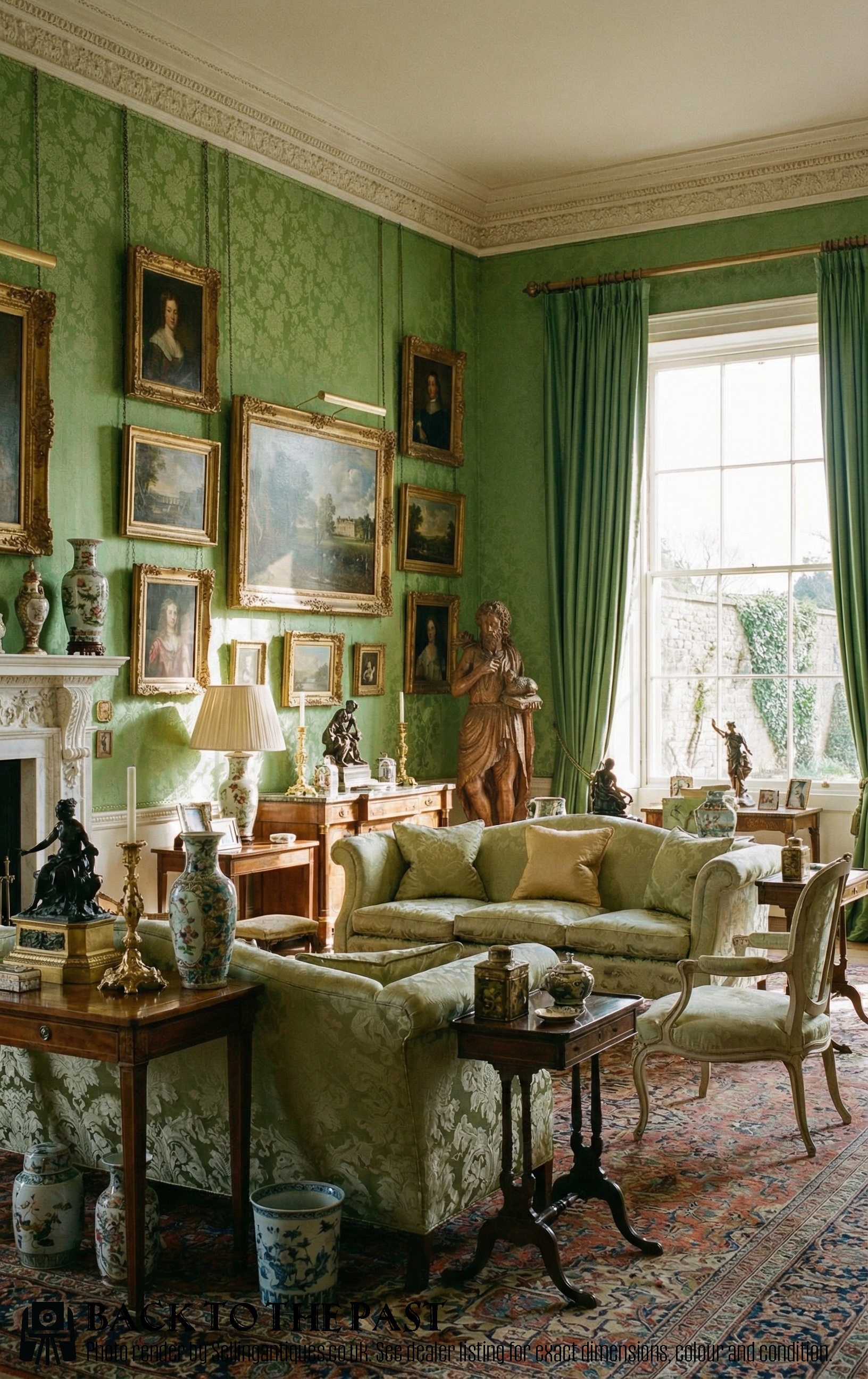
Brown Wood Saint Carving
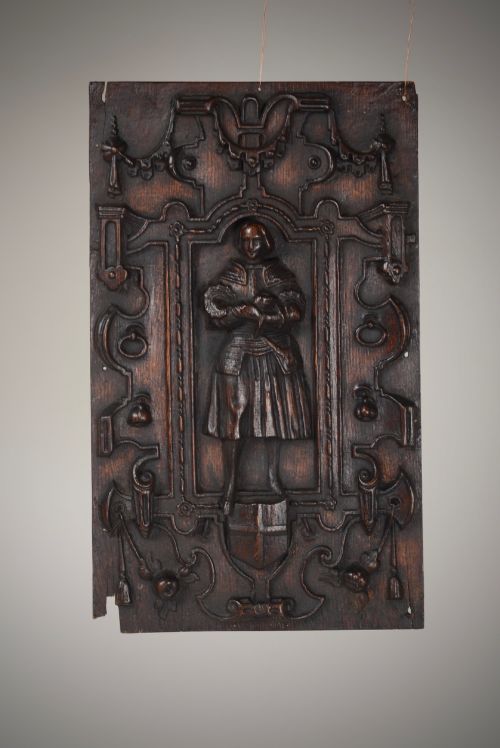
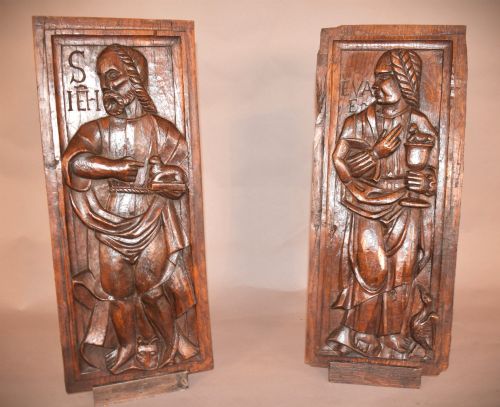
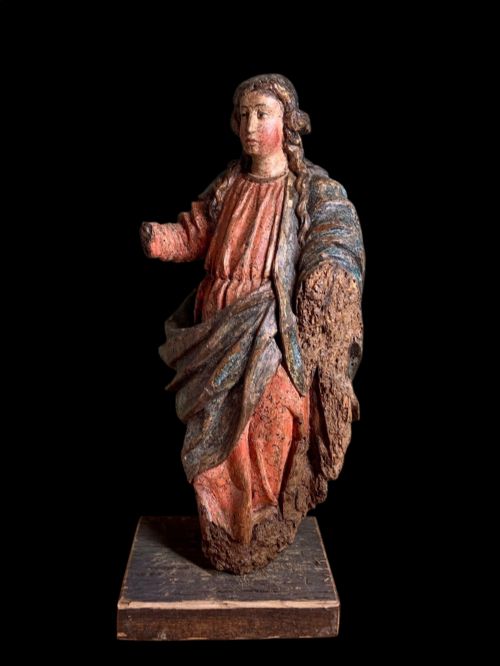
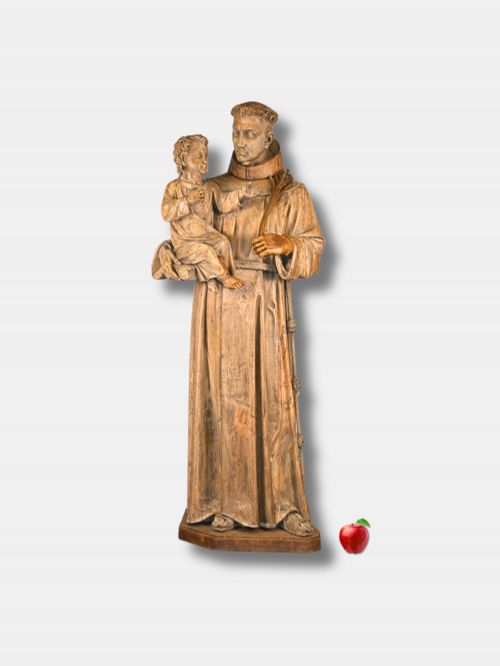
A brown wood saint carving brings centuries of ecclesiastical history into a room, spanning periods from pre-sixteenth century Gothic works to nineteenth-century interpretations. These figures depict recognised religious figures, including Saint John, Saint Anthony, the Virgin Mary, and Saint Jerome, captured in standing postures, busts, and detailed panels.
Most pieces encountered here originate from continental European traditions, including Italian, German, French, Flemish, and Spanish workshops. Forms range from life-size statues and pairs of figures to smaller panels and character heads intended for private devotion or church settings.
Materials and construction methods
Carvers shaped these sculptures from dense domestic hardwoods, predominantly utilising oak, limewood, walnut, applewood, and general carved wood. Oak provided structural stability for large architectural figures, while limewood allowed artisans to execute fine facial expressions and deep drapery folds.
Many surfaces received layers of gesso preparation before finishing with polychrome paint, gold leaf, or natural wood patination. Over centuries, these painted finishes have worn, revealing the underlying grain and the tool marks left by the original chisels.
Among the solemn saints and panels, a sturdy wooden sculpture of a Saint Bernard rescue dog stands ready for action.
Distinctions in quality and execution
The division between ordinary workshop production and master execution lies in the anatomical accuracy of the hands, the fluidity of the drapery folds, and the expressive depth of the face. Superior carvers managed to impart a convincing sense of movement and emotion into rigid timber.
The preservation of original surface treatments, such as early polychrome paint and gesso layers, heavily influences the standing of a piece. Examples that retain their authentic historic finish without heavy modern overpainting command greater interest from collectors.
Franz Keller·Bohumil Kafka
The Brown Wood Saint Carving Glossary
- Gesso
- A plaster-like mixture applied to timber as a smooth base for subsequent gilding or painting. It helps seal the wood grain.
- Limewood
- A fine-grained, pale wood favored by European sculptors for its resistance to splitting and suitability for intricate detail. It accepts sharp chisel cuts cleanly.
- Donor figure
- A sculpture depicting the person who commissioned a religious work of art, often shown kneeling in prayer alongside a saint. These pieces frequently date to the medieval and Gothic periods.
Brown Wood Saint Carving: Frequently Asked Questions
Where were these carvings originally displayed?
These wooden sculptures and panels typically originated inside churches, abbeys, and private chapels as focal points for prayer and architectural devotion.
Over time, many migrated into domestic settings as collectors gathered ecclesiastical art for display in studies and living spaces.
How should I care for an antique wood sculpture?
Keep wooden religious figures away from direct sunlight, heating vents, and rapid humidity fluctuations to prevent the timber from splitting or warping.
Dust the surface gently with a dry, soft brush and avoid applying modern polishes or oils to historic polychrome or bare wood finishes.
What is the difference between a panel and a statue?
Statues are fully three-dimensional figures carved in the round, designed to be viewed from multiple angles on altars or brackets.
Panels are relief carvings set into a flat wooden background, originally created to adorn church furniture, walls, or screens.