
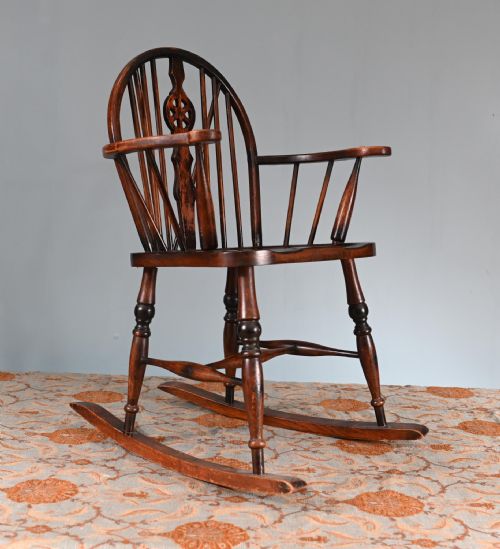


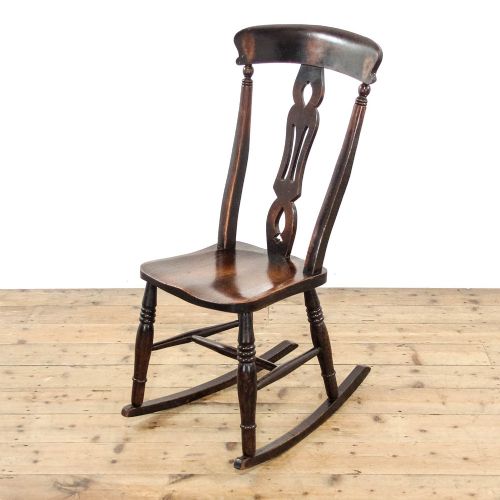


Brown Wood Rocking Chair
A brown wood rocking chair brings domestic comfort and vernacular charm to a room, offering gentle motion through centuries of craftsmanship.
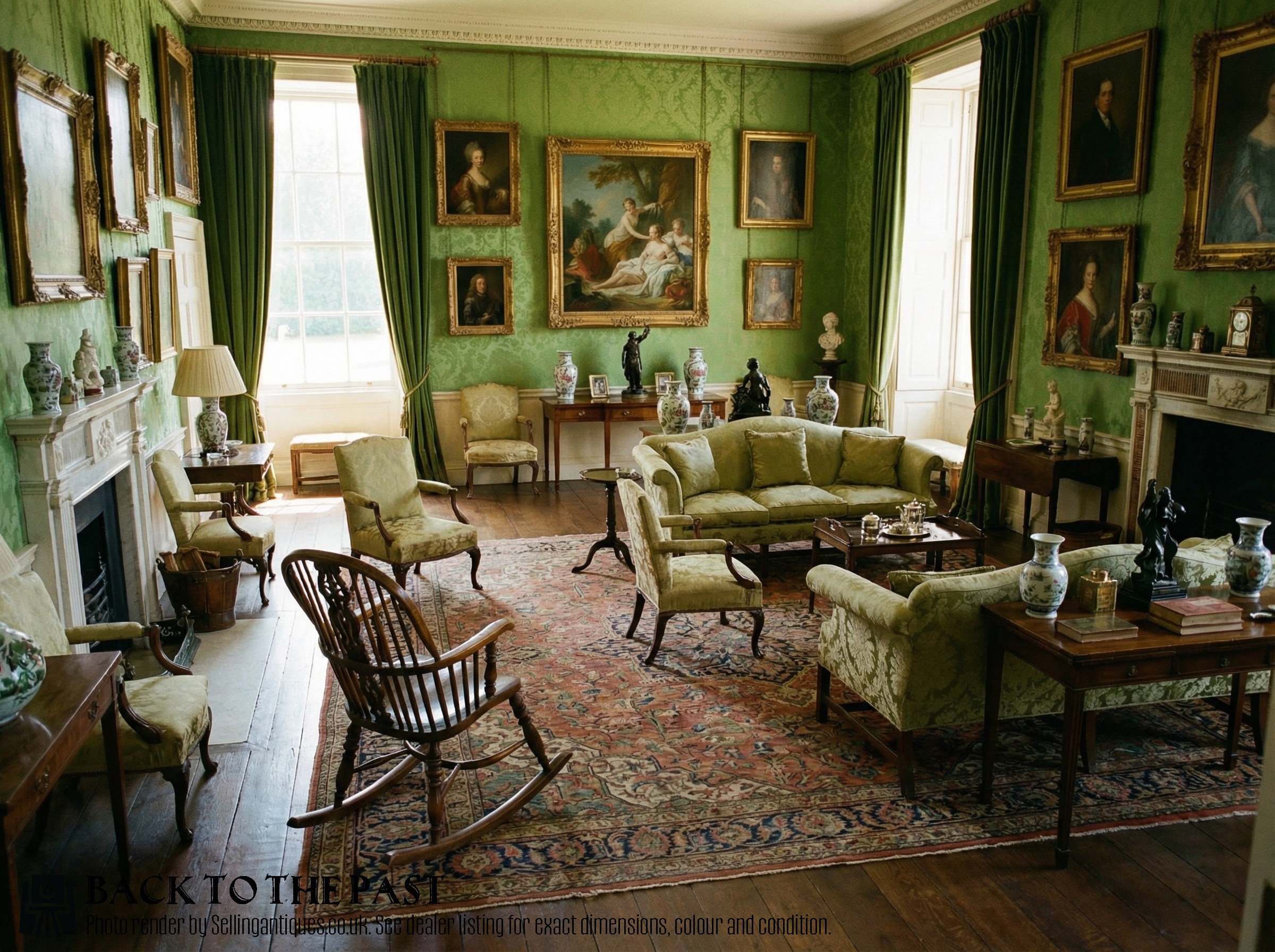
Brown Wood Rocking Chair
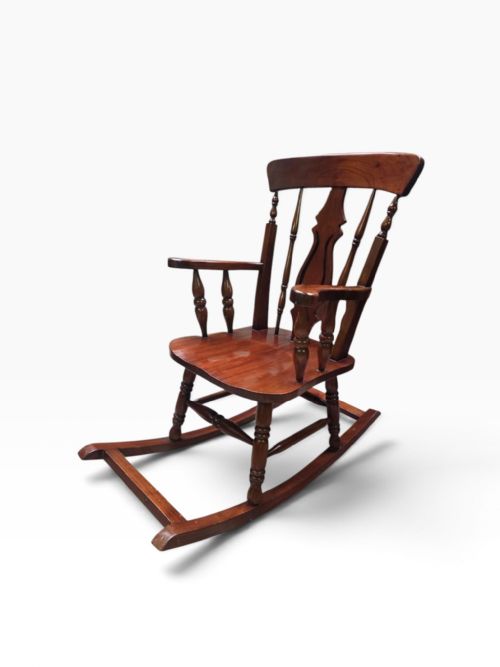
A brown wood rocking chair encompasses a range of vernacular and formal seating, from sturdy Windsor forms to turned bobbin frames. Buyers seeking this phrase will encounter pieces spanning the Victorian era, the nineteenth century, and Edwardian periods, utilising timbers such as mahogany, beech, elm, and ash.
The selection on this page leans heavily towards country-style Windsors, ladder back fireside chairs, and steam-bent designs. Makers utilised local hardwoods to build functional seating intended for nurseries, firesides, and parlours alike.
Regional variations appear across the selection, including Scottish vernacular pieces and American child formats. Each example demonstrates the enduring appeal of traditional rocking furniture.
Materials and construction methods
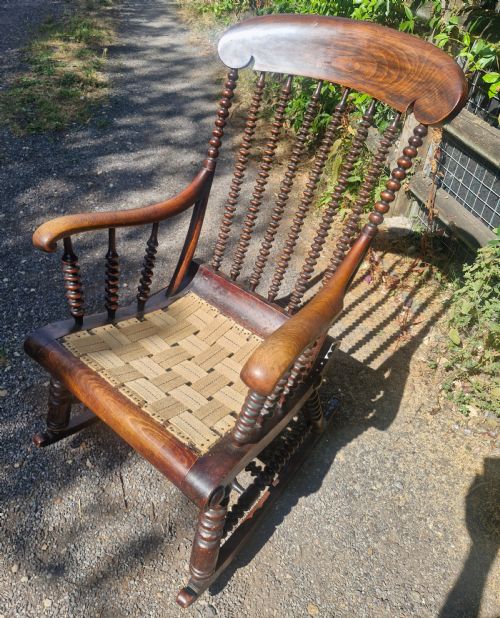
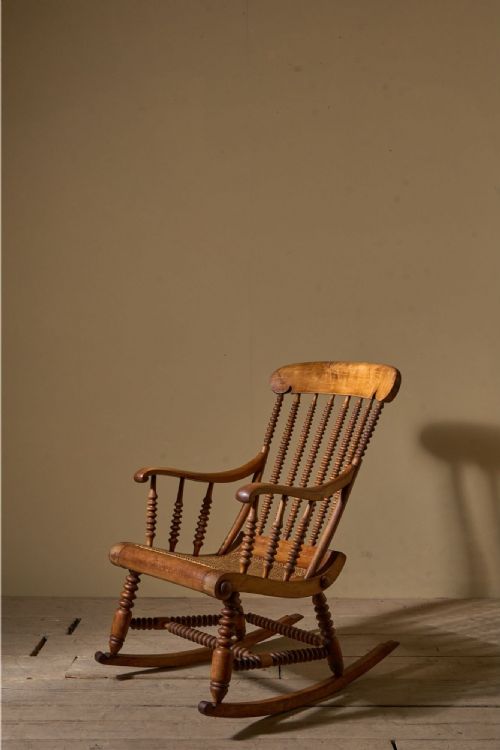
Cabinet makers and bodgers constructed these frames using native hardwoods like elm for seats, ash for bent parts, and beech for turned spindles. Timbers were selected for strength and flexibility, particularly where steam-bending or lathe-turning was required for components such as bobbin frames and spindle backs.
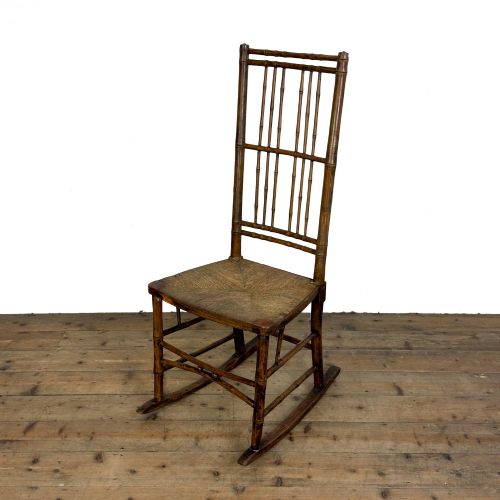
Seating areas often incorporate woven cane or rush inserts fitted into solid wooden frames. Joinery relied on traditional pegging and wedging, ensuring the continuous motion of rocking did not weaken the structural joints over decades of daily use.
Brown Wood Rocking Chair Retail Price Guide 2026
Typical asking prices for brown wood rocking chair among the pieces listed under this phrase on Sellingantiques today, from the lower quarter to the upper quarter. They describe what is for sale here now, not the wider market.
Even miniature dolls and children received proper rocking chairs, proving that small Victorians took their relaxation just as seriously.
Distinguishing quality in construction
Quality rests in the integrity of the timber selection and the precision of the joinery rather than surface ornamentation alone. Superior examples maintain original structural components, where turned spindles, bobbin frames, and steam-bent arms show crisp detailing without excessive wear.
The balance of the rockers themselves dictates the fluidity of the movement. Master makers ensured the curved runners matched the weight distribution of the chair, whereas lesser examples might display uneven rocking arcs or mismatched timber replacements.
Thonet
The Brown Wood Rocking Chair Glossary
- Windsor
- A traditional chair type featuring a solid wooden seat into which the legs and back spindles are directly socketed. These often include carved wheelback or comb-back details.
- Bobbin turned
- A method of lathe-work that produces a series of rounded, spool-like shapes along wooden framing members. This decorative technique appears frequently on nineteenth-century vernacular frames.
- Bentwood
- Wood softened through steaming and then bent into curved shapes under pressure. This technique defines lightweight nineteenth-century designs.
- Vernacular
- Everyday furniture made by regional craftsmen using local materials and traditional methods rather than following strict high-style metropolitan fashions.
Brown Wood Rocking Chair: Frequently Asked Questions
What is a brown wood rocking chair?
A brown wood rocking chair is a seated piece mounted on curved wooden rockers, constructed from timbers such as mahogany, elm, beech, and ash.
These chairs range from vernacular country Windsors to steam-bent Edwardian designs, intended for relaxed domestic seating.
How were rocking chairs used?
Rocking chairs served practical domestic purposes near hearths, in nurseries for soothing infants, and in parlours for leisure.
The gentle motion provided comfort during long periods of sitting, making them a staple of nineteenth-century home life.
How do I date a wooden rocking chair?
Dating relies on identifying construction techniques, timber choices, and stylistic markers such as bobbin framing or wheelback splats.
Victorian and Edwardian examples often display machine assistance or specific steam-bending patents, while earlier vernacular pieces show hand-turned joinery.
Where should I place a rocking chair?
These chairs suit living rooms, studies, and bedrooms where their gentle motion and warm timber tones can be appreciated.
Sufficient clearance behind the runners is necessary to allow the chair to rock freely without striking walls or furniture.