
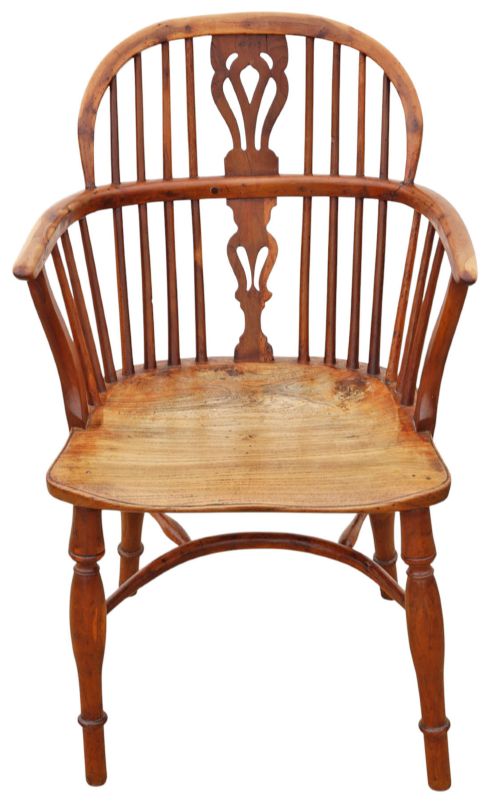
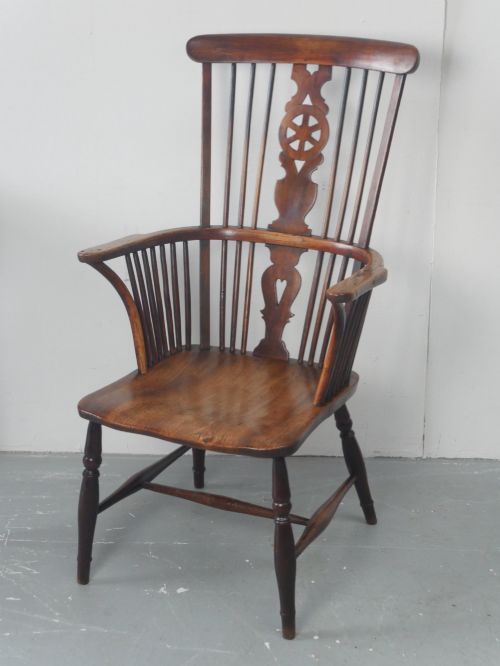
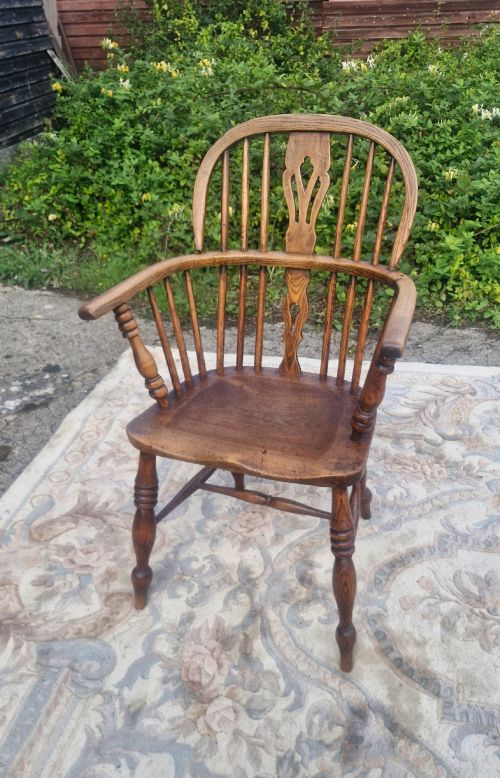
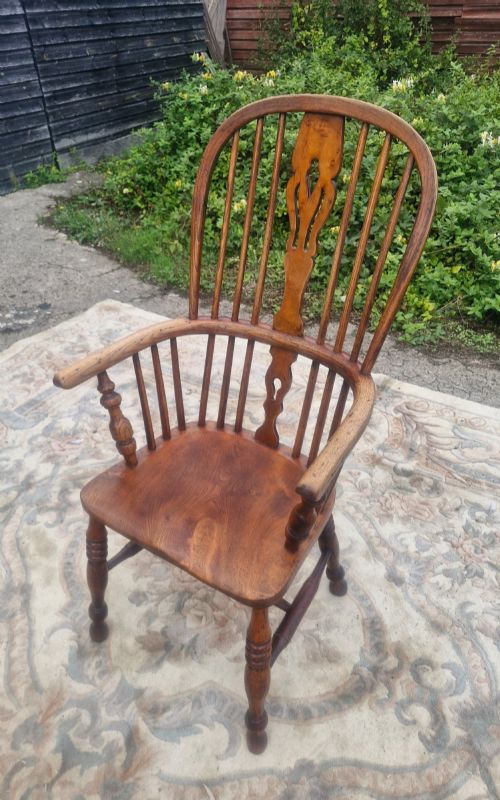


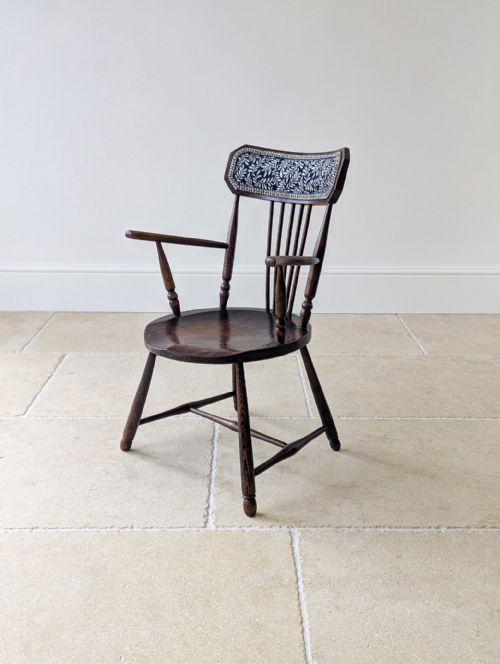
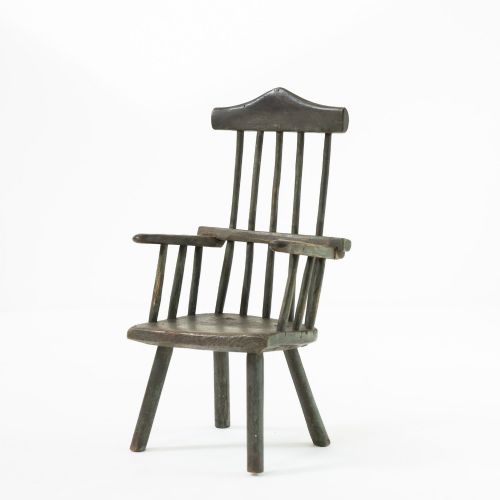
Wooden Windsor Armchair
A wooden windsor armchair offers solid domestic seating shaped by centuries of country joinery and vernacular design.
Wooden Windsor Armchair
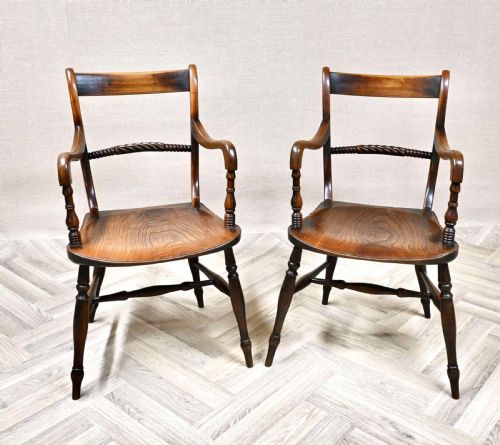
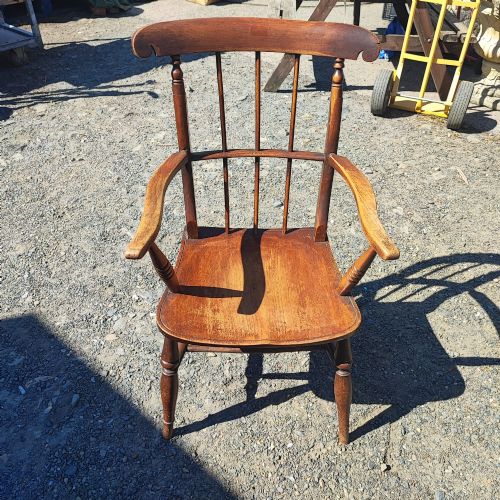
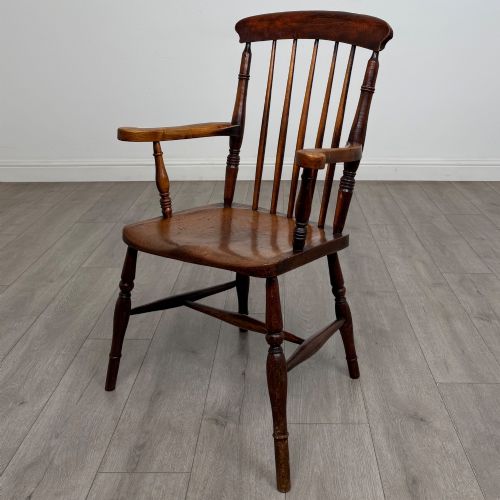
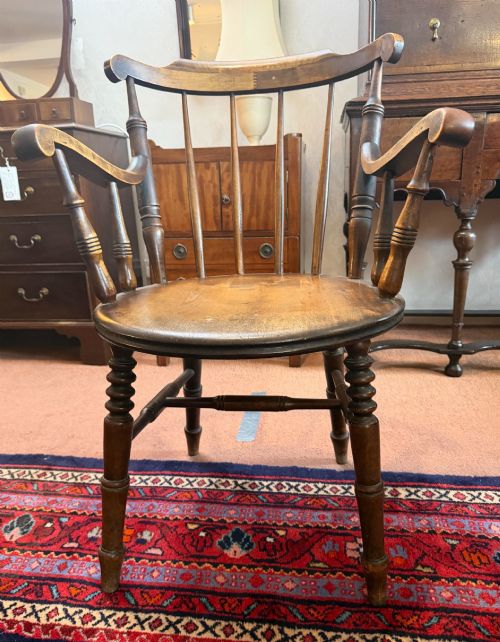
A wooden windsor armchair is a traditional seated piece built with a heavy solid seat into which legs and back spindles are wedged directly. The examples found here span the eighteenth, nineteenth, and early twentieth centuries, drawing heavily on English country and Georgian vernacular traditions.
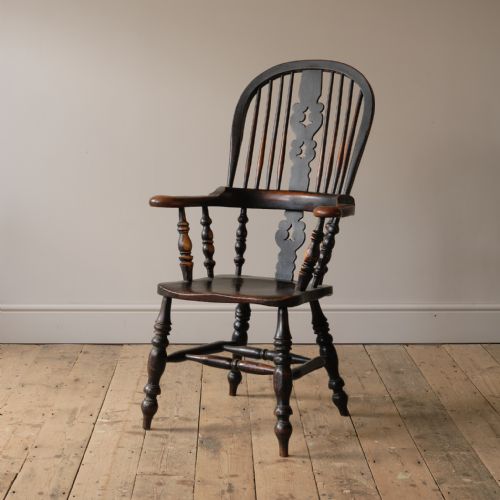
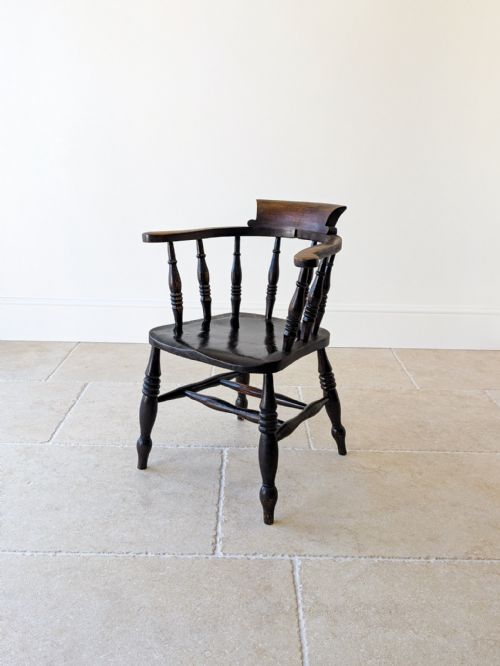
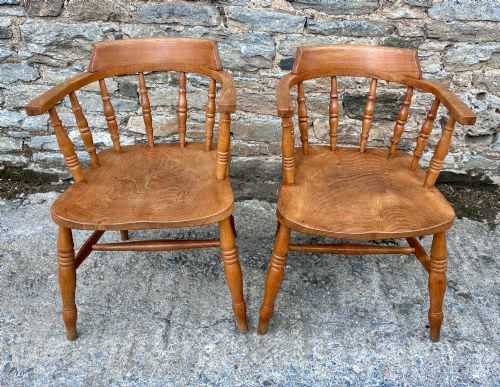
The primary forms on this page include high-back, low-back, comb-back, and hoop-back armchairs, alongside specialised variants like captain's chairs, smokers' bows, and children's armchairs. These seats served in farmhouses, kitchens, and studies across regions such as the West Country, Wales, and Scotland.
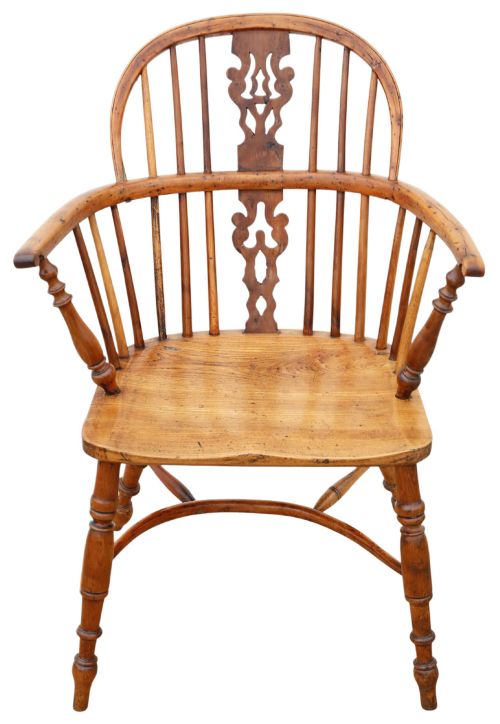
Buyers encounter pieces ranging from simple stick-back farm chairs to elaborate yew-wood carvers with crinoline stretchers. The selection emphasises practical domestic seating developed through regional English cabinet-making traditions.
How they were made
Makers constructed these chairs by combining native timbers, most frequently pairing an elm seat with ash for the bent parts and beech or birch for the spindles and legs. Yew wood appears in select examples, prized for its dense grain and rich tone.
The construction relies on turned and steam-bent components fitted into bored holes within a thick saddle-shaped wooden seat. Carpenters shaped the seats using adzes and scorps to create a comfortable hollow before securing the undercarriage with glued and wedged tenons.
Occasional child-sized armchairs preserve the exact miniature proportions of adult country seating.
What varies in quality
Quality in a wooden windsor armchair rests largely on the choice of timber combination and the depth of the seat carving. Superior examples display deeply sculpted elm seats and carefully steam-bent hoop backs that retain harmonious proportions.
The elegance of the spindle turning, the crispness of the arm scrolls, and the integrity of the wedged joints distinguish fine vernacular work from standard utility seating. Patina accumulated through decades of use also separates well-preserved surfaces from overly restored timber.
J SPENCER
The Wooden Windsor Armchair Glossary
- Comb-back
- A Windsor chair style where the vertical back spindles extend upward into a horizontal headpiece resembling a decorative comb.
- Crinoline stretcher
- A curved under-framing brace linking the legs of a chair together, often found on eighteenth-century regional pieces.
- Smoker's bow
- A low-backed Windsor armchair with a continuous curved arm rail, frequently utilised in Victorian country houses and pubs.
- Hoop-back
- A single continuous piece of steam-bent wood forming the upper back and arm supports of a chair.
- Vernacular
- Objects designed by regional makers following local traditions and practical utility rather than formal academic styles.
Wooden Windsor Armchair: Frequently Asked Questions
What is a wooden windsor armchair?
A wooden windsor armchair is a distinct form of seating characterised by a solid carved wooden seat into which the legs and back construction are tenoned directly.
Unlike framed chairs, these pieces rely on individual turned spindles and bentwood parts locked firmly into the thick central base for structural support.
How do I date a windsor chair?
Dating relies on examining the timber species, the turning profile of the legs, and the complexity of the back construction. Earlier eighteenth-century examples often feature comb-backs and yew wood, whereas later Victorian versions frequently utilise beech and simpler stick-back designs.
Regional variations and construction methods also provide clear indicators of the period in which the chair was built.
Were these chairs used at desks?
Many sturdy variants, such as captain's chairs and low-back models, served functional roles in offices, studies, and farmhouse writing spaces throughout the nineteenth century.
Their robust construction and supportive curved arms made them suitable for prolonged daily sitting.
How do I care for antique elm?
Antique elm furniture requires a stable indoor environment away from direct heat sources and excessive moisture to prevent the timber from splitting. Regular application of a traditional beeswax polish helps maintain the surface sheen and nourishes the dry wood.