
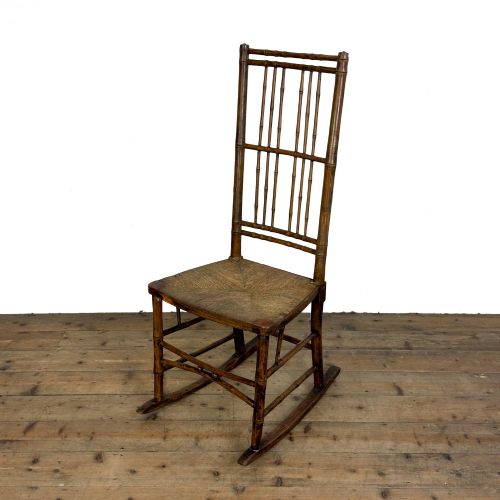
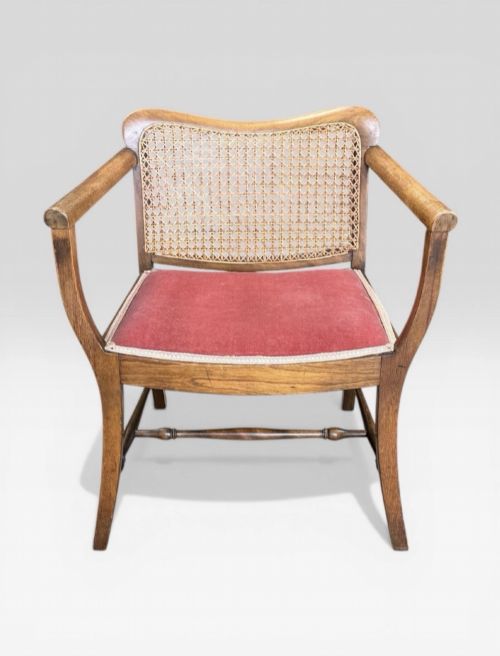

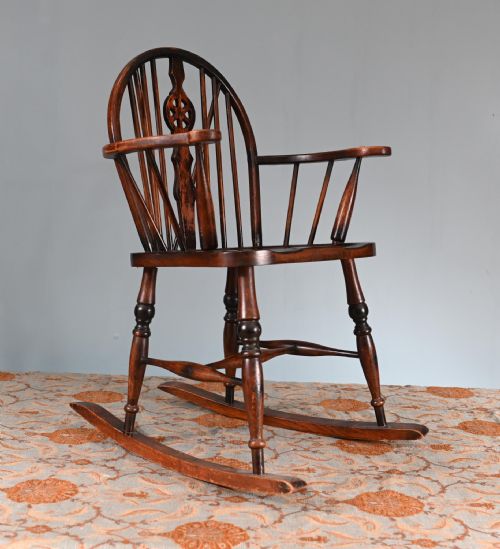


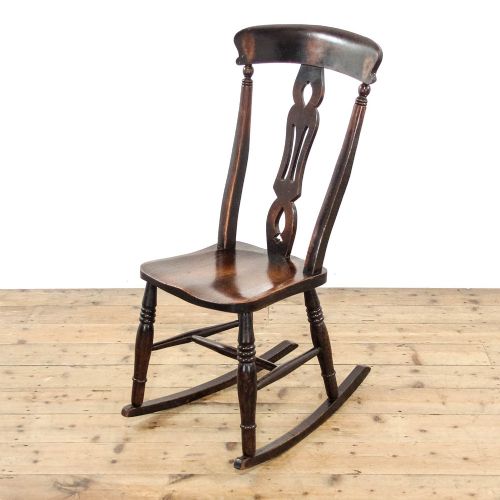


Brown Wood Nursery Chair
A brown wood nursery chair brings centuries of domestic history into a room, offering small-scale seating crafted for children.
Brown Wood Nursery Chair
A brown wood nursery chair encompasses miniature seating forms designed specifically for children, spanning armchairs, rockers, high chairs, and Windsor designs. These pieces appear across periods from the Georgian and Victorian eras through to the Edwardian period and the early twentieth century.
Makers utilised timber varieties suited to domestic utility, producing compact chairs that mirrored adult styles of their respective periods. A brown wood nursery chair often survives in smaller proportions because it was originally built for a child's stature.
Materials and construction
Craftsmen built these small chairs using solid timbers such as elm, beech, ash, yew, oak, and mahogany, frequently combining woods within a single frame for strength and contrast. Country makers employed regional timbers available locally, turning spindles and bending components to shape.
Cane work appears frequently on seats and backs, particularly on bergere chairs and Victorian cane seat armchairs, requiring skilled weaving around wooden frames. Joinery methods relied on traditional pegging, turning, and steam-bending techniques suited to the particular timber.
Listings feature timbers including yew wood, elm, ash, beech, and mahogany across the Georgian, Victorian, and Edwardian periods.
Judging quality in miniature seating
Quality rests in the integrity of the timber selection and the precision of the joinery, particularly where spindles meet thick plank seats. Pieces fashioned from figured yew wood or high-grade mahogany demonstrate superior craftsmanship compared to utilitarian utility versions.
The survival of original surfaces, such as aged polish on mahogany or natural patination on elm and ash, dictates the visual merit of the piece. Fine examples retain structural stability despite their diminutive size, showing considered proportion and balanced turnings.
James Shoolbred
The Brown Wood Nursery Chair Glossary
- Windsor
- A chair built with a solid wooden seat into which the legs and back spindles are directly bored and wedged. These vernacular pieces often feature bow backs or comb pieces.
- Crinoline stretcher
- A curved metal or wooden brace linking the legs of a chair to provide lateral stability. It takes its name from the hoop skirts worn in the nineteenth century.
- Bergere
- An upholstered or cane-paneled armchair featuring enclosed sides. In children's variants, cane work forms the back and seat insert.
- Faux bamboo
- Wood turned and carved to imitate the segmented stalks of bamboo. This decorative technique appears on Victorian seating frames.
- Correction chair
- A nineteenth-century seating form designed with a tall straight back intended to encourage upright posture in children. These often incorporate cane seats and backs.
Brown Wood Nursery Chair: Frequently Asked Questions
What is a brown wood nursery chair?
A brown wood nursery chair is a small-scale historical seat built for children, encompassing Windsor chairs, rockers, and high chairs from the Georgian and Victorian periods.
These pieces reflect adult furniture styles of their respective eras translated into miniature proportions for domestic use.
How do I date a childs Windsor chair?
Dating relies on examining the timber species, turning styles, and construction methods, such as the presence of a crinoline stretcher or saddle seats. Georgian examples often feature yew or elm, while later nineteenth-century pieces show distinct Victorian turnings.
Comparing the construction details to adult counterparts helps place the piece within periods ranging from 1800 through the Edwardian era.
Were these chairs used daily?
These small chairs served practical roles in nurseries and domestic interiors, accommodating children for meals, reading, or rest. High chairs and rocking chairs were built to withstand the demands of daily household life.
Many survivors show the patina of genuine use while retaining their structural integrity across generations.
How should I care for antique wood furniture?
Maintenance involves keeping wooden pieces away from direct heat sources and sudden humidity changes to prevent timber splitting. Gentle dusting with a dry cloth preserves the finish without harming the historic surface.
Applying appropriate wax occasionally helps maintain the lustre of woods like mahogany, yew, and elm.