
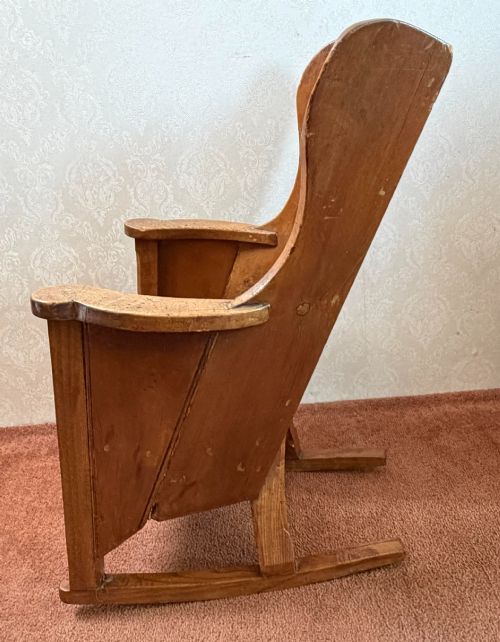
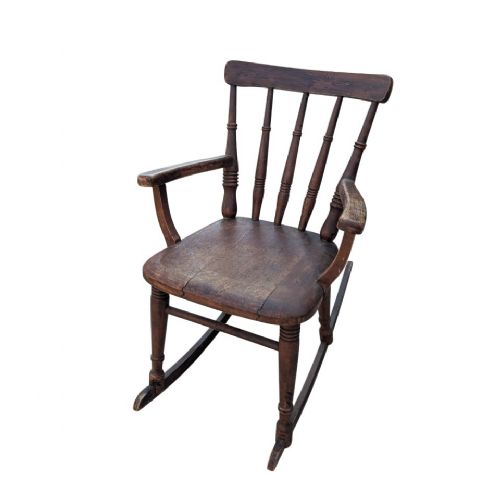


Traditional Timber Nursery Chair
These traditional timber nursery chair options bring honest historical charm to a room, offering genuine seating pieces made for children in past centuries.
Traditional Timber Nursery Chair
A traditional timber nursery chair comprises seating forms built specifically for children during the nineteenth century and around nineteen hundred. These pieces span rocking chairs, children's high chairs, and child's windsor chairs designed for domestic use.
You are most likely to meet nineteenth century rocking chairs and windsor forms on this page. These versions appear alongside Victorian country pieces and folding child's chairs.
Makers constructed these items from various woods to serve everyday households. The selection includes styles ranging from English and Scandinavian country to rustic folk art.
How they were made
Craftsmen shaped these items using solid timbers including pine, oak, elm, beech, ash, fruitwood, and mahogany. Carpenters often combined different woods within a single frame to balance strength and appearance.
Construction techniques involved traditional joinery suited to domestic seating. Some examples feature cane or bergere inserts, metal hardware, and moulded panelled seats and backs.
Listings feature items built from wood, pine, cane, metal, oak, elm, beech, and ash across the nineteenth century.
What varies in quality
Quality differences lie in the selection of timber and the sophistication of the turning and joinery. Finer examples display carefully chosen fruitwoods or mahogany with balanced proportions.
The degree of decorative detail on moulded panels and spindles separates standard utilitarian seating from more ambitious country workshop production.
The Traditional Timber Nursery Chair Glossary
- Windsor
- A chair built with a solid wooden seat into which the legs and back spindles are dowelled directly. This construction method provides robust stability for everyday seating.
- Bergere
- A type of woven cane panelling used for seats and backs. It adds a lighter texture to heavier wooden frames.
- Fruitwood
- Timber sourced from fruit-bearing trees such as pear or apple, prized by makers for its dense grain and warm tone. It appears frequently in better-quality nineteenth century seating.
- Moulded panel
- A wooden board shaped with concave or convex profiles to fit the sitter's body. These panels are typical of Victorian chair backs and seats.
Traditional Timber Nursery Chair: Frequently Asked Questions
What is a traditional timber nursery chair?
A traditional timber nursery chair is a small-scale seat made in the nineteenth century for children. These pieces include rocking chairs, high chairs, and windsor designs.
They reflect the domestic furniture styles of their period, utilising local woods and traditional construction methods.
How were these chairs used?
These chairs provided seating for young children in domestic nurseries and family rooms. Rocking versions helped soothe infants, while high chairs assisted with feeding.
Their smaller proportions matched the physical needs of children before mass-produced plastic seating existed.
Are these chairs suitable for daily use?
Many of these historical pieces remain structurally sound for gentle daily sitting or decorative display. Their solid wood construction has endured for generations in domestic settings.
Careful placement helps preserve the antique timber and original surfaces.