
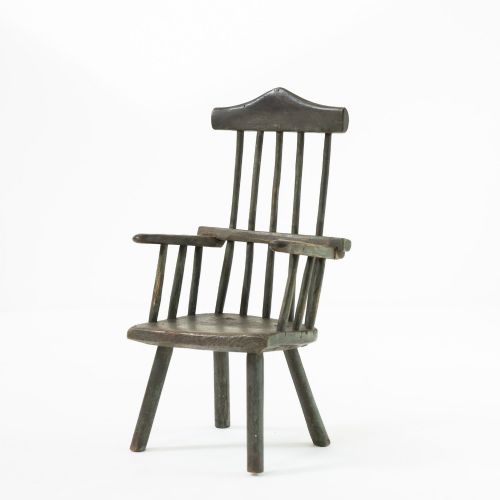


19th Century Childrens Furniture
These 19th century childrens furniture pieces bring domestic history into small scale, offering practical seating built for past generations.
19th Century Childrens Furniture
When you search for 19th century childrens furniture, you encounter scaled down seating built for younger members of the household across various stylistic traditions. These domestic items include low armchairs, high chairs, benches, and rocking chairs designed for daily use.
The pieces on this page span several periods, from Georgian and Regency eras through the Victorian years and up to around 1850. Regional variations appear alongside formal styles, connecting vernacular craftsmanship with domestic life.
How they were made
Makers utilised solid timbers such as elm, mahogany, yew, beechwood, and fruitwood to construct durable frames that could withstand heavy daily use by children. Turned spindles, stick backs, and steam bent components provided structural integrity.
Seating surfaces incorporated solid timber boards, woven cane panels, or leather pads depending on the intended function and formality of the chair. Painted finishes occasionally coated the wood to protect the surface or decorate the piece.
The furniture spans multiple design traditions, ranging from English country vernacular to Scandinavian country and formal Regency.
What varies in quality
The distinction between standard examples and finer pieces lies in the selection of timber and the complexity of the joinery. Woods like figured mahogany or well grained yew reflect greater initial expense than basic utilitarian hardwoods.
Proportion and execution of turning also separate ordinary utility items from more considered vernacular or formal workshop productions. The retention of original surfaces and materials adds considerable integrity to surviving examples.
The 19th Century Childrens Furniture Glossary
- Stick back
- A chair construction method where turned spindles are inserted directly into a solid wooden seat. This technique forms the supportive backrest seen in many vernacular examples.
- Windsor
- A chair style featuring a saddle shaped wooden seat into which the legs and back spindles are tenoned. They often incorporate bentwood arm bows for added strength.
- Caned
- A seating material woven from peeled rattan strips. It provides a lightweight and flexible surface popular in formal dining or high chair designs.
- Vernacular
- Objects made by local craftsmen following regional traditions rather than high style metropolitan patterns. These pieces prioritise functional utility and local material availability.
19th Century Childrens Furniture: Frequently Asked Questions
Were these miniature chairs actually used by children?
Yes, these items were built specifically for everyday use by youngsters in domestic settings. Their smaller proportions match the ergonomic needs of children in past centuries.
High chairs raised toddlers to table height, while low armchairs and rockers provided portable seating for nurseries and parlours.
How do I identify the period of a child's chair?
Dating relies on observing construction methods, timber choices, and stylistic traits associated with specific eras like the Regency or Victorian periods. Tool marks and joinery techniques often reveal the age of the woodwork.
Comparing the turning details and overall silhouette to adult furniture of the same decade helps narrow down the approximate date of manufacture.
Can I use antique children's furniture in a modern home?
These pieces function well as decorative display objects or occasional seats in contemporary interiors. Their compact size makes them suitable for placement in hallways, bedrooms, or living spaces.
Placement should consider the structural stability of older joints if intended for actual seating use by children today.
What is the difference between rustic and formal children's chairs?
Rustic or primitive vernacular pieces utilise local woods like elm or fruitwood with simple turned parts, reflecting regional country craftsmanship. Formal examples often employ mahogany with refined details reflecting contemporary adult furniture.
Formal pieces frequently feature sophisticated elements such as caned panels or reeded legs, whereas country pieces focus on robust stick back construction.