


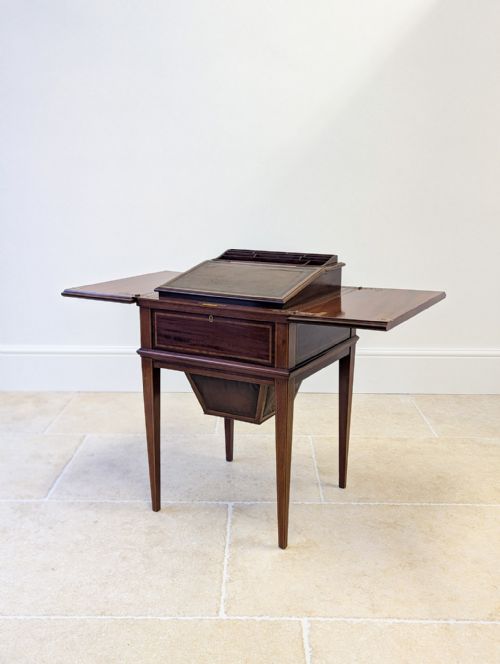
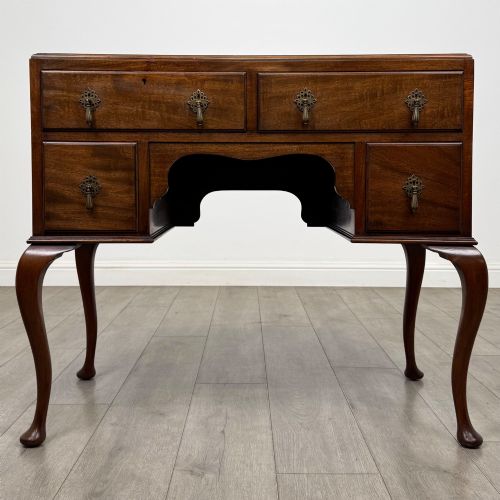
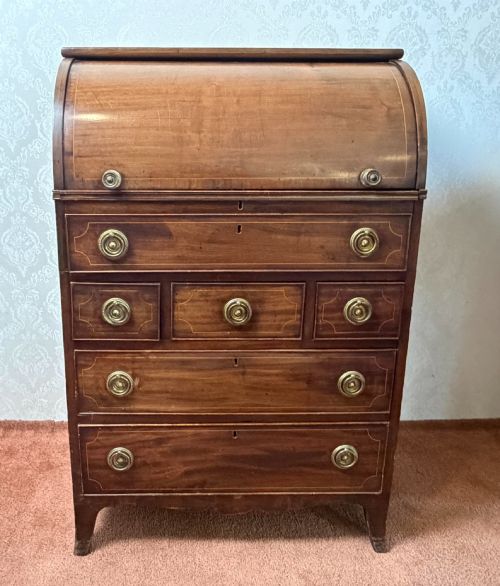
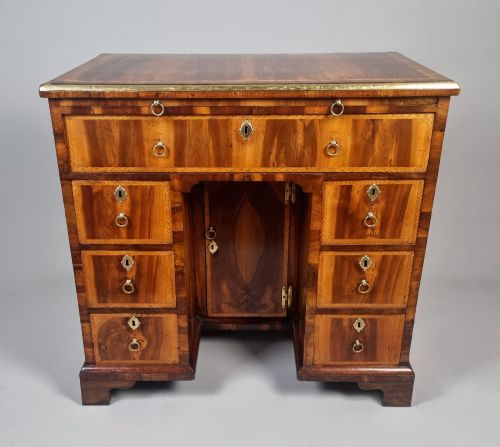
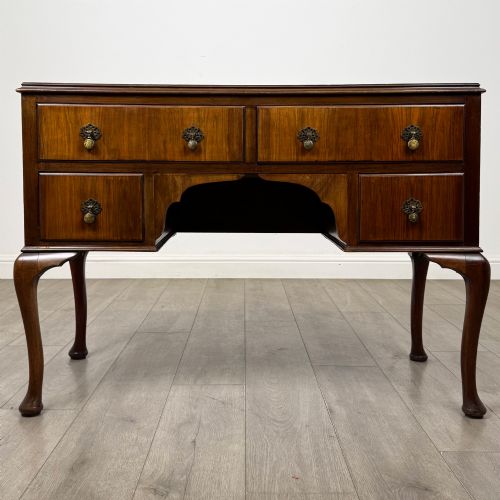
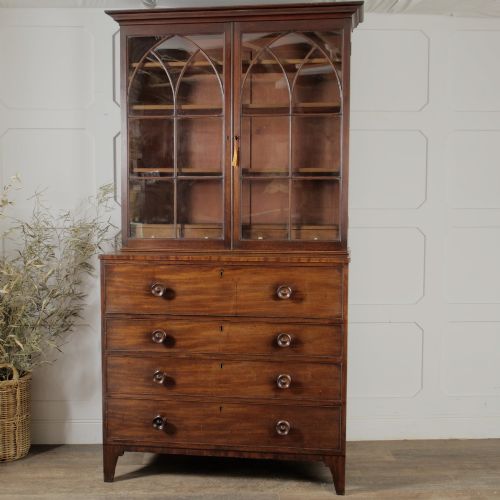
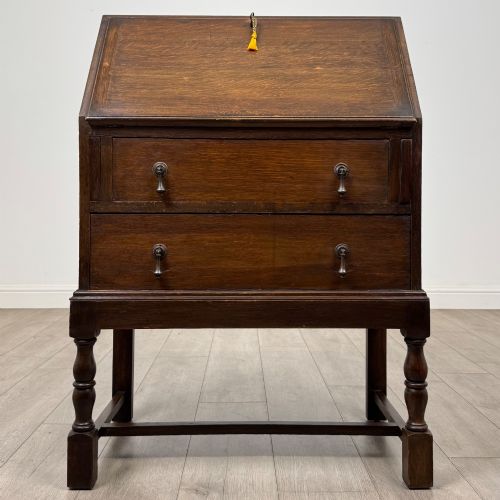
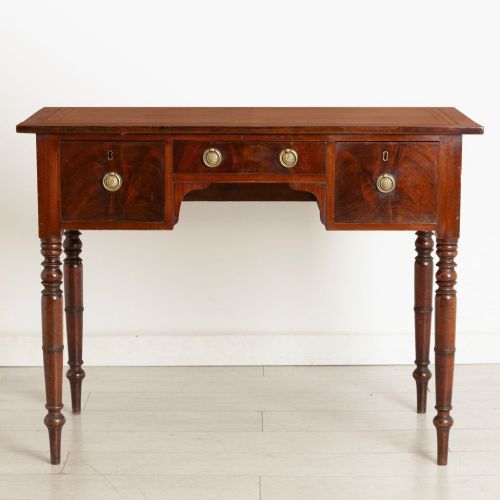
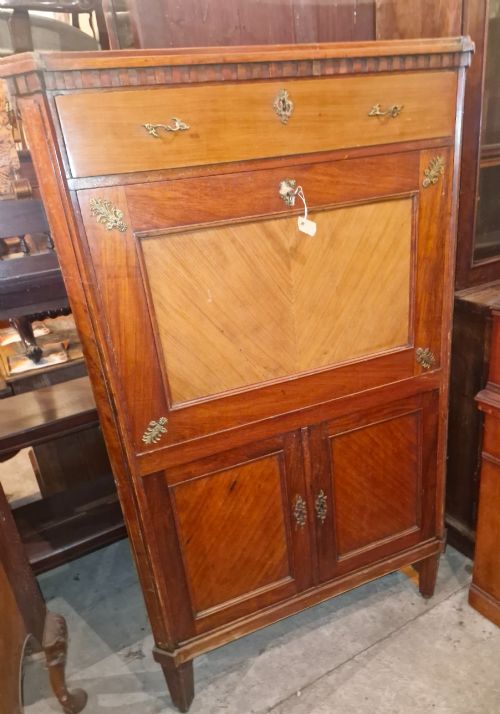
Brown Wood Bureau Desk
These brown wood bureau desks are practical writing cabinets and tables shaped by centuries of craftsmanship, offering secret storage and sturdy workspace.
Brown Wood Bureau Desk
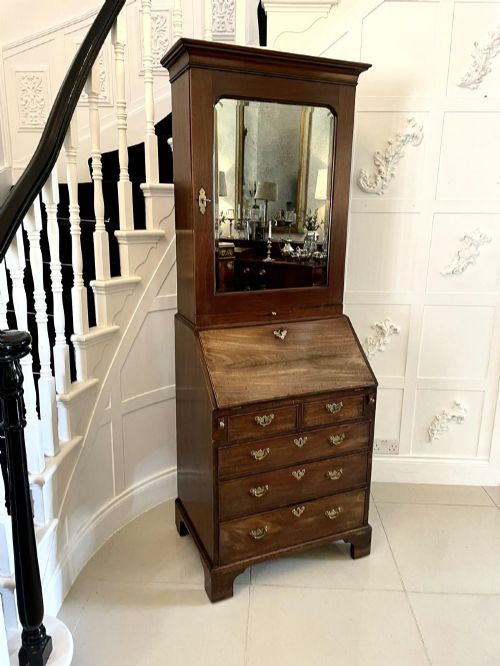
A brown wood bureau desk combines a sloping fall-front writing flap with internal pigeonholes and drawers, concealing a private space for correspondence. These pieces appear across Georgian, Victorian, and Edwardian periods, taking forms from compact kneehole desks to tall bureau bookcases.
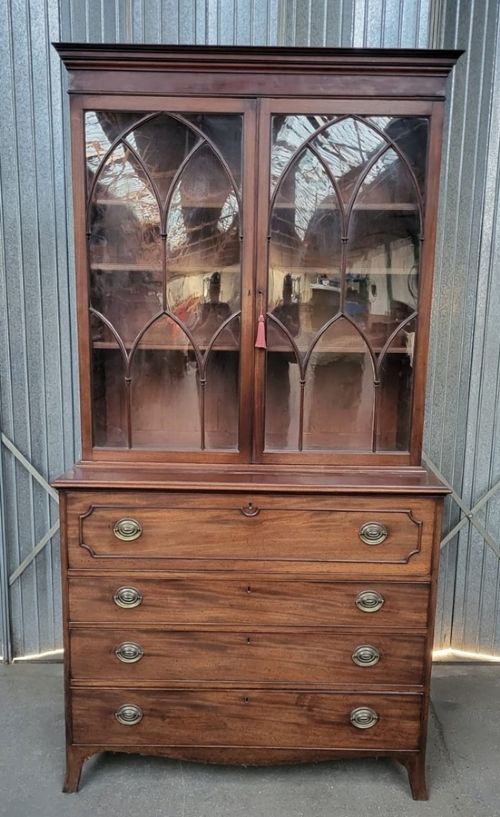
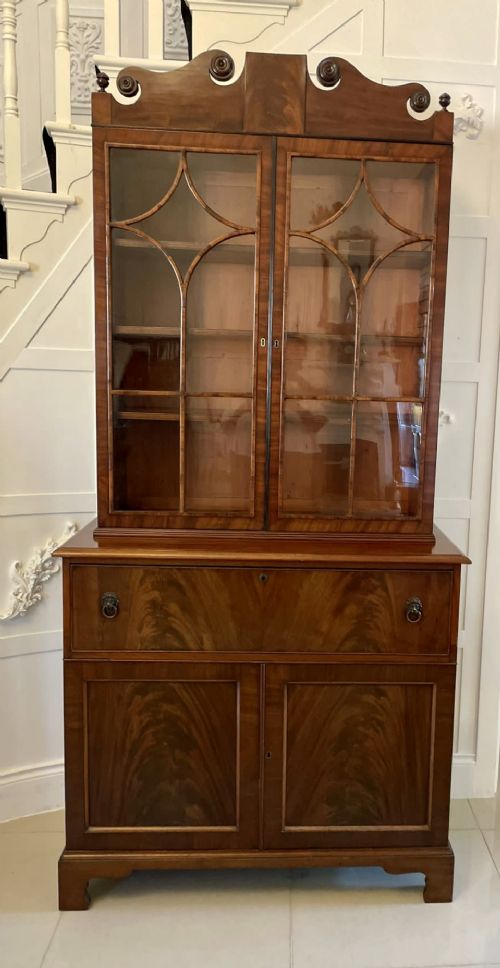
The most common versions met on this page are mahogany and oak items from the Georgian and Edwardian eras. Buyers encounter everything from simple drop-front cabinets to elaborate secretaire bookcases fitted with glass doors and adjustable shelving.
Materials and construction methods
Cabinetmakers built these desks primarily using solid timber frameworks veneered with figured mahogany, walnut, yew wood, or oak. Fine brass handles, hinges, and key escutcheons secure the drawers and fall-fronts, while some continental and Victorian examples add ormolu mounts and porcelain plaques.
Internal components utilise secondary woods like oak or pine for drawer linings, constructed with hand-cut dovetails. Fall-front writing surfaces frequently feature inset panels of tooled leather for a durable writing plane.
Materials documented across the pieces include mahogany, walnut, oak, yew wood, satinwood, kingwood, tulipwood, burr elm, brass, glass, and ormolu.
Assessing quality and craftsmanship
Quality rests upon the selection of timber figures, such as burr elm or burr walnut, and the precision of the cabinetmaker's joinery. Superior examples maintain original brass hardware, fitted interior compartments with secret drawers, and unwarped fall-front panels that close flush.
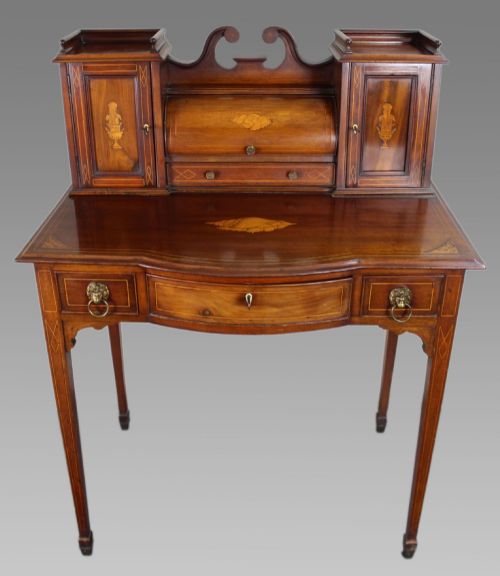
The depth of carving, subtlety of marquetry inlay, and integrity of the internal pigeonhole arrangement distinguish fine workshop production from later commercial output. Original surface patination and minimal timber replacement elevate a piece above standard utility items.
The Brown Wood Bureau Desk Glossary
- Bureau
- A writing desk featuring a sloping fall-front flap that opens to reveal small drawers and pigeonholes. It stands either on bracket feet as a standalone unit or upon a frame.
- Secretaire Bookcase
- A tall piece combining a upper shelving section with glazed doors and a lower drawer that pulls down to function as a writing desk. These units provide both library storage and private writing space.
- Kneehole Desk
- A compact pedestal desk with a central recess for the user's legs, flanked by columns of small drawers. They first appeared in the Georgian period.
- Ormolu
- Gilded bronze mounts cast in decorative scrollwork or floral motifs and applied to furniture. This technique is frequently found on French and Victorian writing cabinets.
Brown Wood Bureau Desk: Frequently Asked Questions
What is a brown wood bureau desk?
A brown wood bureau desk is a traditional writing cabinet featuring a hinged sloping flap that drops down to form a writing surface. Inside, users find an arrangement of small drawers and pigeonholes for storing stationery and letters.
These pieces range from simple oak and mahogany examples to grand bureau bookcases with upper shelving. They served as private workstations in historic homes and continue to function as practical desks today.
How do I use a bureau desk?
To use a bureau desk, unlock the fall-front flap and lower it gently until it rests horizontally, supported by hinged wooden arms or brackets. This creates a compact writing platform above the main drawer section.
When writing is finished, papers and ink are stored back inside the pigeonholes before lifting the flap upright and securing it with a key. The internal compartments keep small items organised out of sight.
How do I date a bureau desk?
Dating a bureau desk involves examining the timber species, construction methods of the drawer linings, and overall style. Georgian pieces often display fine mahogany and dovetailing, while Edwardian versions frequently utilise satinwood inlay and lighter oak structures.
Hardware such as brass handles and escutcheons also provide clues, as does the presence of secondary woods like pine or oak inside the carcase. Examining these details together reveals the period of manufacture.
Are bureau desks good for small spaces?
Bureau desks suit compact rooms because the fall-front design encloses the workspace when not in use. They offer substantial storage through multiple drawers without occupying the floor area of a modern office desk.
Many historic examples were built in smaller proportions, making them adaptable for contemporary living areas where surface space is limited.