


Brown Wood Bear Sculpture
A brown wood bear sculpture brings rustic charm and detailed animal form into a room, shaped by hands across the nineteenth century.
Brown Wood Bear Sculpture
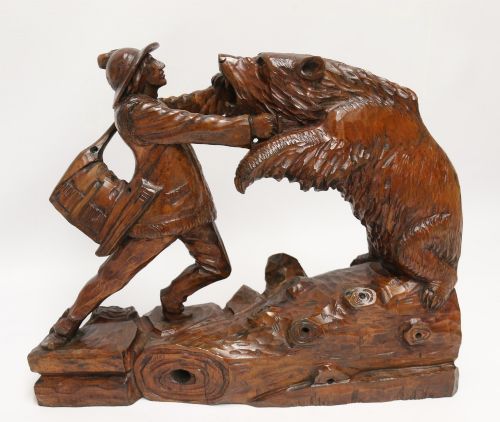
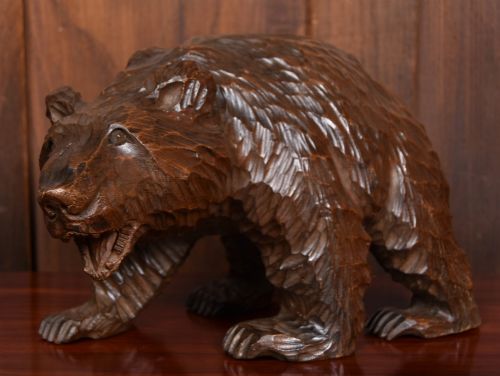
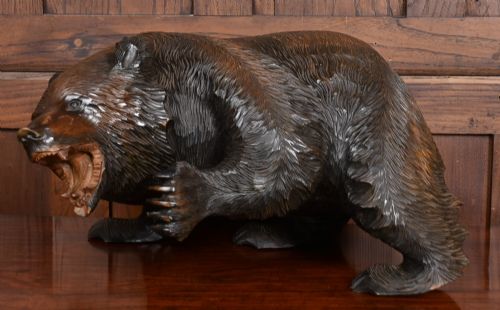
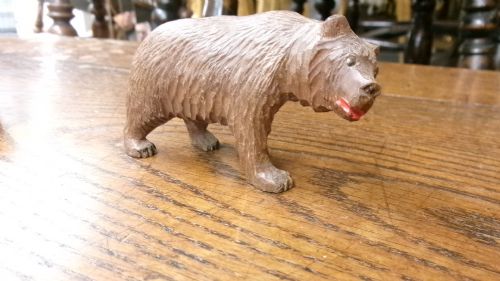
A brown wood bear sculpture encompasses carved figures, functional hall stands, and small decorative objects originating from European and Japanese traditions. When searching for a brown wood bear sculpture, collectors encounter animal carvings spanning the Georgian era, the nineteenth century, and the Edwardian period. These pieces range from miniature desk items and tobacco boxes to large umbrella stands and exhibition pieces.
The regional styles define the visual character of the sculptures, drawing heavily on Black Forest, Swiss folk art, and Japanese folk art traditions. Many pieces depict bears engaged in human activities or standing alert, carved with glass, metal, or stud eyes. Collectors find single figures, pairs, and complex figure groups carved in deep brown timbers.
How they were made
Carvers utilised traditional hand tools to shape dense timbers such as linden wood, walnut, oak, and general hardwood. Linden wood, favoured for its fine grain and consistent texture, allowed artisans to render deep fur texture and realistic facial expressions. Wax finishes were often applied to protect the timber and deepen the natural tone of the brown wood.
Makers integrated functional elements into the carvings, such as metal hardware for inkstands, umbrella wells in hall stands, and lidded compartments for humidors. The construction combined solid wood blocks for the main bear bodies with applied details for ears, paws, and accessories.
Listings feature items carved from linden wood, walnut, oak, and hardwood, spanning the Georgian period to the 1920s.
What varies in quality
The anatomical accuracy of the bear and the depth of the fur carving distinguish superior sculptures from simpler works. Master carvers captured tension in the muscles and lifelike expressions in the eyes, whereas lesser pieces rely on stiff outlines and shallow tool marks.
The ambition of the form separates standard decorative objects from exhibition pieces. Large hall stands, complex figure groups, and multi-piece sets demonstrate greater sculptural capability than standalone figures.
The Brown Wood Bear Sculpture Glossary
- Black Forest
- A regional carving style originating from the wooded mountain region of central Europe, known for realistic animal sculptures. These pieces frequently depict bears acting as furniture or desktop accessories.
- Kibori Kuma
- A Japanese term for traditional wood-carved bears, originating from the northern regions. These sculptures are hand-carved in styles distinct from European traditions.
- Linden wood
- A pale hardwood favoured by carvers for its smooth grain and ease of shaping intricate details. It accepts dark wax finishes well.
- Humidor
- A specialised box designed to keep tobacco moist, occasionally carved in the form of an animal. These objects feature fitted lidded compartments.
- Hall stand
- A large piece of hall furniture combining coat hooks, umbrella storage, and umbrella stands. In this category, they incorporate carved bear figures into the wooden framework.
Brown Wood Bear Sculpture: Frequently Asked Questions
How do I date a carved bear sculpture?
Dating relies on stylistic clues, tool marks, and associated furniture forms such as Edwardian hall stands or Georgian figures.
Material choices like linden wood or walnut and regional traits help narrow the origin to specific decades within the nineteenth century.
Where were Black Forest bears made?
These carvings originated primarily in the mountainous regions of Switzerland and Germany during the nineteenth century.
Local woodcarvers produced them for tourists, exporting them widely across Britain and Europe.
What is Kibori Kuma?
Kibori Kuma refers to traditional wooden bear carvings made in Japan, often by regional folk artists.
These pieces feature distinct hand-carved textures that set them apart from European Black Forest examples.
How were carved bear stands used?
Bear hall stands and umbrella stands served a practical purpose in nineteenth-century entrance halls.
They held walking sticks, umbrellas, and coats while providing a striking decorative focal point.