


Brown Wood Barometer
A brown wood barometer is a practical instrument for measuring atmospheric pressure, housed in timber cases that bring period character to any wall.
Brown Wood Barometer
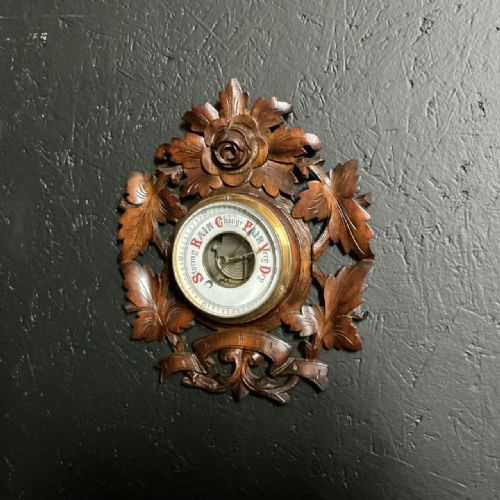
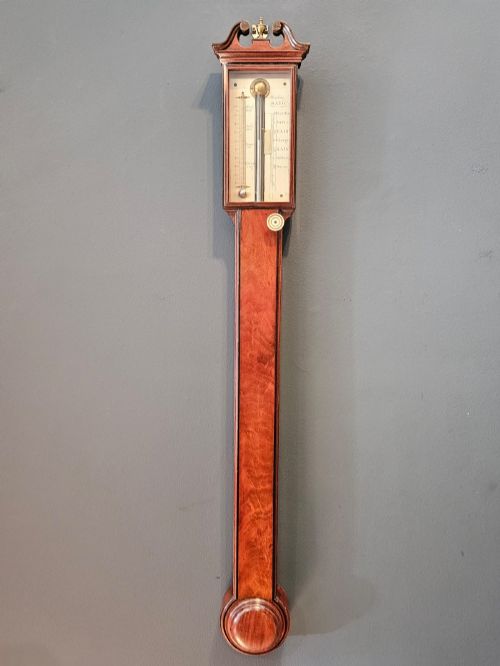
A brown wood barometer combines scientific utility with domestic decoration, taking forms such as stick barometers, banjo barometers, and wall barometers. These instruments date across the eighteenth, nineteenth, and early twentieth centuries, spanning periods from early Georgian to Edwardian and Victorian styles.
The most common examples on this page are carved oak and mahogany banjo barometers or stick barometers from the Victorian era. Walnut and beechwood also appear, alongside specialised pieces like barographs and combined weather stations.
Materials and construction
Cases rely on timber such as mahogany, oak, walnut, and beechwood, often shaped into carved or polished surrounds. Brass components secure the dials, bezels, and mercury tubes or aneroid movements within the wooden frames.
Makers integrated glass lenses to protect the paper dials and thermometer scales, while bone or ivorine scales frequently display the barometric pressure readings.
Brown Wood Barometer Retail Price Guide 2026
Typical asking prices for brown wood barometer among the pieces listed under this phrase on Sellingantiques today, from the lower quarter to the upper quarter. They describe what is for sale here now, not the wider market.
Listings feature oak, mahogany, walnut, and beechwood cases housing mercury and aneroid mechanisms across Victorian, Edwardian, and Georgian periods.
Assessing quality in wood barometers
Differentiation lies in the crispness of the timber carving, the choice of cabinet wood, and the refinement of the dial engraving. Finely figured mahogany or burr walnut paired with robust brass fittings indicates superior workshop production.
The reputation of the maker and the complexity of the instrument, such as combined clock and barometer movements or mercury-filled stick tubes, further distinguish standard examples from masterworks.
Negretti & Zambra·Short & Mason·Jenkins Of Old Swindon·Maple & Co·W.E. Pain of Cambridge·S&B Solomons of London
The Brown Wood Barometer Glossary
- Stick barometer
- A tall, slender instrument containing an open column of mercury that rises and falls with atmospheric pressure. These vertical gauges represent traditional scientific design.
- Banjo barometer
- A wall barometer featuring a rounded top and an expanded, bulbous lower body shaped like a stringed instrument. This form dominated nineteenth-century domestic interiors.
- Aneroid barometer
- A mechanism that uses a sealed, flexible metal box to measure pressure changes without liquid. This design allowed barometers to be built in more compact and varied cases.
- Barograph
- A recording barometer that traces pressure fluctuations onto a rotating drum fitted with paper charts. These instruments often incorporate a drawer for spare charts.
- Wheel barometer
- A dial barometer operated by a float on a siphon tube connected to a pulley and pointer. The circular face typically sits below a hygrometer or thermometer.
Brown Wood Barometer: Frequently Asked Questions
How do I read a stick barometer?
Read the height of the mercury column using the scale marked on the brass plate alongside the glass tube. Rising levels generally indicate improving weather conditions.
Compare the primary pointer with the manually adjustable vernier needle to see whether pressure has increased or decreased since your last check.
Where should I hang a wall barometer?
Mount the barometer on an interior wall away from direct sunlight, radiators, and heavy draughts. Stable ambient temperatures ensure the internal mechanism functions accurately.
Choose a wall at eye level where the dial or scale can be read clearly without obstruction.
How do I tell an aneroid from a mercury barometer?
Aneroid barometers display pressure on a circular dial with a rotating hand, much like a clock face. They contain no visible liquid columns.
Mercury barometers feature a vertical glass tube where a silvery liquid column moves up and down against a graduated scale.
How do I care for a wooden barometer case?
Dust the timber case gently with a dry, soft cloth to prevent accumulation in carved recesses. Avoid using modern aerosol polishes or chemical cleaning agents.
Maintain stable humidity in the room to protect the wood and prevent the joints or veneers from warping over time.