


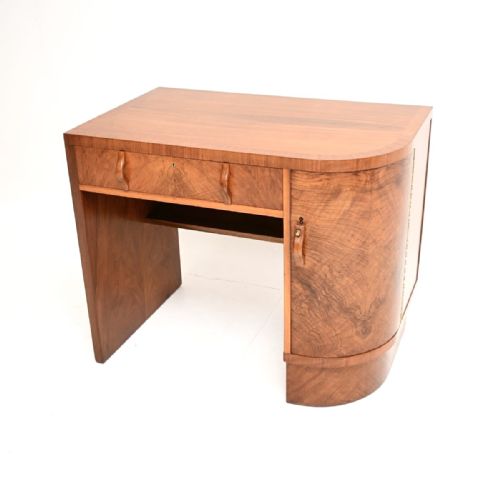
Brown Walnut Writing Bureau
A brown walnut writing bureau brings warmth and practicality to a room, offering a private writing surface that folds away when the letters are done.
Brown Walnut Writing Bureau
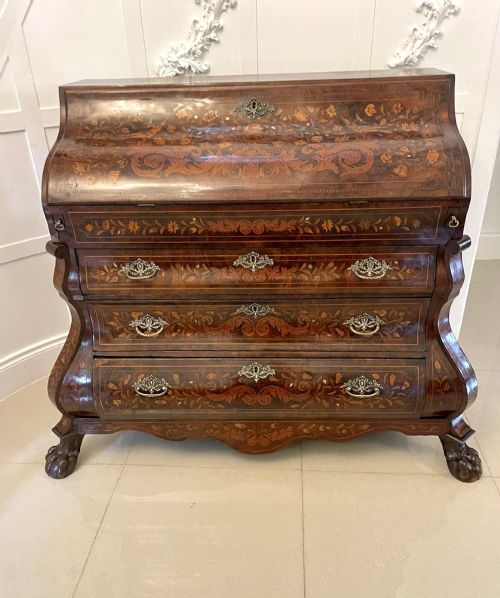
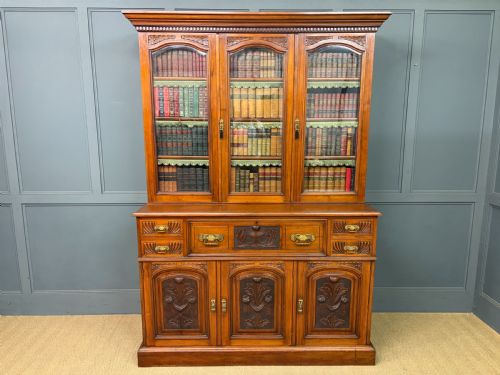
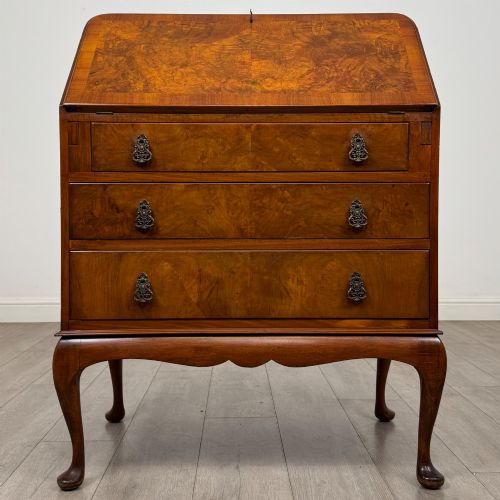
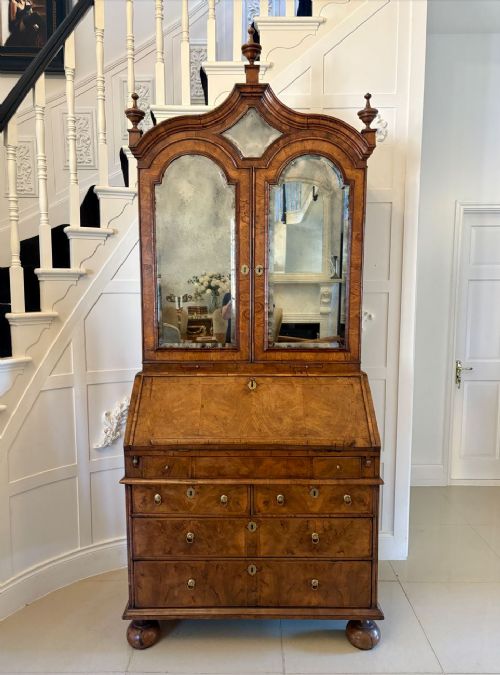
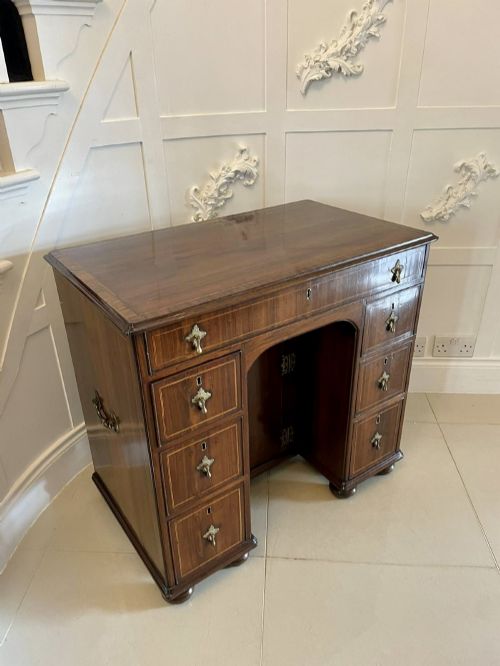
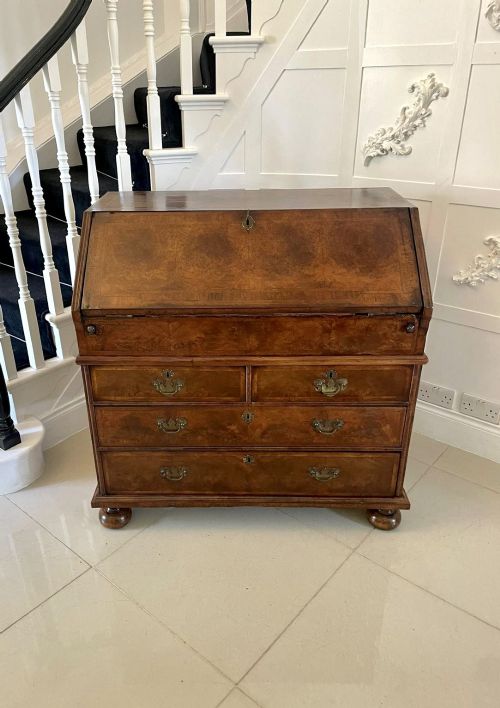
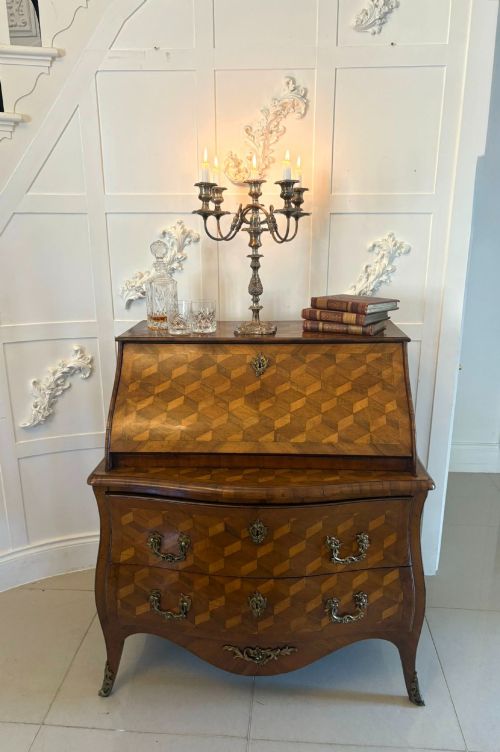
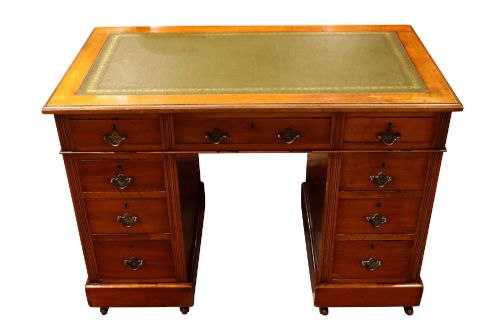
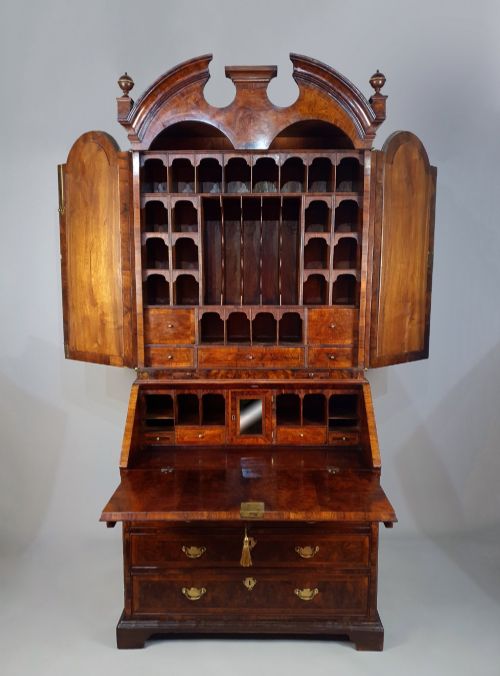
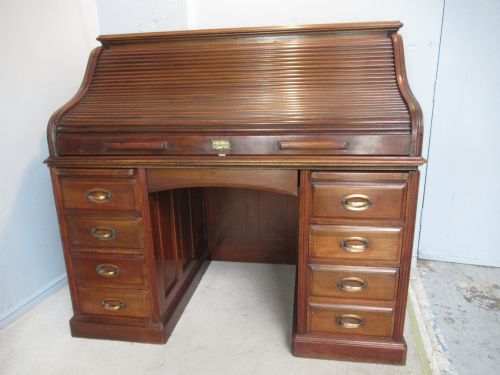
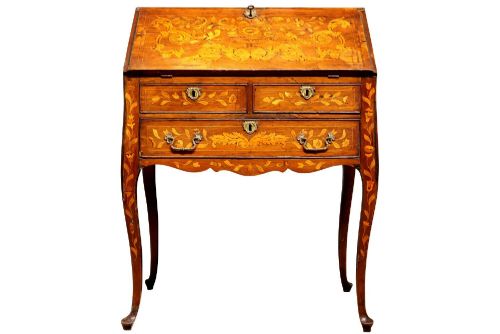
A brown walnut writing bureau is primarily a fall-front desk that conceals small drawers and pigeonholes for correspondence, standing on legs or a chest of drawers. Pieces on this page span the seventeenth century through to the Art Deco era and the 1930s, taking forms such as bureau bookcases, kneehole desks, and bureau de dame.
The materials include plain walnut, burr walnut, and figured walnut, often accented with marquetry, parquetry, and brass hardware. Buyers frequently encounter Georgian and eighteenth-century examples alongside later Edwardian and Victorian interpretations.
Materials and Technique
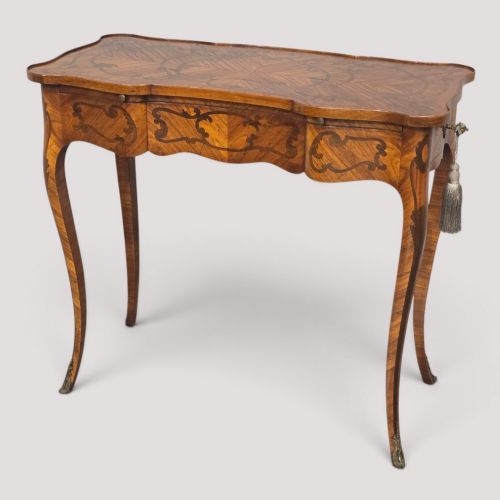
Cabinetmakers used solid walnut and applied decorative veneers of burr walnut, laid down in herringbone patterns or framed with featherbanding to create rich surface movement. Marquetry and parquetry inlay introduced floral motifs and geometric designs using fruitwoods and contrasting timbers.
Structural elements incorporated oak for drawer linings and carcases, while brass provided handles, escutcheons, and occasional inlay work. Leather inserts frequently formed the writing surfaces on pedestal desks and bureau tables.
Listings on this page span the 17th, 18th, 19th, and 20th centuries, featuring walnut, burr walnut, oak, glass, leather, and brass.
Assessing Quality
Quality rests in the choice and matching of the veneer timbers, particularly how symmetrical the burr walnut grain appears across the fall-front flap and drawer fronts. The crispness of hand-cut marquetry and the retention of original brass fittings elevate certain pieces above standard workshop production.
Internal joinery, such as hand-dovetailed drawer construction using oak or fruitwood, indicates the care taken by the original cabinetmaker. Proportions and the integration of fitted compartments within the bureau interior determine the structural harmony of the piece.
The Brown Walnut Writing Bureau Glossary
- Burr walnut
- A figured wood grain taken from the warted growths of walnut trees, prized for its swirling patterns.
- Fall-front
- A hinged writing flap that drops down to provide a horizontal surface for penmanship.
- Escritoire
- A tall writing cabinet or desk containing a central flap that lowers to reveal fitted drawers.
- Marquetry
- Decorative veneer work forming pictures or patterns from thin pieces of wood and other materials.
- Kneehole desk
- A compact desk with a central recess for the legs, flanked by pedestals of small drawers.
Brown Walnut Writing Bureau: Frequently Asked Questions
How do I use a bureau daily?
Lower the fall-front flap to reveal the interior writing surface and pigeonholes for stationery storage.
Lift and lock the flap upright when not in use to keep the workspace tidy and conceal the contents.
How do I identify an 18th-century bureau?
Look for construction characteristics such as hand-cut dovetails, oak secondary timbers, and candle slides above the fall-front.
Early pieces often display featherbanding and herringturned veneer work rather than the broader marquetry seen in Dutch or later revival pieces.
Where should I place a walnut bureau?
Position the piece away from direct sunlight and heat sources to prevent the walnut veneer from drying out or warping.
Ensure there is sufficient clearance for the fall-front to open fully and for a chair to slide into position.