






Carved Lion Writing Desk
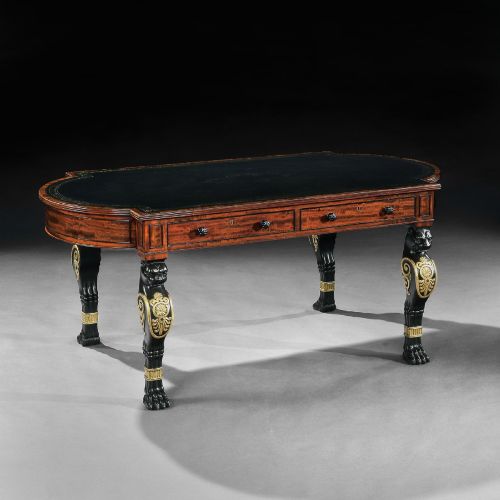
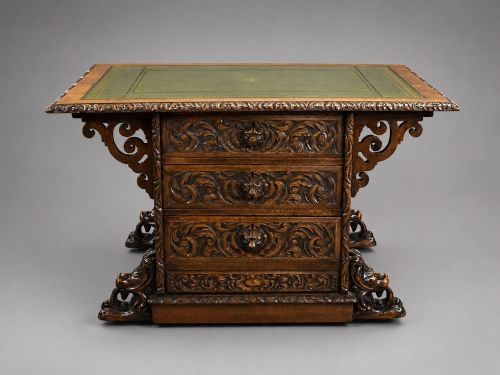
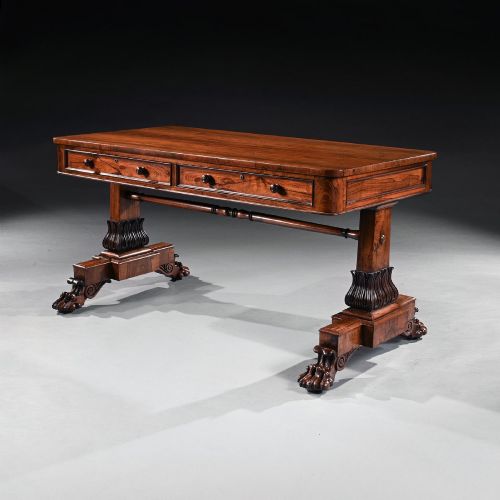
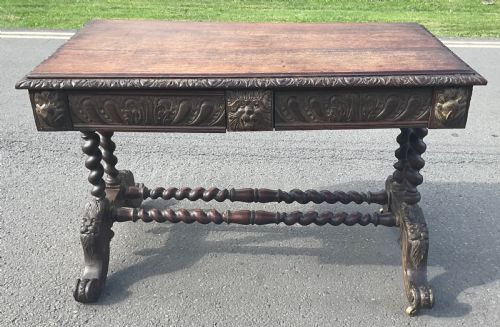
These carved lion writing desk examples combine robust timbers with sculptural animal motifs to anchor a serious study.
Carved Lion Writing Desk
When you search for a carved lion writing desk, you encounter substantial furniture pieces built primarily during the nineteenth century. These forms include partners writing tables, Davenport desks, and library tables featuring sculptural woodwork.
The most common examples on this page date from the Victorian period, frequently fashioned from oak or walnut. Makers integrated carved lion heads, paws, and stylistic flourishes into standard writing surfaces and pedestals.
Beyond straightforward desks, the selection encompasses side tables and centre tables that served functional workspaces in period libraries and studies. Each piece demonstrates the heavy ornamentation favoured during the nineteenth century.
How they were made
Carpenters utilised dense hardwoods such as oak, walnut, mahogany, and rosewood to construct the structural carcasses and heavy writing surfaces. Ebonised wood and gilt wood also appear among the material selection for decorative contrast.
Artisans applied deep relief carving directly into the timber, shaping leonine feet, heads, and flanking supports by hand. Brass hardware and inset leather writing surfaces completed the functional composition of these tables.
Carved Lion Writing Desk Retail Price Guide 2026
Typical asking prices for carved lion writing desk among the pieces listed under this phrase on Sellingantiques today, from the lower quarter to the upper quarter. They describe what is for sale here now, not the wider market.
One Victorian desk hides a Green Man carving among the foliage, watching over the inkwell.
What varies in quality
The depth and anatomical precision of the woodwork separate standard production from superior examples. Crisp detailing in the lion motifs indicates skilled hand carving rather than mechanical execution.
Material selection dictates the grade of the piece, with richly figured walnut and heavy oak commanding greater presence than simpler timbers. Original brass fittings and well-preserved leather inserts further distinguish the finer tables.
The Carved Lion Writing Desk Glossary
- Partners desk
- A large double-sided writing table designed for two people to work face-to-face, equipped with drawers on both flanks.
- Davenport desk
- A compact Victorian writing desk featuring a sloping lid and side drawers, often supported by front columns or carved figures.
- Library table
- A freestanding centre table used for reading and writing, finished on all sides to sit in the middle of a room.
- Gothic Revival
- A nineteenth-century architectural and decorative style drawing inspiration from medieval forms, arches, and heavy ornamentation.
Carved Lion Writing Desk: Frequently Asked Questions
What is a partners writing table?
A partners writing table is a large double-sided desk built with drawers and compartments accessible from both long sides. This layout allowed two individuals to share a single workspace.
Such tables frequently served in professional offices, libraries, or large stately homes during the nineteenth century.
How do I identify a Davenport desk?
A Davenport desk is a compact writing cabinet featuring a slanted leather-lined top that lifts to reveal storage compartments. A bank of small drawers typically opens to one side.
These pieces were popular in Victorian parlours and private studies for correspondence and letter writing.
What woods were used for these desks?
Cabinetmakers relied heavily on durable timbers such as oak, walnut, mahogany, and rosewood. These hardwoods provided the structural strength required for heavy carving.
Some examples also incorporate ebonised wood and gilt wood to achieve specific decorative Victorian aesthetics.
How do I date a Victorian desk?
Dating relies on examining the timber species, construction methods, and stylistic revival influences present in the carving. Pieces spanning the nineteenth century often exhibit Gothic or Renaissance revival motifs.
Documented examples from the 1850s to the 1880s reflect the changing ornamental tastes of the period.