


Brown Walnut Swing Mirror
A brown walnut swing mirror is a tabletop looking glass on a pivoting frame that brings warmth and practical dressing utility to any room.
Brown Walnut Swing Mirror
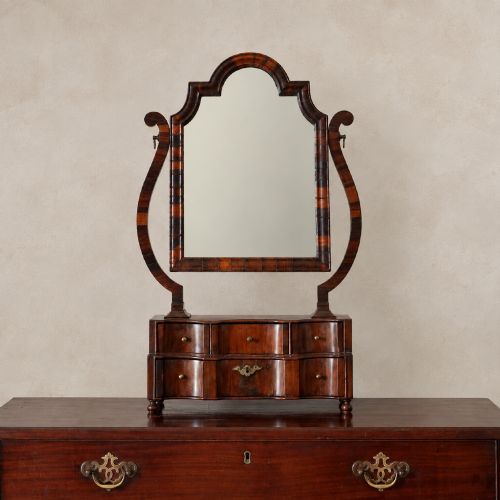
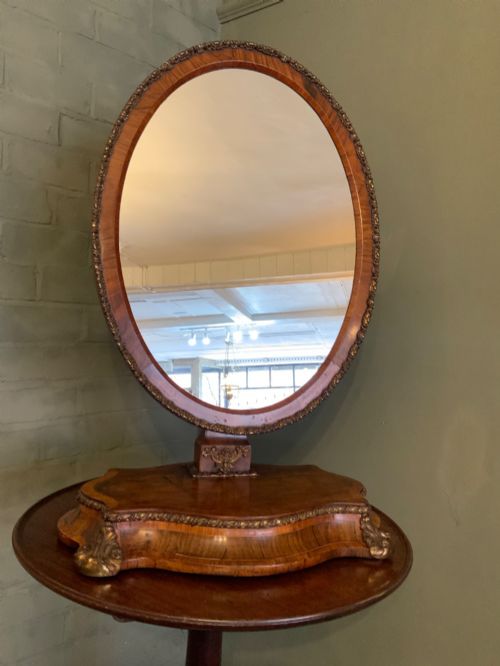
A brown walnut swing mirror is typically encountered as a tabletop dressing or toilet mirror, designed for placement on chests and dressing tables. The selections available span from the early eighteenth century through the Georgian and Victorian eras up to Edwardian examples.
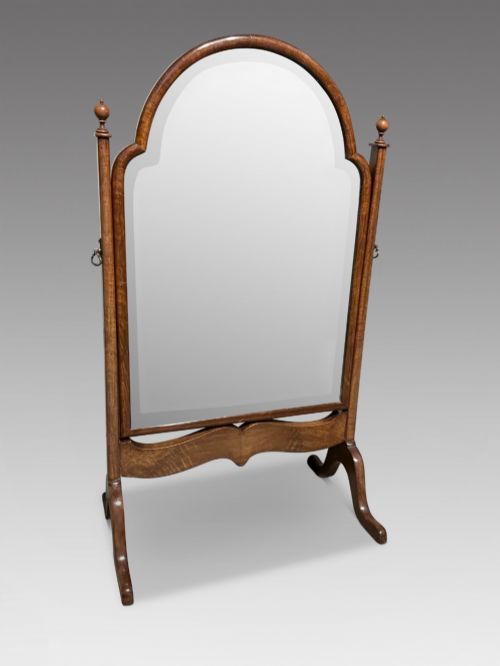
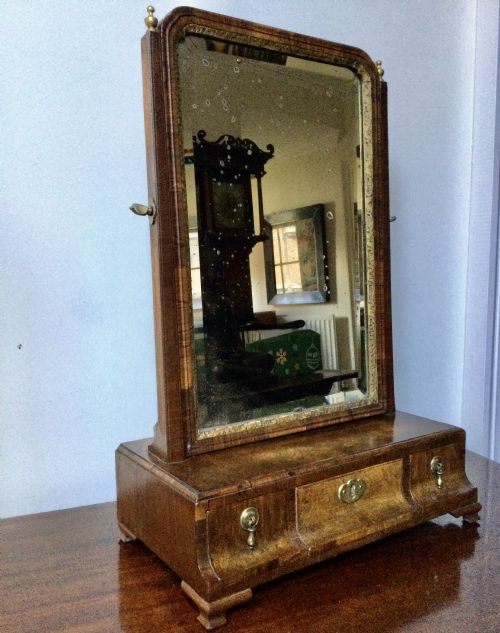
Forms include traditional box mirrors, bureau fitments incorporating small drawers, and cheval or table top mirrors. Regional variations such as Dutch marquetry pieces alongside British Queen Anne and Georgian interpretations appear throughout the inventory.
How they were made
Construction relies heavily on walnut timber, frequently enhanced with burr walnut veneers, laburnum, and boxwood inlay. Makers utilised mirror glass mounted within pivoting wooden frames supported by upright arms.
Metal components such as brass brackets and ormolu mounts provide both structural support and decorative contrast. Marquetry techniques and bureau fittings add functional complexity to specific regional forms.
Some miniature bureau mirrors cleverly pack a secret writing desk and tiny drawers beneath the glass, proving our ancestors loved a compact hideaway.
What varies in quality
Quality separates pieces through the selection of timber figures, particularly the depth and grain of burr walnut and marquetry patterns. Finer examples display meticulous attention to inlay work and the integration of small drawers.
The proportion between the mirror plate and the supporting frame dictates visual balance. Original brass hardware and the integrity of the pivoting mechanism further distinguish superior examples from standard production.
The Brown Walnut Swing Mirror Glossary
- Toilet mirror
- A small dressing mirror designed to sit upon a table or chest rather than stand independently on the floor. These pieces became essential domestic items during the eighteenth century.
- Burr walnut
- A specialised wood cut from walnut tree growths that yields intricate, swirling grain patterns. Cabinet makers prized this material for decorative veneer panels.
- Bureau fitment
- A small desk section featuring pigeonholes and drawers built into the base of the mirror frame. This combination allowed for correspondence and grooming in a single unit.
- Marquetry
- The art of applying pieces of veneer to a structure to form decorative patterns and pictures. Dutch examples frequently employ floral and botanical motifs.
- Ormolu
- Gilded bronze ornamentation applied to furniture mounts and mirror frames. It provides a bright metallic contrast against dark walnut surfaces.
Brown Walnut Swing Mirror: Frequently Asked Questions
Where should I place a swing mirror?
These mirrors suit placement on top of tall chests of drawers, sideboards, or dedicated dressing tables in bedrooms and hallways.
Ensure the supporting surface is deep enough to accommodate the footprint of the frame and stable enough to support the pivoting glass.
How do I date an older walnut mirror?
Dating relies on observing construction methods, timber choice, and stylistic markers such as Queen Anne or Georgian proportions.
Examining the backboards, plate glass type, and joinery details helps establish whether a piece originates from the eighteenth or nineteenth century.
Can I adjust the tension on the swing mechanism?
Most mirrors use brass screw caps or side pins that can be gently tightened or loosened to control the tilt of the glass.
Take care not to force historic metal fittings when adjusting the angle to prevent damage to the surrounding wood frame.
What is the difference between a toilet mirror and a dressing mirror?
The terms are often used interchangeably, though toilet mirrors historically sat on dressing chests used during morning toilet routines.
Some larger versions incorporate drawer bases, while simpler table mirrors consist solely of the glass and pivoting supports.