
Brown Walnut Shelving
Brown walnut shelving brings rich, dark timber grain and practical display space together in pieces ranging from compact wall brackets to large breakfront libraries.
Brown Walnut Shelving
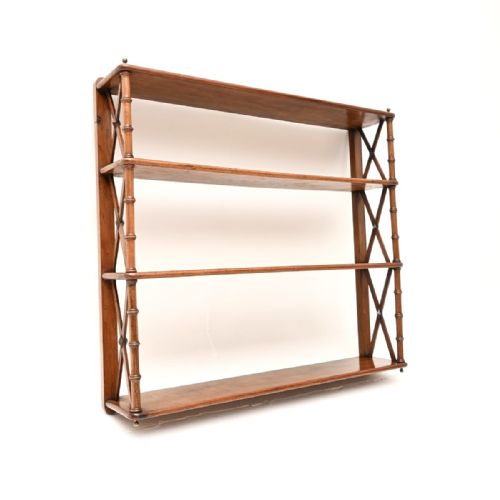
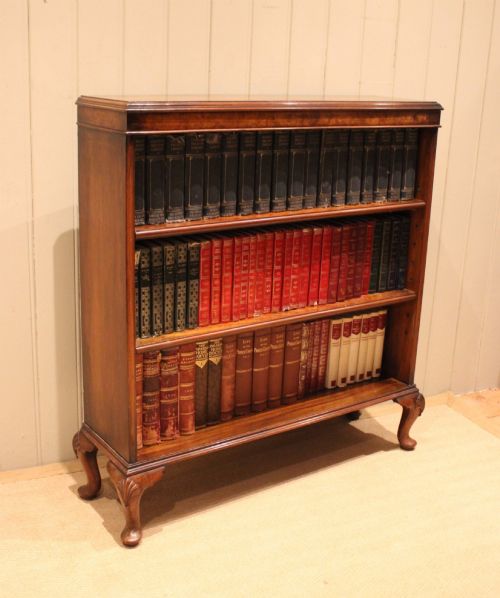
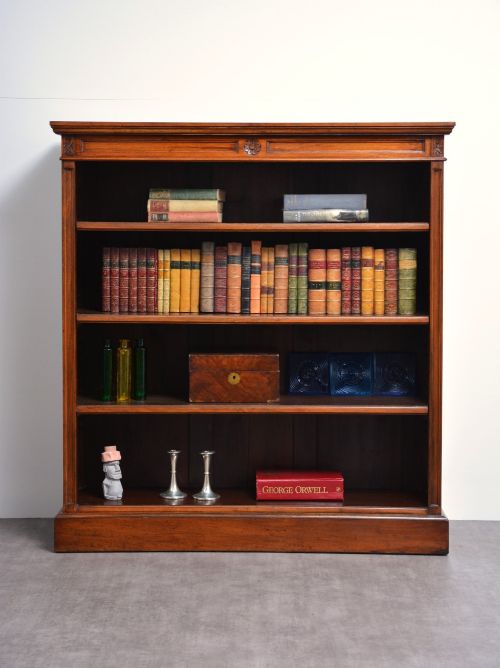
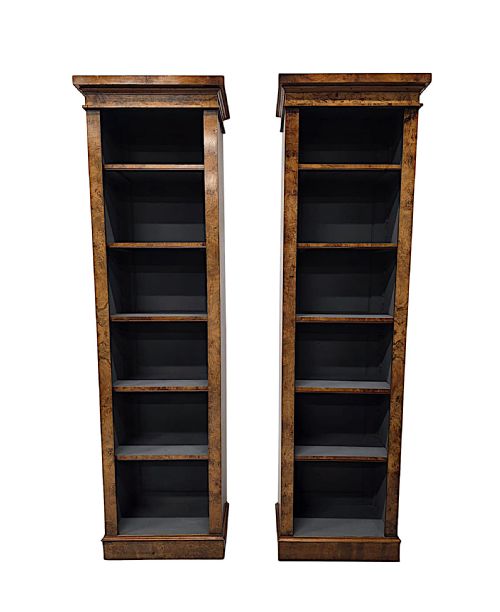
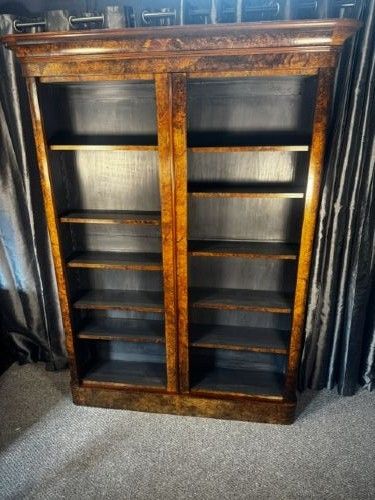
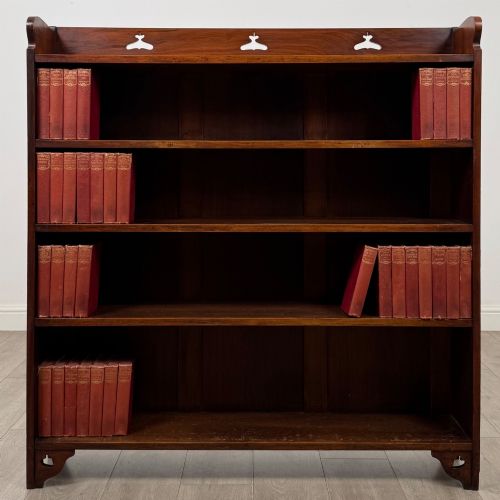
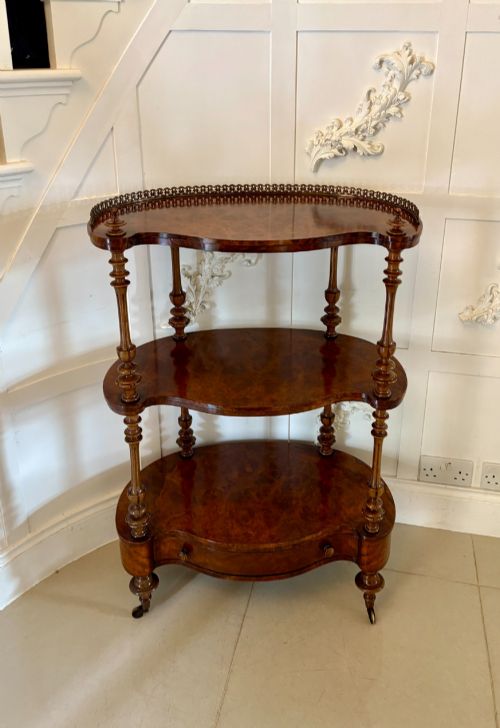
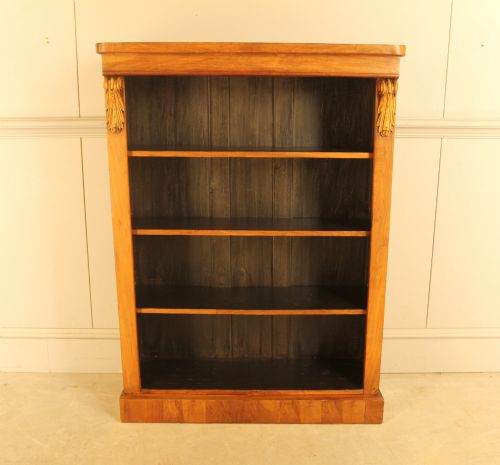
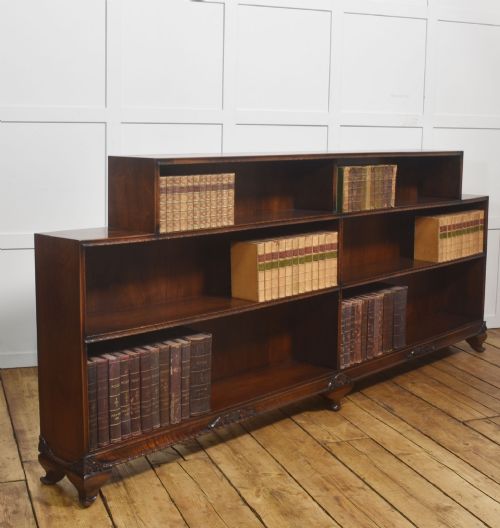
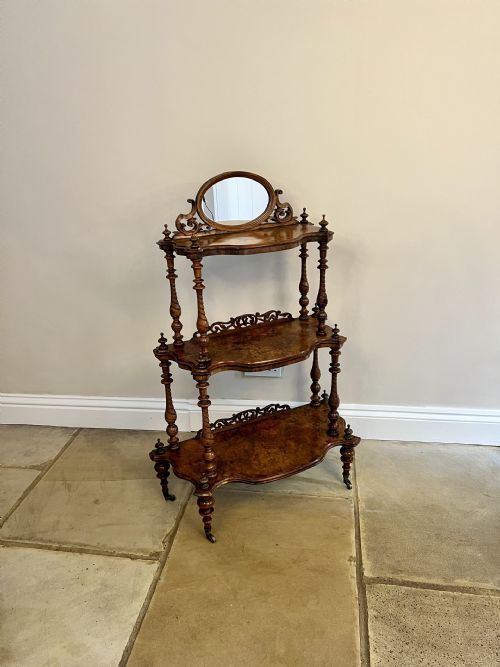
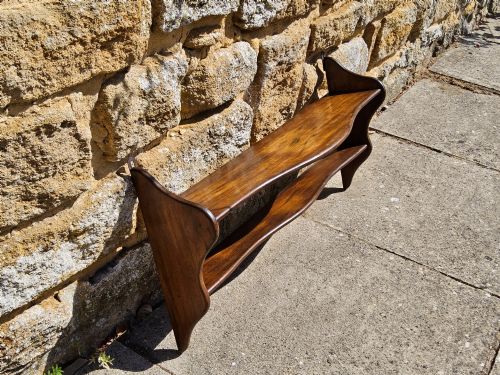
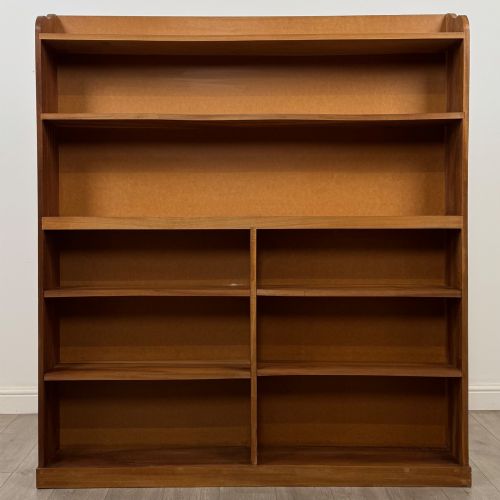
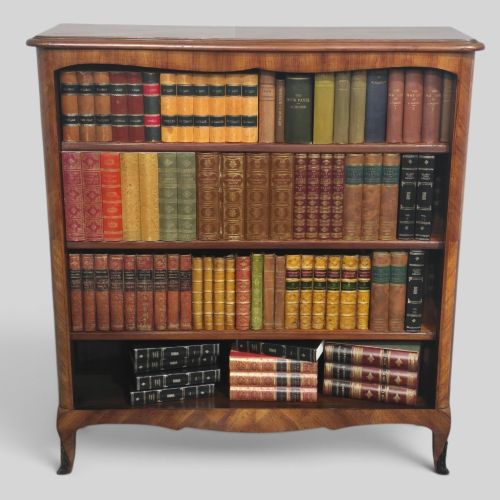
Brown walnut shelving encompasses open bookcases, tiered whatnots, wall-mounted brackets and glazed cabinets produced across the nineteenth and twentieth centuries. Buyers seeking brown walnut shelving encounter Victorian open library units alongside Edwardian and Art Deco designs configured for domestic storage and display.
The material vocabulary spans solid timber, burr walnut veneers, and secondary woods such as pine, often paired with brass fittings or glass panels. Pieces emerge from English workshops as well as Continental makers, maintaining a focus on figured grain patterns.
Materials and construction methods
Cabinet makers utilised walnut and burr walnut veneers over timber carcasses to create decorative surfaces with swirling grain patterns. Solid walnut serves for structural elements, turned legs, and carved mouldings.
Shelving frequently incorporates adjustable wooden supports alongside brass hardware and occasional gilt metal mounts. Pine often forms the secondary backing or internal framing of larger bookcases and cabinets.
Arthur Simpson provided folding walnut cabinets in the 1920s for Victorians who preferred to pack up their shelving and move it across the room.
Distinctions in quality
Quality rests on the selection and matching of the walnut veneer, where symmetrical burr patterns indicate superior cabinet work. Finely turned columns, serpentine shaping, and crisp carving distinguish better examples from plain utility furniture.
Structural integrity relies on sound timber seasoning and the correct functioning of adjustable shelf mechanisms. Original brass fittings and stable, well-fitted joints elevate the standing of a piece.
Arthur Simpson
The Brown Walnut Shelving Glossary
- Whatnot
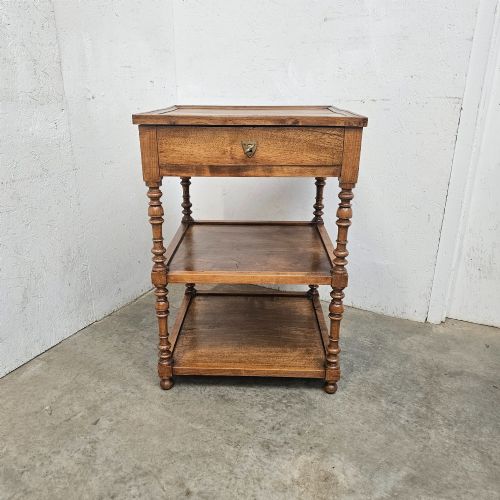
- An open, multi-tiered piece of freestanding furniture designed for displaying ornaments, books, or small objects. These stands often incorporate turned corner supports and multiple tiers.
- Breakfront
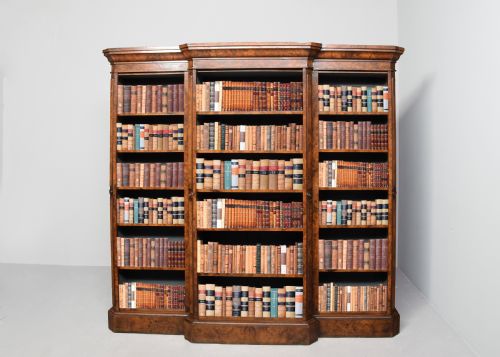
- A piece of furniture whose central section projects forward from the flanking wings. This architectural arrangement adds depth and visual rhythm to large library bookcases.
- Etagere
- A set of open shelves for displaying small possessions, similar in function to a whatnot. The form appeared frequently in French and English nineteenth-century interiors.
- Veneer
- A thin layer of superior wood applied over a secondary timber base to provide a decorative surface. Walnut veneer allows workshops to display dramatic grain without using solid timber throughout.
Brown Walnut Shelving: Frequently Asked Questions
How do I adjust wooden shelves?
Most nineteenth-century bookcases utilise either a traditional tooth-and-rack system or wooden bearer strips attached to the interior sides. You simply lift the shelf clear of its supports and reposition it into the adjacent slots.
Ensure the shelf rests evenly on all four supports to prevent warping or rocking under the weight of books.
Are these shelves suitable for heavy books?
Solid timber library bookcases and breakfront units are engineered to support substantial volumes, particularly those fitted with thick walnut shelves. Lighter wall brackets and whatnots suit decorative items and smaller paperbacks rather than heavy folios.
Check the thickness of the timber and the strength of the internal supports before loading a unit with dense collections.
How do I distinguish Victorian from Art Deco pieces?
Victorian walnut shelving relies on historical revival styles, turned columns, carved details, and figured burr veneers. These pieces often present a darker finish and ornate structural silhouettes.
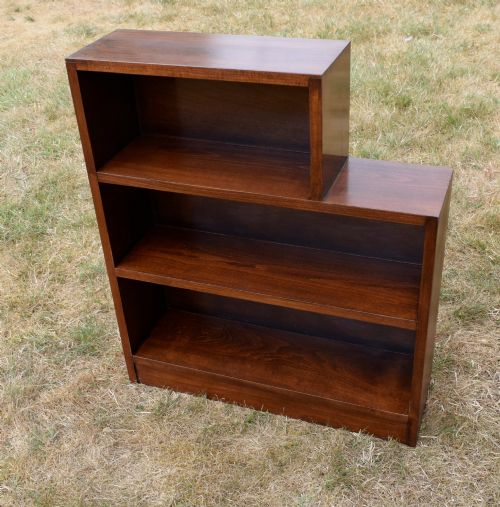
Art Deco items from the 1930s favour clean geometric lines, stepped profiles, and streamlined forms with minimal ornamentation. The grain patterns remain the primary decoration rather than applied carvings.
What is the best way to clean walnut surfaces?
Dust the timber regularly with a soft, dry cloth to prevent particulate buildup in the grain. Avoid silicone sprays or modern household polishes that can leave a hazy residue over time.
Apply a traditional beeswax sparingly if the timber appears dry, buffing it gently to maintain the natural satin sheen of the walnut.