
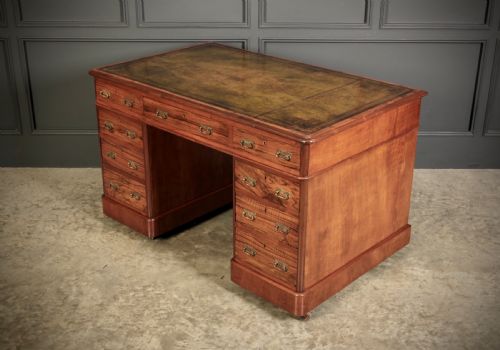

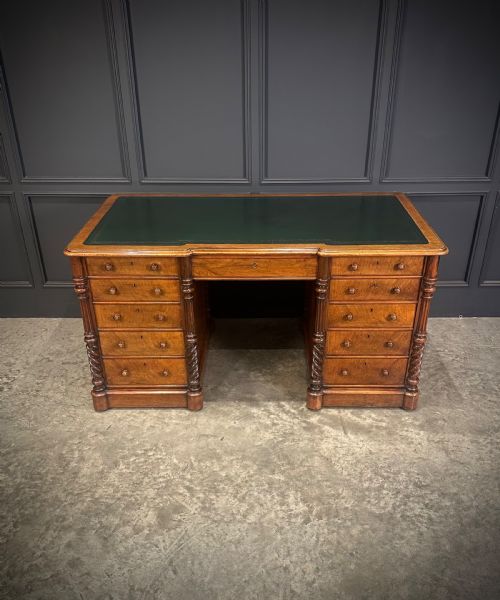

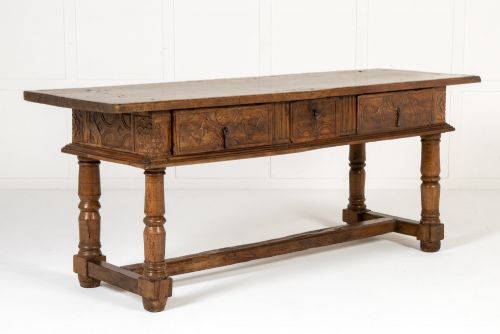
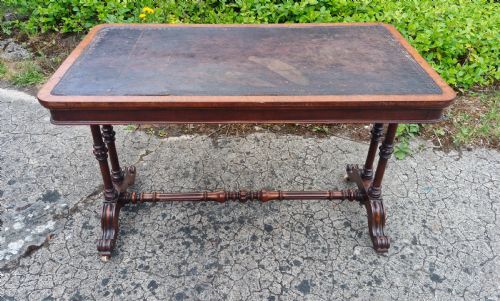


Brown Walnut Library Desk
A brown walnut library desk brings rich grain and practical workspace into a room, offering the durability of solid timber paired with fitted writing surfaces.
Brown Walnut Library Desk
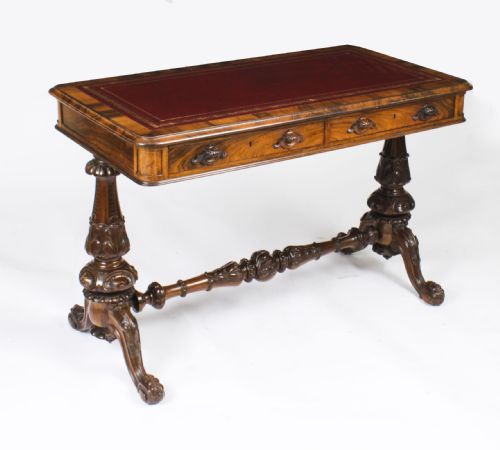
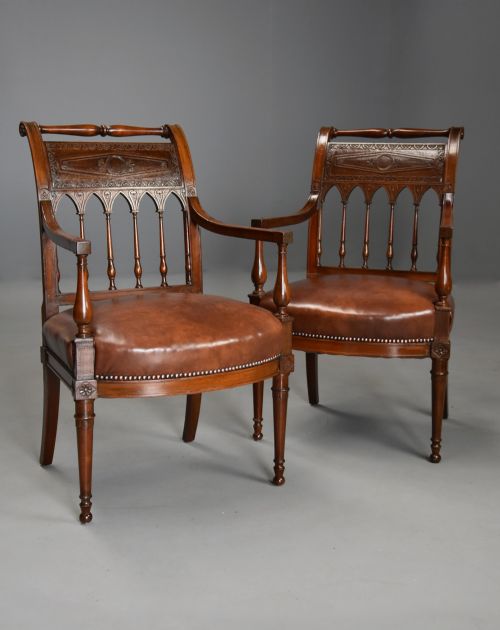
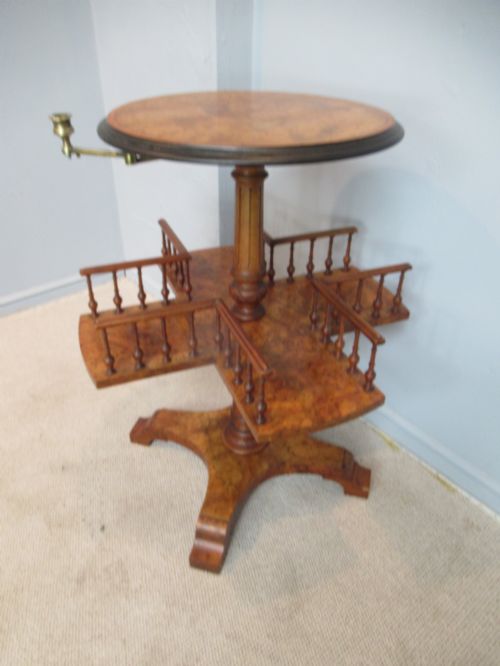
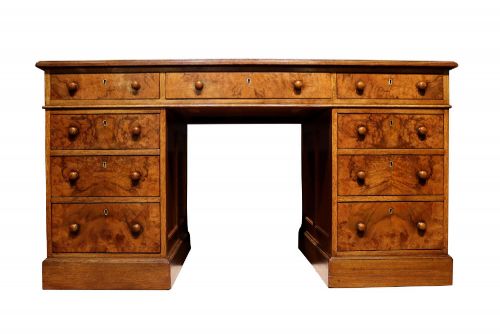
The pieces spanning the nineteenth century showcase the evolution of functional workspace design, from simpler Victorian writing tables to substantial partner formats with drawers on multiple sides. Alongside these desks, related library seating and centre tables frequently appear in the listings.
Originating from British and continental workshops, these items reflect both traditional revival aesthetics and practical nineteenth-century office requirements. Selecting the right piece involves matching the scale of the desk or table to the proportions of the room it will occupy.
Materials and construction
Cabinet makers utilised walnut and burr walnut veneers over secondary timbers to achieve striking figured patterns across large flat surfaces. Solid walnut formed the structural frames, legs, and mouldings, offering both resilience and a deep natural colour.
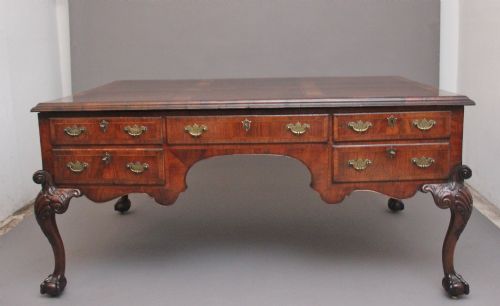
Writing surfaces were traditionally inset with leather or velvet to provide a smooth, durable plane for daily correspondence. Brass hardware, including drop handles, escutcheons, and castors, added functional detail and secure fastening to drawers.
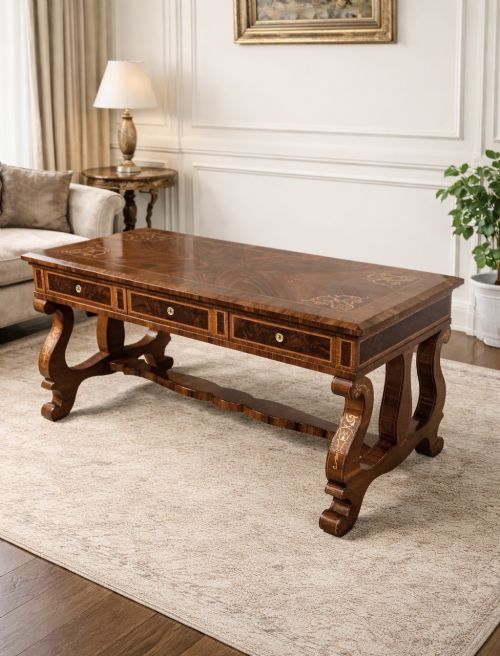
Inlaid stringing and marquetry panels decorated the tops and friezes of finer tables, demonstrating the precision of period joinery. Hand-cut dovetails inside the drawer boxes reveal traditional assembly methods intended to endure decades of frequent use.
Some desks hide secret compartments behind dummy drawer fronts, built to keep private correspondence safe from wandering eyes.
Distinguishing the finer examples
The distinction between standard commercial pieces and exceptional cabinet work rests on the choice of timber and the complexity of its figure. Highly burr-figured walnut veneers arranged with symmetrical grain matching separate ordinary tables from master workshop productions.
Construction details such as solid cedar drawer linings, well-cut dovetailing, and original patinated leather writing surfaces elevate the standing of a desk. Maker signatures or stamps embedded within the drawer framework further indicate high standards of construction.
Proportion and decorative restraint also determine quality, where well-balanced turnings, crisp carving, and preserved original brass mounts contribute to a more harmonious and enduring piece of furniture.
Edwards and Roberts·Gill and Reigate·Gillows Lancaster·W J Mansell
The Brown Walnut Library Desk Glossary
- Partners desk
- A large double-sided writing table designed for two people to work opposite one another, featuring banks of drawers beneath both sides.
- Burr walnut
- A highly figured timber veneer harvested from the excrescences or burls of walnut trees, prized for its swirling grain patterns.
- Ormolu
- Gilded bronze ornamentation mounted onto the corners, legs, or aprons of finer furniture, common on continental pieces.
- Escutcheon
- A protective brass plate surrounding a keyhole, designed to prevent the surrounding wood from wearing away.
- Frieze
- The horizontal band situated immediately beneath the top surface of a table or desk, frequently housing one or more drawers.
Brown Walnut Library Desk: Frequently Asked Questions
What is a partners desk?
A partners desk is a large double-sided workspace built with drawers and cupboards accessible from both faces. This format allowed two individuals to sit opposite each other in a shared library or study.
These pieces typically offer substantial proportions and served as the central working hub in large period homes or administrative offices.
How do I care for leather desk tops?
Leather writing surfaces require gentle cleaning with a soft, dry cloth to remove dust and debris. Periodic treatment with specialist leather balms helps prevent the material from drying out and cracking.
Avoid using harsh chemical cleaners or excess water, which can stain both the hide and the surrounding walnut timber.
Are these desks suitable for daily use?
Period desks are constructed from solid hardwoods and robust veneers designed for enduring utility. Their drawers and writing surfaces accommodate modern paperwork and writing tasks effectively.
Placing the desk away from direct heat sources and strong sunlight protects both the timber finish and the inset leather from premature wear.
How do I distinguish Victorian from Edwardian desks?
Victorian desks generally exhibit heavier proportions, darker finishes, and robust walnut or burr walnut timbers. They often feature prominent turned legs or substantial pedestal bases with deep drawer configurations.
Edwardian pieces tend to display lighter construction, sometimes incorporating revival styles like Queen Anne or Chippendale with tapered legs and more delicate stringing.