
Brown Vanity Desk
A brown vanity desk offers a practical surface for grooming and writing, uniting period craftsmanship with functional timber design.
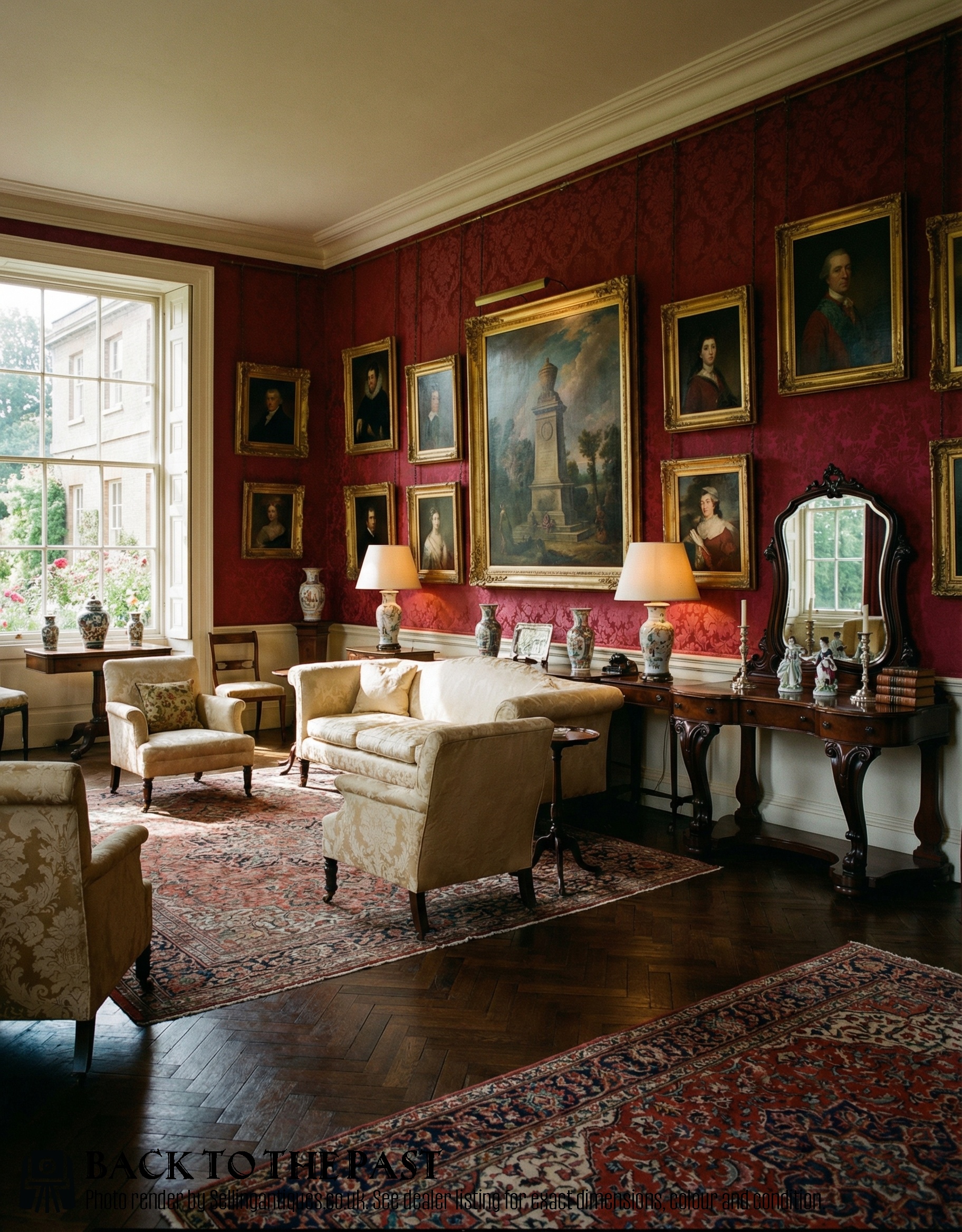
Brown Vanity Desk
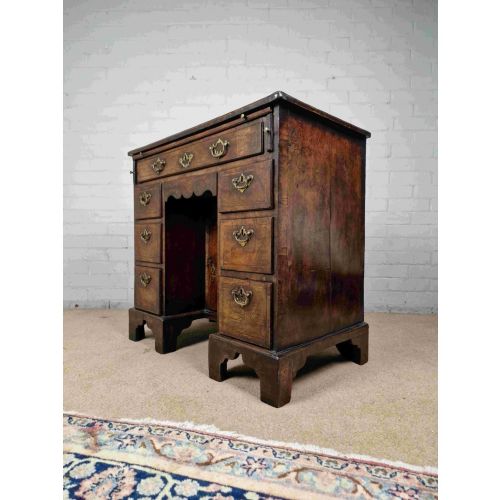
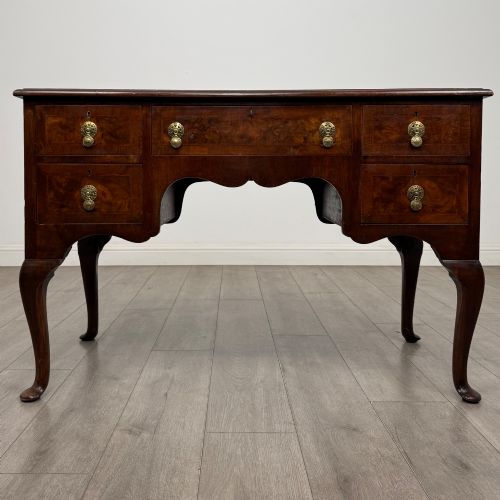
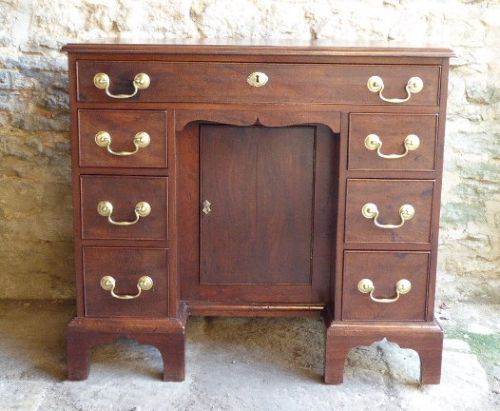
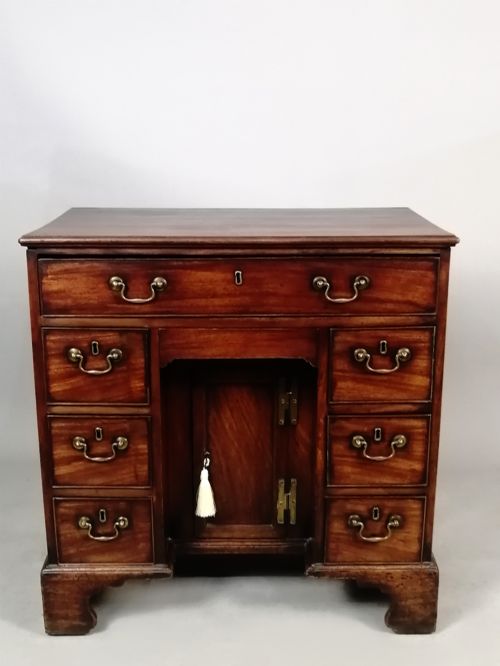
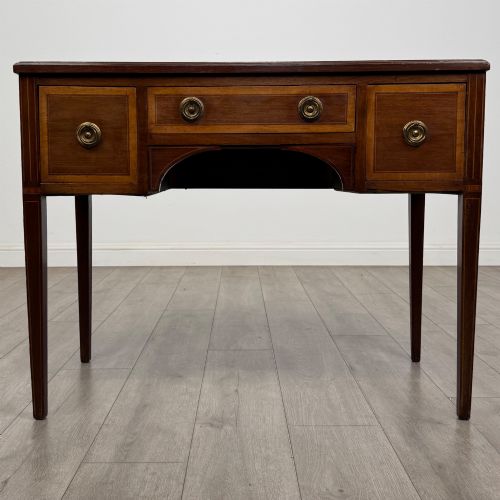
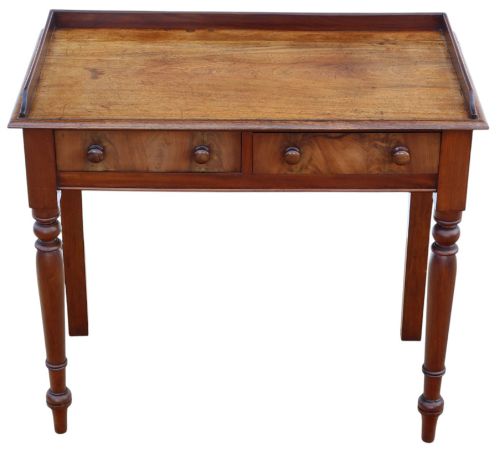
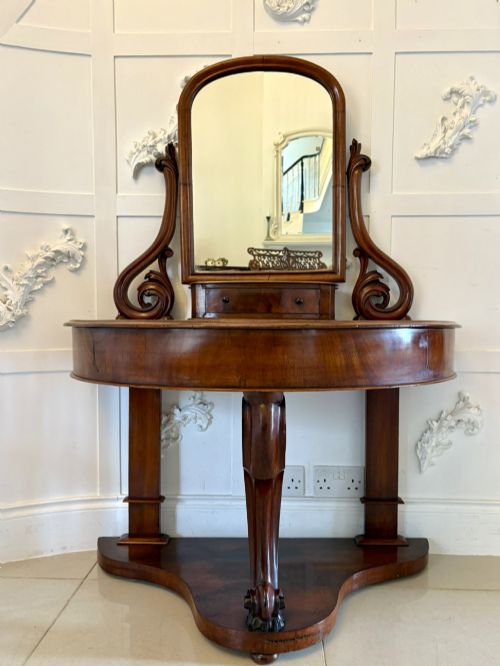
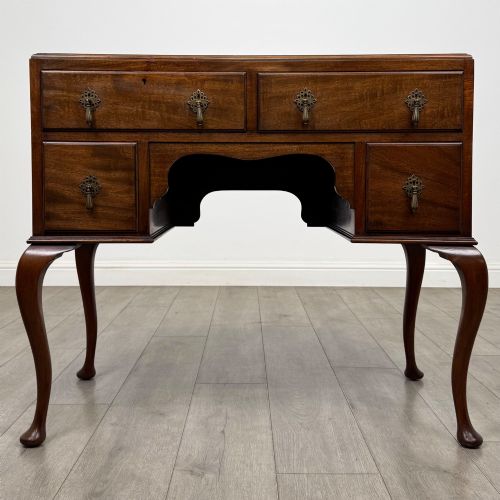
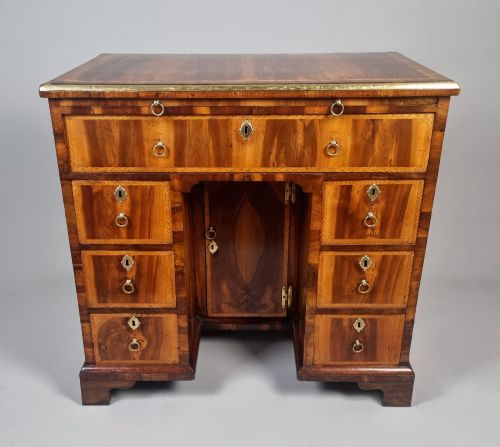
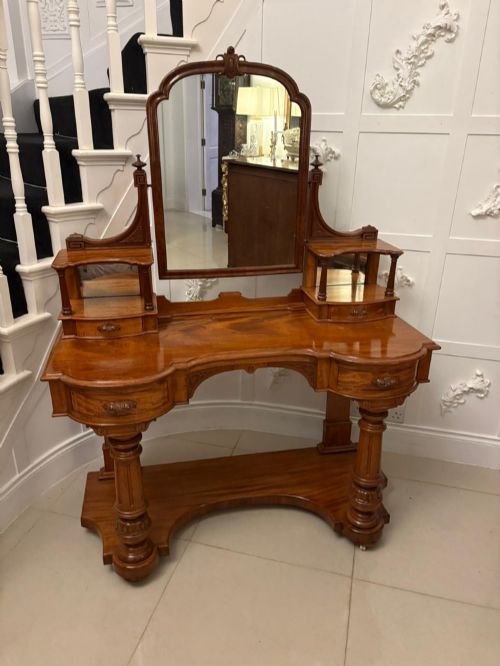
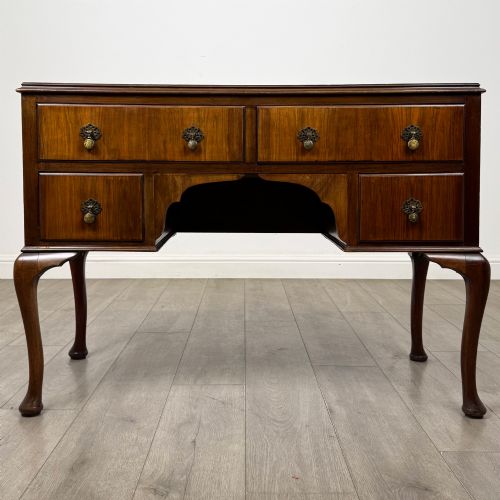
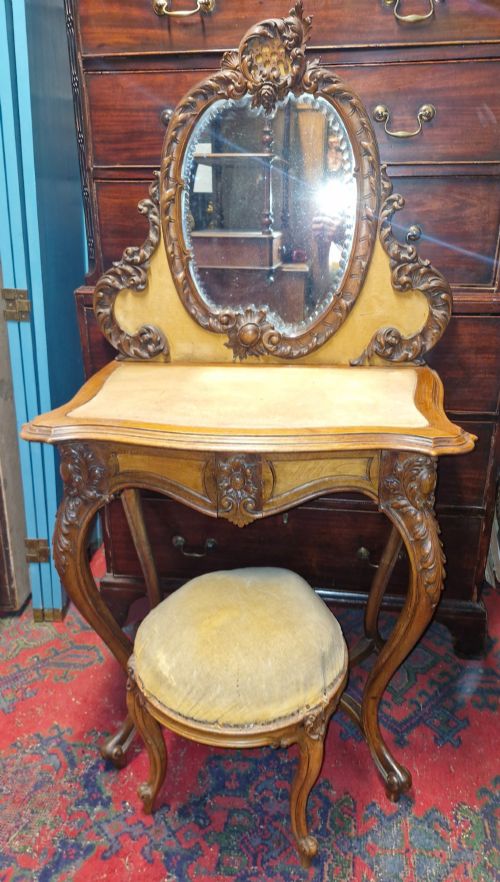
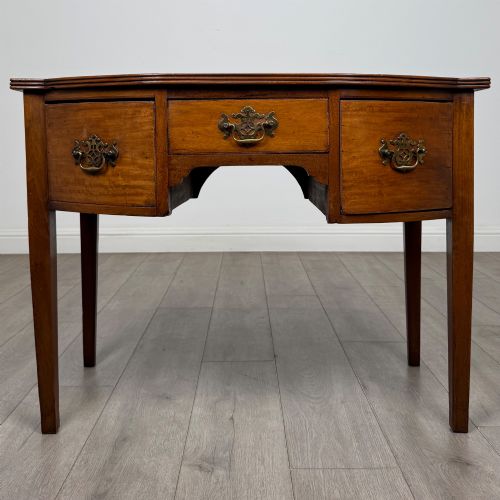
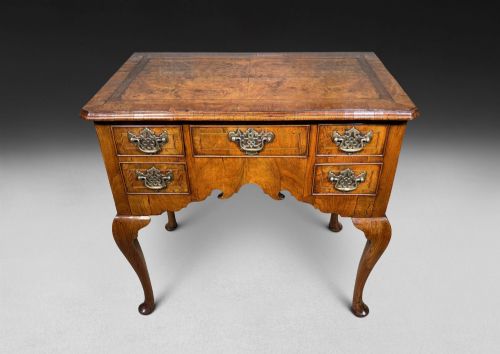
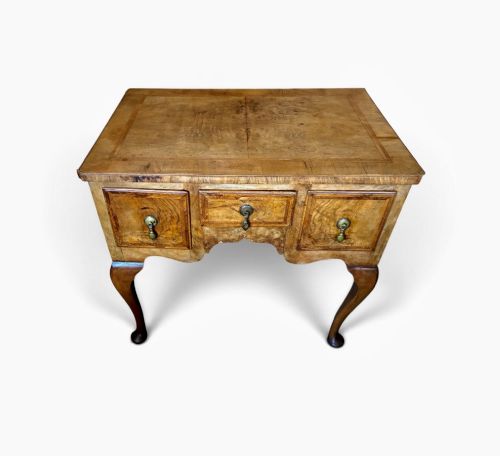
A brown vanity desk combines the utility of a writing table with the dedicated surface of a dressing table, often taking the form of a lowboy, kneehole desk, or dressing chest. These pieces function as personal grooming stations or compact writing spaces, featuring fitted drawers and occasional accompanying mirrors.
The selections on this page span several centuries, with particular emphasis on Edwardian, Victorian, and Georgian eras alongside later reproductions. Mahogany and walnut dominate the offerings, appearing in both solid timbers and figured veneers.
Makers and designers from the eighteenth century onwards adapted these forms for domestic chambers and dressing rooms. Buyers encounter everything from austere oak lowboys to elaborate satinwood-inlaid Edwardian writing tables.
How they were made
Cabinet makers constructed these desks using dense hardwoods such as mahogany, oak, and walnut, often applying decorative burr walnut or flame mahogany veneers to primary surfaces. Solid timbers formed the structural frames, drawer linings, and internal partitions.
Construction techniques included dovetailed drawer joints and mortise and tenon frames, ensuring structural rigidity across centuries of use. Surface finishing involved hand-polished shellac or wax, which highlighted the natural grain and figure of the wood.
Several pieces include fitted bureau compartments and adjustable shield mirrors designed for morning grooming routines.
What varies in quality
The selection of timber grain heavily dictates the visual merit of a brown vanity desk, with figured walnut and flame mahogany commanding greater attention. Symmetry in veneer matching across drawer fronts and tops indicates superior workshop standards.
Hardware retention and secondary timber selection separate standard pieces from exceptional examples. Original brass handles, locks, and secondary oak or pine linings demonstrate careful preservation and higher initial manufacturing cost.
The Brown Vanity Desk Glossary
- Lowboy
- A small table with one or more rows of drawers, commonly used as a dressing table or side table in the eighteenth century.
- Kneehole desk
- A desk featuring a central recessed space for the legs, flanked by pedestals of small drawers.
- Secretaire
- A piece of furniture containing a fitted writing drawer or drop-front desk compartment.
- Veneer
- A thin layer of figured wood applied over a secondary timber base to create decorative surface patterns.
- Serpentine front
- A furniture front characterised by a concave central section flanked by two convex curves.
Brown Vanity Desk: Frequently Asked Questions
How do I date a brown vanity desk?
Dating relies on observing construction methods, timber choices, and hardware styles. Secondary woods like oak or pine inside drawer boxes often help indicate the period.
Stylistic cues such as cabriole legs, bracket feet, or inlaid satinwood motifs point toward specific eras like the Georgian or Edwardian periods.
Were these desks used for writing or grooming?
Many brown vanity desks served dual purposes depending on the era and domestic requirements. Pieces described as writing and dressing tables accommodated both diary writing and morning toilet preparations.
Adjustable mirrors and partitioned top drawers indicate grooming use, while flat wooden surfaces and kneeholes facilitated writing.
What is the difference between a lowboy and a dressing table?
A lowboy is typically a compact table with drawers supported on four legs, functioning historically as a small side table or dressing stand. Dressing tables often incorporate superstructure mirrors or tiered drawer arrangements.
Both forms overlap significantly in antique nomenclature, particularly during the eighteenth century.
How do I care for a walnut veneer surface?
Walnut surfaces require protection from direct sunlight and excessive moisture to prevent fading and veneer lifting. Regular dusting with a soft, dry cloth preserves the polished finish.
Applying microcrystalline wax periodically maintains the moisture barrier of the wood without building up heavy residues.