


Brown Tone Watercolour Painting
When you search for a brown tone watercolour painting, you are looking at works on paper that rely on monochrome or limited earth palettes.
Brown Tone Watercolour Painting
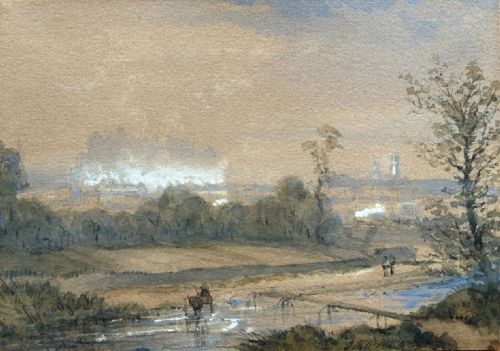
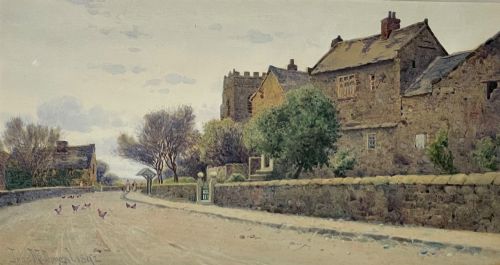
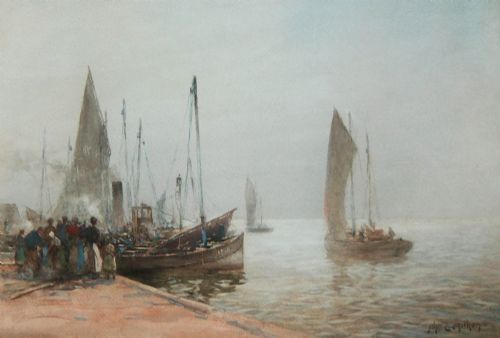
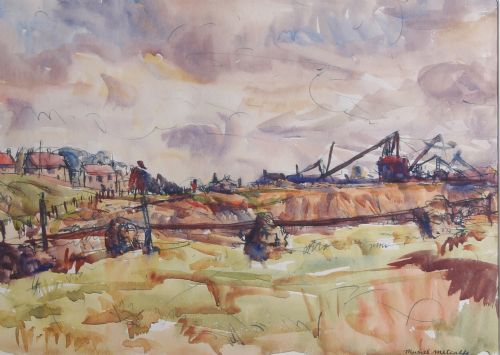
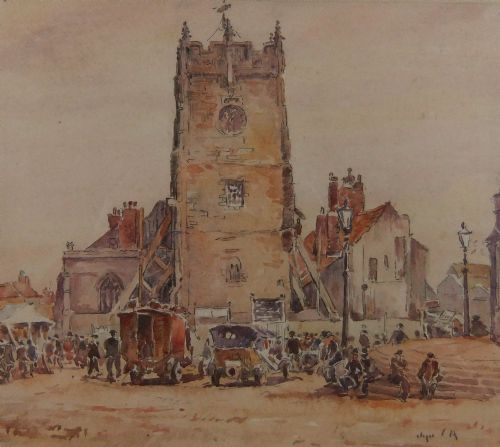
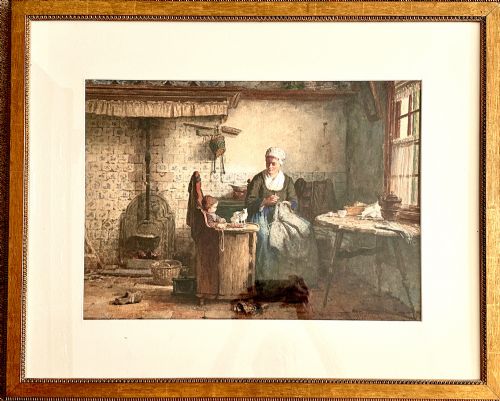
A brown tone watercolour painting typically depicts British landscapes, coastal villages, and figurative scenes rooted in the nineteenth and twentieth centuries. The selection on this page leans heavily toward Victorian and Edwardian works, alongside pieces from the 1920s through to the 1940s.
Motive subjects range from Yorkshire harbours and Scottish landscapes to farmyards and village streets. Artists utilised subtle washes of brown pigment and ink on paper to capture atmospheric light and shade without relying on bright chromatic spectrums.
Materials and technique
These works rely on water-soluble pigments and ink applied to paper supports, occasionally framed with glass and wood. The technique involves disciplined control of fluid washes, where diluted brown tones build depth, shadow, and architectural detail.
Artists layered watercolour pigment to achieve tonal gradations, using ink lines to define contours in landscapes and interior figures. The paper itself often forms the highest highlights, showing through thin applications of earth-coloured washes.
Several artists captured quiet village moments, proving that nineteenth-century horses had just as much patience waiting outside pubs as modern ones.
What separates the grades
Quality rests in the economy of brushwork and the precision of the tonal control across the paper. Stronger examples display confident handling of shadow and light that creates immediate atmospheric depth, whereas lesser works feel laboured or flat.
The sophistication of composition and the stability of the pigment against fading also distinguish finer pieces. Works by established named artists generally exhibit a surer command of perspective and wash density.
John R Prentice·John McDougal·James E Aitken·Muriel Metcalfe·John Smith Atherton·Hendrik Valkenberg·James Hayllar·Alfred George Morgan·James Tower·James Hardy·John Atkinson·Louie Stanley Maurice Prince·John Syer·Adrian Jones·Henry Charles Fox·Roland Batchelor·Percy Brooke·Leonardo Morello·Rowland Henry Hill·Thomas Pyne·Sir William George Gillies·Edward Killingworth Johnson·Harold E Frecker·Charles James Adams·J V R Parsons
The Brown Tone Watercolour Painting Glossary
- Watercolour
- A painting method in which the paints are made of pigments suspended in a water-based solution. The paper support remains visible through translucent washes of colour.
- Wash
- A thin, fluid layer of diluted pigment spread evenly across the paper. This technique creates smooth skies, water, or shadow areas without visible brush marks.
- Monochrome
- A painting executed in a single colour or shades of a single colour such as sepia or brown. It emphasises tone and form over a full spectrum.
- Pigment
- The finely ground natural or synthetic coloured powder that gives paint its hue. In these works, earth pigments provide the characteristic brown tones.
- Support
- The physical material upon which the painting is created. Paper serves as the primary support for these water-based works.
Brown Tone Watercolour Painting: Frequently Asked Questions
How should I frame an old watercolour?
Protect the paper from direct sunlight and moisture by using acid-free mount boards and conservation-grade glass. Keeping the work away from extreme heat prevents the paper support from becoming brittle over time.
Ensure the painting does not touch the glass directly, as trapped condensation can damage the pigment and paper surface. Proper framing preserves the delicate brown washes for decades.
How do I identify a Victorian watercolour?
Victorian watercolours often feature detailed narrative scenes, romantic landscapes, or careful architectural studies executed on heavier textured paper. Signatures and dates, where present, help confirm the period of execution.
Stylistic conventions of the nineteenth century frequently prioritised subdued earth palettes and meticulous brushwork over experimental abstraction. Examining the backing board and framing remnants can also provide clues to the age.
Why are some watercolours brown?
Artists often chose sepia, umber, and bistre pigments to create atmospheric, moody compositions that mimic early photography or monochrome printmaking. These earth tones were favoured for capturing overcast skies, winter landscapes, and shadowed interiors.
Over decades, certain pigments and varnishes can also naturally shift towards warmer amber and brown hues due to ageing. This patination is a normal characteristic of nineteenth and early twentieth-century works on paper.
Are these works original paintings?
Every piece recorded here is a unique hand-painted work created directly on paper by an artist, rather than a printed reproduction. Brush textures and pigment pooling under magnification confirm the direct application of wet paint.
Artists sketched these scenes <i>in situ</i> or developed them in studios using watercolour pigments and ink. Each surviving sheet represents a singular creative act from its respective period.